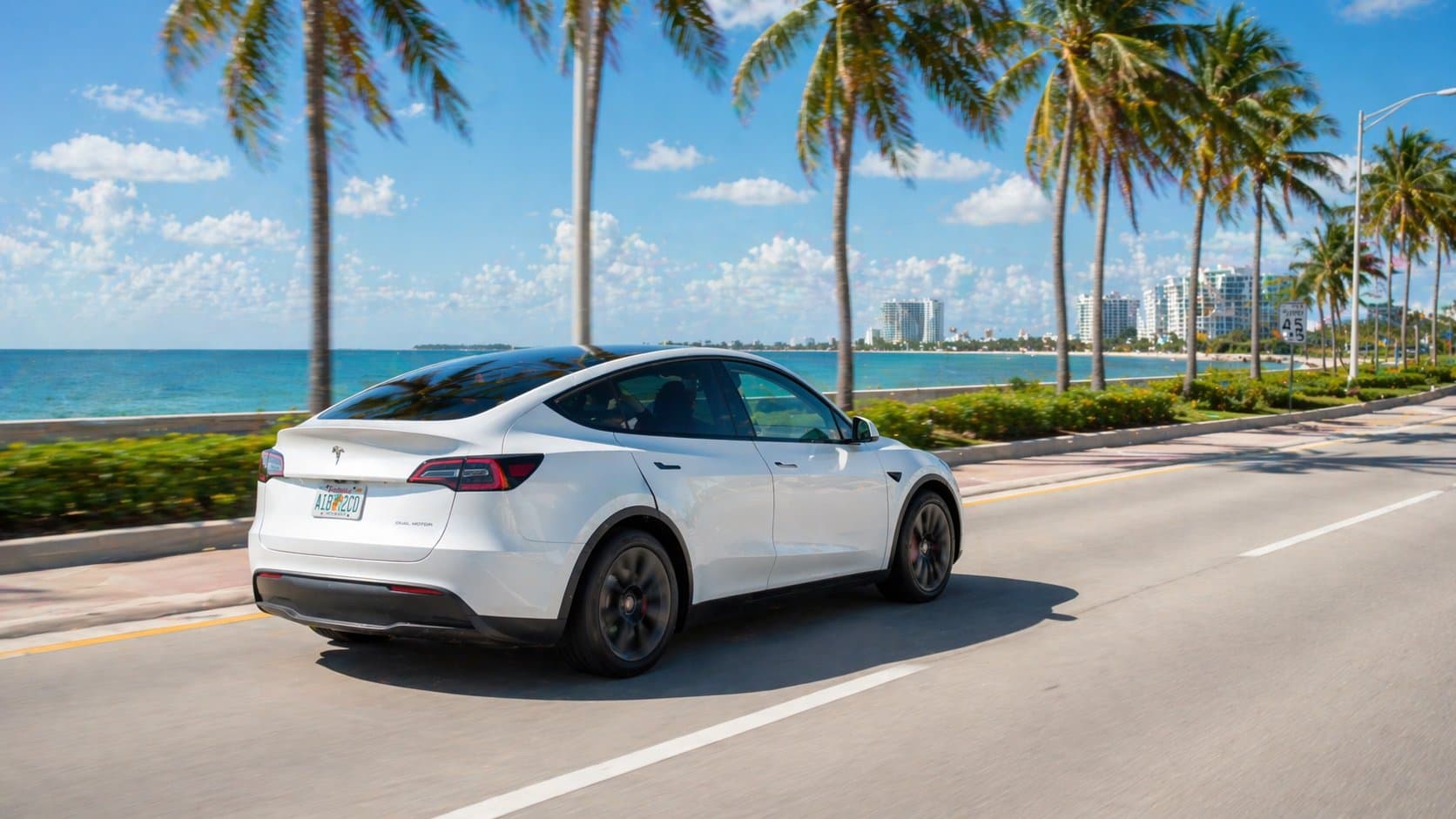
Florida is simultaneously the best and worst state for EV ownership. The best because year-round warm weather eliminates cold-weather range loss, no state income tax means more money for the car payment, and Florida's flat terrain maximizes real-world range. The worst because extreme summer heat (95°F+ for months) stresses batteries, hurricane evacuation routes can exceed 300 miles with no charging infrastructure in emergencies, and the salt air along both coasts accelerates corrosion on exposed components.
This guide covers which EVs handle Florida's unique conditions best — and which ones to avoid.
What Florida Does to EVs
Heat and Battery Thermal Management
Florida's summer heat creates sustained thermal stress on EV batteries. Unlike cold weather (which temporarily reduces range but doesn't damage the battery), extreme heat can permanently accelerate battery degradation if the thermal management system isn't robust enough.
The critical specification is active liquid cooling. EVs with active liquid cooling circulate coolant through the battery pack to maintain optimal temperature regardless of ambient conditions. EVs with passive air cooling rely on airflow and can't prevent heat buildup during Florida summers, especially when the car is parked in direct sun.
Active liquid cooling (good for Florida): Tesla (all models), Hyundai Ioniq 5/6, Kia EV6/EV9, BMW iX/i4, Ford Mustang Mach-E, Rivian R1T/R1S, Chevrolet Equinox EV.
Passive air cooling (risky for Florida): Nissan Leaf (older models), some Chinese imports.
For a deeper comparison of which models hold up best in triple-digit temperatures, see our best EVs for hot climates guide.
Hurricane Evacuation Considerations
Florida's hurricane season (June–November) creates a scenario that no other state faces: potential mandatory evacuation of millions of people along routes that may have no operational charging infrastructure due to power outages.
The EV hurricane strategy: maintain your battery above 80% during hurricane season. If evacuation is ordered, a full battery provides 200–350 miles of range — enough to reach Georgia, Alabama, or the Florida Panhandle from most of South/Central Florida. Charge at home before leaving — don't count on public chargers being operational during a storm. Our charging station finder can help you identify stations along evacuation corridors.
EVs with 300+ mile range provide the most evacuation buffer: Tesla Model 3 Long Range (358 mi), Tesla Model Y Long Range (311 mi), Hyundai Ioniq 6 Long Range (361 mi), BMW iX xDrive50 (324 mi).
Salt Air Corrosion
Florida's coastal salt air corrodes exposed metal components faster than inland environments. EV-specific concerns include charging port contacts (rinse with fresh water monthly if you live within 5 miles of the coast), exposed brake rotors (EVs use brakes less due to regenerative braking, which means rotors sit with salt deposits longer — drive with periodic firm braking to clean rotors), and underbody fasteners and suspension components.
The Best EVs for Florida
Best Overall: Tesla Model Y Long Range
Price: $44,990
Range: 311 miles EPA
Why Florida loves it: Active thermal management handles heat, 311 miles covers any in-state trip, Supercharger network is dense across Florida (65+ stations), and over-the-air updates keep the car current. The Model Y is the #1 selling EV in Florida for good reason — it just works in the Florida environment.
Best Value: Chevrolet Equinox EV
Price: $33,900 (starting)
Range: 319 miles EPA (LT trim)
Why Florida loves it: The longest range in its price class means worry-free Florida driving. GM's Ultium battery platform has active thermal management. At $33,900, it's the most affordable long-range EV available — perfect for Florida's cost-conscious market. Chevrolet's extensive dealer network in Florida means service is never far away.
Best for Families: Kia EV9
Price: $56,395 (starting)
Range: 304 miles EPA
Why Florida loves it: Three-row seating handles Florida family life (kids, car seats, beach gear). 304-mile range covers Tampa-to-Miami (280 miles) on a single charge. 800V ultra-fast charging means 10–80% in 24 minutes at EA stations. The EV9's boxy design maximizes interior space for beach chairs, coolers, and everything else Florida families haul.
Best for Commuters: Hyundai Ioniq 6
Price: $38,615 (starting)
Range: 361 miles EPA (Long Range RWD)
Why Florida loves it: The longest range of any non-luxury EV means even the Tampa-to-Orlando daily commuters (170 miles round trip) never worry about charging during the workday. The sedan body style handles Florida rainstorms better aerodynamically than tall SUVs. And 361 miles of range provides maximum hurricane evacuation buffer. If long-distance driving is a priority, also see our best EVs for road trips list.
Best for Truck Buyers: Ford F-150 Lightning
Price: $52,090 (starting)
Range: 240–320 miles EPA
Why Florida loves it: Florida is a truck state — F-150 has been the bestselling vehicle in Florida for decades. The Lightning maintains the F-150's utility (towing, bed space, power outlets) with EV benefits. The Pro Power Onboard feature provides 9.6 kW of generator capability — during hurricane-related power outages, the Lightning can power your home for 2–3 days. This feature alone makes the Lightning the most hurricane-ready vehicle in Florida, gas or electric. Compare full specs and pricing on our EV deals page.
Florida EV Incentives
Florida offers no state EV tax credit (no state income tax = no state credit mechanism). However, several Florida utilities offer EV-specific incentives. JEA (Jacksonville) offers reduced EV charging rates. Duke Energy Florida offers a $200 rebate for Level 2 home charger installation. FPL offers special EV time-of-use rates with overnight charging at approximately $0.06/kWh.
At FPL's overnight rate, charging a 300-mile EV from empty costs approximately $5–$7 — compared to $40–$60 for gasoline in an equivalent vehicle. Over 15,000 miles per year, that's roughly $250–$350 in electricity versus $2,000–$3,000 in gasoline. Florida's cheap electricity is one of the strongest financial arguments for EV ownership in any state.
The Bottom Line
Florida is an excellent state for EV ownership — cheap electricity, no range-killing winters, flat terrain, and expanding charging infrastructure. The Tesla Model Y is the safe choice. The Equinox EV is the value choice. The Ioniq 6 is the range choice. And the F-150 Lightning is the hurricane-preparedness choice. Whichever you choose, keep the battery above 80% during hurricane season, rinse the charging port monthly if you live near the coast, and enjoy paying $6 to “fill up” instead of $60. Browse our Florida service directory to find EV-certified mechanics near you.