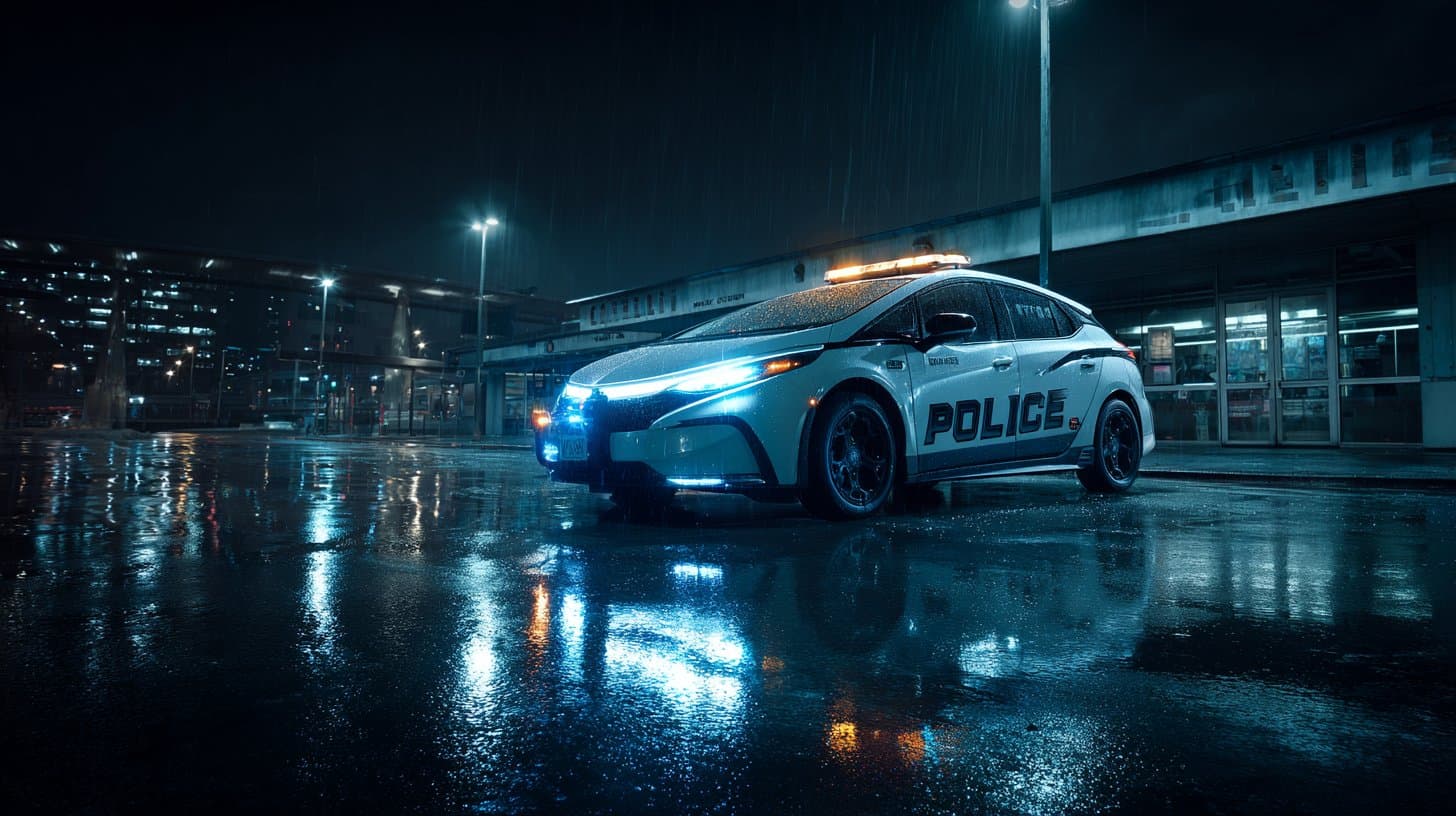
Police officers, firefighters, paramedics, and other first responders face unique demands from their personal vehicles. Long shifts, unpredictable schedules, and the need for reliability mean your car isn't just transportation — it's a lifeline. The good news? Electric vehicles in 2026 are more than capable of meeting these demands while saving you thousands of dollars per year in fuel and maintenance costs. Here are the best EVs for law enforcement professionals and first responders.
What First Responders Need from an EV
Before diving into specific models, let's establish what matters most for police officers and first responders when choosing a personal EV. These criteria are different from what a typical commuter might prioritize, and understanding them will help you make the right choice.
- Range over 300 miles: Twelve-hour shifts, potential overtime, and the need to respond to emergencies mean you can't afford to worry about range. A 300+ mile range provides a comfortable buffer for even the longest shifts without needing to charge during duty hours.
- Fast DC charging: When you do need to charge, speed matters. Look for vehicles that can add 150+ miles in 20 minutes or less at a DC fast charger. This means you can top up during a meal break without disrupting your schedule.
- Reliability record: Your vehicle must start every time, in every condition. EVs generally excel here — fewer moving parts mean fewer potential failures — but some manufacturers have better track records than others.
- Cargo and trunk space: First responders often carry gear, bags, uniforms, and emergency equipment. You need a trunk or cargo area that accommodates duty bags, body armor carriers, boots, and personal items without compromising passenger space.
- Durability and build quality: Daily use in demanding conditions requires a vehicle built to last. Look for strong warranties, proven powertrains, and a solid dealer/service network in your area.
- Resale value: Law enforcement professionals often rotate vehicles every 3–5 years. Strong resale value means lower total cost of ownership and more equity when it's time to upgrade.
- Total cost savings: On a first responder salary, every dollar counts. EVs save $1,200–$2,000 per year on fuel alone, and maintenance savings (no oil changes, no transmission service, longer brake life) add another $500–$800 annually.
Our Top Picks for First Responders
1. Tesla Model 3 Long Range — Best Overall for Police Officers
The Tesla Model 3 Long Range is the top pick for police officers and first responders for several compelling reasons. Its 358-mile range is among the best in the sedan segment, providing more than enough capacity for a 12-hour shift with significant buffer remaining. Even in Florida's summer heat with air conditioning running constantly, real-world range comfortably exceeds 300 miles.
The Tesla Supercharger network is the single greatest advantage for shift workers. With over 60,000 connectors across North America and reliable uptime exceeding 99%, you can count on a Supercharger being available and functional when you need it. A 15-minute stop adds approximately 175 miles — perfect for a quick top-up during a meal break between shifts.
The Model 3's low-profile sedan design offers a stealthy, professional appearance that works whether you're commuting to the station, attending court, or running errands off duty. The 22.9 cubic feet of trunk space accommodates a full duty bag, body armor carrier, and additional gear. The frunk adds another 3.1 cubic feet for items you want secured separately. Tesla's Sentry Mode provides built-in 360-degree vehicle surveillance when parked — a valuable security feature for officers.
View Tesla Model 3 Deals →2. Tesla Model Y — Best for Gear-Heavy First Responders
If you need more cargo space for gear, the Tesla Model Y is the natural upgrade. With 68 cubic feet of total cargo space (seats folded), it comfortably handles duty bags, extra uniforms, tactical equipment, medical kits, and personal items. Firefighters and paramedics who carry bulkier equipment will particularly appreciate the SUV's higher cargo floor and wider opening.
The Model Y shares the Model 3's Supercharger network access, Sentry Mode security, and over-the-air software updates. Its 337-mile range on the Long Range AWD variant is more than sufficient for extended shifts, and the all-wheel-drive capability provides added traction in wet conditions — valuable for Florida's frequent thunderstorms. The higher ride height makes getting in and out easier when you're wearing a duty belt and full gear, reducing fatigue over long shifts.
The Model Y is also the best-selling EV in America, which means parts availability, service center access, and resale value are all excellent. It retains approximately 65–70% of its value after three years, making it a financially sound investment for first responders who plan to trade up within a few years.
View Tesla Model Y Deals →3. Ford F-150 Lightning — Best for Officers Who Need a Truck
Many law enforcement officers and first responders also use their personal vehicles for off-duty activities that demand truck capability — towing boats, hauling equipment, or managing property. The Ford F-150 Lightning delivers that truck versatility with 320 miles of range and the unique Pro Power Onboard system that can power tools, equipment, or even serve as emergency backup power for your home during hurricane season.
The Lightning's 14.1 cubic-foot Mega Power Frunk is lockable and drainable, providing secure storage for duty gear, tactical equipment, or valuables you don't want visible in the bed. The truck can tow up to 10,000 pounds, making it ideal for officers who also tow boats, trailers, or ATVs on weekends. Ford's extensive dealer network means service is never far away, and the F-150 nameplate carries strong resale value.
For Florida-based officers, the Lightning's emergency power capability is particularly valuable. During hurricane season, the truck's 131 kWh battery can power essential home appliances for up to three days, including refrigerators, lights, fans, and phone chargers — a genuine lifesaver when the grid goes down.
View Ford F-150 Lightning Deals →4. Hyundai Ioniq 6 — Best Budget-Friendly Option
The Hyundai Ioniq 6 offers the best range-per-dollar of any EV on the market, making it the top choice for first responders on a tighter budget. With 361 miles of EPA range starting at $38,615, it delivers more range than the Tesla Model 3 for less money. The 800-volt architecture enables ultra-fast 18-minute charging from 10–80%, meaning you can add over 200 miles during a quick meal break.
Hyundai's industry-leading 10-year/100,000-mile powertrain warranty provides exceptional peace of mind for professionals who depend on their vehicle daily. The Ioniq 6's efficiency is outstanding — over 4.6 miles per kWh in optimal conditions — which translates to the lowest energy costs of any car on this list. For officers who drive 15,000–20,000 miles per year, the Ioniq 6 could save $1,800–$2,200 annually on fuel compared to a gas sedan.
The Ioniq 6's trunk space (12 cubic feet) is its main limitation — it's tighter than the Tesla Model 3. However, for officers who travel light or who primarily use their personal vehicle for commuting to and from the station, the Ioniq 6's exceptional range efficiency and lower entry price make it an outstanding value. The Vehicle-to-Load (V2L) feature also lets you power devices directly from the car — useful for charging laptops, radios, or other equipment in the field.
View Hyundai Ioniq 6 Deals →Cost Savings: EVs vs Gas for First Responders
Let's put real numbers to the savings. A police officer driving 18,000 miles per year in a gas sedan averaging 28 mpg at $3.50/gallon spends approximately $2,250 per year on fuel. The same officer driving a Tesla Model 3 at $0.13/kWh (Florida average residential rate) spends approximately $585 per year on electricity. That's a savings of $1,665 per year — or $8,325 over five years.
Add maintenance savings (no oil changes at $75–$100 each, no transmission fluid changes, no spark plug replacements, no exhaust system repairs, and significantly reduced brake wear thanks to regenerative braking), and the total five-year savings reach $11,000–$14,000 compared to an equivalent gas vehicle. For first responders managing household budgets carefully, these savings are substantial and consistent.
Charging Strategies for Shift Workers
Shift work creates unique charging patterns. Here are practical strategies for first responders:
- Home charging overnight: Install a Level 2 (240V) home charger. Plug in when you get home from a shift, and you'll wake up to a full battery every morning. Cost: roughly $1.00–$2.00 per full charge during off-peak hours.
- Station charging: Advocate for Level 2 chargers at your station. Several agencies across Florida have installed them, allowing officers to charge during shifts at minimal cost to the department.
- DC fast charging on breaks: For days when you can't charge at home, a 15–20 minute stop at a DC fast charger during a meal break can add 150–200 miles — more than enough to finish a shift.
- Keep it between 20–80%: For daily use, charging between 20% and 80% maximizes battery longevity while providing plenty of usable range. Only charge to 100% before road trips or exceptionally long shifts.
Florida-Specific Advantages for First Responders
Florida's climate is actually ideal for EV ownership. Warm temperatures help battery efficiency (cold weather is the enemy of EV range, not heat), and the state's flat terrain maximizes real-world range. Florida's growing DC fast-charging infrastructure along I-95, I-75, I-4, and the Florida Turnpike means you can drive anywhere in the state with confidence. Many Florida utility companies offer EV-specific rate plans with off-peak charging as low as $0.04 per kWh — making a full charge cost less than a cup of coffee.
The Bottom Line
Electric vehicles are no longer a compromise for first responders — they're an upgrade. With 300+ miles of range, ultra-fast charging, minimal maintenance, and annual savings exceeding $1,500, the EVs on this list deliver the reliability and endurance that law enforcement professionals demand. Whether you choose the Tesla Model 3 for its Supercharger network, the Model Y for cargo space, the F-150 Lightning for truck capability, or the Ioniq 6 for range efficiency, you're making a smart financial and practical decision.
Find Your Perfect First Responder EV
Browse current deals on all four recommended models, or use our EV Match tool to get a personalized recommendation based on your shift schedule, commute distance, and budget.