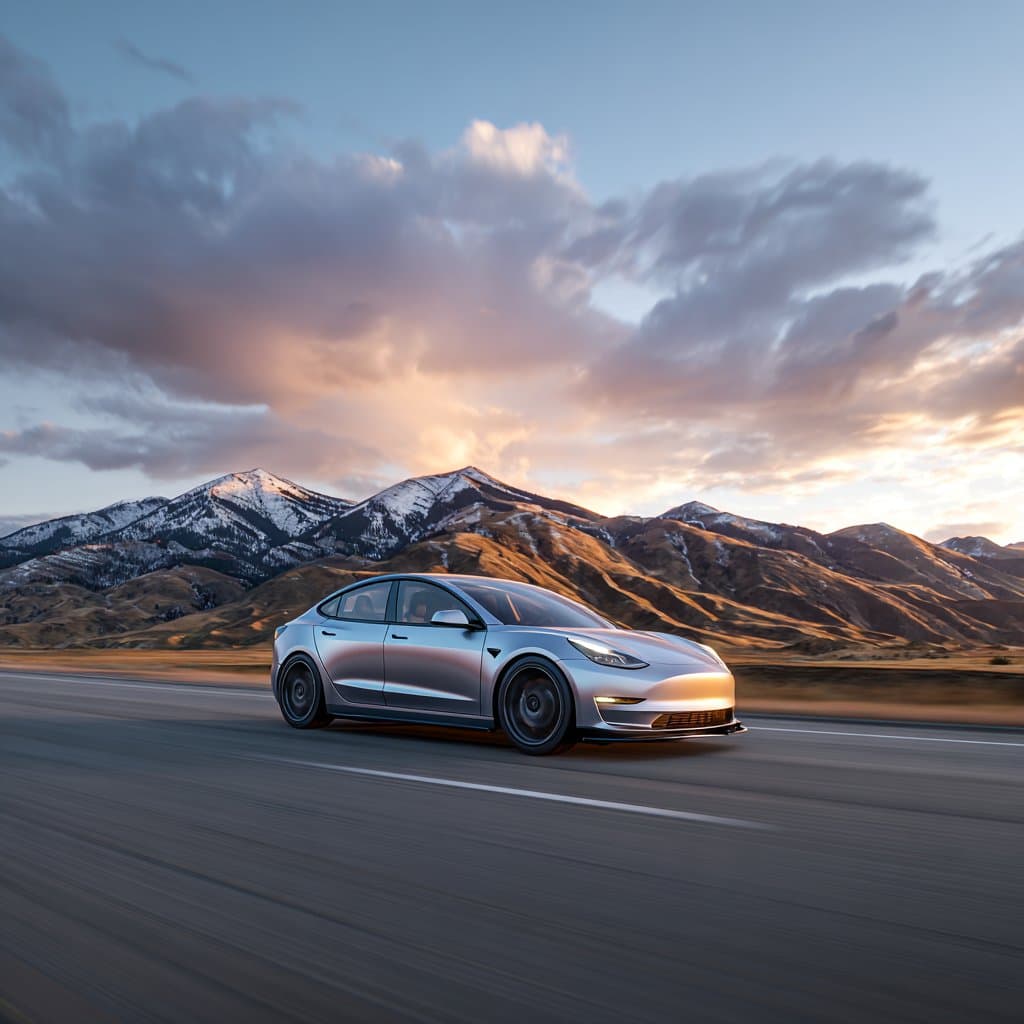
Highway driving is the hardest test for an electric vehicle. Speed increases aerodynamic drag exponentially, meaning highway miles consume significantly more energy than city miles. The gap between EPA range and real-world highway range is often 15–25% — a 300-mile EPA rating may deliver only 230–260 miles at 75 mph.
For long-distance driving, three things matter above all else: actual real-world highway range, charging speed (how quickly you can add range at a stop), and charging network reliability (are the chargers where you need them, working when you arrive?).
This guide covers the best EVs for highway driving and long road trips in 2026 — ranked for real-world performance, not EPA window sticker numbers.
What Highway Driving Does to EV Range
Before the rankings, it helps to understand why highway range differs from EPA estimates.
The EPA combined range test is a standardized laboratory cycle that blends city and highway driving at relatively moderate speeds. Real-world highway driving at 70–80 mph in mixed terrain, with AC running and passengers aboard, typically produces range 15–25% below the EPA figure.
Real-world highway range estimates for key models:
- Tesla Model 3 Long Range (EPA: 358 mi) → ~290–310 miles at 70 mph
- Tesla Model Y Long Range (EPA: 320 mi) → ~260–280 miles at 70 mph
- Hyundai Ioniq 6 Long Range (EPA: 361 mi) → ~295–315 miles at 70 mph
- Mercedes EQS (EPA: 350 mi) → ~285–310 miles at 70 mph
- BMW iX (EPA: 324 mi) → ~265–285 miles at 70 mph
The most aerodynamically efficient EVs (Ioniq 6, Model 3, EQS) retain more of their EPA range at highway speeds than less aerodynamic vehicles.
The 5 Best EVs for Highway Driving and Long Trips in 2026
1. Tesla Model 3 Long Range — Best Highway EV Overall
- EPA Range: 358 miles
- Real-World Highway Range (70 mph): ~295–315 miles
- DC Fast Charging: 250 kW V3 Supercharger
- 10–80% Charge Time: ~25 minutes
- Starting Price: $42,490
The Tesla Model 3 Long Range is the best highway EV in 2026, and it holds this position for reasons that go beyond raw range numbers.
Range: At 358 miles EPA and ~300 miles real-world highway, the Model 3 has one of the best highway ranges in the non-luxury EV segment. Its aerodynamic coefficient of drag (Cd 0.23) is among the lowest of any production vehicle, meaning it loses relatively little range to wind resistance at speed.
Charging network: The Supercharger network is the decisive advantage. Over 50,000 Supercharger stalls across North America, with industry-leading uptime and reliability. Tesla's navigation automatically routes through Supercharger stops on long trips, pre-conditions the battery for fast charging while you're still driving (meaning you arrive at the charger ready to charge at maximum rate), and tells you exactly how much charge you'll have at each stop. This eliminates road trip charging anxiety more completely than any other EV ecosystem.
Charging speed: 250 kW peak charging adds approximately 200 miles in 15 minutes at a V3 Supercharger. In practice, a 15–20 minute charging stop is typical for adding 150–175 miles — about as long as a bathroom and coffee break.
Driver assistance: Tesla's Autopilot (standard) and Full Self-Driving (optional) make long highway driving significantly less fatiguing. The traffic-aware cruise control handles speed variations smoothly, and Navigate on Autopilot automatically manages lane changes and highway junctions when enabled.
Who it's for: The most well-rounded highway EV for buyers who value the complete Supercharger experience, strong range, and low fatigue on long drives.
2. Hyundai Ioniq 6 Long Range — Best Highway Range at Its Price Point
- EPA Range: 361 miles (Long Range RWD)
- Real-World Highway Range (70 mph): ~300–320 miles
- DC Fast Charging: 233 kW (800V)
- 10–80% Charge Time: ~18 minutes
- Starting Price: $38,615
The Ioniq 6 is the highway range champion at its price point. Its Cd of 0.21 — lower than the Model 3, lower than most sports cars — makes it one of the most aerodynamically efficient production vehicles ever built. That aerodynamics translates directly to highway range retention.
At 300+ miles of real-world highway range and 18-minute 10–80% fast charging, the Ioniq 6 can cover ground as efficiently as any EV on the market. A charge stop adding 200 miles takes about 15 minutes at a 350 kW Electrify America or EVgo station.
The 800V charging architecture means peak charging speed remains consistent during the charge session — there's less tapering of speed as the battery fills compared to 400V architecture EVs. In practice, the Ioniq 6 often delivers more miles added per minute of charging time than vehicles with higher peak kW ratings but 400V architecture.
Interior comfort on long trips is excellent. The cabin is quiet (Hyundai invested heavily in acoustic insulation), seats are well-bolstered for long stints, and the dual-screen setup keeps navigation and media easily accessible.
The one trade-off vs Tesla: charging network. Electrify America is the primary fast charging network for Ioniq 6, and while it has expanded significantly, station availability and uptime still trails the Supercharger network. Planning ahead with PlugShare or the Hyundai app is more important for non-Tesla EV road trippers.
Who it's for: Buyers who want maximum highway range efficiency at below-premium price, and are comfortable using the public charging network with some route planning.
3. Mercedes EQS 450+ — Best Luxury Highway EV
- EPA Range: 350 miles
- Real-World Highway Range (70 mph): ~285–310 miles
- DC Fast Charging: 200 kW
- 10–80% Charge Time: ~31 minutes
- Starting Price: $104,400
For buyers who want a first-class experience on long highway journeys and budget is not the primary concern, the Mercedes EQS is unrivaled. It combines competitive highway range with the most refined, comfortable, and technology-rich interior available in any EV.
The EQS's MBUX Hyperscreen — a 56-inch curved display spanning the entire dashboard — is genuinely unlike anything else in production. The front passenger has their own full-featured interactive display. The rear passengers have entertainment screens. The ambient lighting system has 64 color zones. It's indulgent in the best sense.
The air suspension delivers a magic carpet ride quality over highway imperfections that makes long-distance driving profoundly comfortable. The front seats have massage functions, ventilation, and heating. The cabin is whisper quiet — better NVH isolation than most sedans regardless of powertrain type.
200 kW peak charging is competitive, though slower than the Model 3 or Ioniq 6 at the fastest chargers. For buyers at this price point who are generally staying at hotels with Level 2 charging, this matters less than for buyers who rely heavily on fast charging.
Who it's for: Luxury buyers who cover long distances frequently and want the most comfortable, technology-rich highway experience available.
4. Rivian R1T Max Pack — Best Highway EV for Adventure Trips
- EPA Range: 410 miles (Max Pack)
- Real-World Highway Range (70 mph): ~325–350 miles
- DC Fast Charging: 200 kW
- 10–80% Charge Time: ~35 minutes
- Starting Price: $69,900 (standard), +$16,000 for Max Pack
The Rivian R1T with the Max Pack battery is the longest-range EV currently on sale — and it's a pickup truck, which makes it the obvious choice for buyers who want to cover serious highway distance with gear, a trailer, or adventure equipment.
410 miles of EPA range translates to approximately 325–350 miles of real-world highway range unloaded — enough to comfortably complete most 300-mile inter-city legs without stopping. When towing, range drops significantly (similar to other trucks), but the large battery pack provides more buffer than most.
Rivian's Adventure Network is increasingly useful for highway travel to outdoor destinations. The company has been deliberately siting chargers along routes that lead to national parks, ski resorts, mountain towns, and coastal destinations — exactly where R1T owners are headed. The charging experience is Rivian's proprietary network first, with CCS compatibility as a fallback.
For highway trips to outdoor destinations — mountain camping, skiing, coastal adventures — the R1T's off-road capability at the destination, combined with its highway range, makes it uniquely capable.
Who it's for: Adventure-oriented buyers who cover long highway distances to reach outdoor destinations and want genuine off-road capability at the end.
5. BMW iX xDrive50 — Best Highway Grand Tourer
- EPA Range: 324 miles
- Real-World Highway Range (70 mph): ~265–285 miles
- DC Fast Charging: 195 kW
- 10–80% Charge Time: ~35 minutes
- Starting Price: $87,100
The BMW iX is the best highway EV for buyers who want a European premium SUV with engaging driving dynamics alongside long-distance comfort.
Where the Mercedes EQS prioritizes serenity and isolation, the iX prioritizes driver engagement. The steering is sharp, the handling agile for an SUV, and the variable sport modes give the driver meaningful control over ride and performance characteristics. It's a proper BMW in how it behaves, with the efficiency and refinement of a well-engineered EV.
The iX's cabin is understated luxury — high-quality materials, excellent ambient lighting, and a well-integrated technology package. The Bowers & Wilkins Diamond Surround Sound system (optional) is exceptional.
At 195 kW peak DC fast charging, the iX charges quickly enough for practical highway use — a 20–25 minute stop typically adds 150+ miles.
Range is the relative weakness at 324 miles EPA and ~275 miles real-world highway — less than the Ioniq 6 or Model 3 at a higher price. But for buyers who prioritize the BMW driving experience and are comfortable with the range and charging stop frequency, it delivers one of the most satisfying highway driving experiences available.
Who it's for: BMW enthusiasts who want the iX's combination of driving dynamics, premium interior, and practical highway range.
Road Trip Planning Tips for EV Drivers
Use A Better Route Planner (ABRP): The best third-party EV route planner, available as an app and web tool. Input your vehicle, route, and current charge level, and it calculates optimal charging stops with arrival SoC, charge duration, and departure SoC for each leg. Integrates with most public charging networks.
Pre-condition your battery before fast charging: All five EVs on this list support battery pre-conditioning — heating or cooling the battery to optimal charging temperature while you're still driving. Enable this feature (or use the navigation system's automatic charging routing) to arrive at the charger ready to accept maximum charge rate.
Plan for 80% arrival at charging stops, not lower: Arriving at a charger with 15–20% remaining gives you a buffer for charger malfunctions or occupied stalls. Building this margin into your route planning makes highway travel more predictable.
Hotel charging is underrated: If you're staying overnight, a Level 2 charger at the hotel (many hotels now have them, especially in premium properties) means you wake up with 150–200 miles added for free or at minimal cost. An 8-hour Level 2 charge overnight can effectively eliminate the need for a mid-day DC fast charging stop on the next day's leg.
Pack a CCS adapter if you drive a Tesla: Tesla vehicles include a NACS port but now ship with a CCS adapter, giving access to Electrify America, EVgo, and ChargePoint DC networks in addition to Superchargers. This backup network access is valuable if a Supercharger station is at capacity on a busy travel day.
The Bottom Line
For most highway travelers, the Tesla Model 3 Long Range remains the gold standard — unmatched charging infrastructure, excellent real-world range, and route planning that eliminates guesswork. For buyers who want maximum range efficiency at a lower price, the Hyundai Ioniq 6 is the most aerodynamically capable option. For luxury travelers, the Mercedes EQS. For adventure-focused highway travelers, the Rivian R1T Max Pack.
The EV road trip experience in 2026 is genuinely excellent. The charging network is comprehensive, charging speeds are fast, and the best EVs make long drives more enjoyable than their gas equivalents. The anxiety around range and charging that characterized early EV ownership is, for the right vehicle and prepared driver, largely a thing of the past.
Compare all 50+ EV models with full specs, range data, and pricing on our EV Deals page. Use our EV Match Tool to find the right road trip EV for your specific routes and needs.