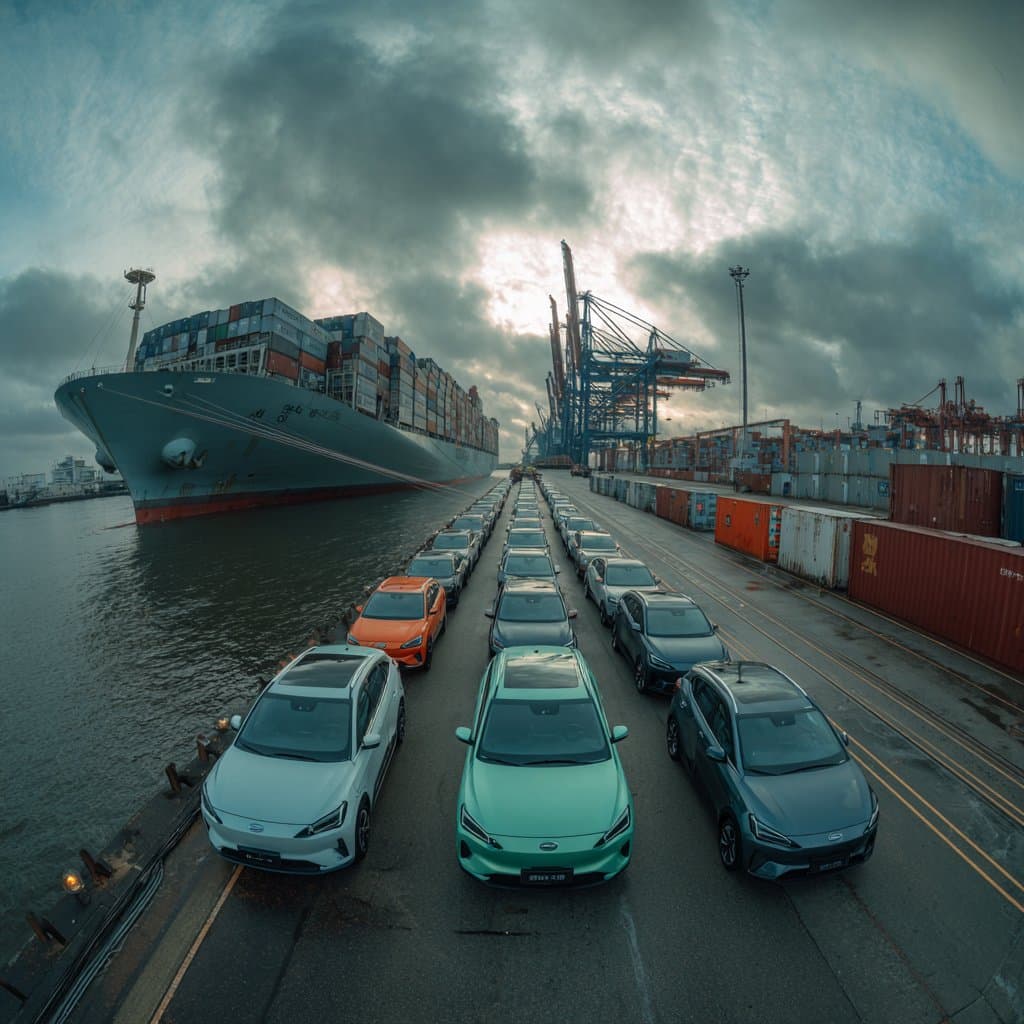
The numbers coming out of BYD's headquarters in Shenzhen are staggering. The Chinese automaker has declared it is “highly confident” it can sell 1.5 million new energy vehicles in overseas markets in 2026 — a target the company now believes it will exceed by 15%.
To put that in perspective, BYD sold about 4 million vehicles total in 2025. They're now projecting that more than half of their business could eventually come from outside China. The oil shock from the Middle East conflict has only accelerated this trajectory, making EVs more attractive to consumers worldwide as gas prices soar.
Even Thailand's Prime Minister has been spotted driving a BYD amid the country's surging gas prices. When a head of state becomes a walking advertisement for your brand, your marketing team can take the day off.
Why BYD is growing so fast
BYD's advantage isn't just that they make EVs. It's that they make nearly everything that goes into them.
Most automakers buy batteries from suppliers like LG, CATL, or Panasonic. BYD makes its own — their Blade Battery is one of the most respected in the industry for its safety and longevity. They also manufacture their own electric motors, power electronics, and semiconductors. This vertical integration means BYD controls its costs in a way that competitors simply cannot match.
The result is aggressive pricing. BYD's Seagull hatchback sells for around $10,000 in China. Their Dolphin compact starts under $15,000. Even their premium models — the Seal sedan, the Tang SUV — undercut European and American rivals by 20–40% while offering comparable or superior specifications.
In markets where BYD is able to sell — Europe, Southeast Asia, the Middle East, Latin America, Australia — they're growing rapidly. European sales of Chinese EVs rose again in Q1 2026, with BYD leading the charge. In Thailand, Indonesia, and Brazil, BYD has established assembly plants and dealer networks that are expanding monthly.
The American question
Here's where it gets complicated for US consumers. You can't buy a BYD car in America. Not because the cars aren't good enough, but because of politics.
The US currently imposes a 100% tariff on Chinese-made EVs — meaning a $25,000 BYD Seal would cost $50,000 by the time it cleared customs. That effectively blocks Chinese automakers from the American market.
Senator Bernie Moreno of Ohio has introduced legislation that would go even further, proposing to ban partnerships that could bring Chinese cars into America through third-party arrangements. The concern isn't just about trade — it's about data security, supply chain dependence, and protecting domestic manufacturing jobs.
But the pressure is building from the other direction. Stellantis — the parent company of Jeep, Dodge, Ram, and Chrysler — is in active talks with Chinese EV maker Leapmotor about potentially manufacturing Chinese-designed EVs at an idle Stellantis plant in Canada. If Chinese EVs can be built in Canada or Mexico and enter the US under existing trade agreements, the tariff wall could become porous.
What BYD makes — and why it matters
Even if BYD vehicles aren't available in America today, understanding what they offer helps contextualize the global EV market and where competition is heading.
BYD Seal — A midsize sedan that competes directly with the Tesla Model 3. Up to 390 miles of range, a 0–60 time under 4 seconds in the performance variant, starting around $25,000–$30,000 in markets where it's available.
BYD Dolphin — A compact hatchback aimed at first-time EV buyers. Around 250 miles of range and a price that starts under $20,000 in many markets. This is the type of affordable EV that doesn't exist in America yet.
BYD Atto 3 — A compact crossover positioned against the Hyundai Kona Electric and Volkswagen ID.4. Competitive range and pricing that undercuts both by a significant margin.
BYD Tang — A full-size three-row SUV with available AWD and over 300 miles of range. Competes with the Tesla Model X and Rivian R1S at a fraction of the price.
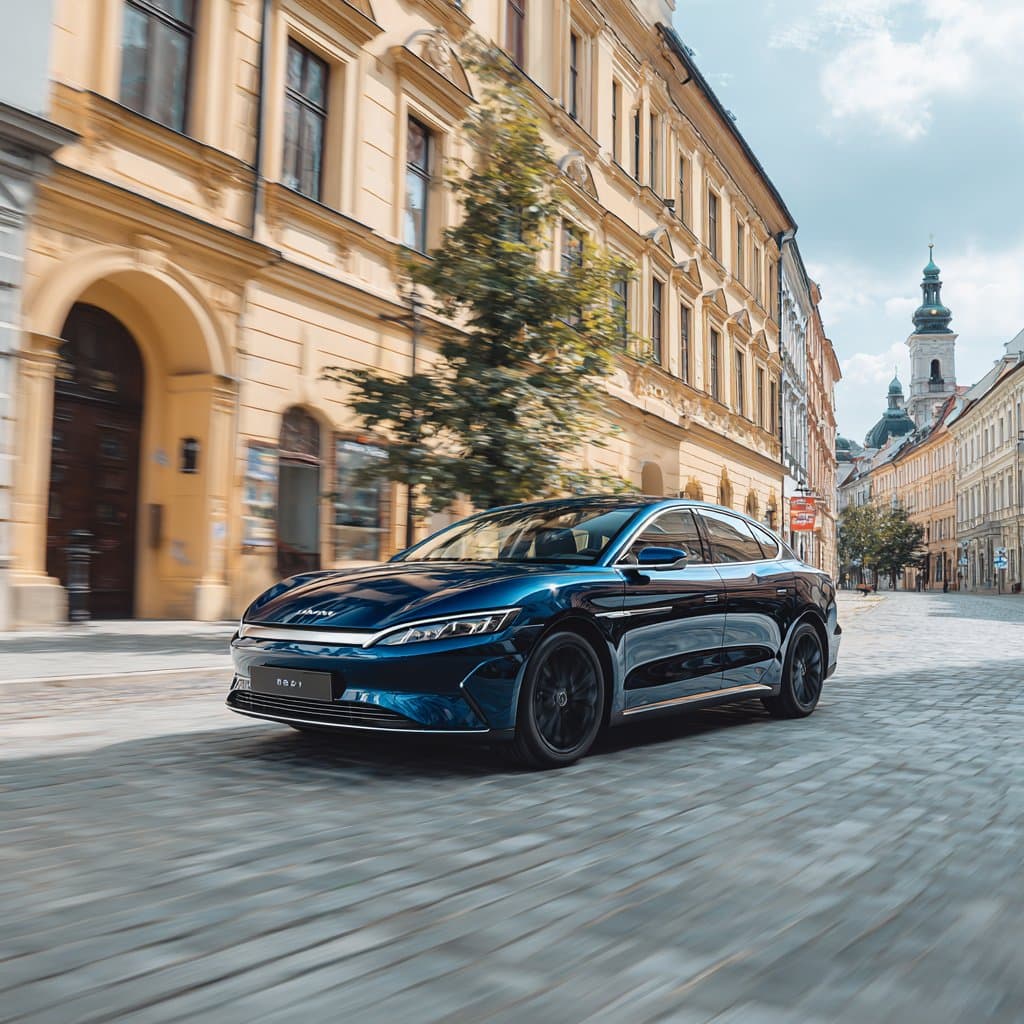
BYD Han — A luxury sedan that targets the Mercedes EQE and BMW i5 segment with premium features and pricing that's 30–40% lower.
The profit question
There is one cloud on BYD's horizon. Despite record sales volumes, BYD's profit per vehicle has been declining. The Chinese domestic EV market has become brutally competitive, with dozens of manufacturers engaged in a price war that's squeezing margins across the industry.
BYD's Q1 2026 profit figures showed the impact — growth in revenue but a slump in profitability that caught investors' attention. The company's stock took a hit on the news, even as export numbers continued to climb.
This is actually an important lesson for the entire EV industry. Selling lots of cars is only valuable if you can make money doing it. Tesla learned this lesson and has been raising prices and cutting costs. BYD is still in growth mode, prioritizing market share over margins, but the question of when (and whether) that strategy transitions to sustainable profitability remains open.
What this means for American buyers
Even though you can't buy a BYD in America, BYD's expansion is still relevant to US car buyers for several reasons.
Competition forces everyone to improve. The threat of Chinese EVs entering the US market is pushing American, European, Japanese, and Korean automakers to make their EVs better and cheaper. Toyota's aggressive bZ pricing, Hyundai's 800-volt architecture in affordable models, and GM's reborn Chevy Bolt all reflect competitive pressure that ultimately benefits consumers.
Global pricing sets expectations. When a BYD Dolphin sells for $18,000 in Europe and a comparable Chevy Bolt sells for $33,000 in America, it raises questions about why the price gap exists.
The tariff situation could change. Tariffs are policy decisions, and policies change with administrations, trade negotiations, and economic conditions. A future trade deal could open the US market to Chinese EVs. When that happens, the impact on pricing and competition would be dramatic.
The bigger picture
The global EV market is splitting into two distinct worlds. In China, Southeast Asia, and increasingly Europe, consumers have access to high-quality electric vehicles at prices that make the switch from gas cars economically obvious. In America, tariffs, domestic manufacturing requirements, and a different regulatory environment keep EV prices higher. BYD's march toward 1.5 million exports represents a fundamental shift in the automotive industry's power structure. Whether or not American consumers can buy a BYD, the ripple effects of their growth are shaping the EVs we can buy — making them better, more affordable, and more competitive than they would be without the pressure from Shenzhen.