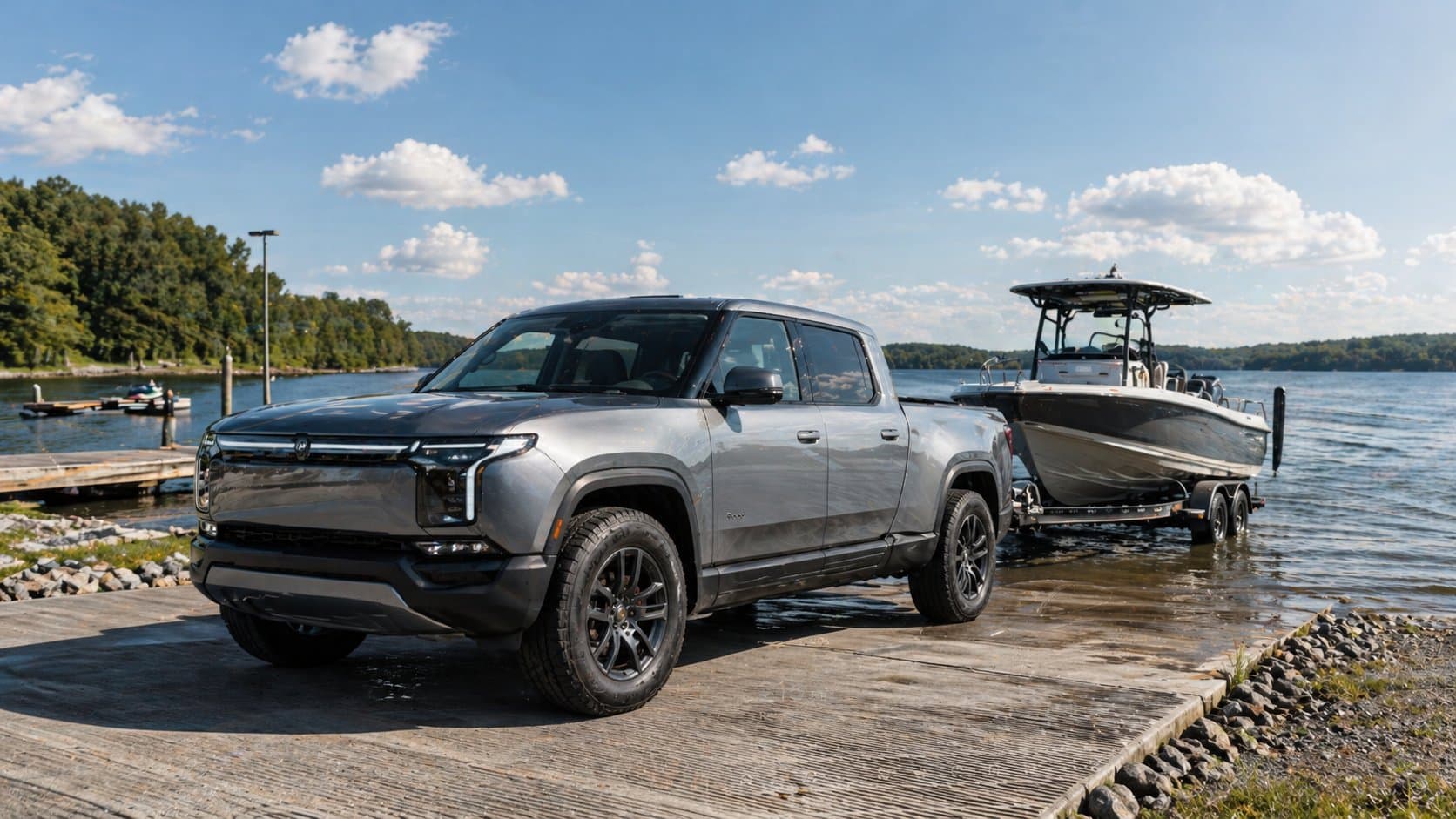
RV owners, boat haulers, and anyone who tows a vehicle behind a motorhome needs to know: can you flat tow an electric vehicle with all four wheels on the ground? The short answer for most EVs is no — and towing incorrectly can cause thousands of dollars in drivetrain damage. But there are exceptions, workarounds, and important details that every EV owner who tows (or gets towed) needs to understand.
Why Most EVs Cannot Be Flat Towed
In a gas car with a neutral transmission, the wheels can spin freely without engaging the engine. In most EVs, the electric motor is permanently connected to the drive wheels through a fixed-gear reduction — there is no neutral in the traditional sense. When the wheels turn, the motor turns. When the motor turns, it generates electricity through regenerative braking. This creates two problems.
First, the electricity generated by the spinning motor has nowhere productive to go if the vehicle's systems are powered down. This energy converts to heat in the motor and power electronics, potentially causing damage to the inverter, motor windings, or battery management system.
Second, the motor resistance creates drag that makes flat towing difficult and increases wear on the drivetrain components. Even in the EV's “neutral” or “transport” mode (if available), some motor engagement typically remains.
Which EVs CAN Be Flat Towed?
Very few production EVs are rated for flat towing by their manufacturer. As of 2026, the confirmed flat-towable EVs include the Rivian R1T and R1S (with Transport Mode enabled, which disconnects the motors from the wheels), the Ford F-150 Lightning (with specific procedures outlined in the owner's manual), and select configurations of the Jeep Wrangler 4xe plug-in hybrid (which has a traditional transfer case with a true neutral position).
Tesla vehicles — Model 3, Model Y, Model S, Model X — are explicitly NOT approved for flat towing. Tesla's owner's manuals state that flat towing can cause significant drivetrain damage. The same applies to all Hyundai/Kia E-GMP vehicles (Ioniq 5, Ioniq 6, EV6, EV9), all GM Ultium vehicles (Equinox EV, Blazer EV, Lyriq), and most other production EVs.
What Happens If You Flat Tow an EV That Is Not Rated for It
The consequences range from inconvenient to expensive. The regenerative braking system may engage unpredictably, creating sudden deceleration forces that stress the tow connection. The drive motors may overheat from continuous rotation without proper cooling (the cooling systems are designed for driving, not passive rotation). The power electronics (inverter, motor controller) may be damaged by uncontrolled electrical generation. And the battery management system may register fault codes that require dealer service to clear.
The repair costs for flat-tow damage typically range from $2,000 for software resets and motor controller replacement to $8,000–$15,000 for motor or inverter replacement. This damage is generally not covered under the vehicle's warranty because it results from operation outside manufacturer specifications.
Alternatives to Flat Towing
Flatbed Trailer
The safest way to transport any EV is on a flatbed trailer with all four wheels off the ground. The vehicle sits on the trailer with the parking brake engaged and wheels chocked. No drivetrain components rotate, no electrical generation occurs, and no damage risk exists. The downside is that a flatbed trailer capable of carrying a 4,500–5,500 pound EV costs $3,000–$8,000 to purchase and adds significant length to your towing combination.
Tow Dolly (Front Wheels Off Ground)
A tow dolly lifts the front wheels off the ground while the rear wheels roll on the pavement. For front-wheel-drive or all-wheel-drive EVs, this does not solve the problem — the rear motor (in AWD vehicles) or the front motor (if lifted) still has the opposite axle rolling and potentially generating electricity. Tow dollies are only safe for rear-wheel-drive EVs where the front wheels (non-driven) are the ones rolling — and even then, check your owner's manual for approval.
Drive It
If you are traveling to a campground or RV destination and your EV has sufficient range, simply driving it separately is the simplest solution. Many RV campgrounds now offer EV charging (Level 2 or even Level 1 outlets at RV hookups), allowing you to charge overnight at your destination.
For RV Owners: The Toad Problem
RV owners who tow a “toad” (a small vehicle towed behind the motorhome for local transportation at the destination) face the biggest challenge. The flat-towing convenience that makes gas-powered Jeep Wranglers and Honda CR-Vs popular toads does not transfer to most EVs. If you are an RV owner considering an EV as your toad vehicle, the Rivian R1S is currently the strongest option — it is approved for flat towing, has genuine off-road capability for campground access, and has enough range (316+ miles) to serve as a standalone vehicle at the destination. See more options on our EV deals page.
Roadside Assistance and Emergency Towing
If your EV runs out of battery or breaks down, the tow truck that arrives MUST use a flatbed — not a wheel-lift or hook-and-chain tow. Most major EV manufacturers include roadside assistance programs that dispatch flatbed trucks automatically, but if you call a generic tow service, specify that you need a flatbed for an electric vehicle. Wheel-lift towing (where the front or rear wheels are lifted and the other pair rolls) carries the same risks as flat towing for most EVs.
The Bottom Line
Most EVs cannot be flat towed — and towing one incorrectly can cause $2,000–$15,000 in drivetrain damage. If you need to tow your EV, use a flatbed trailer. If you are an RV owner who needs a flat-towable vehicle, the Rivian R1S and Ford F-150 Lightning are your current EV options — check our best electric trucks of 2026 guide for full comparisons. Always check your specific vehicle's owner's manual before any towing — the rules vary by model, model year, and drivetrain configuration. When in doubt, flatbed it. The cost of the trailer rental is always less than the cost of motor replacement.