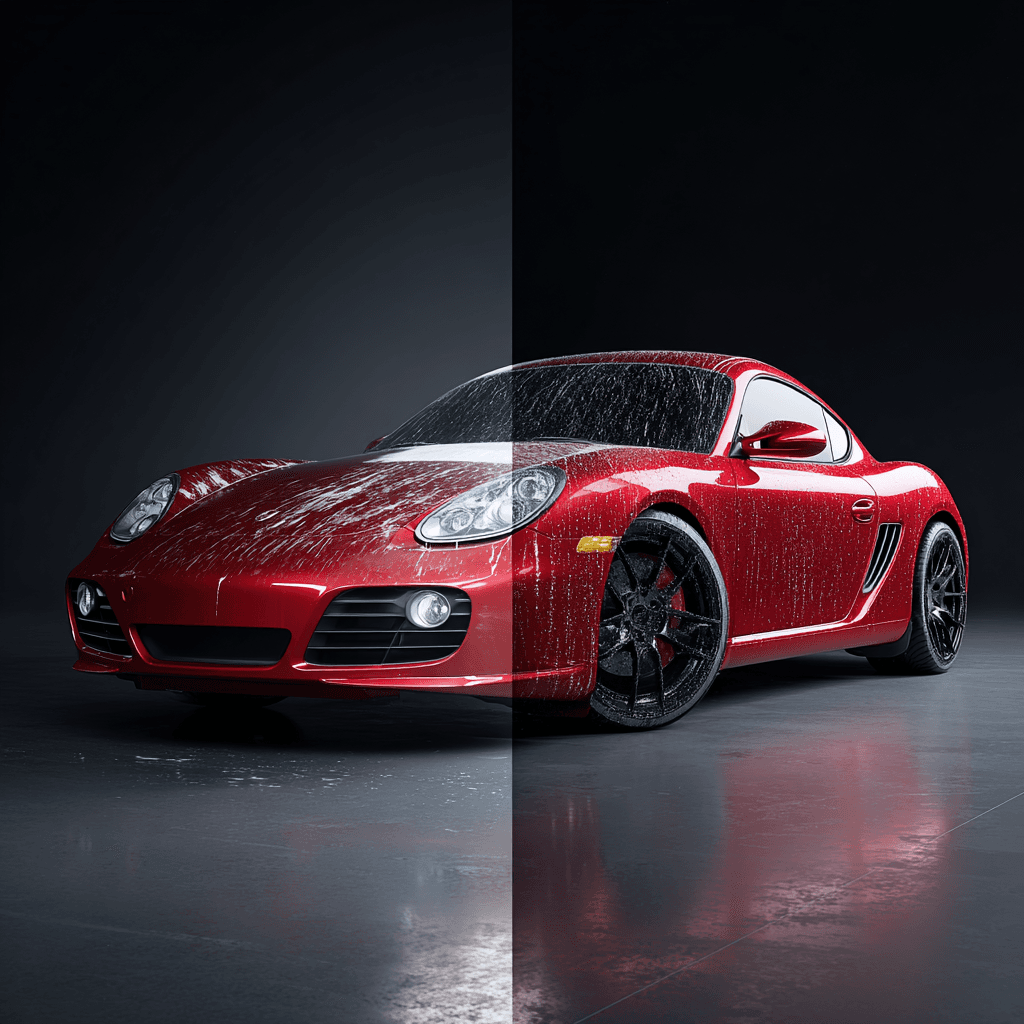
A custom car paint job transforms your vehicle into a one-of-a-kind machine. Whether you're restoring a classic, personalizing a daily driver, or building a show car, understanding how much a custom paint job costs and what the process involves helps you set the right expectations and budget.
Types of Custom Paint Jobs
Single-Stage Paint
Color and gloss in one layer. Simple, affordable, but less durable without a separate clear coat. Common for budget repaints and classic cars.
Basecoat / Clearcoat
Industry standard. Color is applied first, then protected with clear coat layers for gloss, depth, and UV protection.
Metallic & Pearl
Aluminum flakes (metallic) or mica particles (pearl) mixed into the base create a shimmering, multi-dimensional finish that changes in different lighting.
Color-Shift / Chameleon
Special pigments that change color depending on the viewing angle. Head-turning but expensive — the paint alone can cost $300+ per quart.
Candy Paint
A translucent color layer over a metallic base creates deep, rich, jewel-like colors. Popular in custom and lowrider culture. Requires expert application.
Custom Airbrush / Graphics
Hand-painted artwork, flames, murals, or graphics. The pinnacle of custom paint — completely unique to your vehicle.
Custom Paint Job Cost Breakdown
Basic Repaint (single color)
Standard prep, single-stage or base/clear, common color
High-Quality Repaint
Thorough prep, premium paint, base/clear, metallic options
Show-Quality Paint Job
Complete strip, bodywork, multiple coats, wet sand, buff
Custom Art / Full Custom
Airbrush artwork, multi-color, candy, color-shift
What Affects the Price
- •Vehicle size — A compact car requires less paint and labor than a full-size truck or SUV.
- •Color complexity — Solid colors cost less than metallics, pearls, and color-shift paints.
- •Paint quality — Premium paint brands (PPG, BASF, Axalta) cost more but offer better coverage, durability, and color accuracy.
- •Prep work needed — Rust repair, dent removal, and old paint stripping add significant cost.
- •Number of coats — More base and clear coat layers means better depth and durability but more labor and material.
- •Disassembly level — Removing trim, lights, bumpers, and hardware for a clean finish adds labor cost but produces superior results.
The Custom Paint Process
- 1.Disassembly — Trim, lights, bumpers, mirrors, and hardware are removed for clean paint edges.
- 2.Prep & Sanding — Old paint is sanded, rust is treated, and dents are repaired. The surface is made perfectly smooth.
- 3.Primer — Primer is applied and sanded smooth, creating the foundation for the color coat.
- 4.Base Coat — The color is applied in multiple thin, even layers in a climate-controlled paint booth.
- 5.Clear Coat — Multiple clear coat layers are applied for protection, depth, and gloss.
- 6.Wet Sand & Buff — After curing, the paint is wet-sanded and machine buffed to remove orange peel and achieve a mirror finish.
- 7.Reassembly — All parts are reinstalled and the vehicle is final-inspected.
How Long Does a Custom Paint Job Take?
Timeline varies dramatically based on complexity. A basic repaint can be completed in 3-5 days. A high-quality job with thorough prep takes 1-2 weeks. Show-quality and custom artwork paint jobs can take 3-6 weeks or longer. Rush jobs compromise quality — a good paint shop will give you an honest timeline and stick to it.
Protecting Your Custom Paint Job
After investing in custom auto paint, protect it properly:
- •Ceramic coating — Apply a professional ceramic coating to add UV protection, chemical resistance, and hydrophobic properties.
- •Paint protection film (PPF) — Apply clear film to high-impact areas like the front bumper, hood, and fenders.
- •Proper washing — Hand wash only using the two-bucket method. Never use automatic car washes.
- •Garage parking — UV exposure is the biggest enemy of paint longevity. Park indoors whenever possible.
Final Thoughts
A custom car paint job is a significant investment that transforms your vehicle's identity. Whether you're doing a clean factory-color respray or going all-out with a show-quality custom finish, the results are only as good as the shop you choose. Look for a facility with a proper paint booth, experienced painters, a strong portfolio, and a willingness to discuss every detail of the process.
Take the time to get it right — a quality custom paint job will bring you joy every time you see your car for years to come.