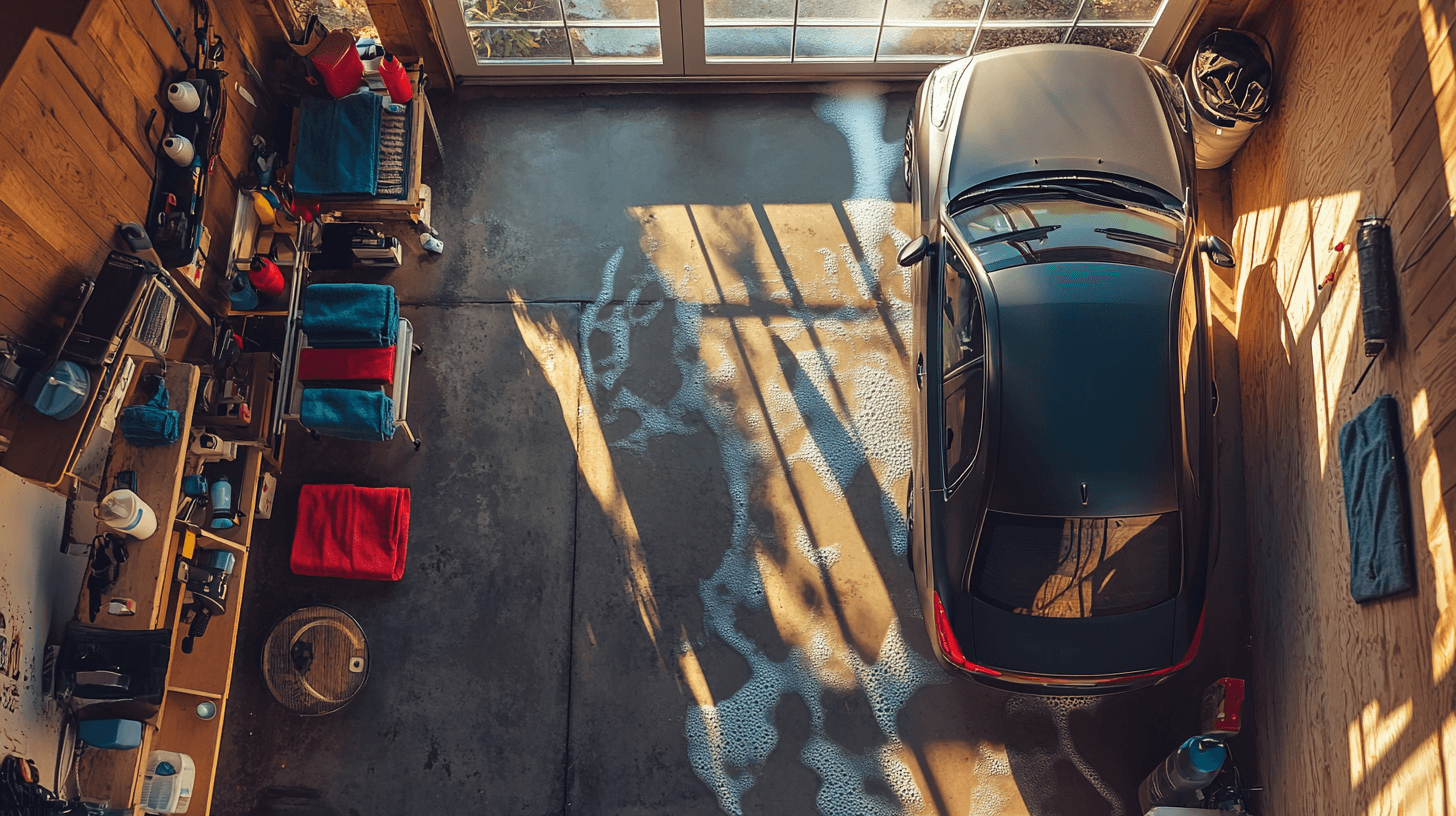
A professional detail costs $200 to $500+. But with the right products, tools, and technique, you can achieve 90% of the same results in your own driveway. This is a step-by-step walkthrough of a full exterior and interior detail — the same process pros use, adapted for home use.
What You'll Need
Exterior
- • Two buckets + grit guards
- • pH-neutral car wash soap
- • Microfiber wash mitt
- • Foam cannon (optional but recommended)
- • Clay bar or clay mitt
- • Iron remover spray
- • Dual-action polisher (optional)
- • Polishing compound + finishing polish
- • Spray sealant or ceramic booster
- • 6-8 clean microfiber towels
- • Wheel cleaner + wheel brush
- • Tire dressing
- • Glass cleaner
Interior
- • Vacuum with attachments
- • Interior cleaner (all-purpose)
- • Leather cleaner + conditioner (if applicable)
- • Interior detailing brushes
- • Microfiber towels for interior
- • Glass cleaner (interior-safe)
- • UV protectant for dashboard/trim
- • Carpet/upholstery cleaner
Total startup cost: $100 - $200 for products that will last 10+ details
Step 1: Wheels First
Always start with the dirtiest part of the car. Cleaning wheels last means splashing brake dust and road grime onto panels you already washed.
- 1.Spray wheel cleaner on one wheel at a time. Let it dwell for 30-60 seconds (follow product instructions).
- 2.Scrub the face, barrels, and lug nut holes with a dedicated wheel brush. Use a smaller brush for tight spoke areas.
- 3.Rinse thoroughly before moving to the next wheel.
- 4.Clean the tire sidewall with all-purpose cleaner and a stiff brush.
Step 2: Pre-Wash / Foam Soak
The pre-wash loosens dirt and debris before you physically touch the paint. This step prevents the majority of wash-induced scratches.
- 1.Rinse the entire car with a strong stream of water to remove loose dirt.
- 2.If you have a foam cannon, apply a thick layer of snow foam and let it dwell for 3-5 minutes. The foam encapsulates dirt particles and lifts them off the paint.
- 3.Rinse off the foam completely before contact washing.
Step 3: Contact Wash (Two-Bucket Method)
- 1.Bucket 1: Fill with water and car wash soap per dilution instructions. Drop in a grit guard.
- 2.Bucket 2: Fill with clean water only. Drop in a grit guard.
- 3.Load your wash mitt from the soap bucket. Wash one panel at a time, starting from the top (roof) and working down. Top panels are cleanest; bottom panels have the most road grime.
- 4.After each panel, rinse your mitt in the clean water bucket, agitate it against the grit guard to release trapped dirt, then reload from the soap bucket.
- 5.Use straight-line motions, not circles. This is safer for the paint and reduces swirl marks.
Step 4: Decontamination
After washing, your paint may still have embedded contaminants (iron particles, industrial fallout, tree sap) that washing can't remove. This step is optional for every wash but should be done every 3-6 months.
- 1.Iron remover: Spray onto wet paint. Wait 2-3 minutes — you'll see purple/red bleeding as it dissolves iron particles. Rinse off.
- 2.Clay bar: Lubricate a small section with clay lube or soapy water. Gently glide the clay bar across the surface. You'll feel it grab contaminants — when it glides smoothly, that panel is clean.
- 3.Rinse and dry the car completely before the next step.
Step 5: Polish (Optional)
Polishing removes light swirl marks and scratches from the clear coat, restoring a deep, reflective finish. This is where a dual-action polisher makes a huge difference over hand polishing.
- •For beginners: Use a dual-action (DA) polisher with a medium-cut polishing pad and an all-in-one polish. DA polishers are safe for beginners — they oscillate rather than spin, making it nearly impossible to burn through paint.
- •Technique: Apply 3-4 pea-sized dots of polish to the pad. Work a 2x2 foot section at a time at medium speed. Make 3-4 slow passes, then wipe off with a clean microfiber.
- •Skip if: Your car has ceramic coating (polishing removes it) or PPF (polishing damages the film).
Step 6: Protect
After washing (and optionally polishing), apply protection to lock in the finish:
- •Spray sealant: The easiest option. Spray onto each panel after drying, wipe with a clean microfiber. Lasts 2-4 months. Cost: $12 - $25.
- •Ceramic booster: If you have an existing ceramic coating, use the manufacturer's recommended booster spray. Refreshes the hydrophobic layer.
- •Traditional wax: Apply with a foam applicator, let it haze, then buff off with a microfiber. More labor-intensive but provides a warm, deep glow. Lasts 1-3 months.
Step 7: Glass
- 1.Use automotive glass cleaner (not household Windex — it contains ammonia that can damage tint).
- 2.Spray onto a waffle-weave microfiber towel, not directly on the glass. This prevents overspray on freshly protected paint.
- 3.Wipe in straight lines, not circles. Use one side of the towel to clean, flip to the dry side to buff streak-free.
- 4.For the interior windshield, reach with a clean microfiber on an extension tool to avoid body oil and fingerprint smudges.
Step 8: Tires
Apply tire dressing to clean, dry tire sidewalls. Use a foam applicator pad for even coverage. Choose a water-based dressing for a natural satin finish, or solvent-based for a high-gloss wet look. Apply thin coats — thick application slings product onto your paint when you drive.
Step 9: Interior
- 1.Remove everything: Floor mats, trash, personal items. Shake out and vacuum the mats separately.
- 2.Vacuum thoroughly: Seats, carpets, between seats, door pockets, trunk. Use crevice tools for tight areas around the console and seat rails.
- 3.Wipe hard surfaces: Dashboard, center console, door panels, steering wheel — use an interior all-purpose cleaner with a microfiber. For textured surfaces, use a soft detailing brush to agitate dirt from the grain.
- 4.Leather care: Clean with a dedicated leather cleaner, then apply leather conditioner. This prevents cracking and keeps the leather supple.
- 5.UV protectant: Apply to the dashboard, door trim, and any plastic surfaces that receive direct sunlight. This prevents fading and cracking.
- 6.Interior glass: Clean all windows from the inside with ammonia-free glass cleaner.
Final Thoughts
A full detail at home takes 2-4 hours the first time. Once you have a routine, maintenance washes take 30-45 minutes. The key is doing it consistently — a well-maintained car that's detailed monthly at home will look better than one that gets a professional detail twice a year.
Start with the basics (wash, dry, protect) and add steps like clay barring and polishing as you get comfortable. The results compound over time — each detail builds on the last.