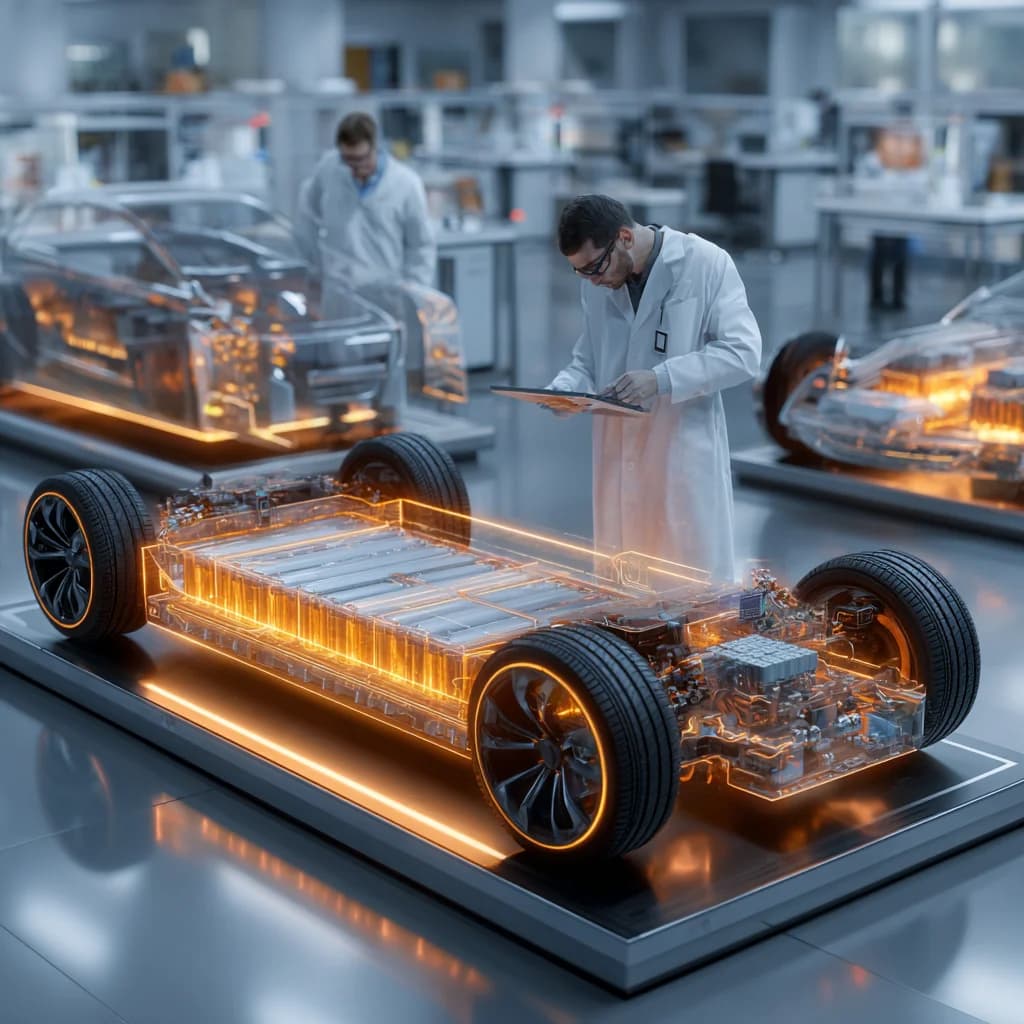
The electric vehicle revolution is fundamentally a battery revolution. As we move through 2026, EV battery technology 2026 advancements are reshaping what's possible for electric transportation. From solid state batteries electric cars to revolutionary anode materials, the innovations emerging this year will define the next decade of electric mobility. Understanding new electric car battery innovations helps consumers make informed decisions and appreciate the remarkable engineering behind modern EVs.
The Current State of EV Batteries
Before exploring what's coming, it's important to understand where we are today. The dominant battery chemistry in electric vehicles remains lithium-ion, specifically variations using nickel-manganese-cobalt (NMC) or lithium-iron-phosphate (LFP) cathodes. These batteries have improved dramatically over the past decade, with energy density increasing approximately 7% annually while costs have dropped over 90% since 2010.
Current flagship EVs typically offer 300-400 miles of range, with charging speeds reaching 200-350 kW at peak. For many consumers wondering how long do EV batteries last, the answer has become increasingly reassuring: most manufacturers now warranty batteries for 8-10 years or 100,000-150,000 miles, and real-world data shows many batteries retaining 80%+ capacity well beyond these thresholds.
However, significant challenges remain. Charging times still can't match the five-minute fill-up experience of gasoline vehicles. Cold weather substantially impacts range. And while batteries are more affordable than ever, they remain the most expensive component in electric vehicles. The technologies emerging in 2026 address each of these limitations.
Solid-State Batteries: The Game Changer
The most anticipated advancement in future of electric vehicle batteries is the transition from liquid electrolyte to solid-state technology. Unlike conventional lithium-ion batteries that use a liquid or gel electrolyte to facilitate ion movement between electrodes, solid-state batteries employ a solid electrolyte material that offers multiple advantages.
Why Solid-State Matters
- →Higher Energy Density – Solid-state batteries can pack 50-100% more energy into the same physical space, potentially doubling vehicle range without increasing battery size or weight.
- →Faster Charging – The solid electrolyte enables faster ion transport, potentially allowing 10-80% charging in under 15 minutes without degrading the battery.
- →Improved Safety – Without flammable liquid electrolyte, solid-state batteries are inherently safer and less prone to thermal runaway events.
- →Longer Lifespan – Early testing suggests solid-state batteries may endure more charge cycles with less degradation than current technology.
- →Better Cold Weather Performance – Solid electrolytes maintain functionality at lower temperatures, addressing a key limitation of current EVs.
2026 Solid-State Developments
Toyota has been the most aggressive in solid-state development, announcing plans to begin limited production in their 2026 models. Their partnership with Idemitsu Kosan has produced a sulfide-based solid electrolyte that reportedly achieves 1,200 km (745 miles) range and 10-minute charging. While initial volumes will be limited to luxury models, this represents a commercial breakthrough after decades of laboratory development.
Samsung SDI has developed a solid-state battery demonstrating 900 Wh/L energy density—roughly double current lithium-ion technology—with plans for automotive applications beginning in late 2026. Their approach uses a silver-carbon composite anode layer that addresses the dendrite formation problem that has historically plagued solid-state batteries.
QuantumScape, the solid-state startup backed by Volkswagen, has moved from prototype to pre-production status. Their ceramic separator technology has demonstrated 800+ charge cycles with minimal degradation, and Volkswagen plans to incorporate these batteries into select ID. series vehicles beginning in 2026.
Silicon Anode Revolution
While solid-state batteries capture headlines, silicon anode technology represents a more immediately impactful new electric car battery innovations trend. Traditional lithium-ion batteries use graphite anodes, but silicon can theoretically store 10 times more lithium ions per gram. The challenge has been that silicon expands dramatically during charging—up to 300%—causing mechanical failure.
In 2026, several companies have solved this expansion problem through innovative engineering approaches. Sila Nanotechnologies has commercialized a silicon-dominant anode that replaces graphite entirely, achieving 20% higher energy density in production batteries now shipping to automotive customers. Their technology uses a nanocomposite structure that accommodates silicon's expansion without degradation.
Mercedes-Benz has announced that their upcoming EQS and EQE refreshes will feature Sila's technology, adding approximately 60 miles of range without increasing battery pack size. This demonstrates how silicon anodes can improve existing vehicles through relatively straightforward battery upgrades.
Group14 Technologies has taken a different approach, creating a silicon-carbon composite that can drop into existing battery manufacturing lines. This compatibility makes adoption easier for automakers, and several Chinese manufacturers have already integrated Group14's material into their 2026 model year vehicles.
Lithium-Iron-Phosphate Advances
Not all battery innovation focuses on premium segments. Lithium-iron-phosphate (LFP) batteries have traditionally offered lower energy density than NMC alternatives but excel in cost, safety, and longevity. In 2026, LFP technology is experiencing a renaissance that's making affordable EVs more practical than ever.
CATL's M3P chemistry—a manganese-enhanced LFP formulation—bridges the gap between LFP's advantages and NMC's energy density. Vehicles using M3P batteries can achieve 400+ mile range while maintaining the 2,000+ cycle life that makes LFP attractive for commercial applications.
BYD's Blade Battery technology continues evolving, with their 2026 formulation demonstrating improved low-temperature performance that historically limited LFP adoption in northern climates. Their cell-to-pack integration strategy eliminates modules entirely, improving space efficiency by 50% compared to traditional pack designs.
Tesla has expanded LFP usage across their lineup, with the Model 3 and Model Y standard range variants now achieving comparable efficiency to earlier NMC versions while offering superior longevity. Their partnership with CATL and BYD ensures supply chain stability that has proven crucial during industry-wide battery shortages.
Sodium-Ion Batteries Enter the Market
Perhaps the most exciting development for affordable electric transportation is the commercial arrival of sodium-ion batteries. Sodium is thousands of times more abundant than lithium and can be sourced domestically in most countries, eliminating supply chain vulnerabilities and reducing costs significantly.
CATL's first-generation sodium-ion batteries are now powering entry-level EVs in China, with energy density reaching 160 Wh/kg—sufficient for urban vehicles with 150-200 mile range. While this doesn't compete with premium lithium-ion for range-focused applications, it opens the door to genuinely affordable electric vehicles.
The technology shines in cold weather performance, maintaining 90% capacity at -20°C compared to 70-80% for lithium-ion batteries. This makes sodium-ion particularly attractive for northern markets and commercial applications where vehicles operate in challenging conditions.
Multiple startups are developing sodium-ion technology for the Western market, with Natron Energy, Faradion, and Altris all planning commercial production beginning in 2026. Industry analysts predict sodium-ion will capture 10-15% of the EV battery market by 2030, primarily in the sub-$30,000 vehicle segment.
Battery Management System Intelligence
Beyond chemistry improvements, EV battery technology 2026 includes dramatic advances in how batteries are managed. Modern battery management systems (BMS) use machine learning to optimize charging, extend lifespan, and maximize range based on individual driving patterns.
Tesla's latest BMS update includes predictive preconditioning that analyzes driving habits and automatically warms the battery before anticipated fast charging stops. This seemingly simple feature can reduce charging time by 20-30% by ensuring the battery is at optimal temperature when you arrive at a charger.
BMW's adaptive charging algorithm learns when you typically leave home and adjusts charging to complete just before departure, minimizing time spent at 100% state of charge which accelerates degradation. The system also recognizes when you're departing for a long trip and charges to higher levels automatically.
These software improvements are often delivered via over-the-air updates, meaning existing vehicles benefit from battery management advances without hardware changes. For consumers asking how long do EV batteries last, these intelligent management systems are extending real-world longevity beyond original expectations.
Charging Technology Synergies
Battery technology doesn't exist in isolation—it evolves alongside charging infrastructure. The newest batteries are designed specifically to handle faster charging without degradation, and charging networks are scaling to match these capabilities.
The 800-volt electrical architecture pioneered by Porsche in the Taycan is becoming standard across premium EVs. This higher voltage enables 350 kW charging that can add 200 miles of range in approximately 15 minutes. Combined with batteries optimized for high-power input, the charging experience increasingly rivals traditional refueling.
Hyundai and Kia's E-GMP platform, now in its second generation, demonstrates this synergy perfectly. The 2026 Ioniq 6 and EV6 updates feature batteries capable of consistent 350 kW charging through 80% state of charge, compared to previous versions that tapered significantly after 50%.
Sustainability and Second Life Applications
The future of electric vehicle batteries extends beyond automotive use. EV batteries that no longer meet demanding vehicle requirements often retain 70-80% of original capacity, making them valuable for stationary storage applications.
In 2026, every major automaker has established battery recycling and second-life programs. BMW's partnership with American Electric Power repurposes retired i3 batteries for grid stabilization. Nissan's xStorage program has deployed over 1,000 second-life Leaf battery systems for residential and commercial energy storage.
Recycling technology has advanced dramatically, with Redwood Materials achieving 95%+ recovery rates for lithium, nickel, and cobalt. This closed-loop approach addresses sustainability concerns and reduces dependence on mining for raw materials.
European regulations requiring battery passports, which track battery composition and lifecycle data, are driving transparency and accountability throughout the supply chain. Consumers can increasingly verify that their EV batteries are produced sustainably and will be responsibly recycled.
What This Means for Consumers
For prospective EV buyers, these battery advances translate into tangible benefits. Range anxiety is becoming irrelevant as even affordable EVs exceed 300 miles between charges. Charging times continue shrinking toward the convenience of traditional refueling. And battery longevity data increasingly shows that replacement concerns are overblown.
The question of whether to wait for next-generation technology is common but often misguided. Current EVs already meet most drivers' needs, and software updates continuously improve existing vehicles. Solid-state and other advanced technologies will enhance the experience further, but today's EVs represent mature, practical transportation.
The pace of battery innovation shows no signs of slowing. What seemed impossible a decade ago is now production reality, and laboratory breakthroughs suggest even more dramatic improvements ahead. Whether you choose to buy now or wait, the EV battery technology 2026 landscape confirms that electric vehicles have definitively crossed the threshold from early adopter curiosity to mainstream transportation solution.