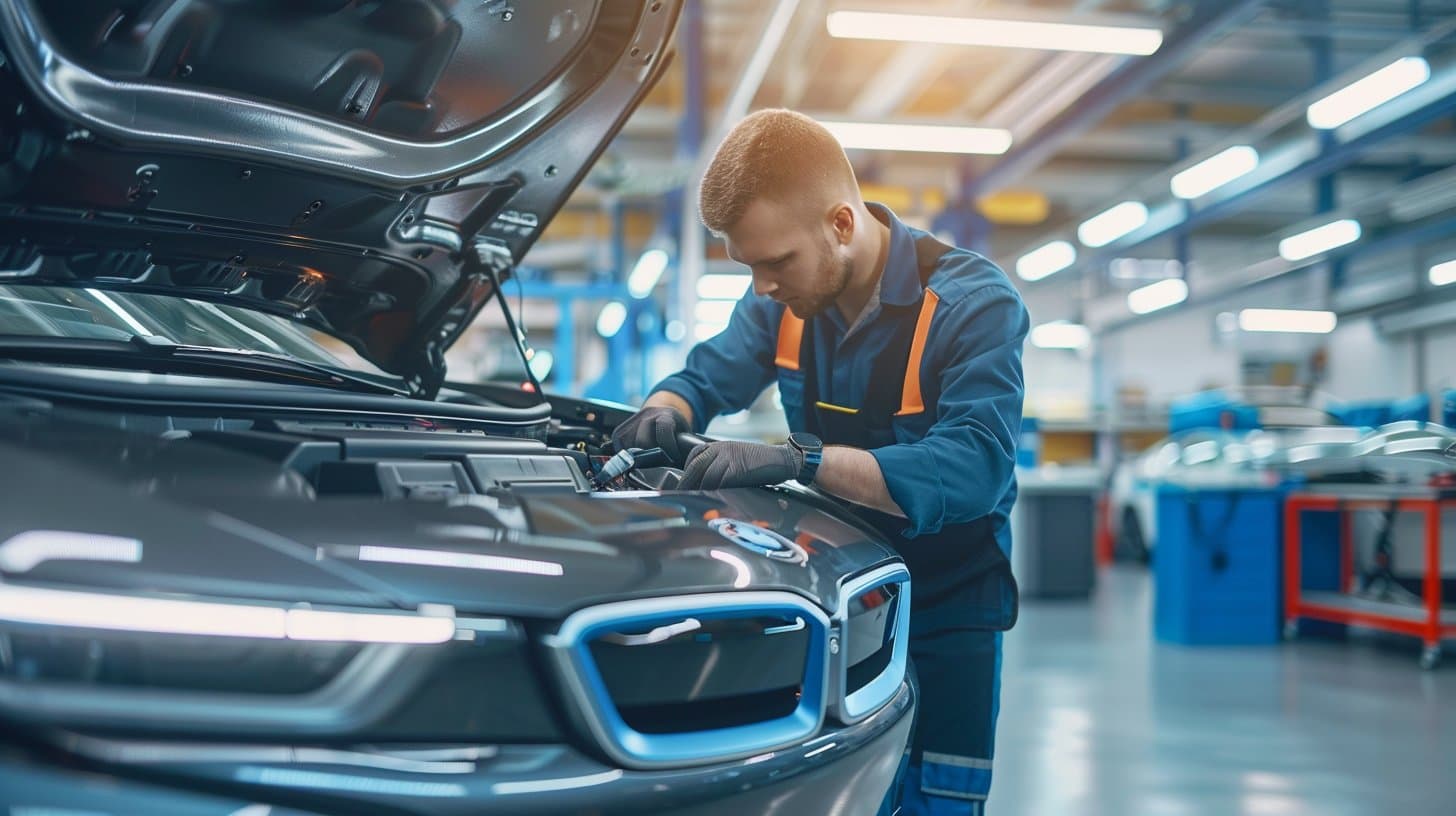
One of the biggest selling points of electric vehicles is lower maintenance costs — but how much lower, and what exactly do you still need to service? The honest answer: EVs eliminate about 60% of the maintenance items on a gas car, but they're not maintenance-free. This EV maintenance guide for 2026 covers everything you actually need to do, what you can skip entirely, real costs from real owners, and a year-by-year maintenance schedule so you know exactly what to expect.
What EVs Don't Have (and Never Need)
Let's start with the maintenance items that simply don't exist on an electric vehicle. These are costs and headaches you'll never deal with again:
- No oil changes — EVs have no engine, no oil, no filter. Save $200–$400 per year.
- No transmission service — EVs use a single-speed reduction gear. No fluid changes, no rebuild risk. Save $150–$300 per service.
- No spark plugs — electric motors don't use combustion. Save $200–$400 every 60,000 miles.
- No timing belt/chain — no engine means no timing components. Save $500–$1,000 at replacement intervals.
- No exhaust system — no catalytic converter theft risk, no muffler replacement, no exhaust manifold gaskets.
- No radiator hoses or water pump — EVs have thermal management systems but no traditional cooling circuit failures.
- No alternator or starter motor — two common failure points eliminated.
- No fuel injectors, fuel pump, or fuel filter — no fuel system at all.
- No emission system — no EGR valve, no oxygen sensors, no catalytic converter, no emissions testing.
A typical gas car has over 2,000 moving parts. An EV has fewer than 200. Fewer parts means fewer things that can break, fewer scheduled maintenance items, and fewer unexpected repair bills.
What EVs Still Need: The Complete List
1. Tires — Your Biggest Ongoing Expense
Frequency: Every 25,000–35,000 miles | Cost: $600–$1,200 per set
Tires are the single biggest maintenance cost on an EV. Electric vehicles are heavier than gas cars (due to the battery), and the instant torque wears tires faster. EV-specific tires are designed for higher load ratings and lower rolling resistance, but they cost 10–20% more than standard tires. Expect to replace tires every 25,000–35,000 miles compared to 40,000–50,000 for a gas car.
Pro tip: Rotate your tires every 5,000–7,500 miles to maximize lifespan. This is the single most impactful maintenance item for extending tire life. Many EV owners do rotations at 6,000-mile intervals and get 35,000+ miles from a set.
2. Cabin Air Filter
Frequency: Every 12–24 months | Cost: $20–$50 (DIY) or $50–$100 (dealer)
Every EV uses a cabin air filter to clean the air entering the passenger compartment. In Florida, where humidity and pollen are constant, replacing this filter annually is recommended. Many EV cabin filters include a HEPA or activated charcoal layer. Tesla uses a “Bioweapon Defense Mode” HEPA filter that's slightly more expensive but cleans air exceptionally well. Most cabin air filters can be replaced in 10 minutes with no tools — YouTube tutorials exist for every model.
3. Brake Fluid
Frequency: Every 2–4 years | Cost: $80–$150
EVs still have hydraulic brakes, and brake fluid absorbs moisture over time, reducing braking performance. Most manufacturers recommend replacing brake fluid every 2–4 years regardless of mileage. Tesla recommends checking every 2 years and replacing as needed. This is one service best left to a professional, as improper brake bleeding can compromise safety.
4. Brake Pads and Rotors — The Pleasant Surprise
Frequency: Every 100,000–200,000+ miles | Cost: $300–$600 when needed
This is one of the most surprising benefits of EV ownership. Thanks to regenerative braking (the motor slows the car and captures energy when you lift off the accelerator), the physical brake pads are used far less than in a gas car. Many EV owners report original brake pads lasting 150,000–200,000+ miles. Some Tesla owners with over 200,000 miles have never replaced brake pads. In a gas car, brake pads typically last 30,000–50,000 miles — a massive difference.
Florida-specific note: In humid climates, brake rotors can develop surface rust from infrequent use. Use your physical brakes periodically (at least once per week in normal driving) to keep rotors clean. Some EV owners in Florida schedule a monthly “brake cleaning drive” where they use physical brakes more aggressively to scrub rust off the rotors.
5. Windshield Washer Fluid
Frequency: As needed | Cost: $5–$10
Yes, this makes the list because it's literally one of the few fluids in an EV. Top up when the indicator light comes on. In Florida, you'll use more washer fluid due to bug splatter and pollen, especially during love bug season (April–May and August–September).
6. Battery Coolant
Frequency: Every 4–6 years or 50,000–100,000 miles | Cost: $150–$300
EVs use a liquid cooling system for the battery pack and power electronics. This coolant degrades over time and needs periodic replacement. Tesla recommends checking at 4 years, Hyundai/Kia at 6 years. This is a dealer/service center job — it requires specialized equipment to properly bleed the cooling circuit.
7. 12V Battery
Frequency: Every 3–5 years | Cost: $100–$300
Every EV still has a small 12V battery that powers accessories, locks, and the computer system that wakes the main battery. This 12V battery needs replacement every 3–5 years, just like in a gas car. Some newer EVs (Tesla Model 3/Y 2024+) use lithium-ion 12V batteries that last longer but cost more to replace ($200–$300 vs $100–$150 for lead-acid).
Annual Maintenance Cost Comparison
| Item | Gas Car (Annual) | EV (Annual) |
|---|---|---|
| Oil changes | $200–$400 | $0 |
| Transmission service | $75 (amortized) | $0 |
| Brake pads | $150 (amortized) | $15 (amortized) |
| Tires | $250 (amortized) | $350 (amortized) |
| Cabin air filter | $35 | $35 |
| Spark plugs, belts, hoses | $100 (amortized) | $0 |
| Brake fluid | $40 (amortized) | $40 (amortized) |
| Coolant | $50 (amortized) | $50 (amortized) |
| Total Annual | $900–$1,100 | $490–$590 |
| Annual Savings | $410–$510 |
Year-by-Year EV Maintenance Schedule
Every 6 months or 5,000–7,500 miles: Tire rotation ($25–$50 or free with tire purchase)
Year 1: Tire rotation x2, cabin air filter. Total: ~$100
Year 2: Tire rotation x2, cabin air filter, brake fluid check. Total: ~$150
Year 3: Tire rotation x2, cabin air filter, first tire replacement (if high mileage). Total: ~$100–$1,000
Year 4: Tire rotation x2, cabin air filter, brake fluid replacement, battery coolant check, 12V battery check. Total: ~$250
Year 5: Tire rotation x2, cabin air filter, second tire replacement, 12V battery replacement. Total: ~$1,100–$1,500
Florida-Specific Maintenance Tips
- Heat and battery care: Florida heat accelerates battery degradation. Park in shade when possible, avoid charging to 100% for daily use (80% is ideal), and avoid leaving your EV parked in direct sun with a very low battery state for extended periods.
- Salt air corrosion: If you live near the coast, rinse the undercarriage monthly to prevent corrosion on non-battery components (suspension, brake calipers, hardware).
- AC system care: Florida EVs run AC heavily. The cabin AC system uses a compressor that's separate from the battery cooling. Have the refrigerant level checked every 2–3 years to maintain cooling efficiency.
- Hurricane preparedness: Keep your EV charged above 80% during hurricane season (June–November). A fully charged EV battery can serve as emergency power for essential devices.
The Bottom Line
EVs are dramatically cheaper to maintain than gas cars — roughly $400–$500 less per year. Over a 10-year ownership period, that's $4,000–$5,000 in savings on maintenance alone, on top of $15,000–$25,000 in fuel savings. The maintenance that does exist is simple: tire rotations, cabin filters, brake fluid, and the occasional coolant change. No oil, no transmission, no spark plugs, no exhaust — just the basics.
Ready to start saving on both fuel and maintenance? Browse our EV deals page for current pricing, or use our EV Match & Savings Hub to calculate your total cost of ownership including maintenance savings.