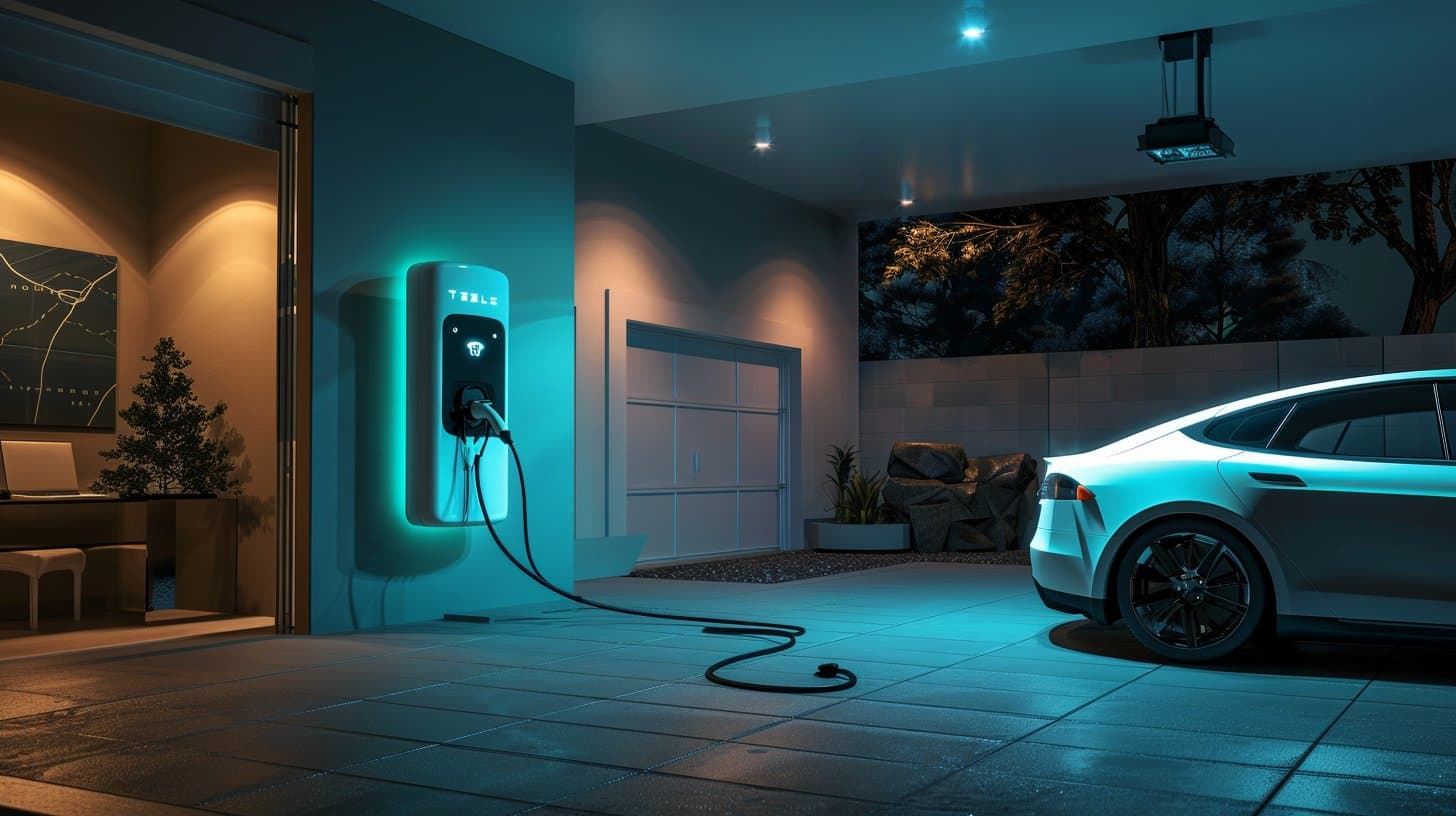
If there's one thing that makes owning an EV genuinely easy, it's home charging. The ability to wake up every morning with a full “tank” — without ever visiting a gas station — is one of the most-loved aspects of EV ownership among long-time drivers.
But if you're new to the world of electric vehicles, the terminology around home charging can feel a little overwhelming. Level 1, Level 2, amps, kWh, EVSE — what does any of it mean, and what do you actually need?
This guide breaks it all down simply.
Level 1 Charging: The Slow but Free Option
Every EV comes with a Level 1 charging cable in the box. This cable plugs into a standard 120V household outlet — the same kind you use for a lamp or phone charger — and requires absolutely no installation.
What you get: approximately 3–5 miles of range per hour of charging.
For most drivers, that means a fully depleted battery could take 40–60 hours to completely replenish from empty. That sounds alarming, but in practice it rarely matters. If you're driving 30–40 miles per day and plugging in overnight for 8 hours, you're typically adding 30–40 miles — which covers most people's daily needs just fine.
Who Level 1 works for: Drivers with short commutes (under 30 miles daily) who can charge overnight. It's also a great backup option for anyone who gets a Level 2 charger but occasionally needs to charge somewhere without one.
Who Level 1 doesn't work for: Anyone with a longer commute, a bigger battery vehicle, or who frequently needs a full charge by morning.
Level 2 Charging: The Right Answer for Most EV Owners
Level 2 charging uses a 240V circuit — the same type used for electric dryers and ovens — and delivers 20–30 miles of range per hour of charging. That means most EVs go from near-empty to full overnight with hours to spare.
This is what the vast majority of EV owners install, and once you have it, charging becomes completely effortless.
What you need: A 240V circuit installed in your garage or near your parking spot, and an EVSE (Electric Vehicle Supply Equipment) — commonly called a “home charger” or “wall box.”
How to Get a Level 2 Charger Installed
Step 1: Check Your Electrical Panel
Most Florida homes have a 200-amp electrical panel — sufficient to support a Level 2 charger without an upgrade. Your electrician will assess whether you have a free 40–50 amp breaker slot available. If your panel is older or already near capacity, a panel upgrade may be needed, which adds to the cost.
Step 2: Find a Licensed Electrician
This is not a DIY job. You need a licensed electrician who is familiar with EV charger installations. Good ways to find one:
- Ask your EV dealer — many have preferred installer referrals
- Search for EVITP-certified electricians (Electric Vehicle Infrastructure Training Program)
- Use platforms like Angi or HomeAdvisor to find local licensed electricians and read reviews
- Some charger manufacturers (ChargePoint, Wallbox) have their own installer networks
In Central Florida (Orlando, Tampa, Jacksonville areas), installation typically takes 2–4 hours once the electrician is on-site.
Step 3: Get Multiple Quotes
Installation costs in Florida typically range from $500 to $1,500, depending on:
- Distance from your electrical panel to the installation location
- Whether a conduit run through walls or outside is needed
- Local permit fees (usually $50–$150)
- Whether any panel work is required
Always get at least two quotes.
The 30% Federal Tax Credit for Home Charger Installation
Here's money most people don't know about: the federal government offers a 30% tax credit on the cost of your home EV charger AND its installation, up to $1,000.
So if you spend $1,200 on the charger unit and $800 on installation ($2,000 total), you'd get $600 back as a tax credit.
This credit is claimed on IRS Form 8911 when you file your taxes. It applies to both new and used EV purchases, and to charger installations at your primary residence.
The Best Home EV Chargers in 2026
1. ChargePoint Home Flex — Best Overall
Price: ~$699 | Max output: 50 amps / 37 miles per hour
The ChargePoint Home Flex is the most popular home EV charger in the US for good reason. It's adjustable (you can set it to whatever amperage your circuit supports), works with every EV on the market, and has an excellent companion app that lets you schedule charging during off-peak hours to save money on your electricity bill.
ChargePoint also has outstanding customer support — important for a first-time installation.
2. Wallbox Pulsar Plus — Best Compact Option
Price: ~$649 | Max output: 48 amps / 37 miles per hour
If space in your garage is limited, the Wallbox Pulsar Plus is one of the most compact Level 2 chargers available. Don't let the size fool you — it delivers full power and has smart scheduling features via its app. Particularly popular with Hyundai, Kia, and non-Tesla EV owners.
3. Enel X JuiceBox 48 — Best Value Smart Charger
Price: ~$599 | Max output: 48 amps / 37 miles per hour
The JuiceBox 48 punches above its price point with robust smart features, including Amazon Alexa integration, scheduled charging, and real-time energy monitoring. It's a strong choice if you want to keep a close eye on your charging costs.
4. Tesla Wall Connector — Best for Tesla Owners
Price: ~$425 | Max output: 48 amps / 44 miles per hour
If you drive a Tesla, the Tesla Wall Connector integrates seamlessly with your car's app, automatically throttles power during peak grid events if you're enrolled in demand response programs, and is competitively priced. Note: it uses Tesla's proprietary connector, so it won't work with non-Tesla vehicles unless you add an adapter.
What About Apartment Dwellers?
If you rent or live in a condo without a dedicated parking spot, home charging is trickier — but not impossible. Options include:
- Ask your landlord or HOA — Florida law (FL Statute 83.682) gives renters the right to request EV charging access in many cases
- Rely on workplace charging — increasingly common in Florida's major metro areas
- Use public Level 2 chargers — many are free or low-cost at shopping centers, libraries, and parking garages
If home charging isn't an option right now, it's worth factoring into your overall EV decision. Use our EV Tools hub to assess your charging readiness before you buy.
Ready to See What EV Fits Your Home Charging Setup?
Home charging is the foundation of a great EV ownership experience — and once you have it, you'll wonder how you ever dealt with gas stations.
Try our free EV Readiness Tool at HealVanna to see how well your home and driving habits are set up for EV ownership. And browse the EV Deals page to find the best current pricing on EVs that work seamlessly with all the chargers we mentioned.