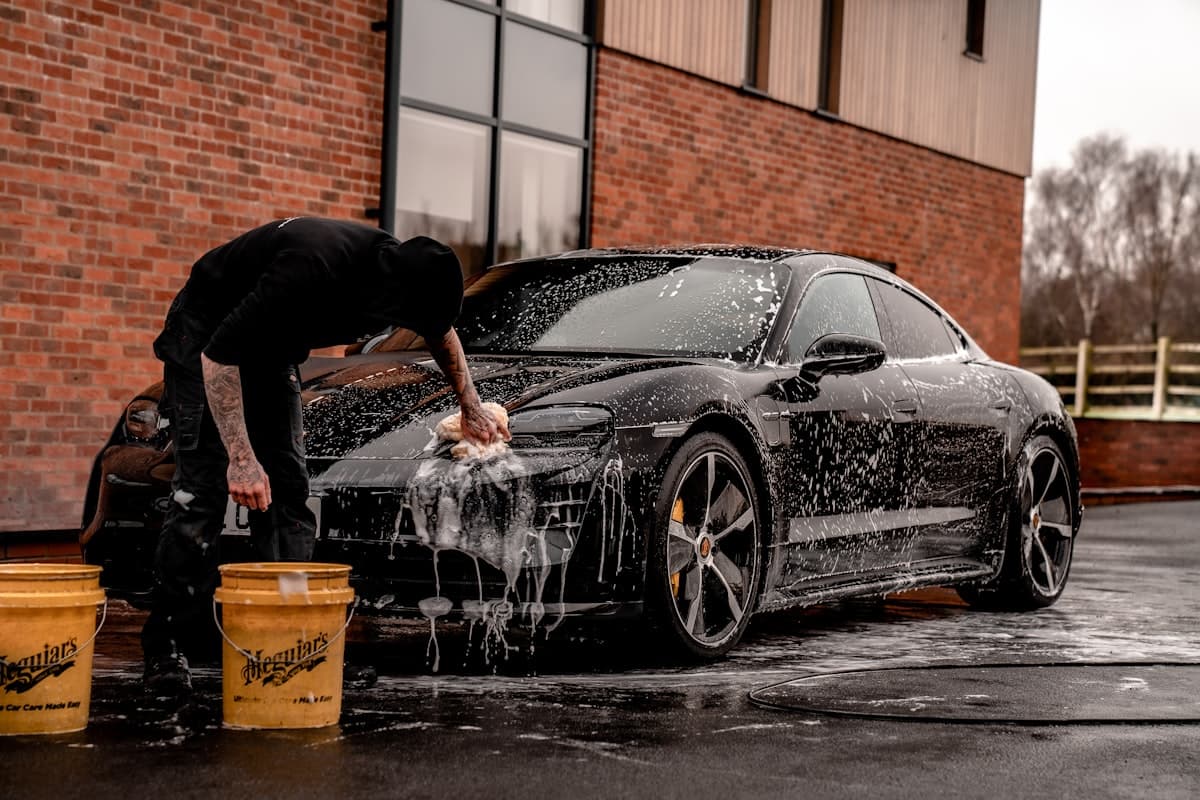
Swirl marks are the fine, circular scratches that become visible on your car's paint under direct sunlight or bright lighting. They're one of the most common paint imperfections, and nearly every vehicle on the road has them to some degree. The good news is that removing swirl marks from car paint is a task many car owners can tackle themselves with the right tools, products, and technique. This complete guide walks you through everything from identifying the cause of your swirl marks to polishing them out and protecting your paint for the long term.
What Causes Swirl Marks on Car Paint?
Before you can fix swirl marks, it helps to understand what creates them in the first place. Swirl marks are micro-scratches in your clear coat — the transparent protective layer that sits on top of your car's base color. These scratches are typically caused by abrasive contact with the paint surface during washing, drying, or detailing. When light hits these tiny scratches at different angles, they create the characteristic circular or spider-web pattern that's especially visible on dark-colored vehicles.
Most Common Causes of Swirl Marks
- •Improper Washing Technique — Using a single bucket without a grit guard, washing in circular motions, or not rinsing your wash mitt frequently enough drags dirt particles across the paint, creating scratches.
- •Automatic Car Washes — The spinning brushes and recycled water in automatic car washes are one of the worst offenders. The brushes trap dirt and grit from previous vehicles and grind them into your paint with every pass.
- •Dirty or Low-Quality Towels — Using bath towels, old rags, or microfiber towels that haven't been properly washed can introduce abrasive particles to your paint surface during drying or quick detail sprays.
- •Dry Wiping — Wiping dust or bird droppings off your car without any lubrication grinds the particles into the clear coat. Even a light dust wipe can leave marks.
- •Improper Polishing or Waxing — Applying polish or wax with a dirty pad, using too much pressure, or using a product with abrasives that are too aggressive for your paint can introduce new swirl marks while trying to fix existing ones.
- •Car Covers — Putting a car cover on a dirty vehicle or using a cover made from harsh fabric can trap dirt and scratch the paint as the cover shifts in the wind.
How to Identify Swirl Marks on Your Vehicle
Identifying swirl marks is the first step toward fixing them. Swirl marks are easiest to see on dark-colored vehicles — black, dark blue, dark gray, and dark red paints show them most prominently. However, they exist on light-colored vehicles too; they're just harder to spot. Here are two reliable methods to assess your paint condition:
The Flashlight Test
Take a bright LED flashlight and hold it 6-12 inches from a panel of your car in a shaded area or garage. Move the light slowly across the surface. Swirl marks will appear as fine circular patterns of light reflecting off the micro-scratches. The more visible the patterns, the deeper the swirl marks. This test works best at night or in a dark garage where you can control the light source.
The Direct Sunlight Test
Park your car in direct sunlight and walk around it, observing the paint from different angles. Swirl marks will appear as a hazy, spiderweb-like pattern across the panels, especially on the hood, roof, and trunk. The sun acts as a broad light source that reveals imperfections across large areas simultaneously. If you see a consistent pattern of fine circular marks rather than isolated deeper scratches, you're looking at swirl marks.
It's important to distinguish swirl marks from deeper scratches, which require different treatment. Swirl marks are confined to the clear coat layer and can be polished out. If you run your fingernail across a scratch and it catches, the damage likely extends into the base coat or primer and may need professional attention or touch-up paint rather than polishing.
DIY Swirl Mark Removal: Hand Polishing Method
For those who don't own a machine polisher or prefer a more hands-on approach, hand polishing can remove light to moderate swirl marks. This method requires more effort and time but carries virtually zero risk of damaging your paint when done correctly.
What You'll Need for Hand Polishing
- •A quality hand polishing compound or all-in-one polish
- •Foam or microfiber hand polishing pads
- •Clean, high-quality microfiber towels for buffing
- •Isopropyl alcohol (IPA) spray for inspecting results
- •Clay bar kit for pre-polishing decontamination
Start by thoroughly washing your vehicle using the two-bucket method. After drying, clay bar the entire surface to remove embedded contaminants like tree sap, industrial fallout, and mineral deposits. Apply a small amount of polish to your foam pad — about a dime-sized amount — and work it into a 2-foot by 2-foot section using overlapping back-and-forth motions rather than circular motions. Apply moderate pressure for 30-60 seconds per section, then buff off the residue with a clean microfiber towel. Inspect the area with your flashlight to assess the improvement.
Hand polishing works best for light swirl marks on vehicles with relatively soft paint. If you're dealing with deeper imperfections or paint that's particularly hard (like many German vehicles), you may need to step up to a machine polisher for consistent results.
Machine Polishing with a Dual Action (DA) Polisher
A dual action polisher is the preferred tool for removing swirl marks effectively and safely. Unlike rotary polishers, which spin in a fixed circular motion and can burn through paint in inexperienced hands, a DA polisher oscillates and rotates simultaneously. This dual motion generates far less heat and makes it nearly impossible to damage your paint, even if you're a beginner. The DA polisher is the gold standard for DIY paint correction and is what most professional detailers reach for when performing single-stage corrections.
Step-by-Step DA Polishing Process
Step 1: Wash and Decontaminate
Give your vehicle a thorough two-bucket wash, then clay bar the entire surface. Any contaminants left on the paint will be ground in by the polishing pad, making things worse. Dry the vehicle completely before proceeding.
Step 2: Tape Off Trim and Edges
Use painter's tape to mask off rubber trim, plastic pieces, emblems, and sharp body edges. Polish residue is difficult to remove from textured plastic, and the polisher can catch on sharp edges and damage either the paint or the pad.
Step 3: Prime Your Pad
Apply 4-5 pea-sized dots of polish onto your polishing pad in a spread pattern. For the first pass, also spread a thin layer of polish across the pad face to prevent dry spots. This is called priming the pad and ensures even product distribution from the start.
Step 4: Spread the Polish at Low Speed
Place the pad flat on the panel and turn the polisher on at its lowest speed setting (typically speed 1-2). Move the polisher slowly across the section to spread the product evenly. This prevents the polish from slinging off the pad when you increase speed.
Step 5: Polish at Working Speed
Increase the speed to your working speed (typically speed 4-5 on most DA polishers). Move the polisher slowly across the panel in overlapping passes — aim for about 1 inch per second. Work in a 2-foot by 2-foot section, making multiple passes in both horizontal and vertical directions. Apply light to moderate pressure; let the machine and the product do the work.
Step 6: Buff Off and Inspect
After 3-4 passes over the section, turn off the polisher and remove the residue with a clean microfiber towel. Spray the area with IPA (a 1:1 mix of isopropyl alcohol and water works well) to strip any filling agents from the polish that might mask remaining swirl marks. Inspect under your flashlight or in direct light to assess the correction level.
Step 7: Repeat as Needed
If swirl marks remain, you can make additional passes with the same product or step up to a slightly more aggressive compound. For most vehicles, 2-3 passes with a medium polish will remove 80-90% of swirl marks. Continue panel by panel until the entire vehicle is corrected.
Compounds vs. Polishes vs. All-in-One Products
Choosing the right product is critical to successful swirl mark removal. The detailing market offers three main categories of correction products, and understanding their differences will help you pick the right one for your situation.
Compounds
- •Most aggressive cutting power
- •Removes deep swirls and scratches
- •Requires a finishing polish afterward
- •Best for heavily damaged paint
- •Removes more clear coat per pass
Polishes
- •Medium cutting power
- •Removes light to moderate swirls
- •Leaves a refined finish
- •Ideal for annual maintenance corrections
- •Safe for most paint types
All-in-One (AIO)
- •Light cutting with built-in sealant
- •Corrects, polishes, and protects in one step
- •Fastest process (single step)
- •Best for light swirls and quick refreshes
- •Limited correction on deeper defects
For most DIY enthusiasts dealing with typical swirl marks, a medium-cut polish paired with a medium-cut foam pad is the best starting point. If that doesn't achieve the level of correction you want, you can step up to a compound with a cutting pad and then follow up with the polish on a finishing pad. All-in-one products are great for maintenance polishing between deeper corrections or for vehicles with very light imperfections.
Preventing Swirl Marks from Coming Back
Spending hours correcting your paint only to have swirl marks return within weeks is frustrating. The key to preventing swirl marks lies in how you wash, dry, and maintain your vehicle going forward. Here are the essential practices every car owner should follow:
Swirl Mark Prevention Tips
- 1.Use the Two-Bucket Wash Method — One bucket holds soapy water, the other holds clean rinse water. After every pass with your wash mitt, rinse it in the clean water bucket to release trapped dirt before dipping it back into the soapy water. Add grit guards to the bottom of both buckets to trap particles.
- 2.Avoid Automatic Car Washes — The brushes in tunnel-style car washes are one of the primary causes of swirl marks. If you must use an automated wash, choose a touchless option that relies on high-pressure water and detergent rather than physical contact.
- 3.Use High-Quality Microfiber Towels — Invest in plush, high-GSM (grams per square meter) microfiber towels for drying and detailing. Towels with a GSM of 400 or higher are gentler on paint. Wash them separately from other laundry, without fabric softener, and replace them when they become worn.
- 4.Wash in Straight Lines, Not Circles — When washing or drying, move your mitt or towel in straight back-and-forth motions rather than circular ones. If a particle does get dragged across the paint, a straight scratch is less visible than a circular swirl mark.
- 5.Never Dry Wipe Your Car — No matter how light the dust layer appears, wiping it off without lubrication will scratch the paint. Use a quick detail spray or waterless wash product to provide lubrication when doing light cleaning between full washes.
- 6.Pre-Rinse Thoroughly — Before touching the paint with a mitt, rinse the entire vehicle with a pressure washer or hose to remove as much loose dirt, sand, and debris as possible. A foam cannon pre-soak is even better, as the foam encapsulates and lifts dirt particles off the surface.
Protecting Your Paint After Correction
After investing the time and effort to remove swirl marks, protecting your freshly corrected paint is essential. A bare clear coat with no protection will begin accumulating new swirl marks and contamination immediately. You have several options for long-term paint protection, each with different levels of durability and maintenance requirements.
Paint Sealant (3-6 Months Protection)
Synthetic paint sealants are the most accessible option for DIY enthusiasts. They create a chemical bond with the clear coat that provides UV protection, hydrophobic water beading, and a slick surface that resists contamination. Application is simple — spread a thin layer, allow it to haze, and buff off with a microfiber towel. Sealants typically last 3-6 months before needing reapplication, making them an excellent choice for those who enjoy the process of maintaining their vehicle regularly.
Ceramic Coating (2-7+ Years Protection)
For more permanent protection, a ceramic coating creates a semi-permanent bond with your paint that provides superior hardness, chemical resistance, UV protection, and hydrophobic properties. Professional-grade coatings can last 5-7 years or more with proper maintenance. While DIY consumer-grade ceramic coatings are available for $50-$150, professional application with paint correction typically costs $1,000-$3,000. Ceramic coatings don't prevent swirl marks entirely, but the harder surface is more resistant to marring and the slick finish makes washing safer and easier.
Paint Protection Film (5-10 Years Protection)
Paint protection film (PPF) is a transparent urethane film applied over the paint that provides physical protection against rock chips, scratches, and swirl marks. Modern PPF products are self-healing, meaning light scratches in the film disappear with heat exposure. PPF offers the highest level of protection available but comes at a premium price — typically $1,500-$7,000 for a full vehicle application. It's the ultimate solution for owners who want to preserve factory-fresh paint indefinitely.
When to Call a Professional
While DIY swirl mark removal is achievable for most car owners, there are situations where professional paint correction is the better choice. Consider hiring a professional detailer if any of the following apply to your situation:
Your vehicle has deep scratches, heavy oxidation, or severe clear coat damage that goes beyond surface-level swirl marks. These conditions require more aggressive correction techniques and possibly wet sanding, which carry significant risk of paint damage if not done correctly. A professional detailer with experience and proper lighting can assess the paint thickness with a gauge, determine how much clear coat can be safely removed, and execute a multi-stage correction that maximizes results while preserving paint longevity.
Your vehicle has soft or single-stage paint. Some manufacturers, particularly certain Japanese brands, use softer clear coats that are easier to correct but also easier to damage with too-aggressive products or technique. Single-stage paint (where the color and clear coat are combined in one layer, common on older vehicles) requires specialized knowledge to correct without burning through the color.
You're working on a high-value, exotic, or classic car. When the stakes are high, the margin for error shrinks considerably. A professional detailer brings not only skill and experience but also insurance coverage in case something goes wrong. The cost of professional correction — typically $500-$2,000 depending on severity — is a small price to pay for peace of mind on a vehicle worth tens or hundreds of thousands of dollars.
You want a ceramic coating or PPF applied after correction. These products require meticulous surface preparation and controlled application environments to bond properly. Most reputable coating and film installers include paint correction as part of their service package, ensuring the surface is flawless before protection is applied.
Common Mistakes to Avoid During DIY Paint Correction
Even with the right tools and products, mistakes during the paint correction process can lead to disappointing results or even new damage. Here are the pitfalls to watch out for:
- •Skipping the Decontamination Step — Polishing over contaminated paint grinds particles into the surface. Always wash and clay bar before any correction work.
- •Using Too Much Product — More polish does not mean more correction. Excess product creates a sloppy layer that reduces the pad's ability to cut effectively. A few pea-sized dots per section is all you need.
- •Moving the Polisher Too Fast — Speed equals heat, but not correction. Move the DA polisher slowly — about 1 inch per second — to give the abrasives time to work. Fast passes skip over defects without correcting them.
- •Not Checking Paint Thickness — If you don't know how much clear coat you have to work with, you risk polishing through it entirely. A paint thickness gauge costs $20-$200 and is a worthwhile investment for anyone doing regular paint correction.
- •Polishing in Direct Sunlight — Heat causes polish to dry out and become difficult to work with. Always polish in a shaded area or garage where temperatures are moderate and you can control the lighting for inspection.
- •Not Changing Pads — Polishing pads become saturated with product and debris over time, reducing their effectiveness. Use fresh pads regularly — a good rule of thumb is one pad per 3-4 panels.
Final Thoughts on Swirl Mark Removal
Removing swirl marks from your car's paint is one of the most satisfying DIY automotive tasks you can undertake. The transformation from a hazy, scratched surface to a deep, glossy, swirl-free finish is dramatic and immediately visible. With a quality DA polisher, the right products, and proper technique, most car owners can achieve professional-level results at a fraction of the cost.
Remember that paint correction is a skill that improves with practice. Start with a less visible panel — like the lower portion of a door or the rear quarter panel — to build confidence before tackling the hood and roof where imperfections are most visible. Take your time, work in small sections, and inspect frequently under good lighting.
Most importantly, protect your corrected paint with a sealant, ceramic coating, or paint protection film, and adopt proper washing habits to prevent new swirl marks from forming. A little discipline in your wash routine goes a long way toward keeping your paint looking its best for years to come. And if the damage is beyond what you're comfortable tackling on your own, don't hesitate to reach out to a professional paint correction specialist who can deliver flawless results safely.