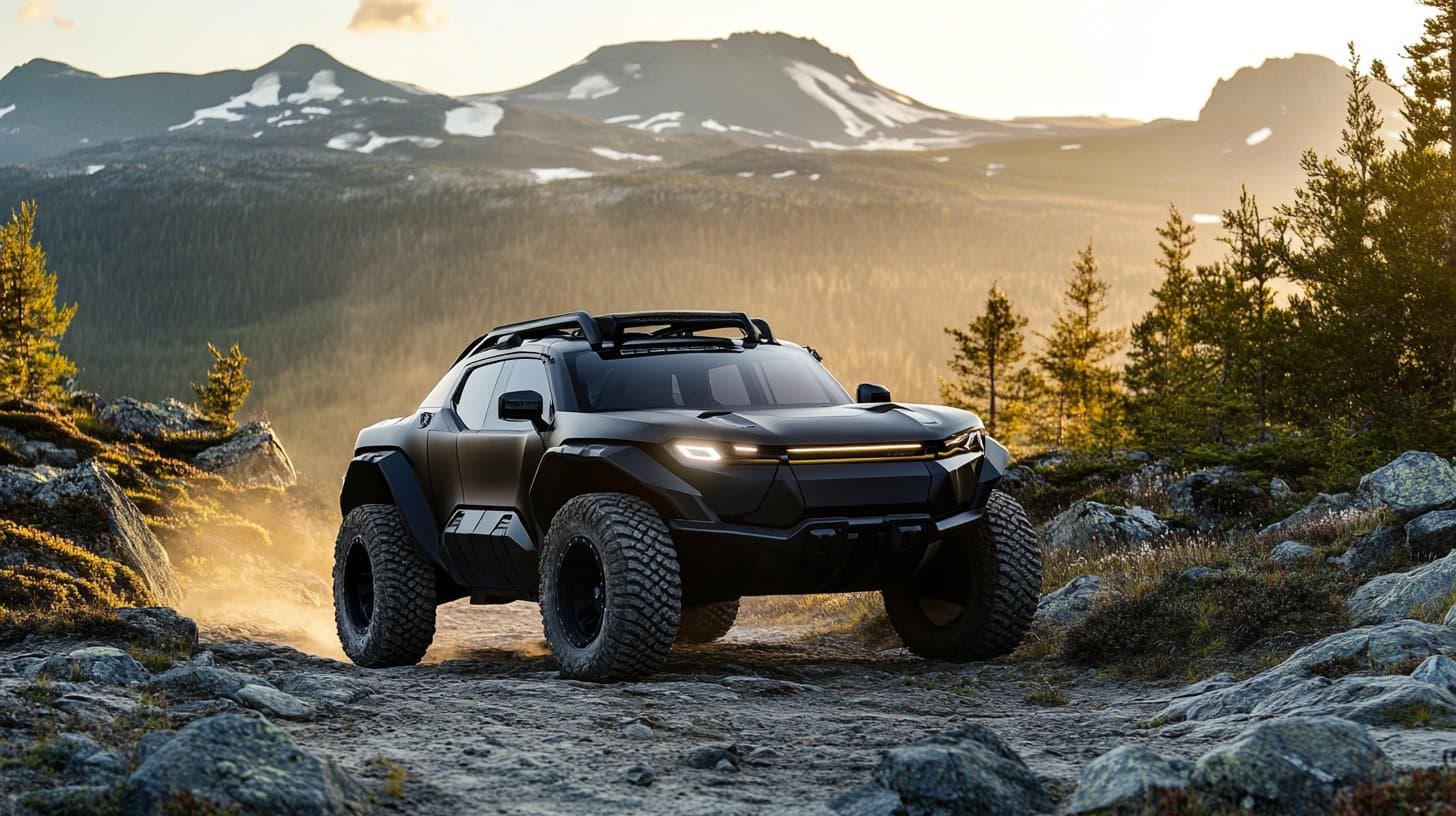
Jeep has spent decades earning its reputation as the undisputed king of off-road capability. Now, with the 2026 Jeep Recon, the brand is making its most audacious bet yet — proving that electric power isn't just compatible with serious trail work, it's actually better. With 650 horsepower, 620 lb-ft of torque, and a purpose-built platform designed from scratch for rocks, mud, and sand, the Recon isn't an electrified compromise. It's an evolution.
Recon by the Numbers: Specs That Matter
The Recon's spec sheet reads like a wishlist for serious off-roaders. Twin electric motors — one on each axle — produce a combined 650 horsepower and 620 lb-ft of torque, all available from the moment you press the accelerator. That's not a peak figure that appears at 5,000 RPM; it's instant, maximum twist at zero RPM, exactly where you need it most when crawling over boulders or pulling through deep sand.
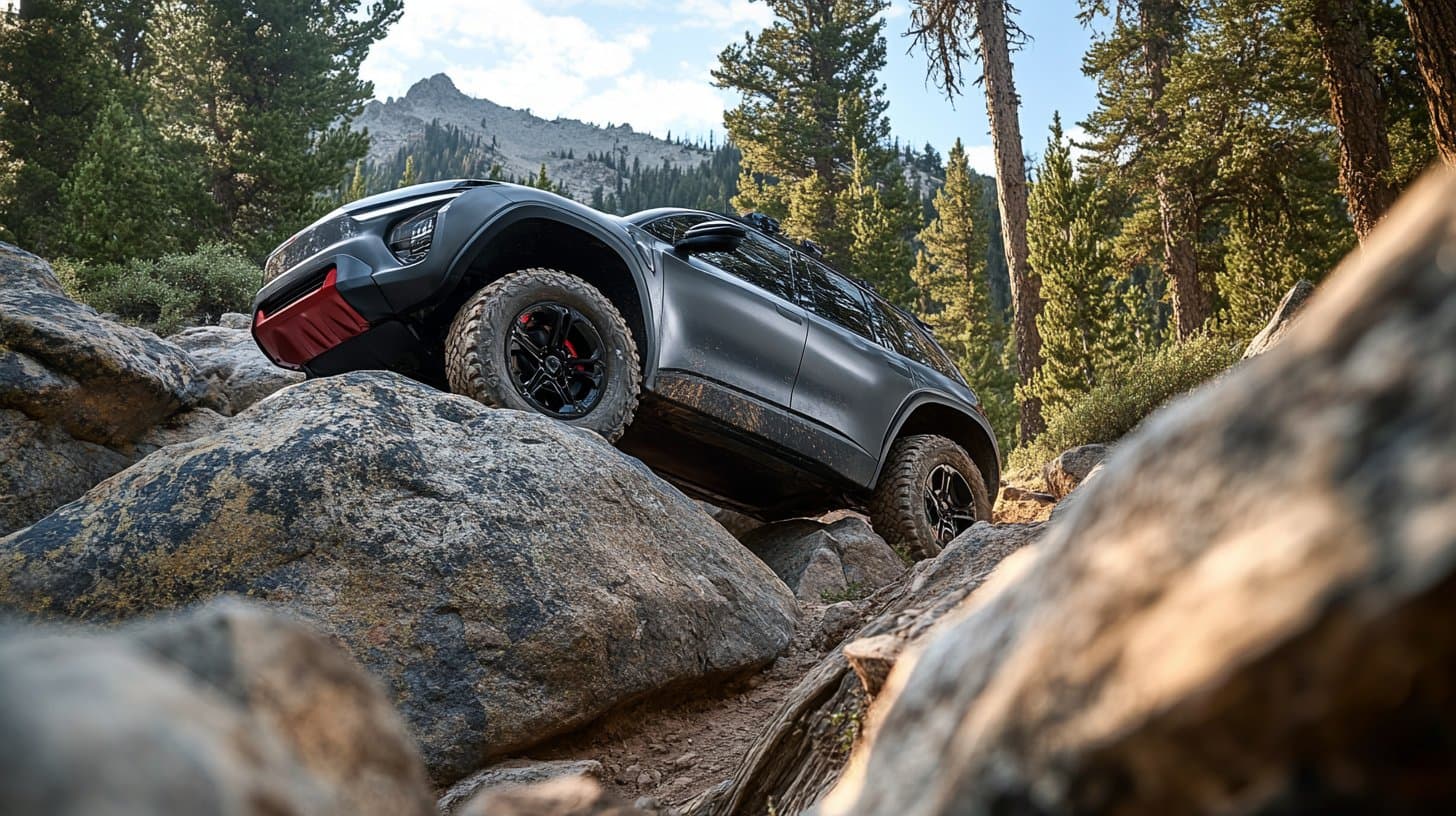
Ground clearance sits at a trail-ready 9.1 inches, paired with factory-equipped 33-inch all-terrain tires mounted on 17-inch beadlock-capable wheels. The approach angle, breakover angle, and departure angle are all class-leading, meaning the Recon can tackle obstacles that would leave most crossovers stranded.
Under the floor sits a 100 kWh battery pack encased in a steel skid plate that doubles as structural reinforcement. The EPA-estimated range lands at approximately 250 miles on pavement — a number that requires context (more on trail range below). Charging is handled via NACS (North American Charging Standard), giving Recon owners access to Tesla's Supercharger network alongside every other public DC fast charging station in North America.
Additional hardware includes electronic locking differentials front and rear, a disconnecting front sway bar for maximum articulation, and selectable drive modes including Rock, Sand, Mud, Snow, and the intriguingly named “Crawl” mode that manages speed and torque distribution automatically while you focus on steering.
Why Electric Makes Sense for Off-Roading
The knee-jerk reaction from off-road purists is predictable: “Electric doesn't belong on the trail.” But the engineering reality tells a different story — and once you understand the physics, it's hard to argue that combustion engines are actually superior for this application.
Instant torque at 0 RPM. A gas engine needs to rev up to produce meaningful torque. An electric motor delivers maximum force the instant power is applied. When you're balancing a 5,000-pound vehicle on a rock ledge and need precisely controlled power to inch forward, nothing matches the immediate, linear response of an electric drivetrain. There's no turbo lag, no clutch engagement, no waiting for the torque converter to catch up.
Per-wheel torque vectoring. With individual motors on each axle and electronic differentials, the Recon can send exactly the right amount of power to each wheel independently. If the front-left wheel loses traction on a wet rock, the system can redirect torque to the other three wheels in milliseconds — faster than any mechanical differential can react. This is the kind of traction control that would cost thousands of dollars in aftermarket lockers and still wouldn't match the precision of electronic control.
No intake or exhaust to submerge. One of the biggest risks in water crossings is flooding the engine intake or backflowing through the exhaust. Electric motors have neither. The Recon's sealed drivetrain components make water fording significantly less risky — Jeep rates the Recon for up to 30 inches of water fording depth, matching the Wrangler Rubicon.
Silent operation for nature immersion. This might sound soft, but ask anyone who trails in national forests or wildlife areas: a quiet vehicle transforms the experience. You hear birdsong, running water, and wind through the trees instead of a rumbling V6. For hunters, wildlife photographers, and anyone who goes off-road to connect with nature, silence is a feature, not a compromise.
Zero emissions at camp. Running a gas engine to power accessories at your campsite means breathing exhaust fumes. The Recon's vehicle-to-load (V2L) capability lets you power camping equipment, lights, a portable fridge, and even a small air compressor for re-inflating tires — all without emissions or engine noise.
How the Recon Compares
Recon vs. Wrangler Rubicon
The Wrangler Rubicon is the benchmark that every off-road vehicle is measured against, and yes, it's Jeep's own icon. The Rubicon's 3.6L V6 produces 285 horsepower and 260 lb-ft of torque — respectable numbers, but the Recon more than doubles both. The Rubicon's advantage lies in simplicity, aftermarket support, and decades of trail-proven heritage. The Recon counters with superior traction control, dramatically more power, and lower running costs. If you're building a rock-crawling rig from scratch with aftermarket everything, the Wrangler still has the edge. For a factory-capable trail machine, the Recon is the better starting point.
Recon vs. Rivian R1S
The Rivian R1S is the closest electric competitor. Rivian's quad-motor setup can produce up to 835 horsepower, and the R1S has earned genuine off-road credibility with its impressive suspension travel and “Tank Turn” feature. However, the R1S is a three-row luxury SUV that happens to be good off-road, while the Recon is a purpose-built trail vehicle. The Recon's shorter wheelbase, removable doors and roof panels, and lower starting price give it distinct advantages for dedicated off-roaders. The R1S is the better family hauler; the Recon is the better Jeep.
Recon vs. Ford Bronco
The Ford Bronco revived the Jeep rivalry when it returned in 2021, and the Bronco Raptor pushed things further with 418 horsepower. But Ford hasn't released a fully electric Bronco yet, and the current Bronco's turbocharged four-cylinder can't match electric torque delivery for low-speed crawling. The Recon leapfrogs the Bronco in powertrain technology while matching it in trail-focused hardware like removable doors, a folding windshield, and generous approach angles.
Trail Range: What 250 Miles Really Means Off-Road
Here's the honest conversation that needs to happen with any electric off-roader: 250 miles of EPA range does not mean 250 miles on the trail. Off-road driving is dramatically less efficient than highway cruising. Low-speed crawling, steep inclines, soft surfaces like sand and mud, and running accessories all consume more energy per mile.
Realistically, plan for 150 to 180 miles of mixed on-road/off-road driving on a full charge. Hardcore trail-only use could drop that further to 100–130 miles depending on terrain severity. That sounds limiting until you consider that most trail runs are 20–50 miles round trip, and even a Wrangler Rubicon's 21-gallon fuel tank only provides about 250 miles of mixed driving anyway.
The real challenge isn't trail range — it's getting to and from the trailhead in remote areas where charging infrastructure is sparse. For this reason, we strongly recommend mapping your route through our charging station finder before heading out. Many popular trail areas in Colorado, Utah, and the Appalachian region now have DC fast chargers within 30–50 miles of major trailheads, but you need to plan ahead.
Pricing and Availability
Jeep has set the Recon's starting MSRP at approximately $65,000 for the base model, which still includes the dual-motor setup, electronic lockers, and 33-inch tires. The Rubicon-equivalent “Trailhawk” trim adds the disconnecting sway bar, upgraded suspension, and additional skid plates for around $72,000. A fully loaded First Edition model will push past $80,000.
That's not cheap, but it's competitive. A Wrangler Rubicon 392 (the V8 model) stickered at over $80,000 before it was discontinued, and a comparably equipped Rivian R1S starts at $79,900. At $65,000, the Recon actually undercuts most serious off-road EVs while offering Jeep's trail-rated pedigree. Check current EV deals for the latest pricing and incentives.
Reservations are open now, and first deliveries are expected in late summer 2026. Production will take place at Jeep's Toledo, Ohio assembly plant, which has been retooled for the electric platform.
The Bigger Picture: Electrification Meets Adventure
The Recon isn't just a new Jeep model — it's a statement that electrification and adventure aren't mutually exclusive. Subaru is making a similar bet with its Trailseeker Uncharted, and the electric truck market is maturing rapidly with options we cover in our best electric trucks of 2026 roundup.
The off-road community has been one of the last holdouts against electrification, and understandably so. Range anxiety is amplified in remote areas, charging infrastructure is nonexistent on many trails, and the culture is deeply tied to the sound and feel of internal combustion. But the Recon addresses the first concern head-on with a usable 250-mile range, and the second concern is rapidly resolving as the charging network expands.
As for the culture? That will change the first time a Recon owner silently crawls over an obstacle that stalls the V6 behind them. Performance has a way of winning converts, regardless of what powers it.
Ready to explore the electric off-road world? Browse current EV deals, find a charging station near you, or check out the full Jeep electric lineup.