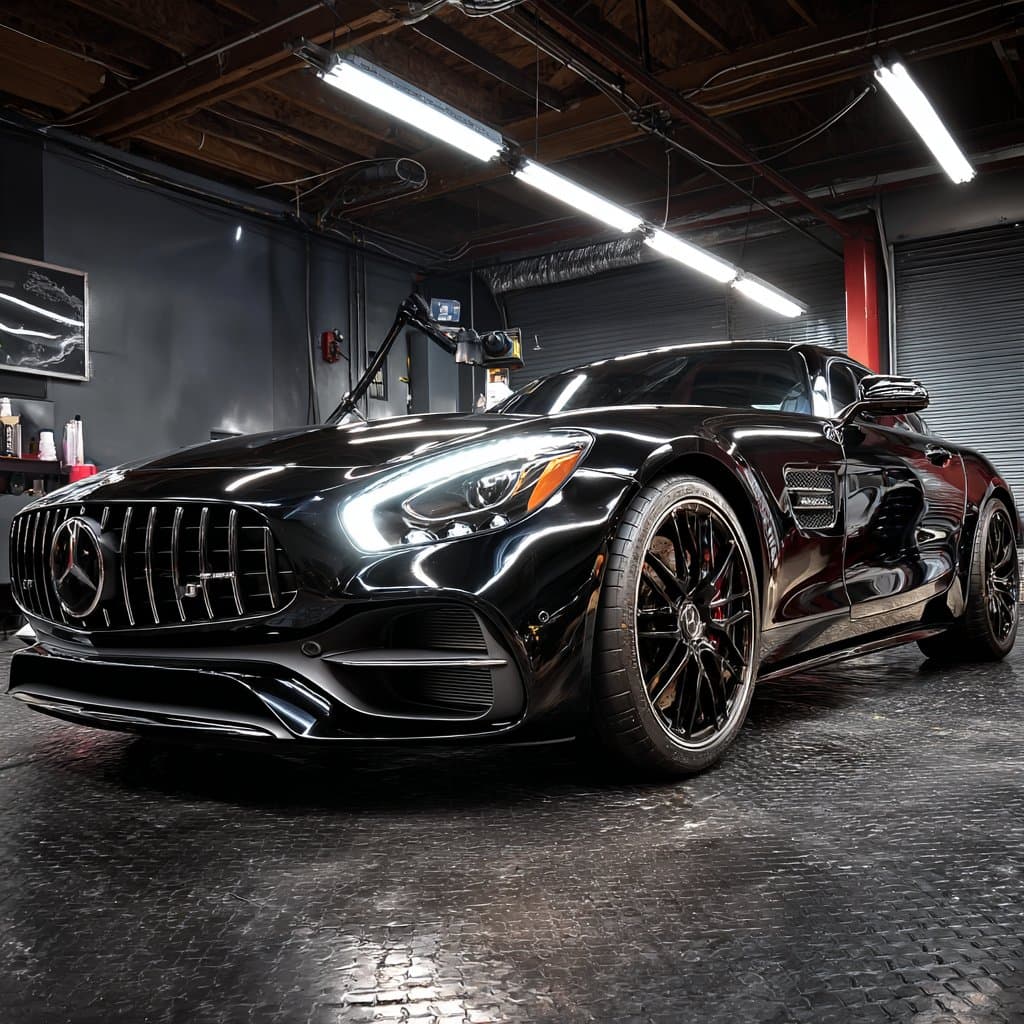
Black cars are undeniably stunning when properly maintained—nothing matches the depth and mirror-like reflections of flawless black paint. However, they're also notoriously unforgiving, showing every swirl mark, scratch, and imperfection. Understanding paint correction black car techniques is essential for achieving and maintaining that showroom finish. This guide covers everything you need to know about how to remove swirl marks and finding the best polish for black paint.
Why Black Paint Is So Challenging
Black paint doesn't actually scratch more easily than other colors—it just shows defects more readily. The dark surface creates maximum contrast with any light-colored scratches or swirls in the clear coat. What would be invisible on a white or silver car becomes glaringly obvious on black paint.
Additionally, black paint absorbs more heat, which can make it more susceptible to water spotting and can complicate the polishing process if the surface gets too hot. This is why black car detailing requires extra care, better techniques, and often more time than lighter colors.
Common Black Paint Defects
- •Swirl Marks – Circular micro-scratches typically caused by improper washing or wiping. They create a spiderweb pattern visible in direct light.
- •Holograms – Buffer trails left by inexperienced polishing, appearing as 3D patterns in the paint.
- •Water Spots – Mineral deposits etched into the clear coat from dried water droplets.
- •Random Deep Scratches – Individual scratches from keys, branches, or improper washing tools.
- •Oxidation – Faded, chalky appearance from UV damage to the clear coat.
Understanding Paint Correction Levels
Paint correction black car work is typically categorized into stages based on severity and the desired outcome:
Single-Stage Polish (Enhancement)
Removes 50-70% of defects using one polish/pad combination
Best for: Light swirling, new car prep, maintenance polishing
Cost: $200-$400
Two-Stage Correction
Compound cut followed by finishing polish, removes 80-90% of defects
Best for: Moderate swirling, visible scratches, neglected paint
Cost: $400-$800
Multi-Stage Correction
Three or more stages for severe defects, achieves 95%+ correction
Best for: Heavy damage, show cars, concours preparation
Cost: $800-$1,500+
The Paint Correction Process
Professional paint correction follows a systematic process to safely remove defects while preserving clear coat thickness:
Step 1: Thorough Wash and Decontamination
Before any polishing begins, the paint must be perfectly clean. This includes a multi-stage wash, iron fallout remover to dissolve embedded metal particles, and clay bar treatment to remove bonded contaminants. Any debris left on the surface during polishing will cause new scratches.
Step 2: Paint Depth Measurement
Professional detailers use paint thickness gauges to measure clear coat depth before starting. This ensures there's sufficient material to safely polish without burning through. Most factory clear coats are 1.5-2.5 mils thick; you generally want to maintain at least 1 mil after correction.
Step 3: Test Spot
A small area is tested with different polish and pad combinations to determine the least aggressive approach that achieves desired results. This prevents unnecessary clear coat removal and ensures the process is optimized for your specific paint.
Step 4: Compounding (If Needed)
For significant defects, the first pass uses a cutting compound and more aggressive pad to level the clear coat and remove deeper scratches. The compound contains abrasives that remove material—this is where actual correction happens.
Step 5: Polishing
The polishing stage removes any haze or micro-marring left by compounding while maximizing gloss. On black paint, this step is critical—any remaining defects will be visible. Multiple polishing passes may be needed for perfect results.
Step 6: IPA Wipe and Inspection
Isopropyl alcohol removes polishing oils that can mask remaining defects. The paint is then inspected under multiple light sources—direct sunlight, LED panels, and halogens—to verify all defects have been addressed.
Best Products for Black Paint Correction
The best polish for black paint depends on the severity of defects and desired finish. Here are top recommendations:
Compounds (Heavy Cutting)
- ★Meguiar's M110 – Excellent cut with minimal dust, professional-grade
- ★Rupes Uno Protect – One-step compound that cuts and finishes in one pass
- ★Koch Chemie H9 – German engineering for heavy defect removal
Finishing Polishes
- ★Menzerna SF4000 – Ultra-fine finish, jeweling quality for black paint
- ★Sonax Perfect Finish – Zero dust, incredible gloss on dark colors
- ★CarPro Essence – Finishing polish with ceramic-infused protection
Polishing Pads for Black Paint
For black paint, softer finishing pads are essential to prevent hologram introduction:
- •Rupes Blue/Yellow DA Pads – Industry standard for hologram-free finishing
- •Lake Country HDO Pads – Excellent heat dissipation for black paint
- •Buff and Shine Uro-Fiber – Microfiber pads for aggressive cut without marring
How to Remove Swirl Marks: DIY Tips
For enthusiasts wanting to tackle how to remove swirl marks themselves, here are essential tips for success on black paint:
- 1.Start with the least aggressive approach – You can always increase aggressiveness, but you can't add clear coat back.
- 2.Work in the shade – Black paint heats up quickly in sun, affecting polish performance and risking burn-through.
- 3.Keep the surface cool – If the panel is too hot to touch, stop and let it cool before continuing.
- 4.Use proper lighting – A swirl finder light or LED panel reveals defects invisible in normal lighting.
- 5. Work small sections – 2x2 foot sections maximum to maintain control and product workability.
- 6.Multiple light passes – Several light-pressure passes beat one heavy pass for hologram-free results.
Protecting Corrected Black Paint
After investing time and money in paint correction, protection is essential to maintain results:
Ceramic Coating
The gold standard for protecting corrected black paint. Ceramic coatings add hardness, chemical resistance, and hydrophobic properties while enhancing depth and gloss. A quality coating can protect your correction work for 2-5+ years.
Paint Protection Film
For maximum protection, PPF prevents new scratches and rock chips from damaging your freshly corrected paint. Consider PPF for high-impact areas combined with ceramic coating for the full vehicle.
Proper Washing Technique
Most swirl marks come from improper washing. Use the two-bucket method, quality microfiber mitts, grit guards, and avoid automated car washes. Touchless washing and proper drying techniques preserve your correction work indefinitely.
When to Choose Professional Paint Correction
While DIY correction is possible, professional detailers offer advantages that may be worth the investment:
- ✓Experience avoiding holograms and burn-through on black paint
- ✓Professional-grade equipment and lighting for perfect results
- ✓Paint thickness gauges and proper measurement protocols
- ✓Climate-controlled environment for optimal polish performance
- ✓Warranty and guarantee on their work
Final Thoughts
Paint correction black car work rewards patience and proper technique with results that are simply stunning. There's nothing quite like the mirror-like depth of properly corrected black paint reflecting the world around it.
Whether you tackle the project yourself or entrust it to professionals, understanding the process helps you achieve and maintain results. Combined with proper protection and maintenance, a corrected black car can maintain that showroom appearance for years to come.