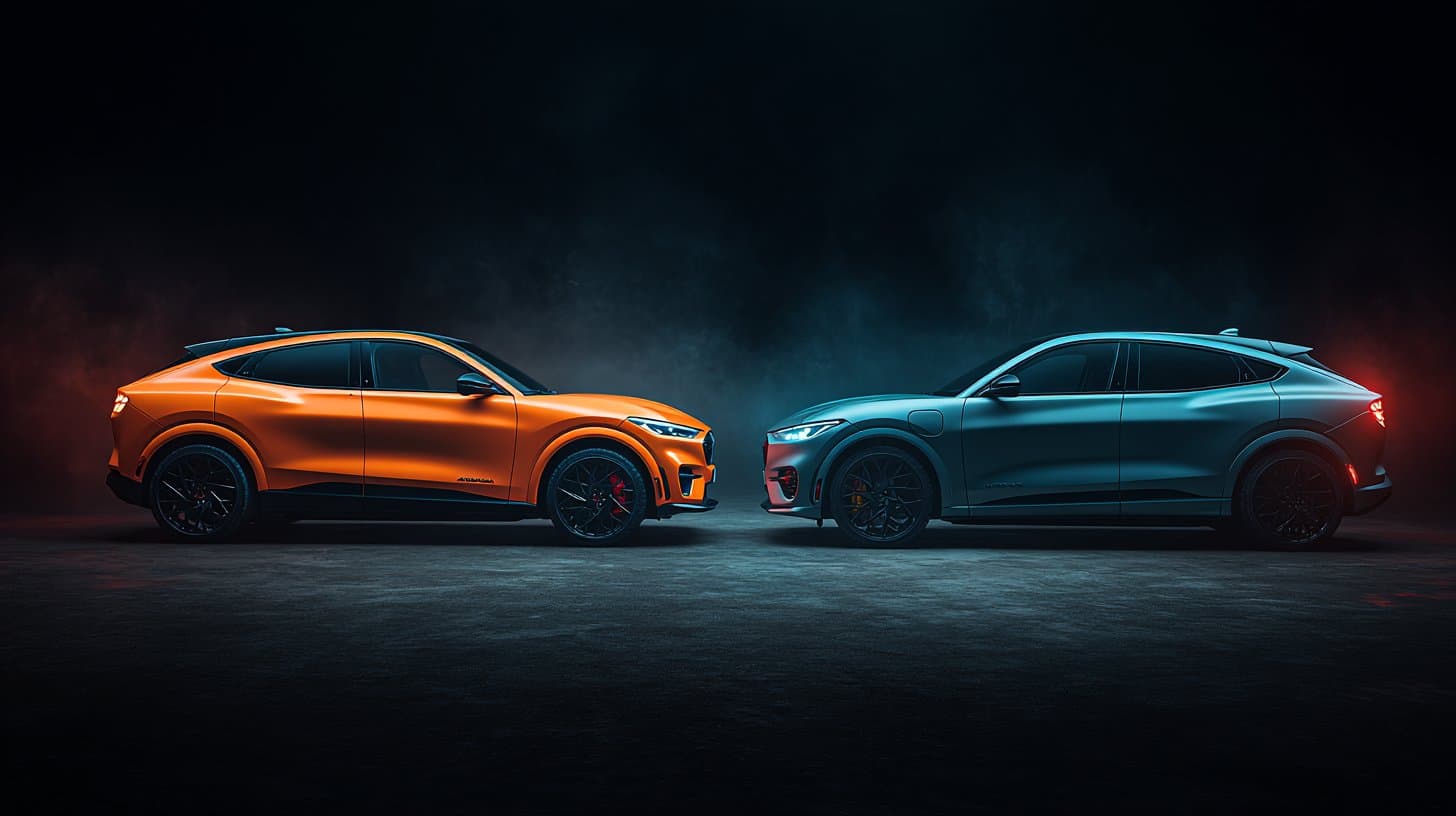
The Rivian R2 has arrived as the most anticipated electric SUV of 2026, and its biggest competitor might not be another startup — it's the Ford Mustang Mach-E, a proven mainstream contender that's been refined over three model years. One represents the adventurous future of EVs, the other a polished everyday driver. If you're cross-shopping these two, here's how they stack up across every category that matters.
Price and Value: Closer Than You'd Think
Rivian R2
$45,000
~$37,500
300+ miles
Dual Motor AWD
Ford Mustang Mach-E
$42,995
~$35,495
312 miles (Extended)
RWD or eAWD
The price gap is narrower than many expected. The Rivian R2 starts at $45,000 ($37,500 after the federal tax credit), while the Mach-E begins at $42,995 ($35,495 after credit). That's only about a $2,000 difference after incentives. However, the Mach-E offers a cheaper RWD option for buyers who don't need all-wheel drive, while the R2 comes standard with dual-motor AWD. For the AWD-to-AWD comparison, the R2 actually represents better value since the Mach-E AWD starts at $47,995.
Design and Identity: Adventure vs. Mainstream
These two vehicles make very different statements. The Rivian R2 carries the brand's outdoor adventure DNA — a compact SUV with rugged proportions, 8.5 inches of ground clearance, and an aesthetic that says “I'd rather be on a trail.” Roof rails, off-road-ready suspension, and a gear tunnel storage compartment reinforce the adventure lifestyle positioning.
The Mustang Mach-E takes a sportier, more urban approach. Its muscular styling borrows cues from the Mustang heritage — the long hood, narrow headlights, and wide rear haunches give it an athletic presence. It looks at home in a downtown parking garage or a suburban driveway, whereas the R2 looks like it just came back from a state park.
Range and Charging: Both Deliver
Rivian estimates the R2 at 300+ miles of range on the standard battery, with a larger pack option expected to push past 350 miles. The Mach-E Extended Range delivers 312 miles on the RWD model and about 277 miles with AWD. In practical terms, both vehicles will handle daily driving and weekend road trips without range anxiety.
For charging, the Mach-E uses CCS and can handle up to 150 kW DC fast charging, adding about 80 miles in 10 minutes. The R2 supports up to 300 kW fast charging thanks to its 800V architecture, potentially adding 150 miles in just 15 minutes. Rivian is also building out its own Adventure Network of fast chargers, though it remains much smaller than the combined CCS and Supercharger networks available to the Mach-E (which gained Supercharger access via adapter in 2025).
Off-Road vs. On-Road Performance
This is where the R2 separates itself. Rivian has built its brand on off-road capability, and the R2 inherits genuine trail credentials: 8.5 inches of ground clearance, independent front and rear motors with torque vectoring, and multiple drive modes including sand, snow, and off-road settings. Water fording depth is rated at 24 inches. For buyers who camp, hike, or live in areas with unpaved roads, the R2 offers capabilities the Mach-E simply can't match.
The Mach-E counters with better on-road dynamics. It's sportier through corners, more responsive to steering inputs, and the GT Performance Edition (starting at $54,995) delivers genuine performance-car acceleration with 480 horsepower. The MagneRide adaptive suspension on GT models provides excellent body control. If your driving is 95% pavement and you want the most engaging driving experience, the Mach-E has the edge.
Interior and Technology
The R2's interior follows Rivian's philosophy of sustainable materials and functional design. Expect recycled fabrics, a clean dashboard layout with a large center screen, and storage solutions designed for active lifestyles — including the signature gear tunnel that runs between the rear wheels, providing a lockable, hidden storage compartment for camping gear, ski equipment, or valuables.
The Mach-E features a 15.5-inch vertical touchscreen running Ford's SYNC 4A system with wireless Apple CarPlay and Android Auto — something Rivian doesn't offer. The B&O premium sound system is excellent, the panoramic glass roof floods the cabin with light, and the front trunk (frunk) adds an additional 4.8 cubic feet of weatherproof storage. Both cabins are well-built, but the Mach-E feels more tech-forward while the R2 feels more rugged-utilitarian.
Practicality and Cargo
Both vehicles are compact SUVs, but the R2 has a slight edge in total cargo flexibility thanks to the gear tunnel and a reported 33 cubic feet behind the rear seats (estimated 65+ with seats folded). The Mach-E offers 29.7 cubic feet behind the rear seats (59.7 folded) plus the 4.8 cubic-foot frunk. The R2's higher ride height and flat load floor make it easier to load bulky items, while the Mach-E's lower cargo floor makes everyday loading slightly easier.
The Verdict: Who Should Buy Which?
Choose the Rivian R2 if: you value off-road capability, want AWD as standard, love the adventure lifestyle aesthetic, plan to camp or explore unpaved areas, or want the fastest charging speeds (800V). The R2 is the more versatile vehicle for buyers whose weekends involve nature.
Choose the Ford Mustang Mach-E if: you want a proven vehicle with three years of real-world reliability data, prefer Apple CarPlay/Android Auto, value a sportier driving experience on pavement, want the option of a cheaper RWD model, or need access to the broadest possible charging network (CCS + Tesla Supercharger via adapter). The Mach-E is the safer, more established choice.
Both are excellent electric SUVs at similar price points. The R2 is the bolder choice for adventure-seekers; the Mach-E is the smarter choice for mainstream buyers who want a well-rounded daily driver.
Not Sure Which SUV Is Right for You?
Our free EV Match tool compares these models based on your driving habits, budget, and lifestyle — plus calculates your exact savings versus gas.
Try the EV Match Tool