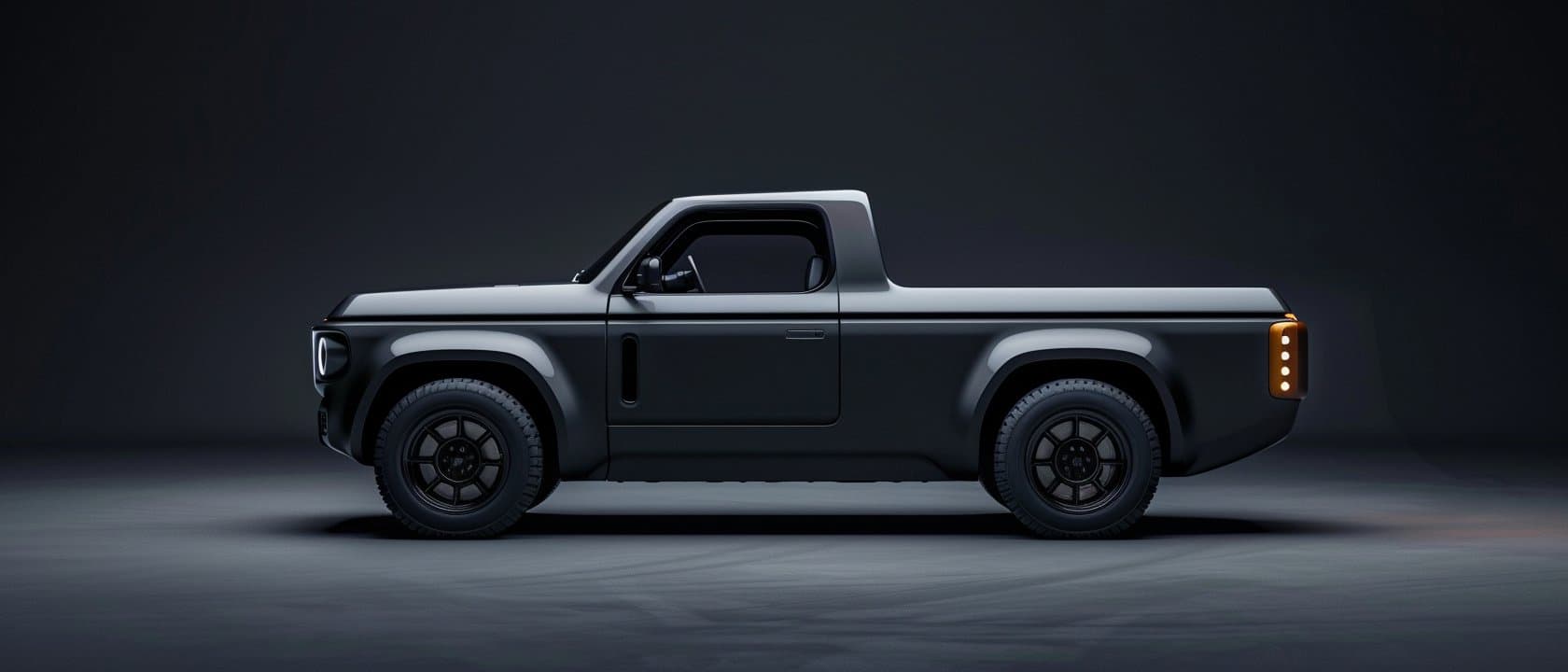
Every decade or so, a vehicle comes along that rewrites the rules of who gets to own a new truck. The Ford Model T did it in the 1920s. The original Toyota Hilux did it in the 1970s. And now Slate Auto — a startup backed by Jeff Bezos, D1 Capital Partners, and $105 million in funding — is betting that a stripped-down, no-nonsense electric pickup starting around $25,000 can do it again. Under new CEO Peter Faricy (appointed March 2026), the company is building its truck at a factory in Warsaw, Indiana with production targeted for late 2026. With over 150,000 reservations and counting, the market seems to agree.
What Makes the Slate Truck Different
The Slate Truck isn't trying to compete with the Ford F-150 Lightning, Rivian R1T, or Tesla Cybertruck. Those are $50,000–$100,000 tech showcases packed with screens, cameras, and software features. The Slate takes the opposite approach: radical simplicity.
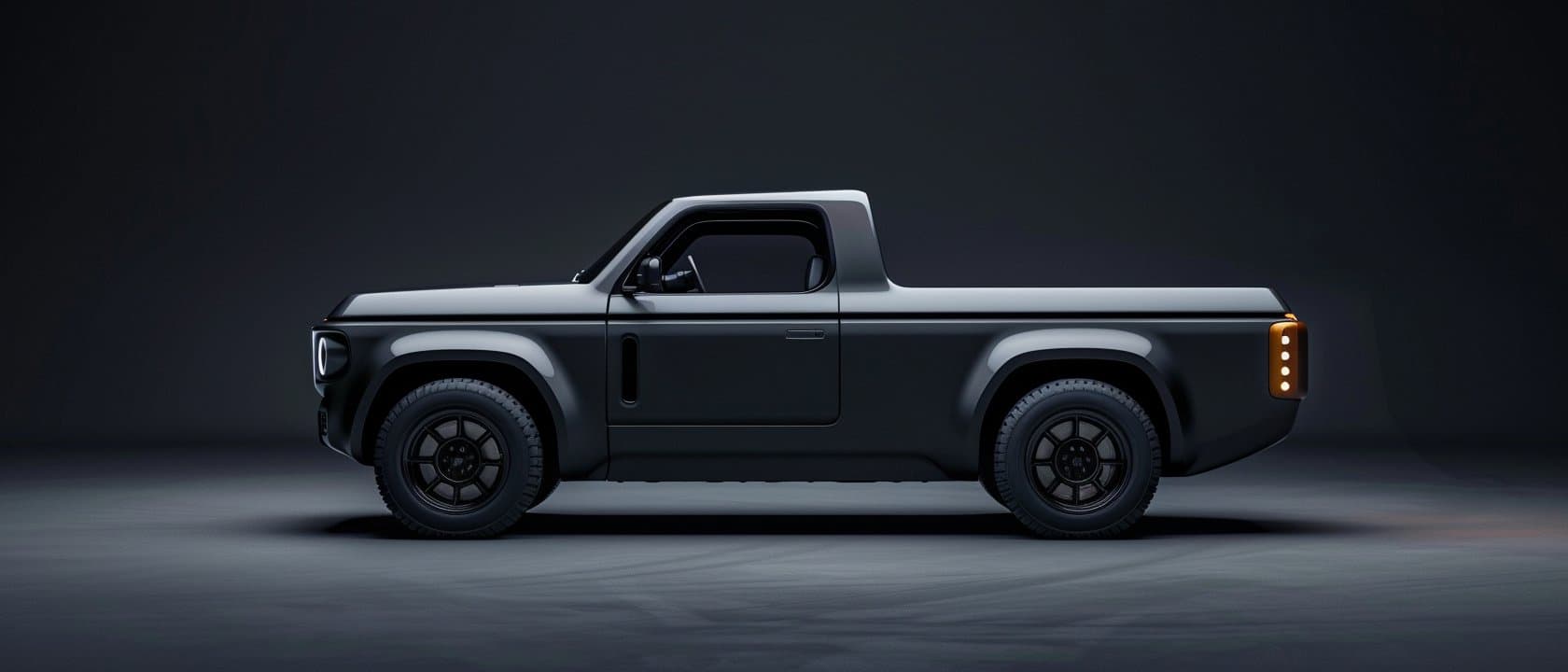
Two doors, not four. The Slate is a regular-cab pickup — a body style that the major automakers have almost entirely abandoned in favor of crew cabs. This dramatically reduces manufacturing complexity and vehicle weight while giving buyers a genuine work truck with a full-size bed.
Manual windows and mirrors. No power-adjustable seats. No 15-inch touchscreen. No over-the-air updates. The interior is as basic as a modern vehicle can legally be, and that's entirely the point. Every feature that gets cut is money saved for the buyer.
Two battery options: 52.7 kWh and 84.3 kWh. Slate offers a smaller pack for buyers who primarily charge at home and drive predictable routes, and a larger pack for those who need more range. Estimated range varies by configuration, but even the smaller battery covers the 50–80 miles per day that most work truck drivers need. Tesla Supercharger access via NACS port means fast charging on longer trips is straightforward.
The “Blank Slate” customization model. This is Slate's most distinctive idea. Buyers choose their battery size and accessories at order time, but the truck is designed so accessories can be swapped anytime after purchase. Need a toolbox rack this year and a camper shell next year? Swap it. The most dramatic option: a bolt-on SUV Kit that converts the pickup into a fully enclosed SUV. One vehicle, multiple configurations, across its entire life.
American-made in Warsaw, Indiana. Slate is manufacturing at a facility in Warsaw, with production targeted for late 2026. Domestic manufacturing simplifies the supply chain and resonates with the blue-collar buyer base the truck targets.
RepairPal partnership for service. Instead of building its own dealer network from scratch, Slate has partnered with RepairPal to connect owners with certified local repair shops nationwide. This solves the service-access problem that has plagued other EV startups — Slate owners can get their truck serviced at trusted independent shops near home.
Why 150,000+ People Reserved One
The reservation number is staggering for a startup with no production history. Buyers are putting down a $50 refundable deposit — a low-risk bet that this truck will actually exist. But the demand signal goes deeper than a cheap deposit. It reflects a genuine crisis in vehicle affordability.
The average new vehicle payment in the United States has hit $738 per month. The average new truck payment is even higher, often exceeding $900. For millions of Americans who need a truck for work, these numbers are simply untenable. The Slate, at roughly $400–$475 per month on a standard 60-month loan, brings truck ownership back within reach of the working class. Note: the federal $7,500 EV tax credit expired in September 2025, so the sticker price is the real price — but even without credits, the Slate undercuts every other new electric truck by $30,000+.
There's also a growing appetite for simplicity. Not every buyer wants adaptive cruise control, ambient lighting, and a subscription to unlock heated seats. Many truck buyers just want a reliable vehicle that starts every morning, carries a payload, and doesn't cost a fortune to fuel. The Slate's operating cost — roughly $30–$40 per month in electricity versus $200+ in gasoline — makes the total cost of ownership argument even more compelling. For more options in this price range, check out our guide to the best affordable EVs for 2026.
Where It Fits in the EV Landscape
The honest answer: nowhere, because nothing like it currently exists. There is no electric pickup truck under $40,000 on sale today. The cheapest EV truck is the Chevrolet Silverado EV Work Truck at roughly $57,000. The Ford F-150 Lightning Pro starts around $55,000. The Rivian R1T begins at $69,900. The Cybertruck starts at $60,990.
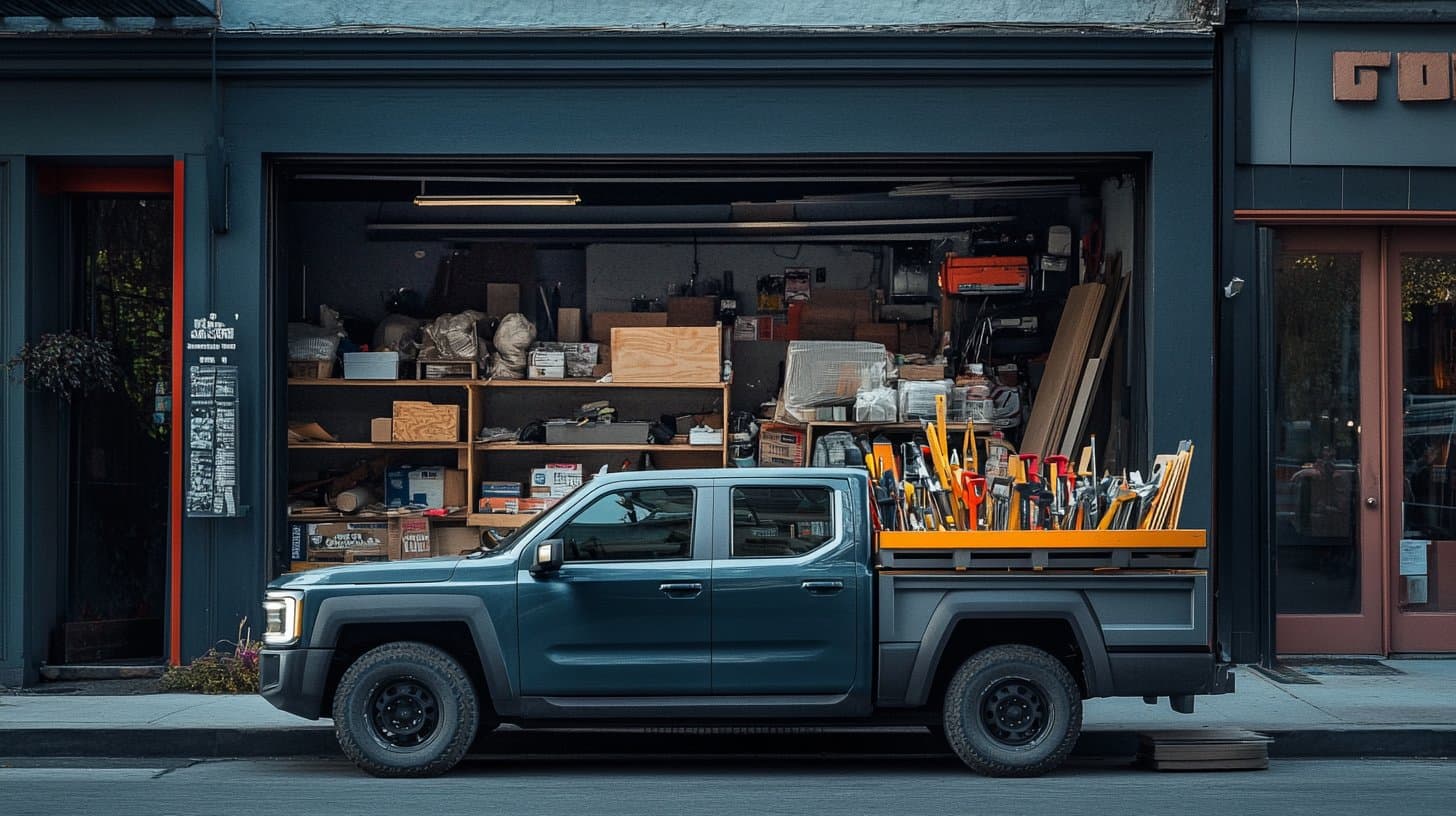
The Slate's nearest competitors aren't EVs at all. They're used gas trucks in the $15,000–$25,000 range and the Ford Maverick hybrid, which starts around $25,000 but is a unibody compact truck, not a body-on-frame workhorse. If Slate delivers on its price and specs, it will have created an entirely new market segment: the affordable electric work truck. See how it compares in our best electric trucks for 2026 roundup.
The Challenges Are Enormous
Manufacturing at Scale
Building concept vehicles is relatively easy. Building tens of thousands of production vehicles per year — consistently, safely, and profitably — is one of the hardest things in manufacturing. Tesla nearly went bankrupt during Model 3 production ramp. Rivian burned through billions before reaching sustainable production rates. Lordstown Motors and Fisker both collapsed trying.
Slate has $105 million in funding. That sounds like a lot until you realize that a single automotive paint shop can cost $400 million. The company will need significantly more capital to build out manufacturing capacity, and the path from prototype to profitable production is littered with the wreckage of startups that underestimated the complexity.
The $25,000–$28,000 Price Point
Slate originally targeted $20,000, but with the federal EV tax credit eliminated in September 2025, the realistic starting price has shifted to $25,000–$28,000 depending on battery choice and configuration. Battery cells alone for the 52.7–84.3 kWh packs cost $5,000–$9,000 at current prices. Add the electric motors, chassis, body panels, interior, safety systems, and assembly labor, and hitting even $25,000 with margin is a challenge that CEO Peter Faricy and the Warsaw factory team are actively working to solve.
Even at $28,000, the Slate still undercuts every other new electric truck by at least $27,000 — and the Blank Slate accessory model means buyers only pay for the features they actually need.
Service and Support Infrastructure
Slate is tackling the service problem differently than other startups. Rather than building its own dealer network, the company has partnered with RepairPal to certify independent shops nationwide for Slate service. This gives owners access to local mechanics they already trust, without Slate needing to build hundreds of service centers from scratch. Whether RepairPal's network can handle EV-specific repairs (high-voltage systems, battery diagnostics) at scale remains to be proven, but it's a smarter approach than going it alone.
What to Watch in the Coming Months
Final pricing confirmation. The $25,000–$28,000 range is current guidance, but final MSRPs by configuration haven't been locked. Watch for official pricing as the Warsaw factory nears production readiness.
Production timeline. CEO Peter Faricy has targeted late 2026 production start at the Warsaw, Indiana facility. Whether that timeline holds will be the biggest test of Slate's execution capability under new leadership.
Final range specifications. The two battery options — 52.7 kWh and 84.3 kWh — are confirmed, but EPA range ratings haven't been published yet. The larger pack should deliver meaningfully more range for buyers who need it, while the smaller pack keeps the base price accessible.
Build quality and crash testing. A $25,000 truck needs to be affordable, not unsafe. NHTSA and IIHS ratings will be critical for mainstream adoption. Buyers will want to see that cost-cutting didn't compromise structural integrity.
The Slate Truck is the most exciting EV proposition in years precisely because it isn't trying to be exciting. It's trying to be useful, affordable, and adaptable — three things that the EV industry has struggled to deliver simultaneously. The Blank Slate customization model, SUV conversion kit, Tesla Supercharger access, and RepairPal service network show that CEO Peter Faricy is thinking about the full ownership experience, not just the sticker price. If the Warsaw factory delivers on schedule in late 2026, Slate won't just sell trucks — it will change the conversation about who electric vehicles are for. Track every new EV launch in our Every New EV 2026 Tracker, or browse current EV deals to find something available right now.