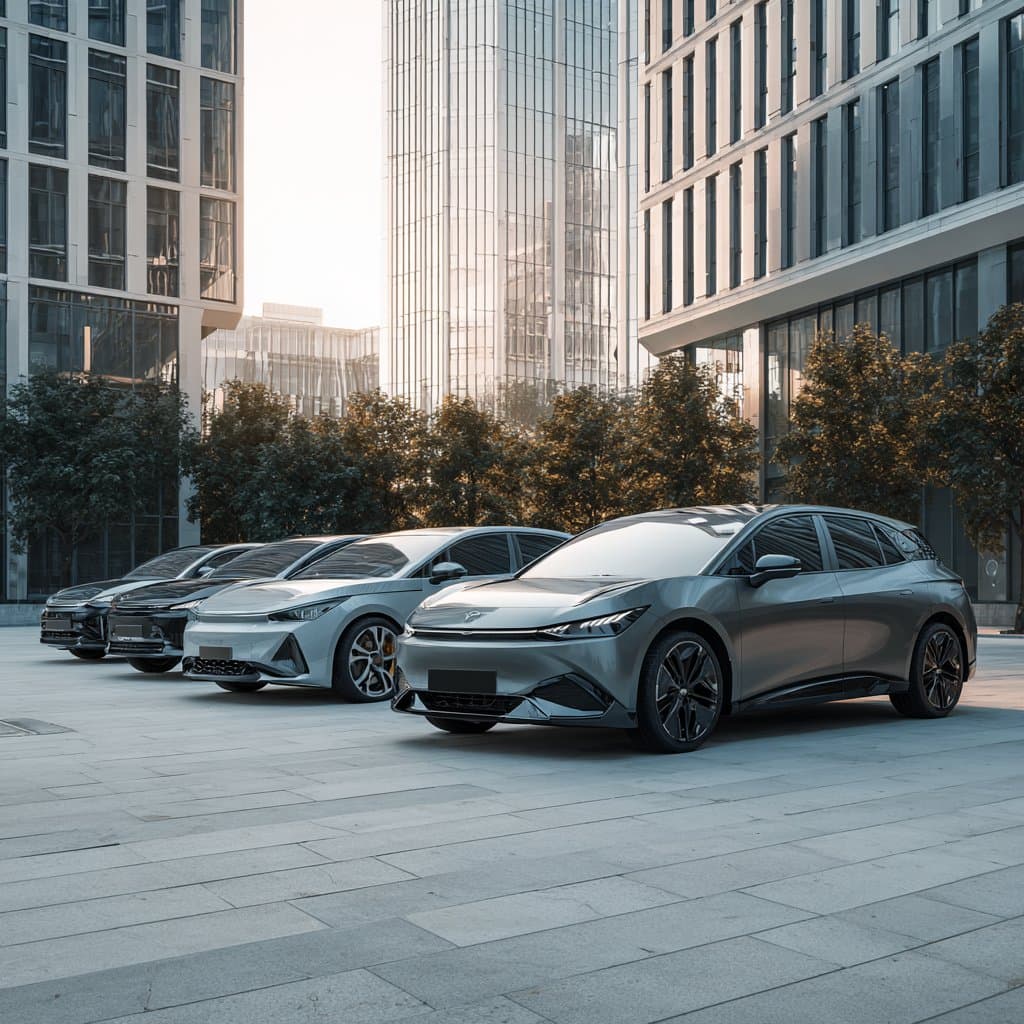
Tesla dominates EV headlines and mindshare, but in 2026, some of the most compelling electric vehicles come from other manufacturers. Whether you're looking for better value, different styling, superior build quality, or simply want to explore your options, these Tesla alternatives deserve serious consideration. This guide covers the best non-Tesla electric cars across every price range and category.
Why Consider Alternatives to Tesla?
Tesla revolutionized the EV market and still offers excellent vehicles, but they're not the only game in town anymore. Here's why many buyers are looking elsewhere:
- •Build quality concerns: Some competitors offer more refined fit and finish
- •Traditional dealership service: Easier access to service centers and loaners
- •Physical buttons and controls: Not everyone loves touchscreen-only interfaces
- •Brand loyalty: Long-time BMW, Mercedes, or Porsche fans can now go electric
- •Value: Some alternatives offer more features or range for the money
Best Budget Tesla Alternatives (Under $45,000)
Chevrolet Equinox EV
Starting at just $35,000, the Equinox EV is one of the best values in the EV market. It offers 319 miles of range, a spacious interior, and GM's proven Ultium platform. The base model undercuts the Model Y by nearly $10,000 while offering comparable space and range.
$35,000
319 miles
6.0 seconds
57 cu ft
Hyundai Ioniq 6
This sleek sedan offers 361 miles of range—more than any Tesla Model 3 variant—and features Hyundai's excellent 800V architecture enabling ultra-fast charging (10-80% in 18 minutes). The aerodynamic design and premium interior punch well above its $45,000 starting price.
$45,000
361 miles
5.1 seconds
10-80% in 18 min
Kia EV6
The EV6 shares its platform with the Ioniq 6 but offers a more practical crossover body style. With striking design, 310 miles of range, and the same ultra-fast charging capability, it's a compelling Model Y alternative with better interior quality and more distinctive styling.
$44,000
310 miles
5.2 seconds
Yes
Best Mid-Range Tesla Alternatives ($45,000-$70,000)
Ford Mustang Mach-E
The Mach-E proved that traditional automakers could build compelling EVs. It offers genuine driving engagement, muscular styling that honors the Mustang heritage, and Ford's extensive dealer network for service. The GT Performance variant delivers 480 horsepower and a 3.5-second 0-60 time.
$46,000
312 miles
3.5s (GT)
Hands-free driving
BMW iX xDrive50
BMW's flagship EV SUV combines the brand's legendary driving dynamics with electric power. The interior is a masterpiece of sustainable luxury with recycled materials and crystal controls. With 324 miles of range and BMW's refined chassis tuning, it's for those who want EV technology wrapped in traditional luxury.
$68,000
324 miles
4.4 seconds
516 hp
Polestar 2
From Volvo's performance brand, the Polestar 2 is a driver's EV with Scandinavian design sensibility. It features a minimalist interior, Google built-in for seamless integration, and chassis tuning from Polestar's racing heritage. The Performance Pack adds Öhlins dampers for serious enthusiasts.
$49,000
320 miles
4.1 seconds
Yes
Best Premium Tesla Alternatives ($70,000+)
Mercedes-Benz EQS SUV
The EQS SUV brings Mercedes' legendary luxury to the electric era. The Hyperscreen dashboard spans 56 inches, rear passengers get executive-class legroom, and the air suspension delivers a magic carpet ride. It's the EV for those who prioritize comfort and prestige above all else.
$105,000
350 miles
4.5 seconds
56-inch display
Porsche Taycan
The Taycan proves electric cars can be genuine sports cars. Porsche's engineering delivers incredible handling, repeatable performance (no thermal throttling), and the build quality you'd expect from Stuttgart. The Turbo S does 0-60 in 2.4 seconds while still offering 280 miles of range.
$92,000
280 miles
2.4s (Turbo S)
162 mph
Lucid Air
If you want to out-Tesla Tesla, the Lucid Air is your car. With up to 516 miles of range (more than any Tesla), 1,234 horsepower in the Sapphire trim, and space efficiency that creates a massive interior in a mid-size footprint, it's the American luxury EV that pushes every boundary.
$70,000
516 miles (max)
1.89s (Sapphire)
1,234 hp
Best Tesla Alternatives for Specific Needs
Best for Families: Rivian R1S
Three-row seating, adventure-ready capability, and 400+ mile range. The ideal Model X alternative.
Best for Commuters: Chevrolet Bolt EUV
At $28,000, it's the most affordable way into a practical EV with 247 miles of range.
Best for Road Trips: Hyundai Ioniq 5
Ultra-fast 800V charging, comfortable interior, and V2L capability for camping.
Best for Truck Buyers: Ford F-150 Lightning
America's best-selling vehicle, now electric. Pro Power Onboard is a game-changer.
Best for Driving Enthusiasts: Porsche Taycan
The only EV that truly feels like a sports car. Unmatched handling and build quality.
The Charging Network Question
One area where Tesla still holds an advantage is their Supercharger network. However, this gap is closing rapidly. Tesla has opened their network to other EVs, and the CCS charging network (Electrify America, EVgo, ChargePoint) continues to expand.
For daily driving with home charging, the network difference is irrelevant. For frequent road trips, check charging coverage along your typical routes before deciding.
Final Thoughts
Tesla deserves credit for pushing the EV market forward, but they're no longer the only compelling choice. The best Tesla alternatives in 2026 offer competitive range, faster charging in some cases, and often better build quality and interior refinement.
The right EV for you depends on your priorities—budget, range, performance, luxury, or practicality. The good news is that no matter what you're looking for, there's likely an excellent non-Tesla option that fits your needs perfectly.