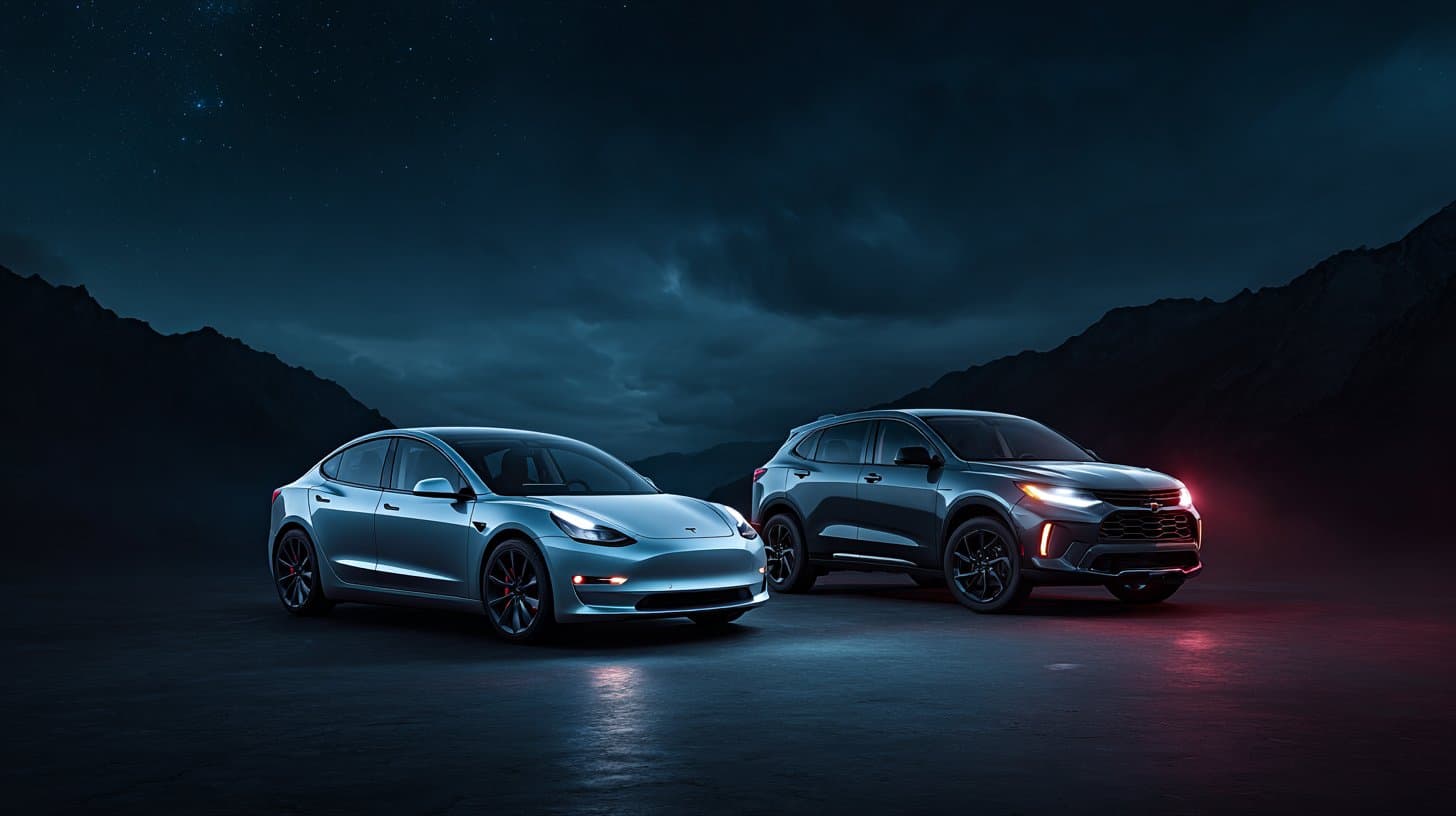
Two of the most talked-about affordable EVs in 2026 are the Tesla Model 3 and the Chevrolet Equinox EV. One is a sleek sedan from the company that defined the modern EV era. The other is GM's mainstream electric SUV that's turned the market upside down with its aggressive pricing. If you're cross-shopping these two, this head-to-head breakdown covers everything — price, range, charging, features, and real-world value.
Price: Advantage Equinox EV
Tesla Model 3 RWD
$38,990
~$31,490
$45,990
$485/mo
Chevy Equinox EV 1LT
$33,900
~$26,400
$40,900
$395/mo
On price alone, the Equinox EV wins decisively. At $26,400 after the federal tax credit versus the Model 3's $31,490, you're saving over $5,000 upfront — and you're getting an SUV instead of a sedan. Even comparing the loaded trims, the Equinox EV 2RS AWD at $40,900 undercuts the Model 3 Long Range AWD at $45,990. GM priced this vehicle to steal market share, and it shows.
Range and Efficiency: A Close Race
The Equinox EV delivers 315 miles of range on its base FWD trim, while the Tesla Model 3 RWD offers 272 miles. That's a 43-mile advantage for the Chevy, which is significant for longer commutes or weekend road trips. Move to the Long Range variants and the gap narrows — the Model 3 LR hits 363 miles while the Equinox EV AWD offers around 285 miles.
In terms of real-world efficiency, the Model 3 has a slight edge. Tesla's aerodynamic sedan shape and efficient drivetrain deliver roughly 3.8 miles per kWh, while the taller Equinox EV manages about 3.4 miles per kWh. In practical terms, that means the Model 3 costs about $2-$3 less per month to charge — not a dealbreaker by any measure.
Charging: Tesla Still Has the Edge
This is where Tesla's first-mover advantage shines. The Supercharger network has over 50,000 connectors across North America, and they're reliably fast, well-maintained, and integrated directly into the navigation system. The Model 3 can add about 175 miles in 15 minutes at a V3 Supercharger.
The Equinox EV uses CCS fast charging and can handle up to 150 kW, adding roughly 70 miles in 10 minutes. The good news is that the CCS network has expanded dramatically in 2026, and many Supercharger stations now support CCS via the Magic Dock adapter. Still, the Tesla charging experience remains smoother — plug in and go, no app juggling, no payment hassles.
Interior and Features: Different Philosophies
The Model 3's interior is famously minimalist — nearly every control lives on the 15.4-inch center touchscreen. There are no physical buttons for climate, no instrument cluster, and no traditional gauges. Some people love the clean design; others find it frustrating, especially when adjusting the mirrors or wipers mid-drive.
The Equinox EV takes a more conventional approach with an 11.2-inch infotainment screen plus a separate 11-inch driver display. You get physical climate controls, Apple CarPlay and Android Auto (which Tesla still doesn't offer), and a layout that feels immediately familiar to anyone coming from a gas car. For buyers who want a normal-feeling car that happens to be electric, the Equinox EV delivers.
Practicality and Space
This category goes to the Equinox EV without contest. As an SUV, it offers a higher seating position, more headroom, easier entry and exit, and 29.5 cubic feet of cargo space behind the rear seats (57.2 with seats folded). The Model 3, as a sedan, offers 23 cubic feet in the trunk plus a 3 cubic foot frunk. If you regularly haul groceries, sports equipment, or kids' gear, the Equinox EV's SUV form factor is hard to beat.
Safety and Driver Assistance
Both vehicles offer strong safety suites. Tesla's Autopilot comes standard with adaptive cruise control, lane keeping, and automatic emergency braking. Full Self-Driving capability is available for $12,000 or $199/month. The Equinox EV includes Chevy Safety Assist as standard (automatic emergency braking, lane keep assist, front pedestrian braking) and offers Super Cruise on higher trims — GM's hands-free highway driving system that many reviewers consider more refined than Tesla's Autopilot for highway use.
The Verdict: Who Wins?
Choose the Chevy Equinox EV if: you want the lowest possible price, need SUV space, prefer a traditional interior with CarPlay/Android Auto, or are coming from a gas SUV and want a familiar experience. At $26,400 after the tax credit, it's the best value in the EV market right now.
Choose the Tesla Model 3 if: you value the Supercharger network, want over-the-air updates that add features over time, prefer a sportier driving experience, or plan to use Full Self-Driving. Tesla's ecosystem and software experience remain best-in-class.
For most mainstream buyers, the Equinox EV represents the better overall value in 2026. But the Model 3 remains an excellent choice for tech-forward drivers who prioritize the Tesla ecosystem.
Still Can't Decide?
Take our free EV Match quiz to compare these models side by side based on your driving habits, budget, and lifestyle — and see exactly how much you'd save switching from gas.
Try the EV Match Tool