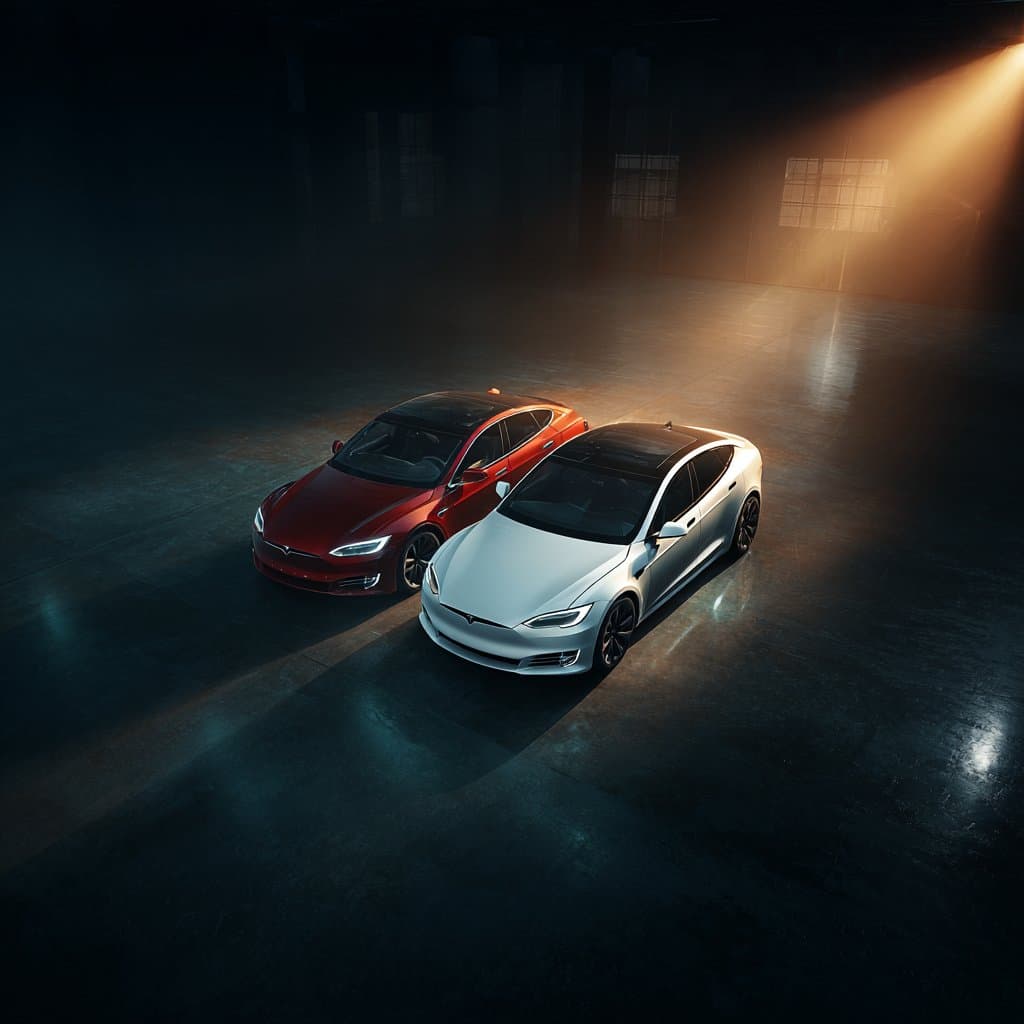
It's official. Elon Musk confirmed this week that Tesla has stopped producing the Model S sedan and Model X SUV. Custom orders are no longer being accepted, and only about 600 vehicles remain in inventory worldwide.
Musk shared the news on X alongside a throwback photo from the original Model S production launch at the Fremont factory in June 2012, writing: “We will have an official ceremony to mark the ending of an era.”
And that's exactly what this is — the end of an era. The cars that proved electric vehicles could be fast, luxurious, and desirable are leaving the stage. Here's what happened, what it means if you own one, and where Tesla goes from here.
The cars that changed everything
It's hard to overstate what the Model S did for the electric vehicle industry. When it launched in 2012, the EV market consisted of golf carts with license plates. The Nissan Leaf had a 73-mile range. The idea of a luxury electric sedan that could outrun a BMW M5 was laughable.
Then the Model S showed up with 265 miles of range, a 17-inch touchscreen, and over-the-air updates. It won Motor Trend's Car of the Year — unanimously. Consumer Reports gave it their highest score ever recorded. It didn't just compete with gas-powered luxury sedans. It embarrassed them.
The Model X followed in 2015 with those dramatic falcon-wing doors, a bioweapon defense mode air filtration system, and the distinction of being the quickest SUV ever built. It became a status symbol in Silicon Valley and beyond.
Together, these two vehicles did something no amount of marketing or government incentives could accomplish: they made electric cars cool. They proved that going electric didn't mean sacrificing performance, luxury, or range. Every EV that followed — from the Porsche Taycan to the Rivian R1S to the Lucid Air — exists in a market that the Model S and Model X created.
Why Tesla pulled the plug
The decision wasn't sudden. Sales of the Model S and Model X had been declining for years. In their peak year, Tesla delivered over 100,000 units of the two models combined. By recent quarters, that number had dropped to a fraction of that.
Several factors drove the decline.
The Model 3 and Model Y cannibalized them. When Tesla launched the Model 3 in 2017 at roughly half the price of a Model S, it opened the floodgates. The Model Y followed in 2020 and quickly became the best-selling car in the world — not just the best-selling EV, but the best-selling car, period. Customers who might have stretched for a Model S found themselves perfectly happy with a Model 3 Performance for $30,000 less.
The competition caught up at the top. In 2012, the Model S had zero competition. By 2026, luxury EV buyers can choose from the Lucid Air (which beat the Model S in range), the Mercedes EQS (which beat it in interior luxury), the Porsche Taycan (which matched it in driving dynamics), and the BMW i7 (which offered a more traditional luxury experience). The Model S still performed well, but it was no longer the only game in town.
Production economics didn't make sense. The Fremont factory needed the production line capacity for the Model Y, which generates far more revenue per square foot than the low-volume S and X. Tesla's focus has shifted to manufacturing scale and cost reduction — building fewer expensive cars and more affordable ones.
The Cybertruck absorbed the halo-car role. Tesla used to need the Model S Plaid to generate headlines with its sub-2-second 0-60 time. Now the Cybertruck does that job while also generating actual sales volume.
What this means if you own a Model S or Model X
If you're one of the hundreds of thousands of Model S or Model X owners on the road, here's what you need to know.
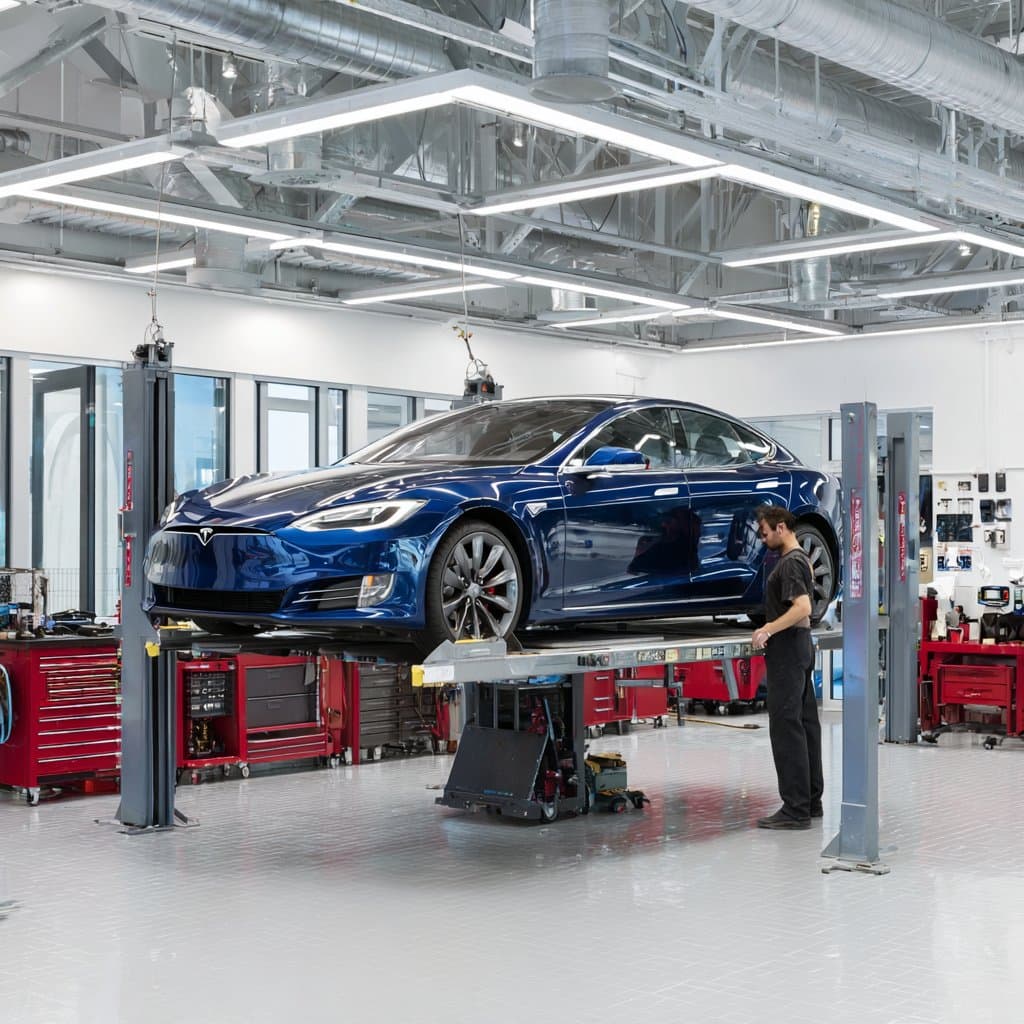
Parts and service will continue. Tesla is legally obligated to support existing vehicles, and they've committed to continuing parts availability and service for the foreseeable future. Your car won't become unsupported overnight. Tesla's service network has also expanded significantly, with service centers now in most major metro areas.
Software updates will likely continue for a while. Tesla has historically maintained software support for older models, though feature additions slow down over time. Don't expect major new features, but security updates and bug fixes should continue.
Resale values will be interesting. This is where things get unpredictable. On one hand, discontinued models sometimes become collector's items — especially significant ones like the Model S Plaid. On the other hand, the used EV market is currently being flooded with vehicles from lease returns, which is pushing prices down across the board. The practical daily-driver Model S variants will likely depreciate normally, while the limited-production Plaid models with low miles could hold or increase in value.
Third-party service options are growing. Independent Tesla-certified shops have been growing rapidly. If you're concerned about long-term service access, having a relationship with a trusted independent shop is smart planning.
Where Tesla goes from here
With the Model S and Model X gone, Tesla's lineup looks like this:
Model 3 — The compact sedan that democratized Tesla ownership. Still one of the best-selling EVs in the world and recently refreshed with updated interior and improved range.
Model Y — Tesla's bread and butter. The best-selling vehicle on the planet. This is where the majority of Tesla's revenue comes from, and it's not going anywhere.
Cybertruck — Tesla's bold (and polarizing) entry into the truck market. Slowly ramping production and finding its audience among buyers who want something truly different.
Tesla Semi — The commercial truck that's in limited production and targeting fleet customers. Not a consumer product, but an important part of Tesla's long-term strategy.
What's notably missing is a true luxury vehicle. The Model S was Tesla's flagship — the car that said “this is what Tesla is capable of at its best.” Without it, Tesla's most expensive consumer vehicle is the Cybertruck, which is a very different statement.
The rumored next-generation Tesla Roadster has been promised for years but has yet to materialize. If and when it arrives, it could fill the halo-car role. But for now, Tesla is a company focused on volume rather than luxury.
The bigger picture
Tesla discontinuing the Model S and Model X is more than just a product decision. It's a signal about where the entire EV market is heading.
The era of proving that EVs can be great is over. That argument has been won. The current battle is about affordability, accessibility, and scale. Tesla is betting that selling millions of Model Ys matters more than selling thousands of Model S sedans. And the market data supports that bet — Toyota's affordable bZ just posted 78.8% sales growth in Q1 2026, while luxury EV sales are struggling across the board.
For consumers, the practical takeaway is this: if you want a luxury electric sedan, you now have more choices than ever — Lucid Air, Mercedes EQS, BMW i7, Porsche Taycan — but you won't be buying one from the company that started it all.
The Model S didn't just change Tesla. It changed the entire automotive industry. Every electric vehicle on the road today owes something to that 2012 sedan that proved electric could be better, not just different.
It earned its ceremony.