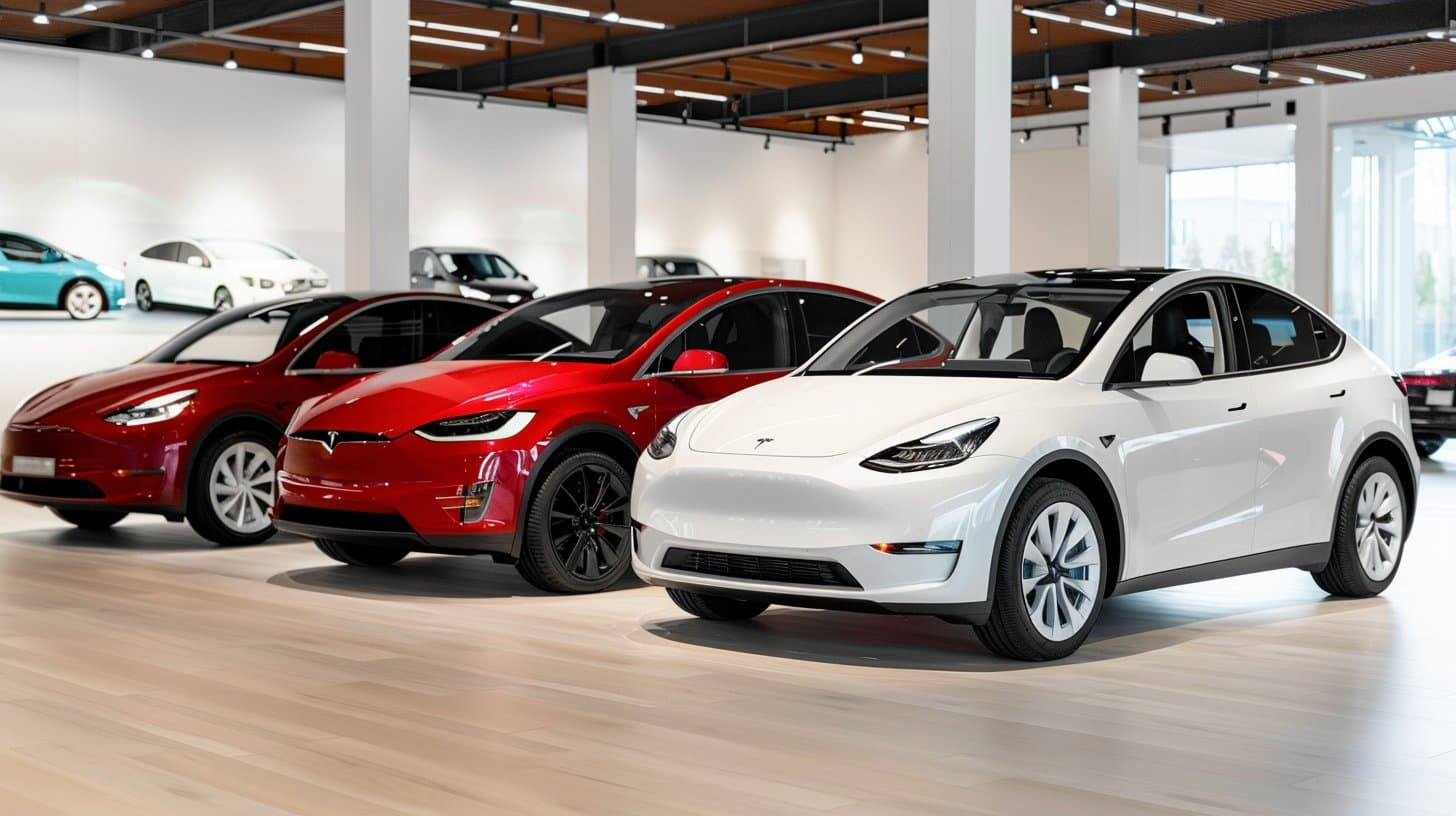
Three brands dominate the mainstream EV conversation in 2026: Tesla, Hyundai, and Chevrolet. Each takes a fundamentally different approach to electric vehicles — and the right choice depends entirely on what you prioritize. Here's how they compare head-to-head across their most popular models.
Brand Philosophies
Tesla — Tech-First: Tesla builds EVs like software companies build products. The cars are hardware platforms that improve over time through over-the-air updates. The Supercharger network, Autopilot, and deep vertical integration (Tesla controls the battery, software, charging network, and sales) create a walled-garden ecosystem that's seamless when you're inside it.
Hyundai — The Balanced Approach: Hyundai builds EVs that compete on traditional automotive merits — build quality, ride comfort, interior design, and charging speed — while matching or exceeding Tesla on technology. The 800V architecture across the Ioniq lineup delivers the fastest charging speeds in the mainstream market. Hyundai also offers something Tesla doesn't: vehicle-to-load (V2L) power, letting you use your car as a portable power source.
Chevrolet — Value Leader: Chevy's EV strategy is straightforward: deliver competitive range and features at the lowest possible price. The Equinox EV starts thousands below comparable Tesla and Hyundai models while offering more range than either. GM's massive dealer network provides service access that smaller EV brands can't match.
Head-to-Head Comparison: The Numbers
Here's how the most popular model from each brand stacks up:
Tesla Model Y
Starting Price: $44,990
Range: 310 miles (Long Range RWD)
DC Fast Charging: 250 kW (Supercharger)
0–60 mph: 5.9 seconds
Cargo Space: 76 cu ft (seats folded)
Hyundai Ioniq 5
Starting Price: $41,800
Range: 303 miles (Long Range RWD)
DC Fast Charging: 350 kW (800V architecture)
0–60 mph: 7.4 seconds
Cargo Space: 59.3 cu ft (seats folded)
Chevrolet Equinox EV
Starting Price: $33,900
Range: 319 miles (LT RWD)
DC Fast Charging: 150 kW
0–60 mph: 6.0 seconds
Cargo Space: 57.2 cu ft (seats folded)
Choose Tesla If…
You value the Supercharger network. Tesla's charging network remains the most reliable and widespread in North America. While other networks are improving (and now support NACS connectors), Tesla Superchargers are still the gold standard for road trip reliability. If you road trip frequently, this matters.
You want Autopilot and the software ecosystem. Tesla's driver assistance technology, over-the-air updates, and app integration are best-in-class. The car improves after you buy it — new features, better navigation, refined driving dynamics — all delivered wirelessly.
You're comfortable with a minimalist interior. The Model Y's interior is polarizing — no physical buttons, no instrument cluster, everything through the center touchscreen. If you love it, it feels futuristic. If you don't, it feels incomplete.
Explore the full Tesla lineup and deals.
Choose Hyundai If…
You want the fastest charging. The Ioniq 5's 800V architecture supports 350 kW DC fast charging — 10 to 80% in approximately 18 minutes at a compatible charger. No Tesla or Chevy matches this. For buyers who rely on public fast charging or take frequent road trips, this is a genuine competitive advantage.
You need vehicle-to-load (V2L) power. The Ioniq 5 can power external devices, appliances, and even other EVs from its battery. This is useful for camping, tailgating, power outages, or running tools at a job site. Tesla and Chevy don't offer this on their mainstream models.
You want a premium interior feel at a mainstream price. The Ioniq 5's interior design, materials, and ambient lighting are a step above the Model Y and Equinox EV. It feels like a $50K+ car inside, at a $41,800 starting price.
Explore the full Hyundai EV lineup and deals.
Choose Chevy If…
Budget is your top priority. At $33,900, the Equinox EV is $7,900 cheaper than the Ioniq 5 and $11,090 cheaper than the Model Y — while delivering more range than either. On a dollars-per-mile-of-range basis, no mainstream EV comes close.
You want the most range per dollar. The Equinox EV's 319 miles at $33,900 works out to roughly $106 per mile of range. The Model Y costs $145 per mile, and the Ioniq 5 costs $138 per mile. If maximizing range while minimizing cost is your goal, Chevy wins decisively.
You prefer a traditional dealer and service experience. GM's 4,000+ Chevy dealers provide easy access to service, warranty work, and test drives. For buyers who want a familiar purchase and ownership experience, Chevy's infrastructure is unmatched.
Explore the full Chevrolet EV lineup and deals.
What About Charging Speed?
Charging speed is where these three brands diverge most sharply. Hyundai's 800V architecture is the fastest, capable of adding 200+ miles in under 20 minutes at a high-power charger. Tesla's V4 Superchargers are fast and incredibly convenient. Chevy's 150 kW maximum is the weakest link — a full 10–80% charge takes roughly 40–45 minutes.
For buyers who primarily charge at home and rarely fast charge, the Equinox EV's slower DC speed is a non-issue. For frequent road trippers or buyers without home charging, the Ioniq 5's speed advantage is significant.
The Bottom Line
There's no wrong choice among these three in 2026. Each delivers a compelling, fully competitive electric vehicle. The question is which set of trade-offs best matches your priorities:
Tesla Model Y — best ecosystem, best charging network, best software. Premium price for a tech-forward experience.
Hyundai Ioniq 5 — fastest charging, premium interior, V2L capability. The well-rounded choice.
Chevrolet Equinox EV — most affordable, most range per dollar, widest service network. The value champion.
Compare all three and 47 more EVs on our EV Deals page, or use our EV Match Tool for a personalized recommendation based on your driving habits and budget.