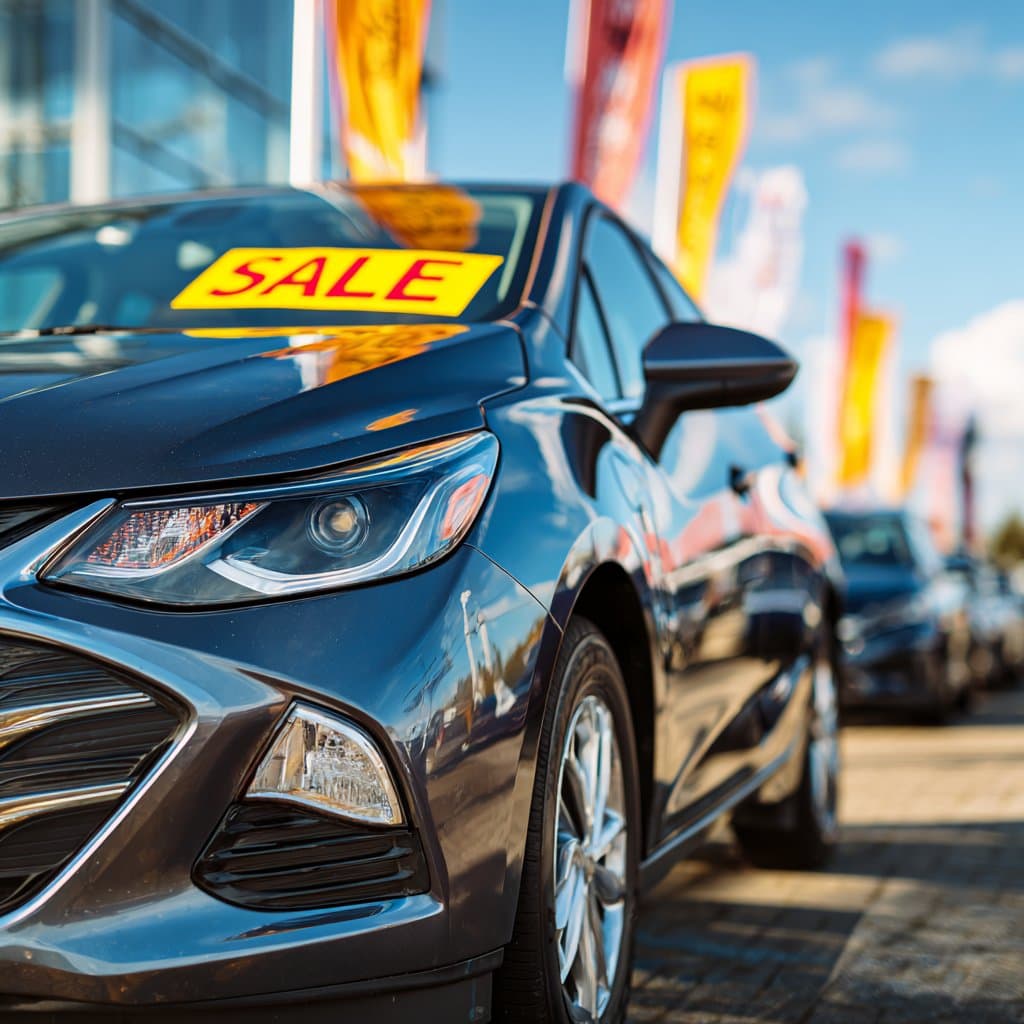
Something remarkable happened in the first quarter of 2026 that most car buyers haven't caught onto yet. Used electric vehicles are now priced within $1,300 of equivalent used gas cars. The average used EV costs $34,821. The average used gas car costs $33,487. That gap used to be over $10,000 just three years ago.
At the same time, gas prices are climbing above $4 per gallon thanks to the Middle East conflict, and a wave of barely-used lease returns is flooding dealer lots with three-year-old EVs in excellent condition.
If you've been waiting for the right time to buy an electric car, the window just opened.
Why used EV prices collapsed (in a good way)
Three forces converged to create this buyer's market.
The lease return tsunami. Between 2023 and 2025, the federal government's IRA incentive included what became known as the “leasing loophole.” Even EVs that didn't qualify for the $7,500 purchase credit could capture the full amount through a lease, because the credit went to the leasing company, which passed the savings to consumers through lower monthly payments. Millions of Americans leased EVs during this period.
Those leases are now ending. The vehicles are coming back to dealers — low-mileage, well-maintained, still under warranty in many cases — and they need to be sold. Cox Automotive projects that EV and plug-in hybrid lease returns will ramp through 2028, with monthly volumes climbing toward 50,000 electric vehicles per month hitting dealer lots.
New EV inventory is building up. New EV sales dropped 28% in Q1 2026 after the federal tax credit expired. Automakers are offering incentives and cutting prices on new models to move metal, which pushes used prices down in turn. When you can buy a new Chevy Equinox EV for $33,000, a three-year-old one needs to be priced significantly lower to compete.
Market maturation. Early EV depreciation was unpredictable because there was no track record. Now, with millions of EVs on the road and years of resale data available, buyers and dealers are more confident in valuating used EVs. That confidence, combined with increased supply, has brought prices to rational levels.
The numbers that matter
The Cox Automotive Q1 2026 data tells a clear story:
93,500 used EVs sold in Q1 2026 — up 12% from Q1 2025 and up 17% from Q4 2025. This isn't a slow trickle. Used EV sales are accelerating.
42 days' supply for used EVs — compared to 38 days for used gas cars. Used EVs are turning on dealer lots at nearly the same rate as gas cars. When a vehicle sells that fast, it means the price is right and the demand is real.
$34,821 average price — within $1,300 of the used gas car average. For context, that $34,821 buys you a vehicle with lower fuel costs, lower maintenance costs, and access to the HOV lane in many states.
5.8 million EVs on US roads — and they're being driven more than ever. Public charging sessions hit 141 million in 2025, up 30%. The infrastructure is catching up, which makes owning a used EV more practical than ever.
The best used EVs to look for right now
Not all used EVs are created equal. Here are the models flooding the market that represent the best value.
Tesla Model 3 (2022–2023)
This is the volume play. More Model 3s were leased than almost any other EV, and they're coming back in large numbers. A 2022–2023 Model 3 with 30,000–40,000 miles can be found for $24,000–$28,000 depending on trim. You get Tesla's Supercharger network, over-the-air updates, Autopilot, and a car that still feels modern. Battery degradation on these models has been minimal — most retain 90%+ of original range.
Hyundai Ioniq 5 (2022–2023)
One of the best values in the used market right now. The Ioniq 5 was already competitively priced new, and used examples are showing up under $26,000. You get 800-volt architecture (which means 10–80% charging in about 18 minutes), a spacious interior that rivals vehicles a class above, and one of the best infotainment systems in the business. Look for the Long Range RWD variant for maximum range.
Ford Mustang Mach-E (2022–2023)
The Mach-E has depreciated more aggressively than some competitors, which means better deals for used buyers. You can find well-equipped models under $27,000. The driving dynamics are genuinely fun, the interior quality is solid, and Ford's BlueCruise hands-free highway driving is one of the better implementations of driver assistance technology.
Chevrolet Bolt EUV (2022–2023)
If you want the absolute cheapest entry into EV ownership, the Bolt EUV is it. Used examples are appearing under $18,000. No, it doesn't have 800-volt charging or a luxury interior. But it gets 250+ miles of range, it's practical, it's reliable, and at that price, the fuel savings alone can pay for the car within a few years.
Volkswagen ID.4 (2022–2023)
VW's electric crossover has been overshadowed by flashier competitors, but used examples offer strong value. Look for them under $24,000. The interior quality is typical Volkswagen — solid and well-assembled — and the ride comfort is excellent for a vehicle at this price point.
Kia EV6 (2022–2023)
Like its Hyundai cousin, the EV6 benefits from 800-volt fast charging. Used prices have dropped below $28,000 for well-equipped models. If you prefer a sportier driving experience than the Ioniq 5, the EV6 delivers it with the same platform and charging speed.

What to check before buying a used EV
Buying a used EV is slightly different from buying a used gas car. Here's what to look for.
Battery health is the big one. Most EVs have a battery health indicator accessible through the vehicle's screen or a diagnostic tool. You want to see 85% or higher state-of-health for a three-year-old vehicle. Anything below 80% should give you pause. Most manufacturer battery warranties cover 8 years or 100,000 miles, so check whether warranty coverage remains.
Charging port condition matters. Inspect the charging port for damage or corrosion. If the previous owner was rough with public chargers, the port can show wear. Also verify that the vehicle's onboard charger accepts the charging speeds it's supposed to — a degraded onboard charger will slow home charging.
Check the software version. Many EVs receive over-the-air updates that add features and fix issues. A used EV running outdated software might be missing important functionality. Make sure it's on the latest available version, or at minimum that it's capable of being updated.
Tire wear is accelerated on EVs. Electric vehicles are heavier and produce instant torque, which wears tires faster than gas cars. Budget for new tires sooner than you might expect — typically every 25,000–30,000 miles versus 40,000–50,000 for a gas car.
Verify the home charging situation. If you plan to charge at home, make sure your electrical panel can support a Level 2 charger (240V, 40–50 amps). Installation typically costs $500–$1,500. If you live in an apartment, verify access to charging infrastructure — either on-site or nearby public stations.
The math makes it undeniable
Let's run the numbers for a typical buyer. Say you're considering a used 2022 Tesla Model 3 at $26,000 versus a used 2022 Toyota Camry at $24,000.
Over three years of ownership at 15,000 miles per year:
The Camry at 32 MPG with gas at $4.20 per gallon costs roughly $5,900 in fuel. Add $3,000 in maintenance (oil changes, brake pads, transmission fluid, filters) and you're at $8,900 in running costs.
The Model 3 at 3.5 miles per kWh with electricity at $0.13 per kWh costs roughly $1,670 in electricity. EV maintenance over three years is typically $600–$800 (tire rotations, cabin air filter, washer fluid). Total running costs: about $2,400.
That's $6,500 less to operate the Tesla over three years — more than covering the $2,000 higher purchase price and putting $4,500 back in your pocket.
With gas prices rising, that gap only widens.
How to find the best deals
Dealer inventory is your friend right now. With lease returns flooding lots, dealers are motivated to move used EVs quickly. Don't be afraid to negotiate — inventory sitting for more than 30 days is costing them money.
Certified pre-owned programs offer peace of mind. Tesla, Hyundai, Kia, Ford, and others offer CPO programs with extended warranties, multi-point inspections, and sometimes additional perks like complimentary charging credits.
Check multiple markets. EV pricing varies significantly by region. States with high EV adoption (California, Washington, Colorado) tend to have more supply and competitive pricing. Some dealers will ship vehicles for a reasonable fee.
Timing matters. The lease return wave is just starting. Inventory will increase throughout 2026 and into 2027, which means prices may drop further. But current prices are already excellent, and waiting means paying for gas in the meantime.
The bottom line
The used EV market in 2026 is offering something that hasn't existed before: electric vehicles at near-parity pricing with gas cars, combined with rising fuel costs that make the ownership math a no-brainer. A three-year-old EV coming off lease with warranty remaining, low miles, and proven battery health is one of the smartest automotive purchases available today.
The question isn't whether used EVs are worth it anymore. The question is how long these prices will last before the market figures it out.