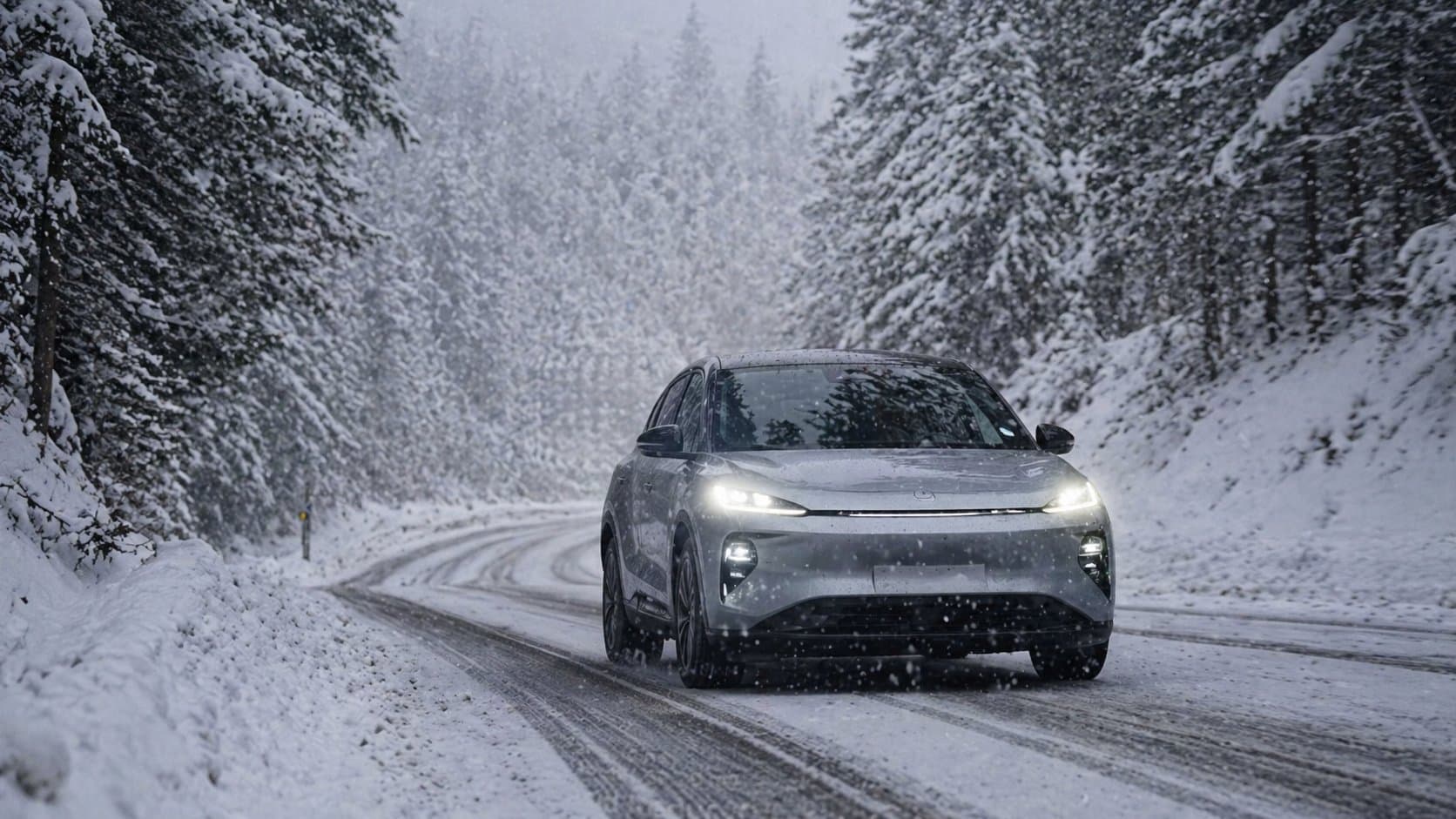
Winter driving demands a specific combination of capabilities: all-wheel drive for traction on snow and ice, adequate ground clearance for unplowed roads, reliable cold-weather range, and heated cabin features that keep the family comfortable during commutes in single-digit temperatures. Electric SUVs with dual-motor AWD systems actually have a winter advantage over gas-powered AWD — the electric motors respond to traction loss instantly (milliseconds vs the 100+ milliseconds that mechanical AWD transfer cases require), providing faster, smoother traction control on slippery surfaces. Here are the best options for winter drivers in 2026.
How Winter Affects EV Performance
Range Reduction
Cold weather reduces EV range by 15–30% depending on temperature and cabin heating usage. A 300-mile summer range becomes 210–255 miles in winter. The primary causes are battery chemistry (lithium-ion cells produce less power at low temperatures), cabin heating (electric resistance heaters draw 3–5 kW continuously, directly reducing driving range), and increased rolling resistance from cold tires on cold pavement. For a deeper look at staying safe and efficient in cold weather, see our EV winter driving tips guide.
How to Minimize Winter Range Loss
Pre-condition the cabin while plugged in at home — heating the car before departure uses grid electricity instead of battery charge. Use heated seats and heated steering wheel instead of cabin air heating — seat heaters consume 50–100 watts versus 3,000–5,000 watts for the cabin heater, providing comfort at a fraction of the energy cost. Set cabin temperature to 65–68°F instead of 72°F — each degree reduction saves approximately 1–2% range. And keep the battery above 20% in cold weather, as cold batteries charge slower and operate less efficiently at very low states of charge.
The Best Winter AWD Electric SUVs
Best Overall: Hyundai Ioniq 5 AWD
Starting price: $49,650 (SE AWD)
Range: 260 miles (EPA, AWD)
Winter range estimate: 182–221 miles
Ground clearance: 6.1 inches
The Ioniq 5's heat pump system is the key winter differentiator — heat pumps are 2–3x more efficient than resistance heaters for cabin heating, meaning less range loss from heating in cold weather. The AWD system sends power to all four wheels through independent front and rear motors, providing instant traction response on snow and ice. The battery pre-conditioning system warms the battery before DC fast charging in cold weather, maintaining charging speeds that non-preconditioned batteries lose in winter. The Ioniq 5 is the winter EV that loses the least range to cold weather, thanks to its heat pump efficiency.
Best Range in Cold Weather: Tesla Model Y Long Range AWD
Starting price: $49,990
Range: 311 miles (EPA, AWD)
Winter range estimate: 218–264 miles
Ground clearance: 6.6 inches
The Model Y's superior EPA range provides the largest winter buffer — even with 25% cold-weather loss, 233+ miles of winter range exceeds most competitors' summer range. Tesla's heat pump (standard since 2021) and Octovalve thermal management system efficiently redistributes waste heat from the motors and battery to cabin heating, reducing range loss. The Supercharger network's winter reliability is a genuine advantage — other charging networks can have frozen cables, non-functional screens, and cold-weather failures that Tesla's heated cables and more robust hardware avoid.
Best Off-Road Winter Capability: Rivian R1S
Starting price: $75,900
Range: 321 miles (Large Pack)
Winter range estimate: 225–273 miles
Ground clearance: Up to 14.9 inches (adjustable air suspension)
The R1S is the winter EV for drivers who deal with unplowed roads, steep snowy driveways, and genuine backcountry conditions. Quad-motor AWD provides independent torque control to each wheel — the most sophisticated traction management system available in any production vehicle. Adjustable air suspension raises ground clearance to 14.9 inches — higher than a Jeep Wrangler. The heated windshield washer fluid system prevents frozen nozzles. And Camp Mode provides climate-controlled overnight stays in the vehicle — useful for ski trips where you want to sleep in the car at the trailhead parking lot. Explore the lineup on our Rivian brand hub.
Best Value Winter AWD: Chevrolet Equinox EV AWD
Starting price: $37,900 (AWD models)
Range: 280–310 miles (EPA, depending on trim)
Winter range estimate: 196–264 miles
Ground clearance: 7.8 inches
The Equinox EV AWD provides the most accessible entry point for winter AWD electric driving. At $37,900, it costs less than most gas-powered AWD SUVs of similar size while providing 280–310 miles of summer range — enough that even 25% winter loss leaves 210+ usable miles. GM's Ultium battery platform includes battery pre-conditioning for cold-weather charging. The 7.8 inches of ground clearance handles moderate snow accumulation on unplowed residential streets.
Best Three-Row Winter Family: Kia EV9 AWD
Starting price: $61,395 (Land AWD)
Range: 270 miles (EPA, AWD)
Winter range estimate: 189–230 miles
Ground clearance: 7.8 inches
For families who need three-row seating AND AWD for winter conditions, the EV9 is the only option that does not compromise on either requirement. The heat pump system minimizes winter range loss. 800V ultra-fast charging means cold-weather road trips are still manageable with 15–20 minute charging stops. And the massive interior keeps the entire family comfortable during winter commutes — heated second-row seats are available to keep backseat passengers warm without maxing out the cabin heater. For more options in the family-SUV segment, check out our best electric family SUVs of 2026 roundup.
Winter Tires Are Non-Negotiable
Regardless of which winter AWD EV you choose, winter tires transform winter capability. All-season tires on an AWD EV provide adequate winter traction. Winter tires on an AWD EV provide exceptional winter traction. The compound difference is dramatic — winter tires reduce braking distances on snow and ice by 20–40% compared to all-season tires, regardless of drivetrain.
Budget $600–$1,200 for a set of winter tires mounted on separate wheels (steel wheels are fine for winter sets). Swap them on in November and off in April. The safety improvement is worth more than any AWD system — tires are the primary traction interface between the car and the road.
The Bottom Line
AWD electric SUVs are genuinely excellent winter vehicles — dual-motor AWD provides faster traction response than mechanical AWD, electric motors deliver smooth torque that reduces wheelspin, and the heavy battery pack lowers the center of gravity for improved stability on slippery roads. The Hyundai Ioniq 5 AWD offers the best winter efficiency through its heat pump. The Tesla Model Y AWD offers the best winter range buffer. The Rivian R1S offers the best off-road winter capability. And the Equinox EV AWD offers the best value entry point for winter electric driving. Add winter tires to any of these, and you have a vehicle that handles winter better than most gas-powered alternatives at any price.
Ready to compare winter-ready electric SUVs side by side? Browse current pricing and incentives on our EV deals page to find the right AWD electric SUV for your climate.