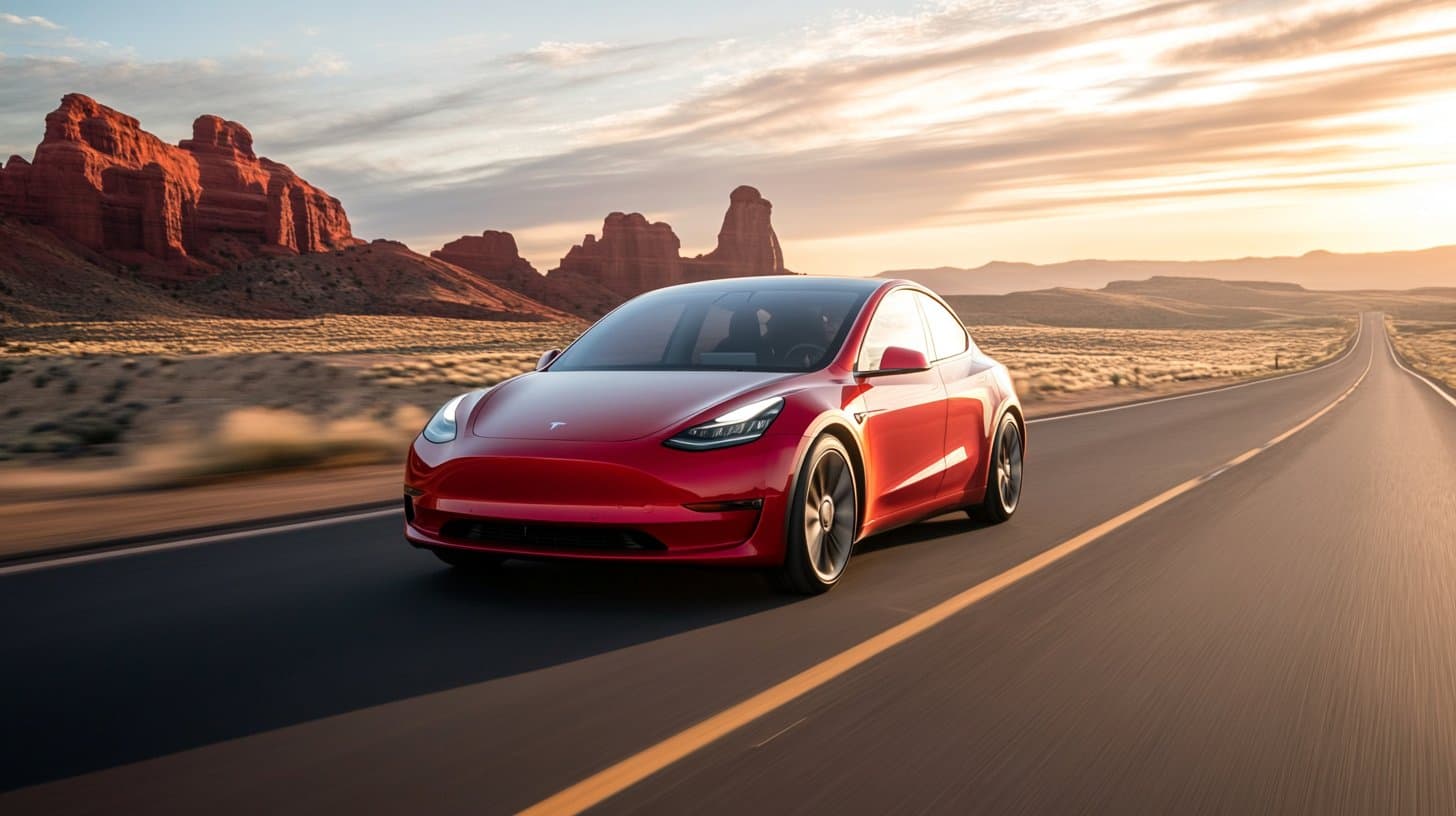
Planning an electric road trip used to mean spreadsheets full of charger locations, constant range calculations, and a lingering sense of dread that you might end up stranded between exits. Not anymore. The best EVs for road trips in 2026 offer 300+ miles of range, ultra-fast charging that adds hundreds of miles in minutes, and access to charging networks that now blanket every major highway corridor in the country. Range anxiety is officially a thing of the past — and these five electric vehicles prove it.
What Makes an EV Great for Road Trips
Not every electric vehicle is created equal when it comes to long-distance travel. A car that excels at daily commuting might fall short on a cross-country adventure. The best electric cars for long distance driving share four critical attributes that separate road trip champions from city-only runabouts.
Range is the most obvious factor. You want at least 280 miles of real-world range to comfortably cover the distance between charging stops without white-knuckling the last 30 miles. EPA estimates are a starting point, but real-world highway range at 70-75 mph with climate control running is what actually matters. Expect 15-20% less than the sticker number on highway drives.
Fast charging speed determines how long you spend waiting versus driving. An EV that charges from 10% to 80% in 18 minutes transforms a bathroom-and-coffee break into a full recharge. Vehicles with 800-volt architecture and peak rates above 200 kW dramatically reduce downtime compared to older 400-volt systems that max out at 150 kW.
Charging network access is equally vital. The fastest-charging EV in the world is useless if there are no compatible stations along your route. Tesla's Supercharger network, now open to all EVs via NACS, has fundamentally changed the equation for every brand. Electrify America and ChargePoint round out coverage in areas where Superchargers are sparse.
Finally, comfort and driver assistance matter more than you might think. Highway driving for 8-10 hours demands supportive seats, a quiet cabin, and ideally a hands-free driving system that reduces fatigue. These features separate an enjoyable journey from an exhausting one.
Top 5 Road Trip EVs for 2026
1. Tesla Model Y Long Range
330 miles
250 kW
Tesla Supercharger
The Tesla Model Y remains the gold standard for EV road trips, and the reason is simple: the Supercharger network. With over 60,000 Supercharger stalls across North America and route planning baked directly into the navigation system, long-distance travel in a Model Y is as thoughtless as it gets. The car tells you where to stop, how long to charge, and whether you need to adjust your speed to make the next station. It just works.
The 2026 refresh brought improved interior materials, ventilated front seats, and a rear passenger display — all welcome additions for long highway stints. With 330 miles of range, most drivers will stop every 2.5 to 3 hours, which aligns naturally with the breaks your body needs anyway. Charging from 10% to 80% takes roughly 25 minutes at a V3 Supercharger, just enough time to stretch your legs and grab food. For families and couples who want zero-stress road tripping, the Tesla Model Y is the benchmark everyone else is chasing.
2. Hyundai Ioniq 5
303 miles
350 kW (800V)
800-volt E-GMP
If charging speed is your top priority, the Hyundai Ioniq 5 is virtually unbeatable. Its 800-volt architecture enables charging from 10% to 80% in just 18 minutes at a compatible 350 kW station — faster than any Tesla. That means your charging stops can be as brief as a quick restroom visit. In real-world road trip conditions, the Ioniq 5 often spends less total time charging than vehicles with longer range but slower charging curves.
Beyond the charging speed, the Hyundai Ioniq 5 delivers a remarkably comfortable road trip experience. The completely flat floor creates expansive legroom in both rows, and the reclining front seats let passengers nap during charging stops. The vehicle-to-load feature can power a portable cooler, laptop, or even camping equipment, making it a versatile companion for adventures that extend beyond the pavement. With 303 miles of range and the fastest charging in its class, the Ioniq 5 turns long drives into surprisingly relaxing affairs.
3. Kia EV6
310 miles
350 kW (800V)
3.4 seconds
The Kia EV6 shares the Ioniq 5's exceptional 800-volt charging platform but wraps it in a sportier, more aerodynamic package. With 310 miles of range in Long Range trim, it edges ahead of its Hyundai sibling on distance between stops. The same 18-minute 10-80% charging capability applies here, giving the EV6 one of the best range-to-charge-time ratios in the entire EV market.
For drivers who want their road trip vehicle to also be genuinely fun, the Kia EV6 GT variant delivers 576 horsepower and a 3.4-second 0-60 time — supercar performance in a practical crossover. Even the standard models offer sharp, responsive handling that makes winding mountain roads a highlight rather than a chore. Kia's 10-year/100,000-mile powertrain warranty adds peace of mind for those high-mileage road trip enthusiasts who put serious distance on their odometers every year.
4. Ford Mustang Mach-E
312 miles
150 kW
BlueCruise Hands-Free
The Ford Mustang Mach-E earns its spot on this list not because of raw charging speed — at 150 kW, it trails the 800-volt competition — but because of BlueCruise. Ford's hands-free highway driving system covers over 130,000 miles of divided highways across North America, allowing you to take your hands off the wheel and let the car manage steering, acceleration, and braking. On a 10-hour drive, that level of fatigue reduction is transformative.
The Ford Mustang Mach-E Extended Range delivers 312 miles per charge, and Ford's access to the Tesla Supercharger network via the NACS adapter has eliminated its biggest previous weakness. The front trunk is perfectly sized for road trip snacks and coolers, the cabin is whisper-quiet at highway speeds, and Ford's nationwide dealer network means service is never far away if anything goes wrong mid-trip. It's the road trip EV for people who prioritize driving comfort above all else.
5. Lucid Air
516 miles
300 kW
Longest Range EV
If range is king, the Lucid Air wears the crown. With an EPA-rated 516 miles on the Grand Touring trim, the Lucid Air can drive from Los Angeles to San Francisco and back — on a single charge. That kind of range fundamentally changes the road trip equation. Instead of planning around chargers, you plan around destinations. Many road trips that would require two or three charging stops in other EVs need only one in a Lucid Air, or none at all.
The 300 kW DC fast charging capability means that when you do stop, charging is swift — roughly 20 minutes from 10% to 80%. The interior is a first-class lounge with a glass canopy roof that floods the cabin with natural light, premium materials throughout, and a 34-inch curved display that makes navigation effortless. Yes, the Lucid Air commands a premium price, but for high-mileage drivers and road trip enthusiasts who want the absolute longest range available in any production EV, nothing else comes close.
Charging Network Coverage in 2026
The charging landscape has transformed dramatically and is a major reason why EV road trips are now genuinely practical. The Tesla Supercharger network, long the gold standard for reliability and coverage, opened its doors to all EVs via the NACS connector standard. With over 60,000 stalls across North America, Superchargers are now spaced every 50-70 miles along virtually every interstate and major highway. This single change eliminated the biggest advantage Tesla vehicles had over the competition.
Electrify America operates the second-largest DC fast charging network with stations in 47 states, many offering 350 kW charging speeds that fully exploit 800-volt vehicles like the Ioniq 5 and EV6. Their stations are typically located at Walmart and premium shopping centers, giving you productive options during charging stops.
ChargePoint rounds out the big three with the largest overall network of Level 2 and DC fast chargers, particularly strong in urban areas and along secondary highways that the other networks may not cover. Between these three networks, there are now more public EV charging locations in the United States than gas stations in most states — a milestone that seemed impossible just five years ago.
Road Trip Planning Tips
- 1.Use your car's built-in route planner. Most modern EVs calculate energy consumption based on elevation, speed, weather, and cargo weight. Tesla's navigation and Hyundai/Kia's systems are particularly accurate and will route you through optimal charging stops automatically.
- 2.Plan charging stops around meals and breaks. A 20-30 minute fast charge aligns perfectly with a sit-down lunch or a stretch break. Time your stops so charging never feels like waiting — it becomes part of the natural rhythm of the trip.
- 3.Precondition your battery before arriving at a charger. Most EVs can warm or cool the battery while driving to the charger, ensuring you hit peak charging speeds the moment you plug in. This alone can shave 5-10 minutes off each stop.
- 4.Download backup charging apps. Keep PlugShare, ChargePoint, and your vehicle's native app installed. If your planned charger is occupied or down, you can instantly reroute to the next nearest option without panic.
- 5.Travel at moderate speeds. Aerodynamic drag increases exponentially with speed. Driving at 70 mph instead of 80 mph can add 30-40 miles of real-world range. On a multi-stop trip, that difference can eliminate an entire charging stop.
- 6.Check charger availability in real time. Apps like PlugShare show live availability and user reviews for each station. Avoid stations that are consistently reported as broken or perpetually full by checking recent reviews before you commit to a stop.
The 20-80% Rule
Here is the single most important charging strategy for road trips: charge from 20% to 80% and then get back on the road. This is not arbitrary — it is rooted in battery chemistry. Lithium-ion batteries charge fastest between 20% and 80% state of charge. Below 20%, the battery management system slows charging to protect cell health. Above 80%, charging speed drops dramatically as the system carefully balances individual cells to prevent damage.
In practical terms, charging from 10% to 80% in a Hyundai Ioniq 5 takes about 18 minutes. Charging from 80% to 100% takes an additional 25-30 minutes. That last 20% of capacity effectively triples your time spent at the charger for minimal range gain. Smart road trippers arrive at each charger around 15-20%, charge to 80%, and move on. This approach minimizes total trip time because you spend proportionally more time driving and less time watching a progress bar crawl.
The only exception is your final stop of the day. If you are arriving at your hotel or destination with no plans to drive further, you can charge to 100% while you sleep or explore. Overnight Level 2 charging at hotels is increasingly common and costs a fraction of DC fast charging — another reason to plan your overnight stops at EV-friendly accommodations.
Find Your Road Trip EV
Compare prices, specs, and deals on the best electric vehicles for long-distance travel. Our EV Best Price Finder helps you lock in the lowest price available.
Browse EV Deals