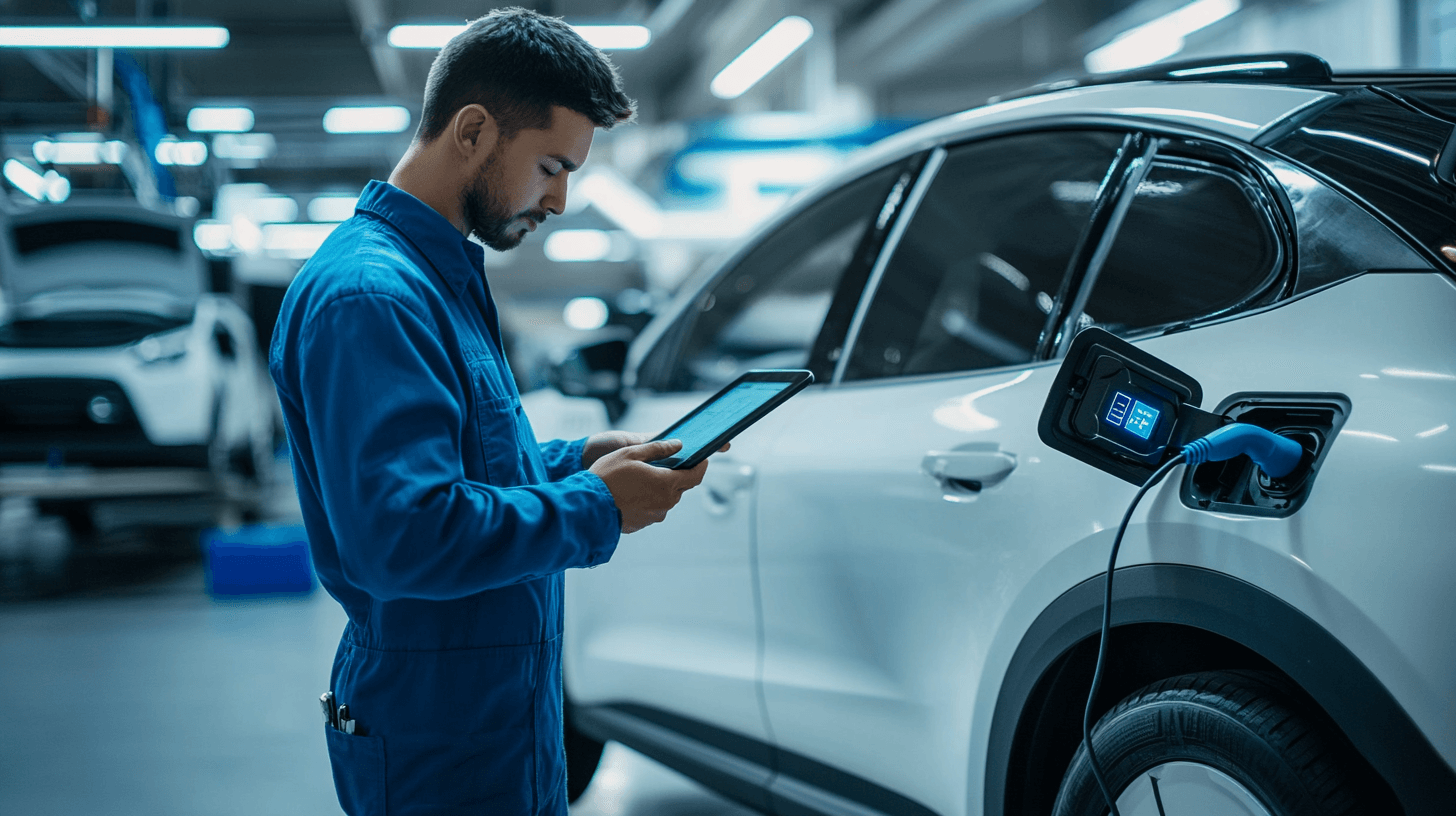
The battery is the most expensive component in any electric vehicle — often accounting for 30-40% of the total vehicle cost. Understanding what your battery warranty covers, how claims work, and what can void it is essential knowledge for every EV owner and buyer.
Federal Warranty Requirements
In the United States, federal regulations require all EV manufacturers to provide a minimum battery warranty. However, most manufacturers exceed the federal minimum:
- •Federal minimum: 8 years / 100,000 miles for the battery pack and electric drivetrain
- •California and CARB states: 10 years / 150,000 miles (applies to 15+ states that follow California emissions standards)
These are minimums. Many manufacturers offer more generous terms, especially for premium models.
Battery Warranty by Manufacturer
| Manufacturer | Duration | Capacity Guarantee | Transferable? |
|---|---|---|---|
| Tesla | 8 yr / 120,000-150,000 mi | 70% retention | Yes |
| Hyundai | 10 yr / 100,000 mi | 70% retention | Yes |
| Kia | 10 yr / 100,000 mi | 70% retention | Yes |
| BMW | 8 yr / 100,000 mi | 70% retention | Yes |
| Ford | 8 yr / 100,000 mi | 70% retention | Yes |
| Rivian | 8 yr / 175,000 mi | 70% retention | Yes |
| Mercedes (EQ) | 10 yr / 155,000 mi | 70% retention | Yes |
| Chevrolet | 8 yr / 100,000 mi | 70% retention | Yes |
Warranty terms may vary by model and model year. Always verify with your specific vehicle's documentation.
What "70% Capacity Retention" Means
Most EV battery warranties guarantee the battery will retain at least 70% of its original capacity during the warranty period. Here's what that looks like in practice:
- •Original range: 300 miles — If the battery degrades below 210 miles of capacity (70%), the manufacturer must repair or replace it under warranty.
- •At 75% capacity: Your 300-mile EV now gets about 225 miles. This is normal degradation and is NOT covered by the warranty.
- •At 68% capacity: Your 300-mile EV now gets about 204 miles. This IS covered — you can file a warranty claim.
Most modern EVs retain 85-95% battery capacity at the 8-year mark under normal use. Reaching the 70% threshold within the warranty period is relatively uncommon with current battery technology.
What's Covered vs. What's Not
Typically Covered
- ✓Complete battery failure (won't hold charge)
- ✓Capacity degradation below the guaranteed threshold (typically 70%)
- ✓Defective battery cells or modules
- ✓Battery management system (BMS) failures
- ✓Thermal management system defects
Typically NOT Covered
- ✕Normal capacity degradation above the guaranteed threshold
- ✕Damage from accidents, flooding, or physical impact
- ✕Unauthorized modifications to the battery or charging system
- ✕Using non-approved charging equipment that causes damage
- ✕Range reduction due to extreme temperatures (temporary, not degradation)
What Happens During a Warranty Claim?
- Report the issue to a dealer — Bring your EV to an authorized service center. Describe the symptoms — reduced range, charging errors, or capacity loss.
- Diagnostic testing — The dealer runs manufacturer-specific diagnostic software to assess battery health, individual cell voltages, and capacity. This is the definitive measurement.
- Manufacturer review — The diagnostic data is sent to the manufacturer for review and claim approval. This can take days to weeks depending on the manufacturer.
- Repair or replacement — If approved, the manufacturer will either replace individual battery modules (most common) or the entire pack. Replacement batteries are often refurbished packs with new cells in the existing casing.
- No cost to you — Warranty repairs are fully covered including parts and labor. You should not be charged anything for a legitimate warranty claim.
How to Maximize Battery Longevity
Following these practices helps ensure your battery stays healthy well beyond the warranty period:
- ✓Keep daily charge between 20-80% — Avoid keeping the battery at 100% or letting it drop near 0% regularly. Charge to 100% only before long trips.
- ✓Minimize DC fast charging — Level 2 home charging is gentler on the battery. Use DC fast charging for road trips, not daily charging.
- ✓Park in shade when possible — Extreme heat accelerates battery degradation. A garage-kept EV will have better long-term battery health.
- ✓Precondition the battery — In cold weather, precondition while plugged in. This uses grid power instead of battery power to warm the pack.
- ✓Keep software updated — Manufacturers frequently push battery management optimizations via over-the-air updates. Stay current.
Warranty Considerations for Used EV Buyers
If you're buying a used EV, the battery warranty is one of the most important factors:
- ✓Check transferability — Most manufacturers transfer the battery warranty to subsequent owners. Verify this for your specific model.
- ✓Check remaining warranty — A 2020 EV with an 8-year warranty has coverage until 2028. Calculate how much time and mileage remain.
- ✓Request a battery health report — Ask the seller or dealer for a current State of Health (SOH) reading. This shows the battery's current capacity as a percentage of original.
- ✓Review service history — Look for evidence of regular maintenance and whether any battery-related service has been performed.
Beyond the Warranty
When the warranty expires, your battery doesn't suddenly fail. Modern EV batteries are designed to last 200,000+ miles with reasonable care. The warranty is a floor, not a ceiling. Most EV owners who follow basic charging best practices will never need a warranty claim.
If your battery does eventually need replacement out of warranty, the cost has been dropping steadily. Battery pack prices have fallen roughly 90% since 2010, and that trend continues. Third-party repair shops specializing in EV batteries are also emerging, offering alternatives to dealer pricing.