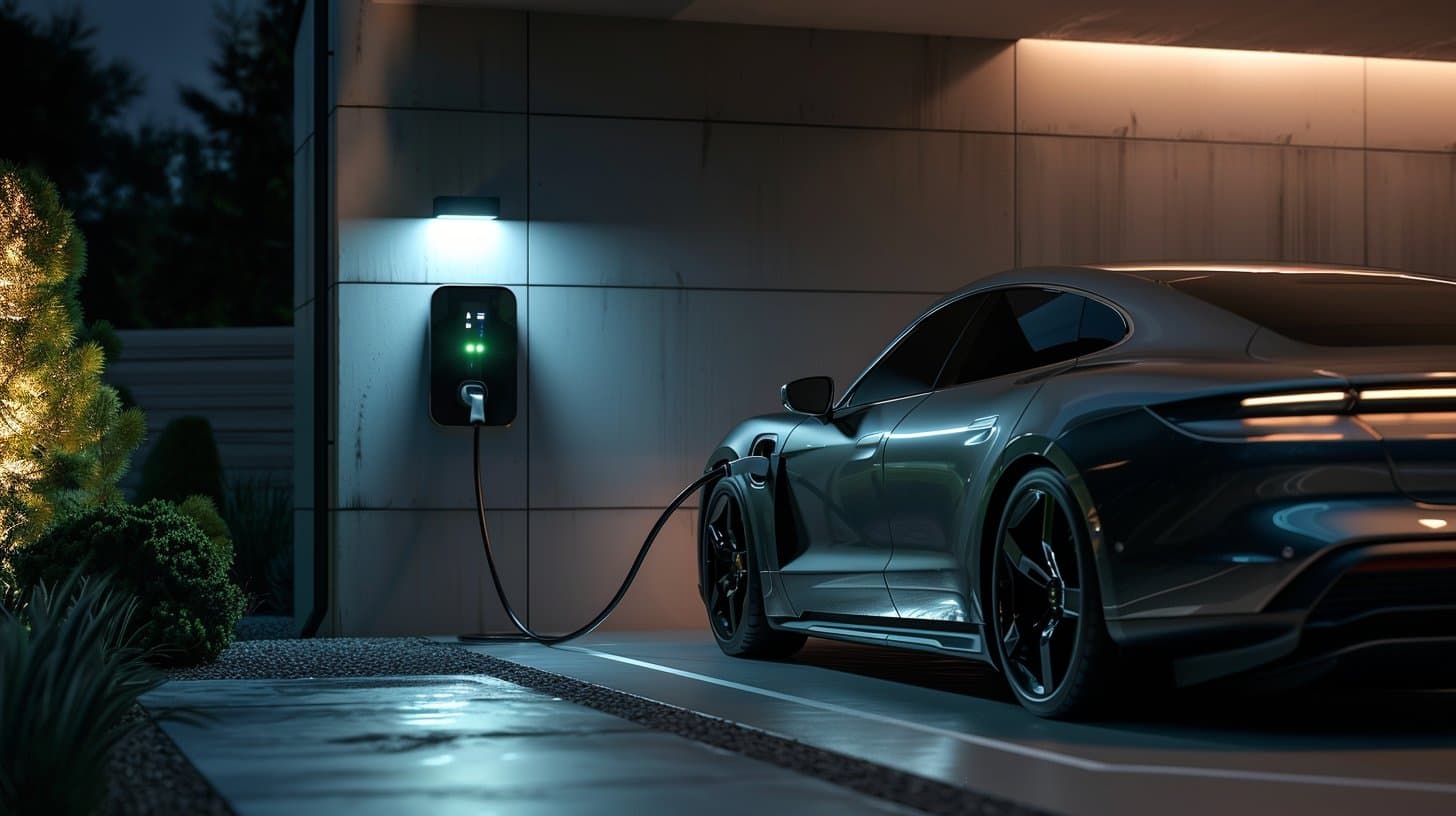
Home charging is the single biggest convenience advantage of owning an electric vehicle. You wake up every morning with a “full tank” without ever visiting a gas station. But the options can be confusing — Level 1, Level 2, hardwired vs plug-in, 40-amp vs 48-amp. This guide breaks down exactly what you need, what it costs, and how to set it up in 2026.
Level 1 Charging — The Free Option You Already Have
Every EV comes with a Level 1 charging cable that plugs into a standard 120V household outlet. It's the slowest option, adding roughly 3–5 miles of range per hour, which translates to about 30–50 miles overnight on a 10-hour charge. That sounds low, but for many drivers it's enough.
If your daily commute is under 40 miles round-trip, Level 1 charging will fully replenish your battery every night with zero additional equipment cost. It's especially practical for plug-in hybrids with smaller batteries. The main downside? If you drain the battery on a long day or forget to plug in, catching up takes a long time.
Level 1 at a Glance
120V (standard outlet)
3–5 miles
30–50 miles
$0 (included with EV)
Best for: daily commutes under 40 miles, plug-in hybrids, renters who can't modify wiring, or anyone who wants zero upfront cost.
Level 2 Charging — The Gold Standard for Home
Level 2 charging uses a 240V circuit — the same type that powers your clothes dryer or oven. It delivers 25–40 miles of range per hour, meaning a full charge from near-empty takes 6–10 hours depending on battery size. For most EV owners, this means plugging in after dinner and waking up to 100% every single morning.
Installation costs vary depending on your home's electrical setup. If you already have a 240V outlet in your garage (like a dryer outlet), you can buy a plug-in charger and start immediately. If you need new wiring from your electrical panel, expect to pay $1,000–$3,000 total including the charger, electrician labor, permits, and any panel upgrades.
Level 2 at a Glance
240V (dedicated circuit)
25–40 miles
6–10 hours (empty to full)
$1,000–$3,000
Best for: any EV owner with a garage or dedicated parking spot. This is the setup 85% of EV owners use daily.
Best Home EV Chargers in 2026
The charger market has matured significantly. Here are the top picks for 2026, covering different budgets and needs.
ChargePoint Home Flex
50 amps / 12 kW
$599–$699
Yes — full scheduling
Most EV owners
The ChargePoint Home Flex remains the most popular home charger for good reason. It's adjustable from 16 to 50 amps, works with every EV on the market, has excellent app integration for scheduling off-peak charging, and carries a 3-year warranty. It's the charger we recommend most often.
Grizzl-E Classic
40 amps / 9.6 kW
$399–$459
Optional (Smart model)
Budget-conscious buyers
The Grizzl-E is built like a tank — NEMA 4 rated for outdoor use, avalanche-tested, and backed by a 3-year warranty. If you don't need app connectivity and want something rugged and affordable, this is the best value in home charging.
Tesla Wall Connector
The Tesla Wall Connector now comes with a J1772 adapter and works with non-Tesla EVs, though it's still optimized for Tesla vehicles. Sleek design, easy installation, and seamless Tesla app integration make it the obvious choice for Tesla owners. It also supports power sharing if you install multiple units.
Emporia EV Charger
48 amps / 11.5 kW
$449–$499
Yes — energy monitoring
Energy-conscious homes
Emporia's charger stands out with built-in energy monitoring that tracks exactly how much electricity your EV uses and what it costs. Combined with their home energy monitor, you get a complete picture of your home's energy usage. Great value at under $500 with smart features included.
Apartment and Condo Charging Options
Not everyone has a garage, and that used to be a dealbreaker for EV ownership. In 2026, the options for apartment dwellers have expanded significantly. Many newer apartment complexes now include shared Level 2 chargers in the parking garage. If yours doesn't, here are practical alternatives.
Workplace charging is the next best thing to home charging. More employers are installing Level 2 chargers as an employee perk, and an 8-hour workday gives you a full charge. Public Level 2 networks at grocery stores, malls, and parking garages can supplement your routine. And DC fast charging at stations from Electrify America, Tesla Superchargers (now open to all EVs), and ChargePoint can add 150–200 miles in 20–30 minutes.
If you have an assigned parking spot with a nearby outlet, even Level 1 charging from a standard 120V outlet can work for moderate commutes. Some apartment residents have negotiated with property managers to install a dedicated 240V outlet — the cost is relatively low and increases property value.
Cost Comparison: EV Home Charging vs Gas
The savings from charging at home are substantial. At the national average electricity rate of about $0.14 per kWh, driving an EV costs roughly $0.04 per mile. A comparable gas car averaging 30 mpg at $3.50 per gallon costs about $0.12 per mile — three times as much.
Annual Fuel Cost (12,000 miles/year)
$444/year
3.3 mi/kWh × $0.14/kWh
$1,400/year
30 mpg × $3.50/gal
Annual savings: ~$956 — that's $80/month back in your pocket
Charge during off-peak hours (typically 9 PM to 6 AM) and your costs drop even further. Many utilities offer EV-specific time-of-use rates that can cut your charging cost in half. In Florida, FPL's off-peak rate can bring your annual EV fuel cost below $300.
Installation Tips and What to Ask Your Electrician
When hiring an electrician for Level 2 charger installation, get at least two quotes and ask these questions: Does your panel have capacity for a 50-amp circuit? Is your panel close to the garage, or will a long wire run increase cost? Do you need a permit, and does the electrician handle that? Will they install a NEMA 14-50 outlet (for plug-in flexibility) or hardwire directly?
A NEMA 14-50 outlet gives you the most flexibility — you can unplug the charger and take it with you if you move. Hardwired installations are slightly cleaner-looking and can support higher amperage in some cases. Either way, make sure the circuit is on a dedicated breaker with no other loads sharing it.
Find the Best EV for Home Charging
Every EV handles home charging a little differently. Compare real-time pricing, charging speeds, and specs on our EV Best Price Finder.
Browse EV DealsRelated Reading
EV Best Price Finder
Compare real-time pricing across 50 EV models from top dealerships.
ToolEV Charging Station Finder
Find public charging stations near you when home charging isn't an option.
GuideBest EVs for Road Trips 2026
When home charging isn't enough — which EVs handle long trips best?
ComparisonEV Maintenance Costs vs Gas Cars 2026
The real numbers on what EVs cost to maintain compared to gas vehicles.