Buying an electric vehicle is one of the biggest financial decisions you can make in 2026, and the sticker price only scratches the surface. The true EV ownership cost involves a complex mix of purchase incentives, charging expenses, maintenance savings, insurance premiums, and depreciation. Whether you are considering your first EV or comparing it against a traditional gas car, this guide breaks down every dollar so you can make an informed decision. By the end, you will have a clear picture of what it really costs to drive electric and how to maximize your savings.
Purchase Price: Sticker Shock vs Reality
The most common objection to EVs remains the upfront cost. In 2026, the average new electric vehicle carries an MSRP of roughly $52,000, compared to about $48,000 for the average new car overall. That gap looks daunting at first glance, but the reality is far more nuanced once you factor in available incentives and the expanding range of affordable models.
The federal EV tax credit remains the single most powerful tool for reducing your purchase price. Qualifying buyers can claim up to $7,500 off their federal tax liability for new EVs, and starting in 2024 the point-of-sale transfer option lets you receive that discount immediately at the dealership rather than waiting until tax season. To qualify, your modified adjusted gross income must fall below $150,000 for single filers or $300,000 for joint filers, and the vehicle must meet domestic manufacturing and battery sourcing requirements.
Beyond the federal credit, state incentives can stack thousands more in savings. Colorado offers a $5,000 state tax credit. California provides up to $7,500 in rebates for qualifying low-income buyers. New Jersey exempts EVs from sales tax entirely. Oregon offers rebates up to $7,500. Even in states without direct rebates, many utility companies provide charger installation rebates worth $500 to $1,500. When you combine federal and state incentives, a $45,000 EV can effectively cost as little as $30,000 to $35,000, putting it squarely in line with or below a comparable gas vehicle.
Example: Effective Purchase Price After Incentives
Charging Costs: Home vs Public
Fuel is where EV ownership starts to save you real money every single month. The average American drives about 13,500 miles per year. With an EV averaging 3.5 miles per kWh and a national average electricity rate of around $0.16 per kWh, your monthly home charging bill works out to roughly $30 to $50 per month. That is a dramatic difference compared to gasoline.
Level 2 Home Charging
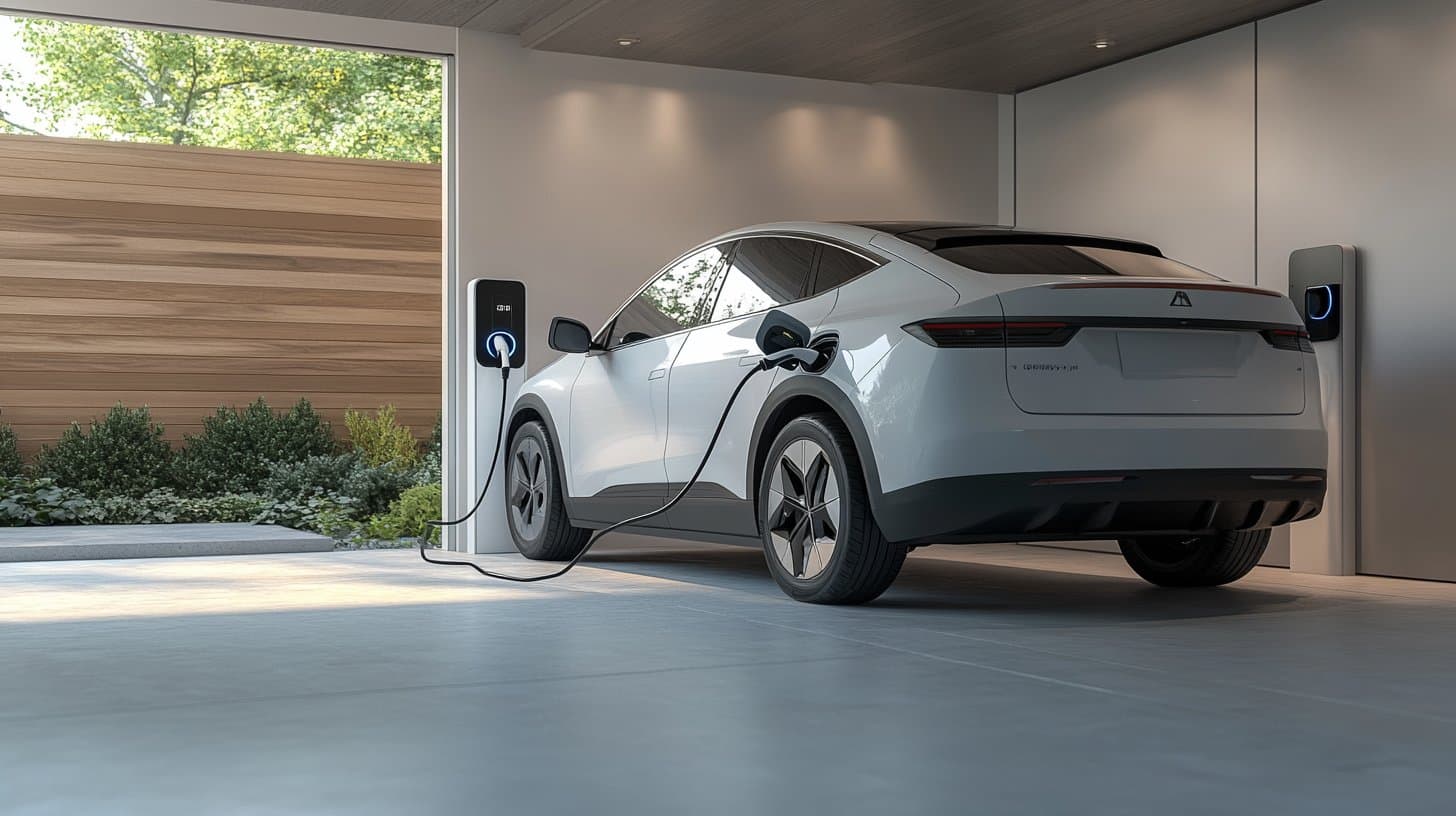
Most EV owners install a 240-volt Level 2 charger at home, which adds about 25 to 30 miles of range per hour of charging. The charger unit itself costs $300 to $700, and professional installation typically runs $500 to $1,500 depending on your electrical panel situation. Many utilities offer time-of-use rates that let you charge overnight at discounted rates as low as $0.08 per kWh, cutting your monthly charging cost to as little as $20 to $30. The federal government also provides a tax credit covering 30 percent of charger installation costs, up to $1,000.
Public and DC Fast Charging
Public DC fast charging is more expensive, ranging from $0.30 to $0.50 per kWh at networks like Electrify America, EVgo, and ChargePoint. Tesla Supercharging averages $0.25 to $0.35 per kWh. If you rely primarily on public charging, your monthly costs might reach $80 to $120, which is still significantly less than gasoline. The key takeaway: even in the worst-case public charging scenario, you spend less than you would at the pump.
Monthly Fuel Cost Comparison
Over the course of a year, a home-charging EV owner saves roughly $1,200 to $1,800 on fuel compared to driving a gas-powered vehicle that gets 28 miles per gallon. Over five years, that adds up to $6,000 to $9,000 in fuel savings alone, which is a significant chunk of the purchase price difference.
Maintenance Savings
This is where electric vehicles truly shine compared to their gas-powered counterparts. An EV drivetrain has roughly 20 moving parts compared to over 2,000 in a traditional internal combustion engine. Fewer moving parts means dramatically fewer things that can break, wear out, or need servicing.
With an EV, you never need oil changes, transmission fluid flushes, spark plug replacements, timing belt service, or exhaust system repairs. Those are some of the most common and expensive maintenance items for gas cars. Regenerative braking, which recovers energy by using the electric motor to slow the car, also significantly reduces brake pad and rotor wear. Many EV owners report their original brake pads lasting 100,000 miles or more, compared to 30,000 to 50,000 miles on a typical gas car.
Average Annual Maintenance Costs
The typical EV owner spends around $600 per year on maintenance, which covers tire rotations, cabin air filters, windshield wipers, washer fluid, and the occasional 12-volt battery replacement. A comparable gas vehicle owner spends roughly $1,200 per year on maintenance when you add in oil changes, transmission service, brake work, and other engine-related upkeep. That $600 annual savings translates to $3,000 over five years of ownership.
Insurance: The Hidden Cost
Insurance is one area where EVs currently come with a premium. On average, electric vehicles cost 15 to 25 percent more to insure than comparable gas-powered cars. There are several reasons for this: EV repair costs tend to be higher due to specialized parts and labor requirements, battery damage can be extremely expensive to fix, and the vehicles themselves often have higher replacement values.
For a mid-range EV like the Tesla Model Y, expect to pay approximately $2,000 to $2,600 per year for full coverage, compared to $1,600 to $2,000 for a comparable gas SUV like the Toyota RAV4. Over five years, that insurance premium gap adds up to $2,000 to $3,000 in additional costs.
However, there are several strategies to reduce your EV insurance costs. Shop around aggressively, as rates vary wildly between insurers. Ask about EV-specific discounts that some companies now offer. Bundle your home and auto policies. Increase your deductible if you have an emergency fund. Consider usage-based insurance programs, which often favor EV drivers who charge at home and drive predictable routes. Finally, maintaining a clean driving record remains the most effective way to keep premiums low regardless of what you drive.
Depreciation and Resale Value
Depreciation is typically the single largest cost of vehicle ownership, and it is where EVs have historically struggled. Early electric vehicles depreciated rapidly due to concerns about battery longevity, limited range, and a small used market. However, the landscape in 2026 looks very different.
Tesla vehicles continue to lead the pack with strong resale values, retaining 60 to 70 percent of their original value after three years. Other mainstream EVs have improved considerably as well, with models like the Hyundai Ioniq 5, Ford Mustang Mach-E, and Chevrolet Equinox EV now retaining 50 to 60 percent of their value after three years. The average gas vehicle retains about 55 to 65 percent over the same period.
Several factors are driving this improvement. Battery technology has advanced to the point where degradation concerns are minimal for most modern EVs, with manufacturers offering 8-year, 100,000-mile battery warranties. The growing demand for used EVs, fueled by rising gas prices and expanded charging infrastructure, has strengthened the secondary market. The used EV tax credit of up to $4,000 also makes pre-owned electrics more attractive to buyers, which supports resale values for current owners.
5-Year Total Cost Comparison
To illustrate the complete financial picture, let us compare two of the most popular vehicles in their respective categories: the Tesla Model Y and the Toyota RAV4 over a full five-year ownership period.
5-Year Total Cost: Tesla Model Y vs Toyota RAV4
| Cost Category | Tesla Model Y | Toyota RAV4 |
|---|---|---|
| Purchase Price (MSRP) | $44,990 | $32,350 |
| Federal Tax Credit | -$7,500 | $0 |
| Effective Purchase Price | $37,490 | $32,350 |
| Fuel / Charging (5 years) | $2,700 | $9,650 |
| Maintenance (5 years) | $3,000 | $6,000 |
| Insurance (5 years) | $11,500 | $9,000 |
| Home Charger Installation | $1,200 | $0 |
| Depreciation (5 years) | $15,750 | $12,900 |
| TOTAL 5-YEAR COST | $71,640 | $69,900 |
The numbers tell a compelling story. Despite the Tesla Model Y costing nearly $13,000 more at MSRP, the five-year total cost of ownership gap narrows to just $1,740 after accounting for the tax credit, fuel savings, and reduced maintenance. If you factor in state incentives that many buyers qualify for, the Model Y can actually be cheaper to own over five years. And if gas prices rise above current levels, the EV advantage grows even wider.
The Most Affordable EVs to Own
Not every EV carries a $45,000 price tag. Several models in 2026 offer exceptional value and low total ownership costs, making them accessible to a wide range of budgets. Here are three standout options worth considering:
The Chevrolet Equinox EV starts around $33,000 and qualifies for the full $7,500 federal tax credit, bringing the effective price below $26,000. With over 300 miles of range and a spacious interior, it is arguably the best value in the entire EV market right now.
The Nissan LEAF remains one of the most affordable entry points into electric driving. Its lower purchase price and proven reliability make it an excellent choice for commuters who do not need 300-plus miles of range. Annual operating costs are among the lowest of any vehicle on the road.
The Tesla Model 3 offers the best combination of range, performance, and resale value in the mid-range segment. Access to the extensive Tesla Supercharger network and over-the-air software updates add long-term value that is difficult to quantify but very real for owners.
How to Minimize Your EV Costs
Whether you already own an EV or are about to purchase one, these strategies will help you keep your total ownership costs as low as possible:
- 1.Charge at home on off-peak rates. Most utilities offer time-of-use plans with overnight electricity rates 40 to 60 percent cheaper than daytime rates. Set your car to charge between midnight and 6 a.m. to maximize savings.
- 2.Stack every available incentive. Do not leave money on the table. Claim the federal tax credit, apply for state rebates, check your utility for charger installation discounts, and look for local incentives offered by your city or county.
- 3.Shop around for insurance. Get quotes from at least five insurers. Ask specifically about EV discounts, bundle policies, and consider increasing your deductible to lower premiums. Some insurers specialize in EVs and offer significantly better rates.
- 4.Maximize regenerative braking. Use one-pedal driving mode whenever possible. This not only extends your range and reduces energy consumption but also dramatically reduces brake wear, saving you hundreds over the life of the vehicle.
- 5.Keep your battery between 20 and 80 percent. Regularly charging to 100 percent or draining below 10 percent accelerates battery degradation. Keeping the charge level in the optimal range helps preserve battery health and protects your resale value.
- 6.Choose the right EV for your needs. Do not overspend on range or features you will not use. A 250-mile range EV that costs $10,000 less than a 350-mile range model will save you far more overall if your daily commute is under 50 miles.
- 7.Maintain your tires properly. EVs are heavier than gas cars and produce instant torque, which means tires wear faster. Keep them properly inflated and rotate them every 5,000 to 7,500 miles to extend their life and maintain optimal efficiency.
- 8.Consider leasing if you want the latest technology. EV technology is evolving rapidly. Leasing lets you upgrade every few years while the lease company claims the commercial tax credit, which often translates to lower monthly payments even on vehicles that do not qualify for the consumer credit.
The Bottom Line
The true cost of EV ownership in 2026 is closer to gas vehicles than ever before, and in many scenarios, an electric vehicle is actually the cheaper option when you look at the full picture. Higher purchase prices are offset by generous tax credits and state incentives. Fuel savings of $1,200 to $1,800 per year add up quickly. Maintenance costs run roughly half of what gas cars require. And while insurance remains a premium, smart shopping can narrow that gap significantly.
The math is clear: for the average American driver who can charge at home and qualifies for federal tax credits, an EV is no longer a financial sacrifice. It is a financially competitive choice that also happens to be better for the environment, quieter to drive, and packed with the latest technology. The question is no longer whether you can afford an EV. It is whether you can afford not to consider one.