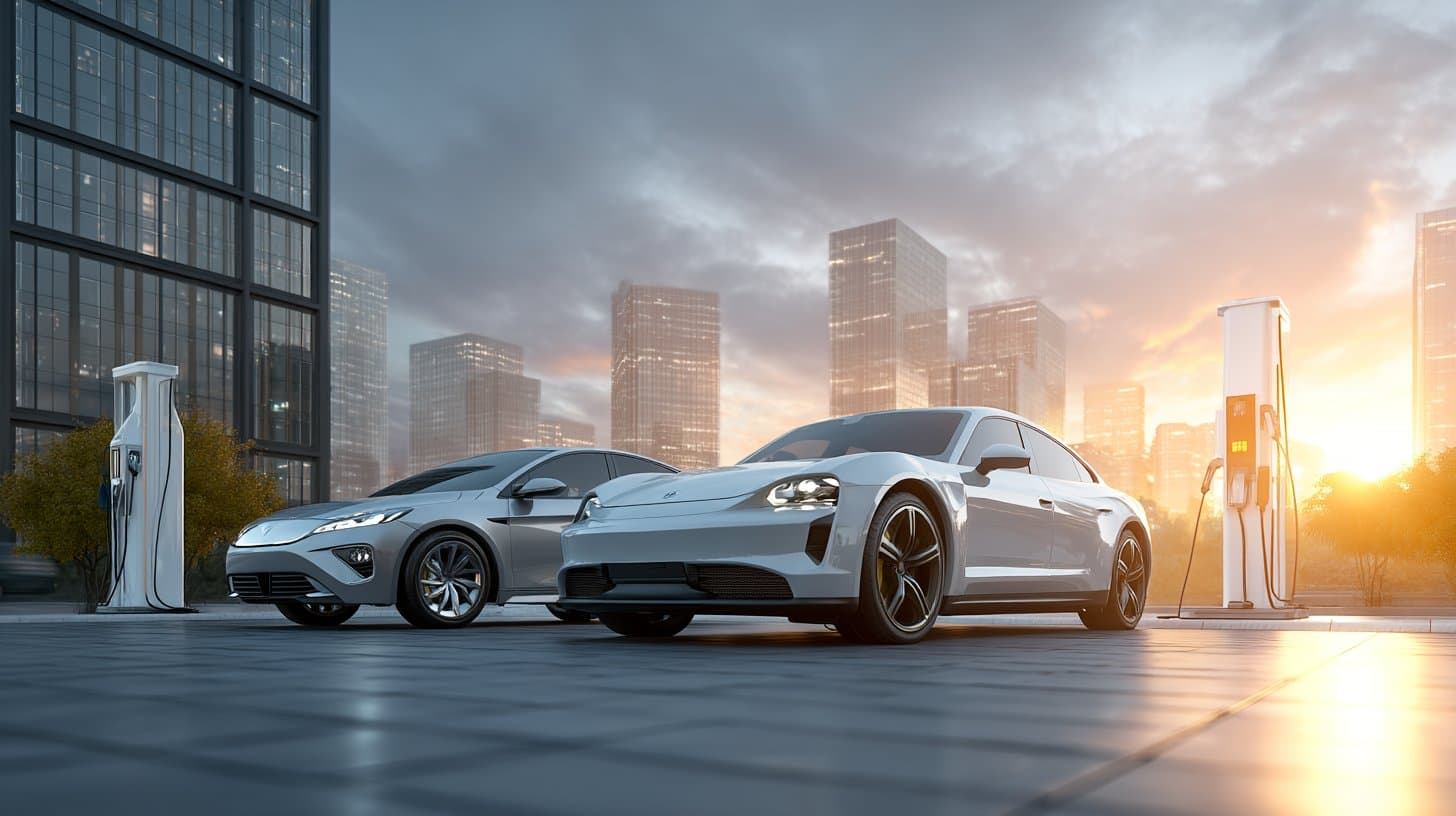
It's the biggest car buying question of 2026: should you go fully electric or play it safe with a hybrid? With battery prices plummeting, charging networks expanding, and hybrid technology reaching new levels of efficiency, the answer isn't as straightforward as either camp would have you believe. This guide breaks down every factor—cost, convenience, lifestyle, and environmental impact—so you can make the right decision for your situation, not someone else's.
Who Should Buy a Full Electric Vehicle
If you have access to home charging—whether that's a garage with a standard 120V outlet or a dedicated 240V Level 2 charger—a battery electric vehicle is almost certainly the better choice. The ability to wake up every morning with a full charge fundamentally changes the ownership experience. You never visit a gas station, you never think about fuel prices, and your “fueling” happens while you sleep. For the roughly 80% of EV owners who charge at home, this convenience alone is the single biggest reason they say they'd never go back to gas.
Your daily commute matters too. If your round-trip drive is under 200 miles—and for the vast majority of Americans, it's under 40—a modern EV handles it effortlessly with range to spare. The Chevrolet Equinox EV offers up to 319 miles of range starting around $27,500, making it one of the most practical and affordable options on the market. The Hyundai Ioniq 5 brings ultra-fast 800-volt charging that can add 200 miles in just 18 minutes, virtually eliminating range anxiety for road trips. And the Tesla Model Y remains the best-selling EV in America, backed by the largest Supercharger network and strong resale values.
Beyond convenience, EVs deliver dramatically lower running costs. Electricity costs roughly one-third as much as gasoline per mile driven. There are no oil changes, no transmission fluid, no timing belts, and regenerative braking means your brake pads can last 100,000 miles or more. Over a typical five-year ownership period, EV owners save between $4,000 and $8,000 on fuel and maintenance alone compared to a similarly priced gas vehicle.
Who Should Buy a Hybrid
Hybrids still make excellent sense for specific lifestyles. If you frequently take long road trips—think 500+ miles in a day through rural areas with sparse charging infrastructure—a hybrid eliminates the planning overhead that comes with an EV. You simply fill up at any gas station in two minutes and keep driving. For drivers who regularly cross through remote stretches of the American West or rural South, this flexibility is genuinely valuable.
If you don't have access to home charging, a hybrid is the more practical choice in most cases. While public charging networks have expanded significantly, relying exclusively on public chargers for daily driving adds cost and inconvenience that erode the EV's advantages. Apartment dwellers and renters without dedicated parking should seriously consider a hybrid unless their workplace offers reliable Level 2 charging.
Cold climates deserve special mention. While modern EVs have improved their cold-weather performance with heat pumps and battery preconditioning, range losses of 20–30% in sub-zero temperatures are still real. A hybrid's gasoline engine provides cabin heat without drawing from the battery, and fuel economy actually improves in highway conditions regardless of temperature. If you live in northern Minnesota and regularly drive long distances in January, a hybrid offers genuine peace of mind that even the best EVs can't fully match yet.
The Real Cost Comparison: EV vs Hybrid Over 5 Years
Numbers don't lie. Let's break down the true cost of ownership for a typical EV versus a comparable hybrid over a five-year period, assuming 12,000 miles driven per year.
5-Year Cost Comparison (60,000 miles)
$30,000
$32,000
-$7,500
$0
$3,600
$7,200
$1,800
$4,500
$10,500
$11,200
$38,400
$54,900
The EV comes out ahead by roughly $16,500 over five years in this scenario, driven primarily by the federal tax credit, lower fuel costs, and significantly reduced maintenance. However, the gap narrows considerably if you don't qualify for the full tax credit or if you rely heavily on paid public fast charging, which can cost two to three times more per kilowatt-hour than home electricity. Depreciation is increasingly favoring EVs as well, as demand for used electric vehicles has surged while battery longevity concerns have faded.
Charging vs Fueling: The Convenience Factor
Here's where the conversation gets nuanced. For daily driving, home EV charging is objectively more convenient than visiting a gas station. You plug in when you get home, unplug when you leave—it takes ten seconds of your time. No detours, no standing in the rain at a pump, no touching grimy nozzles. It's like having your phone fully charged every morning without thinking about it.
Long-distance travel is a different story. Even with the explosive growth of DC fast-charging networks—Tesla's Supercharger network now exceeds 30,000 stalls in the US, and Electrify America, ChargePoint, and others continue to expand—charging an EV on a road trip still takes 20–30 minutes per stop compared to five minutes at a gas pump. For some drivers, those charging stops are a welcome break to stretch, eat, and use the restroom. For others, especially families with small children, every added minute feels like an eternity. A hybrid driver simply fills up and goes, with zero route planning required.
The honest truth is that 90% of your driving is local, and for local driving, an EV is more convenient. The remaining 10%—those occasional long road trips—is where hybrids retain an edge, though that edge shrinks with every new fast charger that comes online.
Environmental Impact: It's More Complex Than You Think
Battery electric vehicles produce zero tailpipe emissions, but their total environmental footprint depends heavily on how the electricity that charges them is generated. In states with clean grids—California, Washington, New York—an EV produces roughly 70–80% fewer lifecycle emissions than a comparable gas car. In states that rely heavily on coal, the advantage is smaller but still significant, typically 30–50% fewer emissions.
Hybrids win on a specific metric: manufacturing carbon footprint. Because they use much smaller batteries (1–2 kWh versus 60–100 kWh for a BEV), the energy-intensive mining and manufacturing process for the battery pack produces significantly less CO2 upfront. A hybrid achieves its environmental benefit from day one, while an EV typically needs 15,000–30,000 miles of driving before it “pays back” the additional manufacturing emissions of its larger battery.
Over the long term, though, the math overwhelmingly favors EVs. The US grid gets cleaner every year as renewables and nuclear replace fossil fuels, and battery recycling programs are ramping up. An EV purchased in 2026 will produce progressively fewer emissions every year it's on the road, while a hybrid's emissions remain essentially constant. If you plan to keep your vehicle for seven years or more, the EV is the clear environmental winner.
The Gateway Effect: Why Hybrid Owners Go Electric Next
There's a fascinating pattern in the automotive market that dealers and analysts call the “gateway effect.” Data from multiple industry surveys shows that over 60% of hybrid owners say their next vehicle will be fully electric. Once drivers experience the smooth, quiet, torque-rich nature of electric propulsion—even in the limited form that a hybrid provides—they want more of it. The hybrid becomes a stepping stone, easing anxieties about range and charging while planting the seed for a full EV transition.
This isn't a knock against hybrids—it's actually an argument in their favor for hesitant buyers. If you're not quite ready to commit to a fully electric lifestyle, a hybrid lets you dip your toes into electrification without diving headfirst into the deep end. You'll enjoy better fuel economy, experience electric driving in low-speed situations, and build confidence that will likely lead you to go fully electric when it's time for your next purchase.
Spring 2026: Why Now Is a Great Time to Buy Either
The spring 2026 market is remarkably favorable for both EV and hybrid shoppers. Inventory levels have normalized after years of pandemic-era shortages, which means dealers are competing aggressively on price. Manufacturer incentives are at their highest levels since 2019, with many brands offering 0% financing, lease specials, and loyalty bonuses on top of federal tax credits.
For EV buyers specifically, the combination of the $7,500 federal tax credit (now available as a point-of-sale discount), falling MSRP prices driven by battery cost reductions, and competitive dealer incentives means that the effective price of many EVs has dropped by $12,000–$15,000 compared to just two years ago. Meanwhile, hybrid buyers benefit from a surge of new models hitting the market, giving them more choices across every segment from compact sedans to full-size SUVs. Whether you're leaning EV or hybrid, visit our EV deals page to compare current pricing and incentives.
The Verdict: A Decision Framework for Your Lifestyle
After weighing every factor, here's a simple framework to guide your decision. Choose an EV if you can charge at home or at work, your daily driving is under 200 miles, you want the lowest possible operating costs, you care about reducing your carbon footprint long-term, and you're comfortable with occasional 20–30 minute charging stops on road trips.
Choose a hybrid if you lack reliable access to home or workplace charging, you frequently drive 500+ miles in a day through areas with limited charging infrastructure, you live in an extremely cold climate and depend on long-distance winter driving, or you want to experience electrification without fully committing to the EV ecosystem yet.
Still not sure? Check out our interactive EV vs Hybrid guide for a personalized quiz that matches your driving habits, budget, and lifestyle to the right powertrain. The truth is that both EVs and hybrids are excellent choices in 2026—the “wrong” answer is sticking with a conventional gas-only vehicle when better options exist at every price point.
Ready to Find Your Perfect EV or Hybrid?
Compare real-time pricing, available incentives, and local inventory on dozens of electric and hybrid models. Our EV Best Price Finder helps you secure the best deal in your area—whether you go fully electric or hybrid.
Browse EV DealsRelated Articles
Toyota RAV4 Hybrid vs Hyundai Ioniq 5
A head-to-head comparison of two of the most popular electrified crossovers on the market.
Buying GuideBest EVs Under $40K in 2026
The top electric vehicles that deliver premium features without the premium price tag.
GuideFirst-Time EV Buyer's Guide: Everything You Need to Know
A complete walkthrough for anyone considering their first electric vehicle purchase.