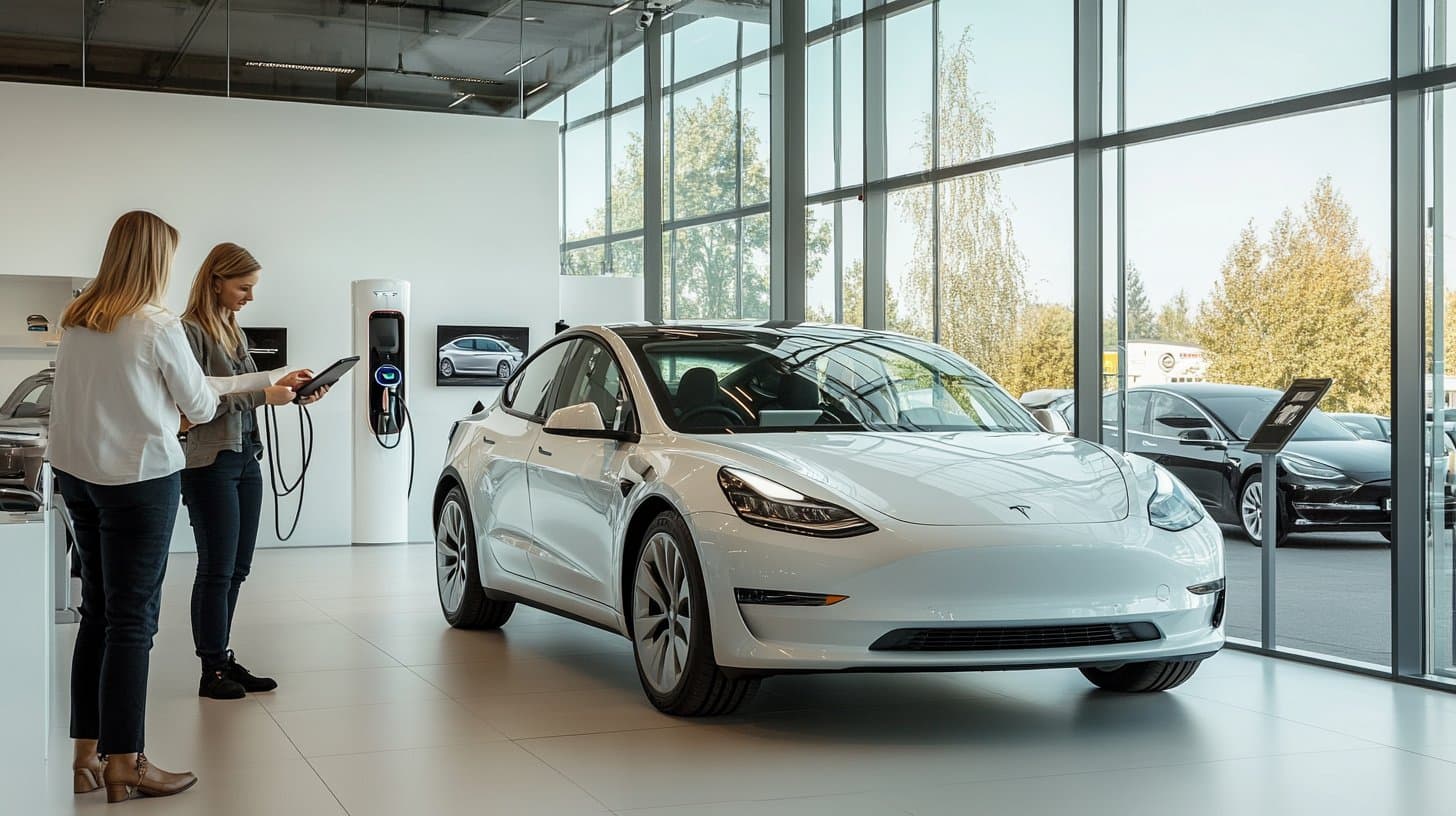
Thinking about making the switch from gas to electric? You're not alone. In 2026, more people than ever are considering an EV as their next vehicle, and for good reason: lower fuel costs, minimal maintenance, instant torque that puts a smile on your face, and a rapidly expanding charging network that makes electric driving practical for nearly everyone. This first time EV buyer guide covers everything you need to know before making the leap, from understanding how electric cars work to choosing the perfect model for your lifestyle and budget. Whether you're a complete newcomer or just starting to get serious about going electric, consider this your comprehensive roadmap to confident EV ownership.
EV Basics: How Electric Cars Work
At its core, an electric vehicle replaces the internal combustion engine with one or more electric motors powered by a large rechargeable battery pack. When you press the accelerator, electricity flows from the battery to the motor, which spins and drives the wheels. It's beautifully simple compared to a gas engine, which relies on hundreds of moving parts, controlled explosions, and complex transmission systems.
The battery pack is the heart of every EV. Modern electric vehicles use lithium-ion battery packs that store energy measured in kilowatt-hours (kWh). Think of kWh like the size of a gas tank: a larger battery stores more energy and generally provides more range. Most EVs on sale today have batteries ranging from 40 kWh to over 100 kWh.
One of the cleverest features of electric vehicles is regenerative braking. When you lift your foot off the accelerator, the electric motor runs in reverse, acting as a generator that converts your forward momentum back into electricity and sends it to the battery. This means you recover energy every time you slow down, extending your range and reducing wear on your brake pads. Many EVs offer adjustable regenerative braking levels, and some let you drive almost entirely with one pedal, which most owners quickly grow to love.
Types of EVs: BEV vs. PHEV vs. HEV
Not all electrified vehicles are created equal. Understanding the three main types will help you decide which one fits your needs.
Battery Electric Vehicle (BEV)
Runs entirely on electricity with no gas engine at all. You plug it in to charge, and that's your only fuel source. Examples include the Tesla Model 3, Chevrolet Equinox EV, and Hyundai Ioniq 5. BEVs offer the lowest operating costs and zero tailpipe emissions.
Plug-In Hybrid Electric Vehicle (PHEV)
Combines a smaller battery (typically 10-20 kWh) with a traditional gas engine. You can drive 25-50 miles on pure electricity, then the gas engine takes over. PHEVs bridge the gap for drivers who want electric daily commuting but aren't ready to go fully electric.
Hybrid Electric Vehicle (HEV)
Uses a small battery and electric motor to assist the gas engine, improving fuel economy. You never plug it in; the battery charges from regenerative braking and the engine. The Toyota Prius is the classic example. These aren't truly “electric cars” in the modern sense.
Our recommendation for most buyers in 2026: go with a BEV. Battery electric vehicles have reached the point where range, charging infrastructure, and pricing make them practical for the vast majority of drivers. PHEVs can be a reasonable stepping stone, but they still require gas station visits, oil changes, and maintenance of two powertrains. If you're ready to simplify your driving life, a BEV is the way to go.
Understanding Range: How Far Can You Actually Go?
Range is the number one concern for most first-time EV buyers, and rightfully so. Every EV comes with an EPA-estimated range, which is determined through standardized testing by the Environmental Protection Agency. However, your real-world range will vary based on several factors.
Factors That Affect Your Real-World Range
- *Temperature: Cold weather is the biggest range reducer. In freezing conditions, expect 20-30% less range due to battery chemistry and cabin heating demands. Hot weather has a smaller impact, roughly 10-15% when running air conditioning heavily.
- *Speed: Highway driving at 70-80 mph consumes significantly more energy than city driving at 30-40 mph. Aerodynamic drag increases with the square of speed, so driving 80 mph instead of 60 mph can reduce range by 25% or more.
- *Terrain: Hilly or mountainous driving uses more energy going uphill, though regenerative braking recovers some energy on the way down. Flat terrain is the most efficient for maximizing range.
- *Driving Style: Aggressive acceleration and hard braking waste energy. Smooth, steady driving can extend range by 10-20% compared to an aggressive driving style.
- *Payload: Extra passengers and cargo add weight, which reduces efficiency slightly. Roof racks and cargo boxes increase aerodynamic drag substantially.
As a general rule of thumb, plan for about 70-85% of the EPA-rated range in typical mixed driving conditions. On highway road trips in cold weather, that number can drop further. The good news? The average American drives just 37 miles per day, and even the shortest-range EVs on the market today offer well over 100 miles. For most daily driving, range is simply not an issue.
Charging 101: The Three Levels You Need to Know
Charging an EV is fundamentally different from filling up a gas tank. Instead of a single option, you have three “levels” of charging, each suited to different situations.
Level 1: Standard Household Outlet (120V)
3-5 miles of range per hour
PHEVs, emergency backup
$0 (uses existing outlet)
~30-50 miles (10 hrs)
Level 1 charging uses a standard 120-volt household outlet and the portable charger that comes with your EV. At 3-5 miles of range per hour, it's very slow for a BEV but can work if you drive less than 40 miles per day and charge overnight. It's perfectly adequate for plug-in hybrids with their smaller batteries. Think of Level 1 as your baseline or emergency option.
Level 2: Dedicated Home Charger (240V)
25-30 miles of range per hour
Daily home charging for BEVs
$500-$1,500 typical
~200-250 miles (8 hrs)
Level 2 is the gold standard for home charging and what we recommend for every BEV owner. Using a 240-volt outlet (the same type used for electric dryers), a Level 2 charger adds 25-30 miles of range per hour. That means a full overnight charge can replenish 200-250 miles. Installation typically costs $500-$1,500, depending on your electrical panel and the distance from the panel to your charging location. Many states and utilities offer rebates that offset installation costs.
DC Fast Charging (Level 3)
150-350 kW (varies by station)
Road trips, quick top-ups
20-40 minutes typical
$10-$25 typical
DC fast charging is what makes long-distance EV travel possible. Found at dedicated charging stations from networks like Tesla Supercharger, Electrify America, and ChargePoint, these powerful chargers can push 150-350 kW into your battery. Most EVs can charge from 10% to 80% in 20-40 minutes, enough to add 150-250 miles during a lunch or restroom break. Charging slows down above 80% to protect battery health, so most road-trippers charge to 80% and move on.
Best EVs for First-Time Buyers in 2026
With the basics covered, let's look at specific vehicles that make excellent choices for your first electric car. We've organized these by budget to help you find the right fit.
Budget-Friendly (Under $35,000)
Chevrolet Equinox EV
~$35,000
Up to 319 miles
Compact SUV
150 kW DC
The Equinox EV is arguably the best value in the entire EV market right now. It offers SUV versatility, impressive range for the price, and a familiar ownership experience through Chevrolet's extensive dealer network. Federal tax credits can bring the effective price below $28,000, making it competitive with gas-powered compact SUVs.
Nissan Leaf
~$29,000
Up to 212 miles
Hatchback
50 kW CHAdeMO
A proven and affordable entry point into EV ownership, the Nissan Leaf has been on the road for over a decade with a strong reliability track record. The Leaf Plus with its 62 kWh battery offers a solid 212-mile range. It's a no-frills, practical choice ideal for commuters and city drivers who want the lowest possible cost of entry.
Mid-Range ($35,000 - $50,000)
Tesla Model 3
~$39,000
Up to 341 miles
Sedan
250 kW Supercharger
The Tesla Model 3 remains the benchmark for electric sedans. Its access to the industry-leading Supercharger network makes road trips effortless, and over-the-air software updates continuously add features and improvements. The minimalist interior may not be for everyone, but the driving experience, range, and charging convenience are hard to beat.
Hyundai Ioniq 5
~$42,000
Up to 303 miles
Crossover SUV
350 kW (800V)
The Ioniq 5 is a favorite among EV enthusiasts for a reason. Its 800-volt architecture enables ultra-fast charging, going from 10% to 80% in about 18 minutes. The spacious, flat-floor interior feels much larger than you'd expect, and the vehicle-to-load feature lets you power appliances, electronics, or even other EVs from your car. Retro-futuristic styling sets it apart from the crowd.
Premium ($50,000+)
BMW i4
~$52,000
Up to 301 miles
Gran Coupe (Sedan)
200 kW DC
For buyers who want a premium driving experience, the BMW i4 delivers the handling precision and interior luxury BMW is known for, now with an electric powertrain. The eDrive40 model offers an impressive 301-mile range, and the M50 performance variant delivers 536 horsepower for those who crave speed. A refined, confidence-inspiring choice for drivers coming from luxury gas cars.
Tesla Model Y
~$45,000
Up to 330 miles
Compact SUV
250 kW Supercharger
The world's best-selling EV combines SUV practicality with Tesla's industry-leading Supercharger network and software ecosystem. Generous cargo space, available third-row seating, and continuous over-the-air updates make it the jack-of-all-trades that satisfies most buyers. Strong resale value means your investment holds up well over time.
Tax Credits and Incentives: Save Thousands on Your EV
One of the biggest financial advantages of buying an EV in 2026 is the availability of generous government incentives that can significantly reduce your out-of-pocket cost.
- 1.Federal Tax Credit (up to $7,500) – The federal EV tax credit offers up to $7,500 for qualifying new electric vehicles. In 2026, this credit can be applied at the point of sale, meaning you get the discount immediately at the dealership rather than waiting until tax time. Eligibility depends on the vehicle's MSRP, battery sourcing, and your income level.
- 2.Used EV Tax Credit (up to $4,000) – Buying a used EV priced under $25,000? You may qualify for a federal tax credit of up to $4,000. This makes pre-owned electric vehicles an incredible bargain, especially 2-3 year old models that still have excellent battery health.
- 3.State and Local Incentives – Many states offer additional rebates, tax credits, or perks. California's Clean Vehicle Rebate, Colorado's $5,000 tax credit, and New Jersey's sales tax exemption are just a few examples. Some utility companies also offer rebates for home charger installation or discounted off-peak charging rates.
When stacking federal, state, and utility incentives, it's possible to save $10,000 or more on a new EV purchase. Always check the latest eligibility requirements, as rules around battery sourcing, manufacturer caps, and income limits can change.
Common Concerns Addressed
Every first-time EV buyer has questions and worries. Let's tackle the most common ones head-on.
Range Anxiety
The fear of running out of charge is the most cited concern among prospective EV buyers, but it's largely a myth for daily driving. With most EVs offering 250-350 miles of range and the average American driving just 37 miles per day, you'll plug in at home each night and wake up with a full “tank.” For road trips, apps like A Better Route Planner and your car's built-in navigation plan charging stops automatically. After a few weeks of ownership, most people report that range anxiety disappears entirely.
Battery Degradation
Modern EV batteries are designed to last. Most manufacturers warranty their batteries for 8 years or 100,000 miles, and real-world data shows that batteries typically retain 85-90% of their original capacity after 200,000 miles. Simple habits help: charge to 80% for daily driving, avoid leaving the battery at 0% for extended periods, and minimize frequent DC fast charging when possible. Battery technology has improved dramatically, and degradation is no longer a major concern for most owners.
Resale Value
Early EVs suffered from steep depreciation, but the market has matured significantly. Popular models like the Tesla Model Y and Model 3 hold their value exceptionally well, often better than comparable gas vehicles. As EV demand continues to grow and gas vehicle desirability declines, resale values for electric vehicles are expected to strengthen further. Choosing a popular model with good range and charging network access is the best strategy for protecting your investment.
Winter Performance
Yes, cold weather reduces range, but EVs also offer some cold-weather advantages. Instant heat from electric cabin heaters means no waiting for the engine to warm up. Many EVs offer heated seats, heated steering wheels, and pre-conditioning that warms the cabin while still plugged in, so you start every cold morning toasty without using battery range. EVs with heat pumps (now standard on most models) are significantly more efficient in cold weather than older models with resistive heaters.
Your EV Buying Checklist
Ready to start shopping? Follow this step-by-step checklist to make your EV purchase with confidence.
- 1.Calculate your daily driving distance – Track your typical weekly mileage to determine the minimum range you need. Add a 30% buffer for weather and unexpected trips.
- 2.Assess your home charging situation – Do you have a garage or dedicated parking space? Can you install a 240V outlet? Home charging is the key to a seamless EV experience.
- 3.Set your total budget including incentives – Factor in the federal tax credit, state incentives, and fuel savings. Use online calculators to compare total cost of ownership against a gas vehicle.
- 4.Research which models qualify for tax credits – Not all EVs qualify for the full $7,500 credit. Check the IRS and fueleconomy.gov for the latest eligibility list.
- 5.Test drive at least three different EVs – Each EV has a distinct personality. Compare driving feel, regenerative braking, interior comfort, and infotainment systems in person.
- 6.Map out nearby charging infrastructure – Use apps like PlugShare or A Better Route Planner to see how many fast chargers are along your regular routes and near your home.
- 7.Get a home charger installation quote – Contact a licensed electrician for a Level 2 charger install estimate before you buy. Factor this into your budget.
- 8.Compare insurance quotes for your top picks – EV insurance rates vary significantly by model. Get quotes from multiple providers to avoid surprises after purchase.
Ready to Find Your First EV?
Compare real-time pricing, incentives, and availability across all major electric vehicles in one place.
Compare All EV Prices