
If you've been watching the numbers climb at your local gas station and wondering whether it's finally time to go electric, you're not alone. The Middle East conflict has sent global oil prices sharply higher in 2026, and American drivers are feeling it every time they fill up.
Regular unleaded is averaging above $4.00 per gallon nationally, with some states — California, Washington, Nevada, Hawaii — well above $5.00. Florida drivers are seeing prices between $3.90 and $4.30 depending on the metro area. And analysts are warning that prices could climb further if the conflict escalates.
Meanwhile, electricity prices have remained remarkably stable. The average residential rate in the US sits around $0.13 per kilowatt-hour, and it hasn't moved much in years. That growing gap between gas and electricity costs is making the math of EV ownership more compelling by the week.
Let's run the actual numbers.
The fuel savings math — no hand-waving
We're going to use real numbers, not best-case EV propaganda. Here's our baseline driver:
- Drives 15,000 miles per year (the US average)
- Lives in Florida (electricity at $0.13/kWh)
- Currently drives a car that gets 28 MPG (the average for cars on the road)
- Gas price: $4.20 per gallon (current Florida average)
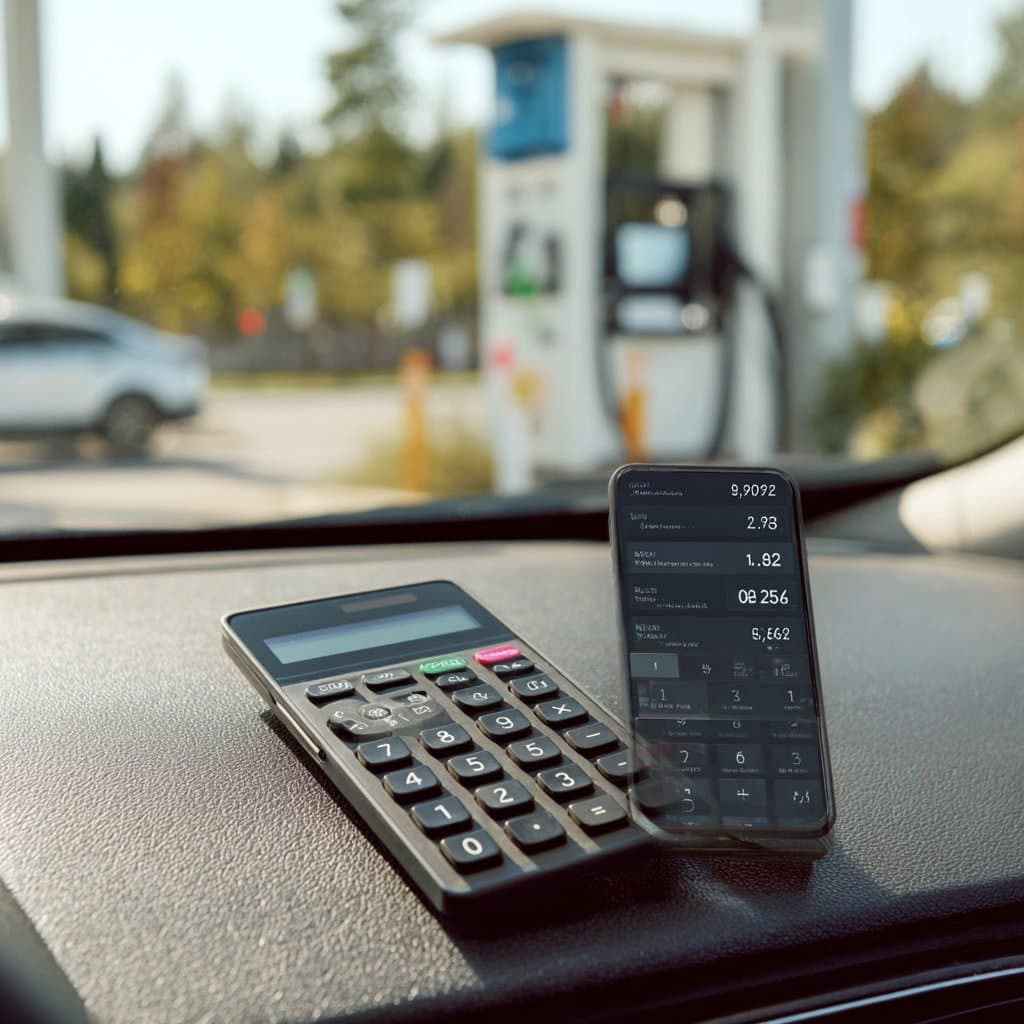
Annual gas cost: 15,000 miles ÷ 28 MPG = 536 gallons × $4.20 = $2,250 per year
Now let's compare that to three popular EVs at different price points:
Tesla Model 3 (3.5 miles per kWh)
15,000 ÷ 3.5 = 4,286 kWh × $0.13 = $557 per year
Annual savings: $1,693
Hyundai Ioniq 5 (3.3 miles per kWh)
15,000 ÷ 3.3 = 4,545 kWh × $0.13 = $591 per year
Annual savings: $1,659
Chevrolet Equinox EV (3.2 miles per kWh)
15,000 ÷ 3.2 = 4,688 kWh × $0.13 = $609 per year
Annual savings: $1,641
That's roughly $140 per month back in your pocket just from fuel savings alone — and that's at today's gas prices. If gas hits $5.00 (as it already has in several states), the annual savings jump above $2,000.
It's not just fuel — maintenance adds up too
The savings don't stop at the pump. Gas cars have hundreds of moving parts that wear out and need replacing. EVs have far fewer.
Typical annual maintenance costs for a gas car:
- Oil changes (3–4 per year): $150–$250
- Brake pad replacement (every 30,000 miles): ~$150/year averaged
- Transmission fluid, coolant, spark plugs, belts: ~$200/year averaged
- Air filters, fuel filters: ~$50/year
- Total: roughly $550–$650 per year
Typical annual maintenance costs for an EV:
- Tire rotations (2 per year): $60–$80
- Cabin air filter (once per year): $30–$50
- Washer fluid, wiper blades: ~$30
- Brake pads last 100,000+ miles due to regenerative braking: ~$30/year averaged
- Total: roughly $150–$200 per year
That's an additional $400–$450 per year in savings. Combined with fuel savings, you're looking at roughly $2,000–$2,100 per year in lower operating costs.
Over a typical 5-year ownership period, that's $10,000–$10,500 — enough to cover a significant portion of any price premium an EV might have over a comparable gas car. And with used EVs now priced within $1,300 of used gas cars, that premium has essentially disappeared.
What about electricity at home?
One of the most common questions is whether your electric bill will spike when you start charging an EV at home. The short answer: yes, but far less than you'd think.
Charging a typical EV that gets 3.5 miles per kWh for 15,000 miles per year adds about 4,286 kWh to your annual electricity consumption. At Florida's average rate of $0.13/kWh, that's roughly $557 per year — or about $46 per month added to your electric bill.
For context, the average Florida household electric bill is about $150–$180 per month. Adding EV charging bumps that to about $200–$225. You're paying $46 more for electricity but saving $188 less on gas. The net savings are clear.
Pro tip: Many Florida utilities offer time-of-use rates that make overnight electricity cheaper — sometimes as low as $0.06–$0.08/kWh. If you set your EV to charge between midnight and 6 AM (which most EVs can do automatically), your charging costs could drop to roughly $25–$30 per month.
The breakeven point — when does an EV pay for itself?
Let's get specific. Say you're choosing between two new vehicles:
2026 Toyota Camry — $29,500, 32 MPG
2026 Chevrolet Equinox EV — $33,000, 3.2 mi/kWh
The EV costs $3,500 more upfront. Your annual operating savings (fuel + maintenance) are approximately $2,050.
Breakeven: roughly 20 months. After that, every month of ownership puts money back in your pocket compared to the Camry.
If you're comparing used vehicles, the math is even faster. A used 2023 Tesla Model 3 at $26,000 versus a used 2023 Toyota Camry at $24,000 gives you a $2,000 price difference with $2,100 in annual savings — breakeven in less than 12 months.
Which EVs save you the most money?
Not all EVs are equally efficient. Here are the most cost-effective EVs on the market ranked by annual fuel cost (at 15,000 miles/year and $0.13/kWh):
| Rank | Model | Annual Fuel Cost | Efficiency |
|---|---|---|---|
| 1 | Tesla Model 3 | $557 | 3.5 mi/kWh |
| 2 | Hyundai Ioniq 6 | $557 | 3.5 mi/kWh |
| 3 | Tesla Model Y | $570 | 3.42 mi/kWh |
| 4 | Hyundai Ioniq 5 | $591 | 3.3 mi/kWh |
| 5 | Kia EV6 | $591 | 3.3 mi/kWh |
| 6 | BMW iX3 | $600 | 3.25 mi/kWh |
| 7 | Chevy Equinox EV | $609 | 3.2 mi/kWh |
| 8 | Ford Mustang Mach-E | $619 | 3.15 mi/kWh |
| 9 | VW ID.4 | $650 | 3.0 mi/kWh |
| 10 | Rivian R1S | $722 | 2.7 mi/kWh |
Even the least efficient EV on this list costs less than half what a 28 MPG gas car costs to fuel.
What if gas prices go even higher?
Here's where it gets interesting. The $4.20/gallon we used is today's reality. But what if the Middle East situation worsens?
At $5.00/gallon: Annual gas cost jumps to $2,679. EV savings climb to $2,100–$2,200 per year.
At $6.00/gallon: Annual gas cost hits $3,214. EV savings reach $2,600–$2,700 per year. The EV breakeven on a $3,500 price premium drops to under 16 months.
At $7.00/gallon (which California briefly saw in 2023): Annual gas cost reaches $3,750. You're saving over $3,000 per year with an EV.
Florida-specific advantages
If you're a Florida driver, you have some extra tailwinds:
No state income tax means you keep 100% of any federal EV incentives or savings.
Abundant sunshine makes solar panels exceptionally practical. If you install solar, your EV charging cost can drop to effectively zero. A 7–8 kW solar system that powers both your home and your EV typically pays for itself in 6–8 years in Florida.
Year-round warm weather is actually an EV advantage for efficiency. EVs lose the most range in extreme cold. Florida's mild winters mean your EV operates at near-peak efficiency year-round.
Florida Power & Light and Duke Energy both offer EV-specific rate plans that reduce overnight charging costs.
The bottom line
At $4.20 per gallon, a typical Florida driver saves roughly $2,000 per year by switching to an EV — that's fuel and maintenance combined. Over 5 years, that's $10,000. If gas prices continue climbing, the savings grow even larger.
The used EV market makes the entry point lower than ever, with three-year-old EVs now priced within $1,300 of equivalent gas cars. The charging infrastructure in Florida has expanded dramatically, with Tesla Superchargers, Electrify America stations, and ChargePoint networks covering all major corridors.
The question used to be “can you afford to switch to an EV?” In 2026, with gas above $4 and climbing, the better question might be “can you afford not to?”