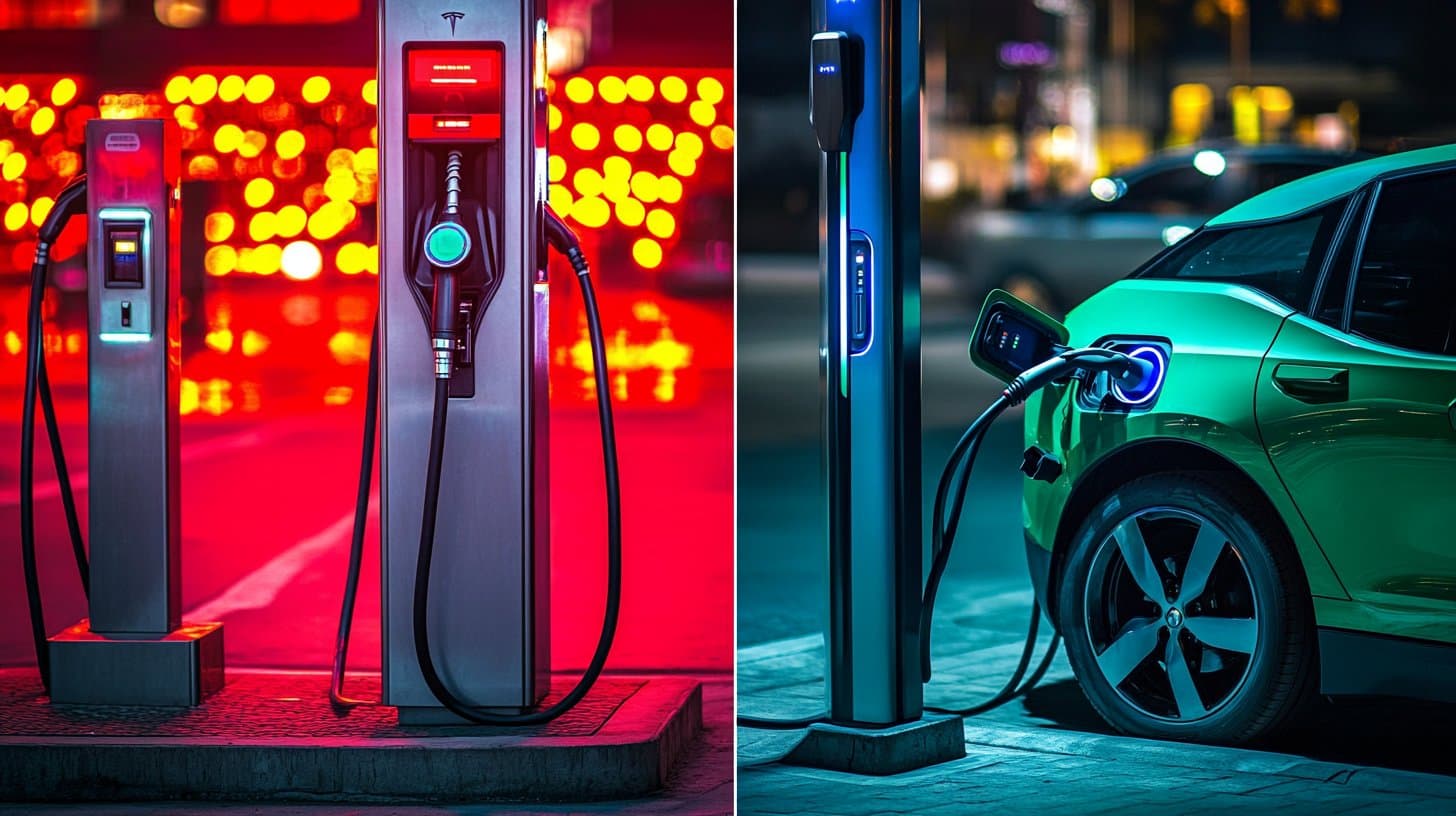
The question everyone asks before switching to an EV: how much money will I actually save? Gas vs electric savings depend on fuel costs, maintenance, tax credits, and how long you own the vehicle. We ran the numbers using real-world data from 2025-2026 to give you a clear, honest answer. Spoiler: the savings are significant — but they're not automatic for everyone.
Fuel Cost Breakdown
Let's start with the most obvious expense: keeping your vehicle moving. The national average price of regular gasoline in early 2026 sits around $3.50 per gallon. The average residential electricity rate is approximately $0.13 per kWh. These two numbers form the foundation of every gas vs electric savings calculation.
The average American drives about 12,000 miles per year. A typical gas car gets around 28 miles per gallon, which means you're burning roughly 429 gallons of fuel annually. At $3.50 per gallon, that's approximately $2,100 per year in fuel costs.
An average EV consumes about 3.5 miles per kWh (or roughly 0.29 kWh per mile). Over 12,000 miles, you'll use about 3,429 kWh of electricity. At $0.13 per kWh, your annual "fuel" cost drops to approximately $600 per year. That's an immediate savings of $1,500 every single year just on fuel — before we even talk about maintenance or incentives.
~$2,100/year
Average gas car fuel cost (12,000 mi/yr)
~$600/year
Average EV electricity cost (12,000 mi/yr)
The Math: 3 Real-World Comparisons
Averages are helpful, but what do the savings look like when you compare specific vehicles that people actually cross-shop? We picked three of the most common matchups and calculated annual fuel costs based on EPA ratings and 12,000 miles per year of driving.
Toyota Camry vs Tesla Model 3
Toyota Camry (32 MPG combined)
$1,313/year
375 gallons x $3.50
Tesla Model 3 (4.0 mi/kWh)
$390/year
3,000 kWh x $0.13
Annual savings with Tesla Model 3: $923
Honda CR-V vs Hyundai Ioniq 5
Honda CR-V (30 MPG combined)
$1,400/year
400 gallons x $3.50
Hyundai Ioniq 5 (3.5 mi/kWh)
$446/year
3,429 kWh x $0.13
Annual savings with Hyundai Ioniq 5: $954
Ford F-150 vs F-150 Lightning
Ford F-150 (23 MPG combined)
$1,826/year
522 gallons x $3.50
F-150 Lightning (2.4 mi/kWh)
$650/year
5,000 kWh x $0.13
Annual savings with F-150 Lightning: $1,176
Maintenance Savings
Fuel savings get all the attention, but maintenance is where EVs quietly pull even further ahead. Electric vehicles have drastically fewer moving parts — no engine, no transmission, no exhaust system, no timing belt, and no oil to change. Regenerative braking means your brake pads last two to three times longer than on a gas car.
Here's what the average gas car owner pays annually for routine maintenance that EV owners mostly skip: oil changes ($400-$800), transmission service ($100-$200), spark plugs and ignition ($50-$150), exhaust system repairs ($100-$300), and more frequent brake work ($200-$400). Add it all up, and a typical gas car costs $1,400 per year in maintenance.
An equivalent EV? Tire rotations, cabin air filters, brake fluid checks, and the occasional coolant flush bring annual maintenance to roughly $600 per year. That's an $800 annual advantage for electric vehicles.
| Maintenance Item | Gas Car (Annual) | EV (Annual) |
|---|---|---|
| Oil changes | $400 - $800 | $0 |
| Brake pads/rotors | $200 - $400 | $50 - $100 |
| Transmission service | $100 - $200 | $0 |
| Spark plugs/ignition | $50 - $150 | $0 |
| Exhaust system | $100 - $300 | $0 |
| Tires/rotation | $300 - $500 | $400 - $600 |
| Coolant/fluids | $50 - $100 | $25 - $50 |
| Annual Total | ~$1,400 | ~$600 |
Tax Credits and Incentives
The federal government offers a $7,500 tax credit for qualifying new electric vehicles under the Inflation Reduction Act. This credit can be applied at the point of sale at participating dealerships, effectively reducing your purchase price immediately. Used EVs qualify for a separate credit of up to $4,000.
On top of federal incentives, many states offer their own EV rebates and credits. California's Clean Vehicle Rebate Project provides up to $2,000. Colorado offers a $5,000 state tax credit. New York, New Jersey, Connecticut, and Oregon all have programs worth $1,500 to $3,000. Check your state's energy office website for current offerings.
Don't overlook utility company rebates either. Many electric utilities offer $200 to $500 rebates for installing a Level 2 home charger, and some provide discounted off-peak charging rates as low as $0.04 to $0.08 per kWh. Charging at off-peak rates can cut your annual electricity cost from $600 down to under $300.
The Break-Even Point
EVs still cost more upfront than comparable gas vehicles. The average transaction price for a new EV in early 2026 is around $45,000, compared to roughly $38,000 for the average gas car — a gap of about $7,000. After the $7,500 federal tax credit, many EV buyers are already ahead on day one.
But even without the full credit, the math works quickly. With combined fuel and maintenance savings of approximately $2,300 per year ($1,500 fuel + $800 maintenance), a $7,000 price gap closes in just over 3 years. If you factor in the federal tax credit, you break even almost immediately. Most financial analyses show the break-even point for EV ownership falls between 3 to 4 years for the average driver.
Hidden Costs to Consider
Transparency matters, so let's acknowledge the costs that work against EVs. These won't erase your savings, but they're worth factoring into your decision.
- 1.Insurance premiums — EV insurance costs 15-25% more than equivalent gas cars, adding roughly $200 to $400 per year. Higher repair costs and expensive battery packs drive the premium increase.
- 2.Home charger installation — A Level 2 home charger (240V) costs $500 to $2,000 installed, depending on your electrical panel and wiring situation. This is a one-time cost that pays for itself quickly through cheaper home charging vs. public stations.
- 3.Tire replacement costs — EVs are heavier and produce instant torque, wearing through tires 20-30% faster. EV-rated tires also cost more. Budget an extra $200 to $400 per year for tires compared to a gas vehicle.
- 4.Public charging costs — If you rely heavily on DC fast charging rather than home charging, your electricity costs can triple. Public fast chargers average $0.30 to $0.60 per kWh, significantly reducing your fuel savings advantage.
10-Year Total Savings
The real picture emerges when you look at cumulative savings over a full ownership period. Here's what the numbers look like over 10 years, assuming 12,000 miles per year of driving:
| Cost Category | Gas Car (10 yrs) | EV (10 yrs) | Savings |
|---|---|---|---|
| Fuel / Electricity | $21,000 | $6,000 | $15,000 |
| Maintenance | $14,000 | $6,000 | $8,000 |
| Insurance (additional) | $0 | +$3,000 | -$3,000 |
| Home charger (one-time) | $0 | +$1,200 | -$1,200 |
| Tire premium | $0 | +$2,500 | -$2,500 |
| Federal tax credit | $0 | -$7,500 | $7,500 |
| Net 10-Year Savings | $23,800 | ||
*Estimates based on national averages. Actual savings vary by vehicle, location, electricity rates, and driving habits.
Even after accounting for higher insurance, tire costs, and home charger installation, the average EV owner comes out roughly $23,800 ahead over a 10-year period. That's nearly $2,400 per year in net savings, or about $200 per month back in your pocket.
Is Going Electric Worth It?
For the majority of drivers, the answer is a clear yes. If you drive 10,000 miles or more per year, have access to home charging or affordable workplace charging, and plan to keep your vehicle for at least 3-4 years, an EV will save you money — period.
The savings are especially dramatic for high-mileage drivers. If you drive 20,000 miles per year instead of 12,000, your fuel savings alone jump from $1,500 to $2,500 annually. Ride-share drivers, long commuters, and families with multiple cars have the most to gain from going electric.
The scenario where EVs make less financial sense is if you drive under 5,000 miles per year, rely exclusively on expensive public fast charging, or plan to keep the vehicle for less than two years. In those edge cases, the upfront cost premium may not fully pay back.
The bottom line: gas vs electric savings are real, substantial, and getting better every year as EV prices drop and charging infrastructure expands. The average owner saves over $20,000 over a decade. The only question is whether now is the right time for you — and with today's deals and incentives, the answer is almost certainly yes.