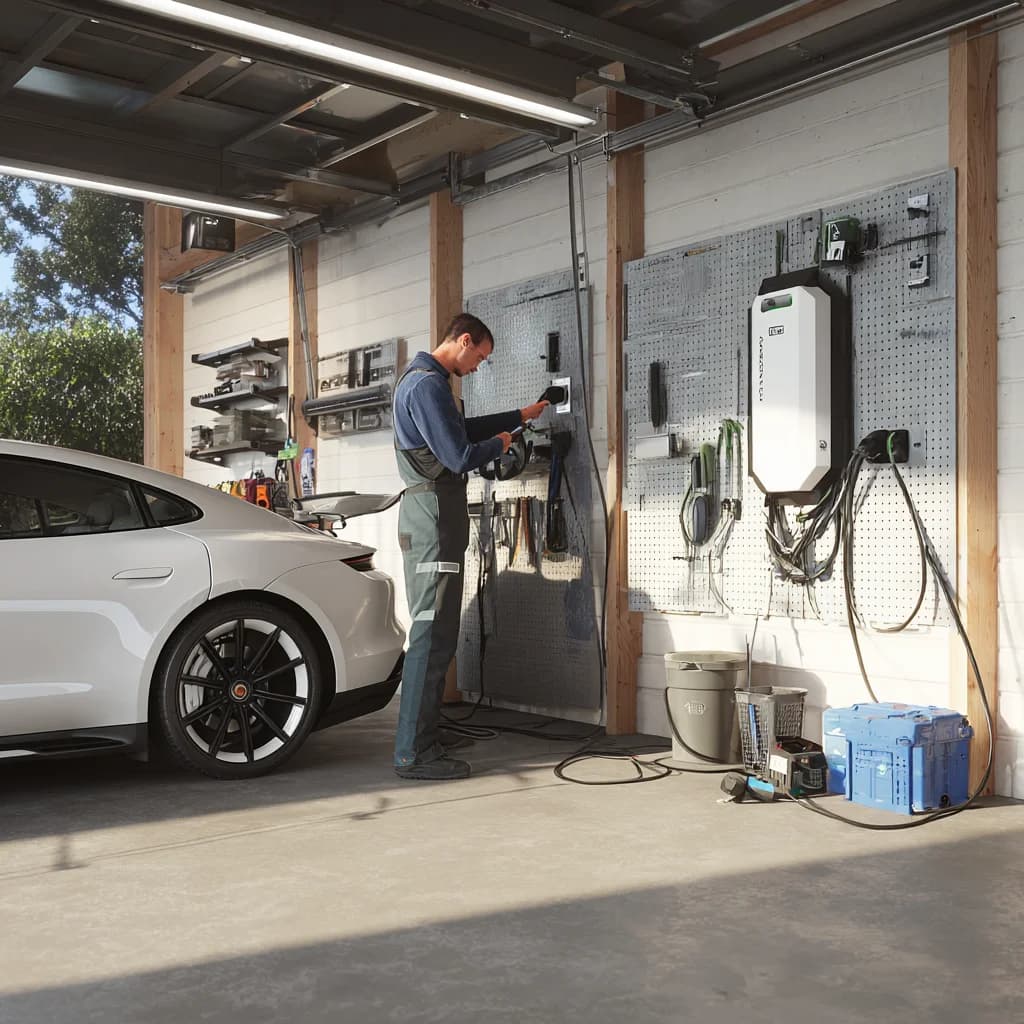
Home charging is the single biggest advantage of owning an electric vehicle. Imagine never visiting a gas station again — just plug in when you get home and wake up to a full battery every morning. But getting a home charger installed can feel overwhelming if you don't know what to expect. This guide breaks down everything you need to know: Level 1 vs Level 2, costs, the installation process, top charger recommendations, and how to maximize your federal tax credit.
Level 1 vs Level 2: What's the Difference?
Level 1 charging uses a standard 120-volt household outlet — the same kind you plug a lamp or phone charger into. Every EV comes with a Level 1 charging cable. It adds about 3–5 miles of range per hour, which translates to roughly 30–50 miles of range overnight (10–12 hours). For drivers with short commutes under 30 miles per day, Level 1 may be all you need — and it costs nothing to set up.
Level 2 charging uses a 240-volt circuit — the same type used by clothes dryers and electric ovens. Level 2 adds 25–40 miles of range per hour, meaning a full charge from near-empty takes just 6–10 hours. For most families, plugging in after dinner means a full battery by morning, regardless of how much driving you did that day. Level 2 is the sweet spot for home charging and what we recommend for most EV owners.
Complete Cost Breakdown
The total cost of a home Level 2 EV charger installation depends on several factors. Here's what to budget for each component:
The Charger Unit — $300 to $700
$300–$400
$400–$550
$550–$700
40–48 amp output
The charger itself (technically called an EVSE — Electric Vehicle Supply Equipment) ranges from $300 for basic models to $700 for smart chargers with Wi-Fi connectivity, energy monitoring, and scheduling features. Look for at least 40-amp output for the fastest Level 2 speeds. Smart features like app-based scheduling let you charge during off-peak electricity hours to save money.
Electrician Installation — $200 to $500
$200–$300
$300–$500
2–4 hours
Required (50-amp)
A licensed electrician will install a dedicated 240V, 50-amp circuit from your electrical panel to your charging location. Simple installations where the panel is close to the garage cost $200–$300. If the electrician needs to run wire through walls, across the house, or underground to a detached garage, expect $300–$500. Always get 2–3 quotes from licensed electricians in your area.
Permits — $50 to $150
$50–$150
Most jurisdictions, yes
Electrician usually
1–3 weeks
Most cities and counties require an electrical permit for a new 240V circuit. Your electrician will typically handle the permit application as part of their service. Some jurisdictions also require an inspection after installation. The permit ensures the work meets local electrical codes and is safe for your home.
Panel Upgrade (If Needed) — $1,000 to $2,500
Older homes (100-amp panel)
$1,000–$2,500
200-amp panel
Smart load management
If your home has an older 100-amp electrical panel, it may not have enough capacity for a 50-amp EV charger circuit alongside your existing loads. Upgrading to a 200-amp panel costs $1,000–$2,500 but is a one-time investment that also increases your home's value. An alternative is smart load management devices ($200–$400) that share capacity between your charger and other high-draw appliances.
Best Home EV Chargers in 2026
After testing and reviewing dozens of home chargers, these four stand out as the best options for most EV owners:
Lectron V-Box ($350) — Best budget option with 48-amp output, NEMA 4 weatherproofing, and a 24-foot cable. No smart features, but unbeatable charging speed for the price. Perfect for garage installations where Wi-Fi connectivity isn't critical.
Autel MaxiCharger ($550) — Best smart charger with built-in energy metering, Wi-Fi and Bluetooth, scheduled charging, and a sleek design. The companion app provides detailed charging reports and cost tracking. Supports dynamic load management to avoid tripping your breaker.
ChargePoint Home Flex ($600) — The most versatile option with adjustable amperage from 16 to 50 amps, making it compatible with any electrical setup. The ChargePoint app offers scheduling, reminders, and integration with utility time-of-use rates to minimize your electricity bill.
Tesla Wall Connector ($475) — Best for Tesla owners with up to 48 amps, a sleek integrated design, and seamless integration with the Tesla app. The Gen 3 model also works with non-Tesla EVs via the J1772 adapter. Power sharing allows multiple Wall Connectors on a single circuit.
HOA Considerations
If you live in a community with a homeowners association, check your HOA rules before installation. The good news: many states now have “right to charge” laws that prevent HOAs from unreasonably blocking EV charger installations. California, Florida, Colorado, Virginia, and over 20 other states have enacted these protections. Your HOA may require approval of the installation plan and aesthetics, but they cannot prohibit you from installing a charger at your own expense.
The 30% Federal Tax Credit
Here's the best part: the federal government offers a 30% tax credit on home EV charger installation through the Alternative Fuel Vehicle Refueling Property Credit (Section 30C). This covers the cost of both the charger unit and installation labor, up to $1,000 for residential installations. On a typical $900 total installation, you'd get $270 back on your federal taxes. The credit is available through 2032, so there's no rush, but it significantly reduces the net cost of home charging.
Find Your Next EV to Charge at Home
Compare real-time pricing on every major EV. Our Best Price Finder tracks deals across Carvana, CarMax, AutoTrader, and dealer inventory nationwide.
Browse EV DealsRelated Articles
First-Time EV Buyer's Complete Guide
Everything you need to know before making the switch to electric.
GuideBest EVs for Condo Dwellers
No home charger? No problem. The best EVs for apartment and condo life.
GuideTrue Cost of EV Ownership
A full breakdown of what it really costs to own an electric vehicle.