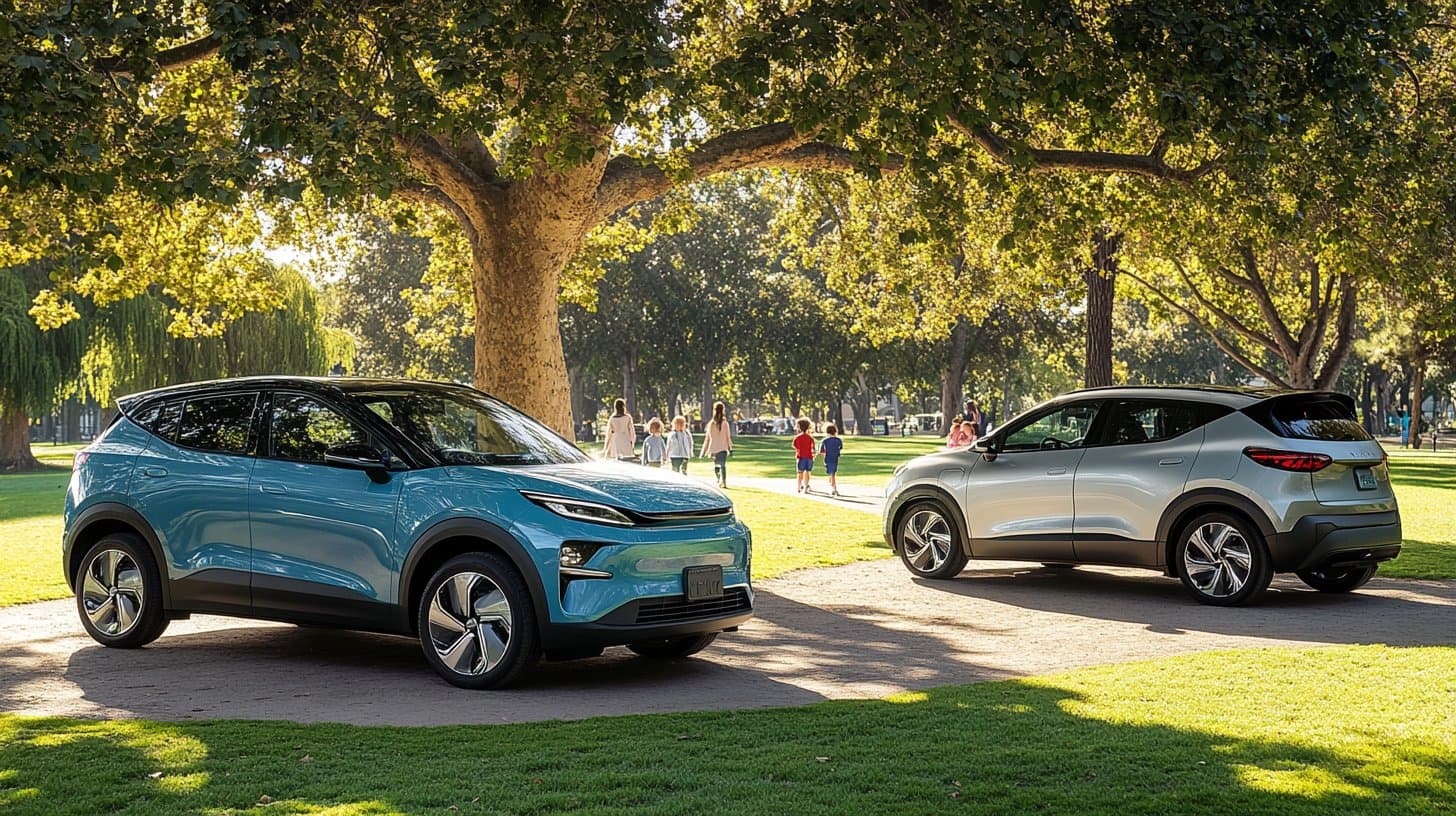
If you're shopping for an electric crossover under $30,000, two names dominate the conversation: the Kia Niro EV and the Chevrolet Bolt EUV. These two compact crossovers have carved out a loyal following among budget-conscious EV buyers who refuse to compromise on range, features, or everyday practicality. One is still available brand new on dealer lots, while the other has become the undisputed king of the used EV market. Let's break down exactly how they compare — and which one deserves your money in 2026.
Kia Niro EV: The Efficient All-Rounder
The Kia Niro EV starts at approximately $35,000 new, but the real sweet spot is on the used market where well-equipped examples regularly appear around $26,000. With an EPA-rated range of 253 miles, it's one of the most efficient electric crossovers money can buy. Kia's 64.8 kWh battery pack punches well above its weight, delivering outstanding miles-per-kWh figures that rival vehicles costing twice as much.
The Niro EV's secret weapon is its efficiency. At roughly 3.4 miles per kWh in real-world driving, it stretches every electron further than almost any other crossover on the market. The regenerative braking system offers multiple levels of adjustment via steering wheel paddles, and the one-pedal driving mode is among the smoothest in the industry. For commuters and city drivers, this translates into fewer charging stops and lower electricity costs over time.
Chevy Bolt EUV: The Used Market Champion
The Chevrolet Bolt EUV is no longer in production — GM discontinued it in late 2023 to retool for the Ultium platform — but that hasn't stopped it from becoming the most popular budget EV on the used market. With average used prices hovering around $19,800, the Bolt EUV delivers an extraordinary value proposition. Its 65 kWh battery provides 247 miles of EPA range, and the standout feature is available Super Cruise hands-free highway driving — a technology you won't find on anything else near this price point.
Despite being discontinued, the Bolt EUV remains well-supported by GM's dealer network. Parts availability is strong, software updates continue, and the vehicle's proven LG battery pack has an excellent long-term reliability record following GM's comprehensive battery replacement program. For buyers who don't mind purchasing used, it's arguably the best EV deal in America right now.
Price Comparison: New vs Used Value
This is where the comparison gets interesting. The Bolt EUV absolutely crushes on used value — at roughly $19,800, it's nearly $6,000 less than a used Niro EV and over $15,000 less than a new one. For buyers strictly focused on the bottom line, the math is hard to argue with. You get a capable, well-equipped electric crossover for less than many new economy cars.
However, the Niro EV has the significant advantage of being available new. That means a full factory warranty, the latest safety features, potential eligibility for federal and state EV tax credits, and the peace of mind that comes with zero miles on the odometer. If you can stretch your budget to $35,000 new or find a certified pre-owned example around $26,000, the Niro EV offers a more complete ownership experience from day one.
Range and Efficiency: A Very Close Race
On paper, the Niro EV edges ahead with 253 miles versus the Bolt EUV's 247 miles — a gap of just six miles that effectively disappears in real-world driving conditions. Where the Niro pulls slightly ahead is in overall efficiency. The Kia consistently achieves 3.3–3.5 miles per kWh in mixed driving, while the Bolt EUV typically delivers 3.1–3.3 miles per kWh. Over the course of a year, that efficiency advantage could save you $100–$200 in electricity costs depending on your local rates.
Both vehicles support DC fast charging, though neither is a speed demon at the plug. The Niro EV tops out at around 80 kW, while the Bolt EUV maxes at approximately 55 kW. For road trips, expect roughly 30–40 minutes from 10% to 80% in the Niro and closer to 60 minutes in the Bolt. For daily commuting and overnight home charging, though, neither vehicle's charging speed will ever be an issue.
Interior and Comfort: Refined vs Fun
Step inside the Niro EV and you'll find a cabin that punches above its price class. The materials are more refined than you'd expect, with soft-touch surfaces on the dashboard and doors, a clean dual-screen layout, and an overall design that feels modern and premium. Rear seat space is generous for the class, and the 22.8 cubic feet of cargo space behind the rear seats is practical for a small crossover.
The Bolt EUV takes a more playful approach to its interior. The cabin is bright and airy thanks to an available panoramic sunroof, the flat-bottom steering wheel adds a sporty touch, and the driving position is slightly more upright and SUV-like. While the materials aren't quite as premium as the Niro's, GM made thoughtful improvements during the Bolt EUV's production run. The seats are comfortable for long drives, and the slightly larger exterior dimensions translate to a touch more rear legroom.
Technology: Super Cruise vs Superior Infotainment
The Bolt EUV's ace in the hole is Super Cruise — GM's hands-free highway driving system. When equipped, it allows truly hands-free driving on over 400,000 miles of compatible highways. An infrared camera tracks your attention to ensure you're watching the road, and the system handles steering, acceleration, and braking with impressive confidence. At under $20,000 used, a Super Cruise-equipped Bolt EUV is the cheapest way to experience genuine hands-free driving.
The Niro EV counters with a better overall infotainment system. The dual 10.25-inch screens are crisp and responsive, wireless Apple CarPlay and Android Auto come standard, and the navigation system integrates EV-specific routing that accounts for your battery level and nearby chargers. Kia's software interface is more intuitive than GM's, and the available Harman Kardon premium audio system delivers surprisingly rich sound for the price.
Should You Wait for the 2027 Chevy Bolt EV?
GM has confirmed the 2027 Chevrolet Bolt EV is on its way, built on the new Ultium platform with an expected starting price around $27,500. The new Bolt promises more range, faster charging, and a fresh design — but it won't arrive until late 2026 or early 2027. If you need a car now, waiting could mean months of uncertainty. If you can be patient, the new Bolt could reset the budget EV landscape entirely.
The Verdict
Both of these crossovers deliver outstanding value, but they serve slightly different buyers. If maximum value is your priority, a used Bolt EUV at under $20,000 is nearly impossible to beat — especially if you find one with Super Cruise. It's the most car you can get for the least money in the entire EV market. If you prefer the new car experience with a full warranty, better efficiency, and a more polished interior, the Kia Niro EV is the clear winner. Either way, you're getting a practical, capable electric crossover that proves you don't need to spend $50,000 to go electric.
Head-to-Head Comparison
Find the Best Deals on Budget EVs
Compare real-time pricing, incentives, and availability on the Niro EV, Bolt EUV, and dozens of other affordable electric vehicles.
Browse EV DealsRelated Articles
5 Best EVs Under $30,000 in 2026
The most affordable electric vehicles you can buy new today, ranked by value and range.
ReviewsBest Used EVs to Buy in 2026
Our top picks for pre-owned electric vehicles that deliver outstanding value on the used market.
Buying GuideBest Electric Cars Under $40,000 in 2026
Expand your budget slightly and unlock a whole new tier of capable, feature-rich electric vehicles.