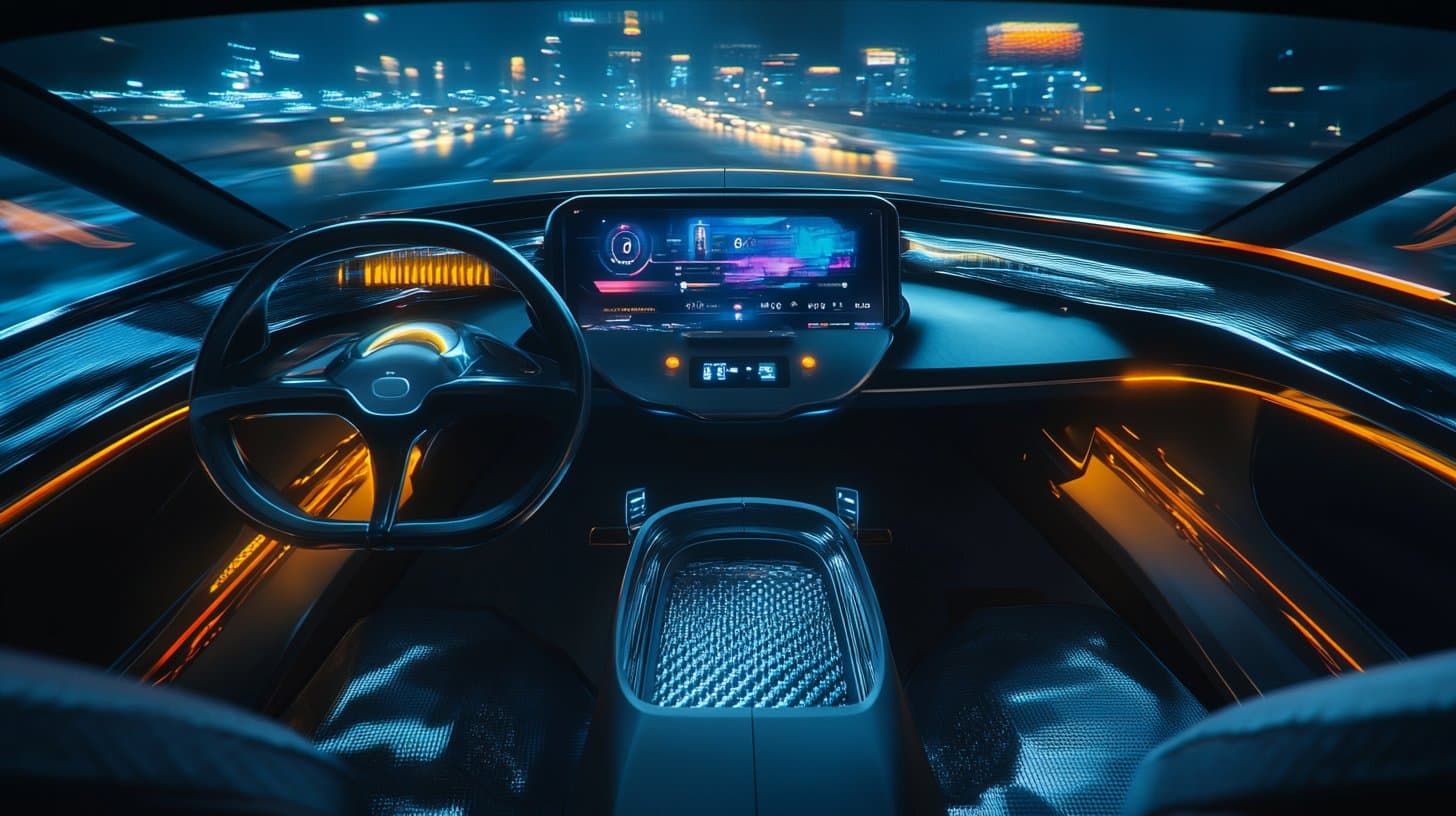
Every car you've ever driven has a mechanical connection between your hands and the front wheels. Turn the steering wheel, and a physical column, universal joints, and a rack-and-pinion gear translate that rotation into tire movement. It's been this way for over a century. Mercedes-Benz is about to change that. The company has confirmed that its steer-by-wire system will debut in production vehicles in 2026, eliminating the mechanical steering column entirely and replacing it with sensors, electric motors, and software. It sounds like a small engineering detail. It's actually one of the most significant chassis innovations in decades.
How Steer-by-Wire Works
In a conventional steering system, your inputs travel through a physical mechanical chain: steering wheel → steering column → universal joints → intermediate shaft → rack-and-pinion gear → tie rods → wheel knuckles → tires. Every vibration, every pothole, every road surface change travels back through that chain to your hands. It's direct, intuitive, and has been refined over 100 years.
Steer-by-wire removes the mechanical link entirely. Instead, sensors on the steering wheel detect your inputs — angle, speed, and force — and transmit that data electronically to electric motors at the front wheels that turn the tires. A separate set of motors in the steering column provides haptic feedback to your hands, simulating the feel of the road surface, tire grip levels, and resistance that you'd normally get through the mechanical connection.
Think of it like the difference between a wired and wireless mouse. The input is the same. The response is the same. But the removal of the physical tether opens up design possibilities that simply don't exist with a mechanical system.
Why It Matters for Electric Vehicles
Packaging Freedom
A mechanical steering column is a rigid tube that runs from the dashboard through the firewall and into the engine bay. It constrains interior layout, limits dash design, and complicates crash safety engineering. Removing it gives designers complete freedom to rethink the cockpit. The steering wheel can be mounted anywhere. The dashboard can extend further forward. Foot space improves. And because EVs already lack an engine block, steer-by-wire combined with a flat battery floor creates interior volumes that rival vehicles a class larger.
Variable Steering Ratios
This is where steer-by-wire gets genuinely transformative. In a mechanical system, the steering ratio is fixed by the physical gear. Turn the wheel 2.5 rotations lock-to-lock, and that's it — every car, every speed, every situation. With steer-by-wire, the ratio is software-defined and infinitely variable.
At highway speed, the system can make steering deliberately slower and more stable, requiring more wheel input for lane changes to prevent twitchy overcorrections. In a parking garage, the ratio can tighten dramatically so you can go lock-to-lock in less than 180 degrees — less than half a turn of the wheel to go from full left to full right. No more hand-over-hand shuffling in tight spaces.
Mercedes has confirmed that its system will offer under 180 degrees of total rotation at low speeds, which is a dramatic departure from the 540+ degrees typical of conventional systems. This single change will make every parking maneuver, U-turn, and tight corner noticeably easier.
Foundation for Autonomous Driving
Steer-by-wire is a prerequisite for Level 3 and Level 4 autonomous driving. When the car is driving itself, having a mechanical steering column that physically moves the wheel is unnecessary and potentially dangerous — a passenger resting their hand on the wheel could interfere with the autonomous system's inputs. With steer-by-wire, the steering wheel can be electronically decoupled from the front wheels during autonomous operation, then instantly reconnected when the driver takes over.
Customizable Driving Feel
Because the haptic feedback is generated by motors rather than transmitted mechanically, every aspect of steering feel can be tuned. Want a heavy, sporty feel? Software adjustment. Want a light, comfort-oriented setup? Software adjustment. Want the car to subtly resist steering inputs that would break traction on a wet road? Software adjustment. Mercedes will likely offer multiple steering modes that go far beyond the “Comfort/Sport/Sport+” settings in current vehicles.
The Yoke Question
Tesla introduced a yoke-style steering wheel in the Model S and Model X — a half-wheel that looks like an airplane control — and the reception was deeply polarizing. The fundamental problem: Tesla used a yoke without steer-by-wire. The conventional steering ratio meant drivers still needed to rotate the wheel significantly for turns and parking, and without a full rim, their hands would land on empty air during hand-over-hand maneuvers.
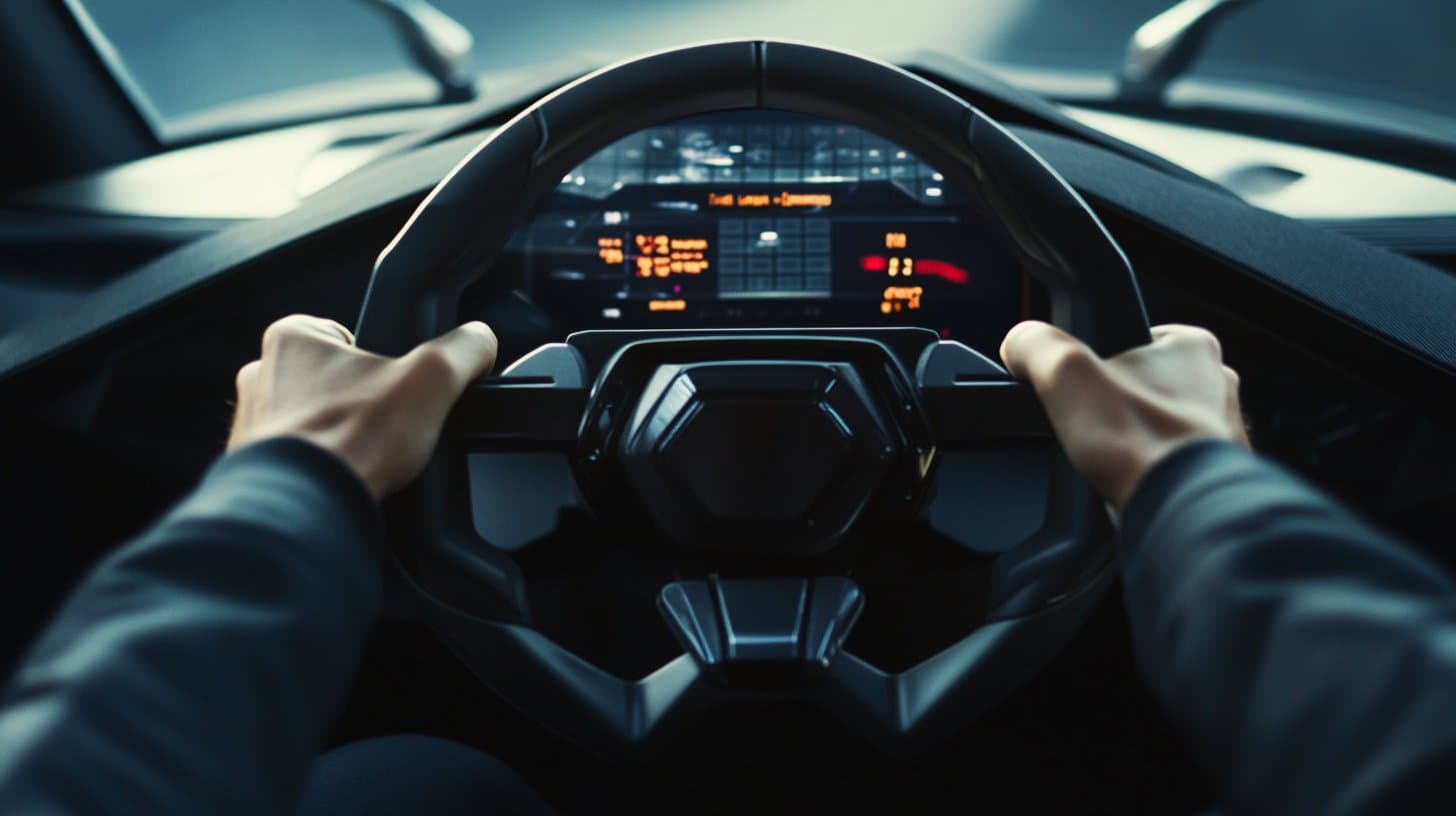
With steer-by-wire and a sub-180-degree rotation range, the yoke suddenly makes perfect sense. Your hands never need to leave the 9-and-3 position because the wheel never rotates far enough to require repositioning. Mercedes hasn't confirmed whether its production system will use a yoke, but the engineering foundation makes it viable for the first time. The lesson: the yoke isn't the problem — the yoke without steer-by-wire is the problem.
Who Else Is Working on Steer-by-Wire
Toyota/Lexus was actually the first to bring steer-by-wire to a production vehicle with the Lexus RZ 450e in 2023. However, Toyota's system was available only in limited markets with specific regulations, and early reviews were mixed — the haptic feedback felt artificial to many drivers. Toyota has continued refining the system and is expected to expand it across more models.
Infiniti deployed a partial steer-by-wire system in the Q50 sedan starting in 2014, though it retained a mechanical backup connection. The system was more of a hybrid approach than a full steer-by-wire implementation.
Tesla is rumored to be developing steer-by-wire for the next-generation Model S replacement and potentially the Robotaxi platform. Given that Tesla already uses a yoke, adding proper steer-by-wire would resolve most of the ergonomic complaints with the current system.
BMW has confirmed active research into steer-by-wire, with likely deployment in the Neue Klasse platform vehicles. BMW's reputation for steering feel makes its implementation particularly interesting — if anyone can make digital steering feel analog, it's BMW.
The Safety Question
The instinctive reaction to removing the mechanical steering column is concern. What happens if the electronics fail? This is the question every engineer working on steer-by-wire has spent a decade answering, and the solution is triple redundancy.
Mercedes's system uses three independent electronic channels, each with its own sensors, processors, and power supply. If one channel fails, the other two maintain full functionality. If two channels fail simultaneously — an astronomically unlikely event — the third provides enough control to safely bring the vehicle to a stop. The probability of a total steer-by-wire failure is calculated to be lower than the probability of a mechanical steering column fracture.
There's also a counterintuitive safety argument: steer-by-wire may actually be safer than mechanical steering. In a frontal collision, the steering column is one of the primary intrusion risks into the passenger cabin. Remove it, and you eliminate an entire injury vector. The system can also intervene to prevent dangerous steering inputs — for example, limiting steering angle at high speed to prevent rollovers or correcting for sudden crosswinds — in ways that a passive mechanical system cannot.
What This Means for the Industry
When Mercedes adopts a technology, the rest of the industry follows. It happened with crumple zones, antilock brakes, electronic stability control, and adaptive cruise control. Steer-by-wire will be no different. Expect BMW, Audi, and Porsche to announce production steer-by-wire systems within 2–3 years of Mercedes's launch. Within a decade, it will likely be standard on premium EVs and available as an option on mainstream models.
The technology also has implications for vehicle manufacturing. Steering columns are complex, heavy, and require precise installation. Eliminating them simplifies the assembly process, reduces vehicle weight by 5–10 pounds, and frees up packaging space that engineers can use for additional battery capacity, storage, or crash structure.
Steer-by-wire isn't the kind of technology that makes headlines or sells cars on an Instagram ad. You won't see it. You'll feel it — in the effortless parking, the perfectly weighted highway cruising, the customizable driving dynamics, and the interior space that seems impossible for the vehicle's exterior size. It's the kind of invisible innovation that, five years from now, will make conventional steering feel like a relic. To see how Mercedes and others are pushing EV technology forward, read our coverage of EVs sweeping the 2026 World Car Awards and the BMW iX3 World Car of the Year win, or see what's launching in our Every New EV 2026 Tracker.