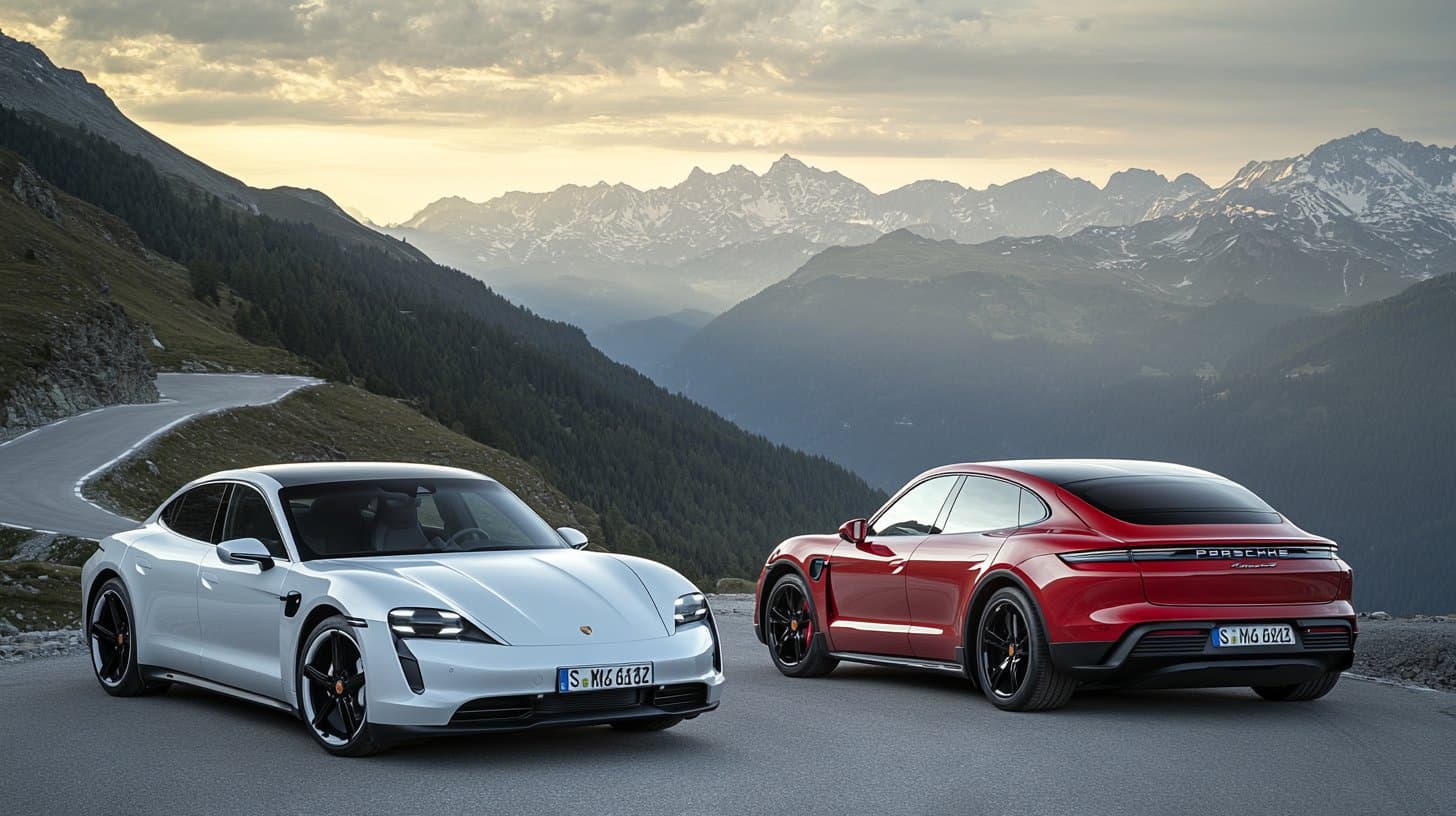
Porsche makes two electric vehicles, and both are exceptional. The Porsche Taycan is a low-slung performance sedan that redefined what an electric car could feel like, while the Porsche Macan Electric brings that same engineering philosophy to the compact luxury SUV segment. Both wear the iconic crest, both deliver genuine Porsche driving thrills, and both command a premium price. But they serve very different lifestyles — so which one actually fits yours?
Porsche Taycan: The Electric Sports Sedan
The Porsche Taycan starts at approximately $88,000 and delivers up to 318 miles of EPA-estimated range. With a 0–60 time of just 3.4 seconds in its rear-wheel-drive configuration, the Taycan is proof that Porsche didn't compromise when electrifying the sports sedan formula. Available as both a sedan and a Sport Turismo wagon, the Taycan offers a striking silhouette that turns heads without trying. Turbo and Turbo S variants push performance into supercar territory, with the Turbo S clocking 0–60 in under 2.5 seconds.
Where the Taycan truly shines is on a winding road. The center of gravity is impossibly low, the rear-axle steering sharpens turn-in, and the regenerative braking is tuned to feel natural rather than abrupt. It doesn't drive like an EV pretending to be a sports car — it drives like a Porsche that happens to be electric.
Porsche Macan Electric: The Everyday Porsche
The Porsche Macan Electric enters the market at around $70,000, making it the more accessible entry point into the Porsche EV lineup. It offers up to 308 miles of range and sprints to 60 mph in 3.9 seconds — figures that would have been supercar numbers just a decade ago. As a compact luxury SUV, the Macan Electric competes in one of the hottest segments in the automotive market, going head-to-head with the BMW iX, Mercedes EQE SUV, and Tesla Model X.
The Macan Electric rides on Porsche's dedicated Premium Platform Electric (PPE) architecture, which it shares with the Audi Q6 e-tron. This purpose-built EV platform means no compromises in packaging — the battery sits flat beneath the floor, the motors are optimized for the chassis, and the weight distribution is nearly perfect. It's an SUV that genuinely feels athletic.
Driving Dynamics: Two Porsches, Two Characters
Both vehicles feel unmistakably like Porsches, but they express that DNA differently. The Taycan is razor-sharp and planted, with a low seating position that puts you right in the middle of the action. Every input — steering, throttle, brakes — is met with immediate, precise feedback. It rewards aggressive driving and makes even a mundane commute feel special.
The Macan Electric, by contrast, blends athleticism with composure. The higher ride height gives you better visibility, the adaptive air suspension soaks up rough pavement, and the all-wheel-drive system delivers confident grip in all conditions. It's more approachable and forgiving than the Taycan, yet it can still carve through corners with a precision that most SUVs can't match. If the Taycan is a scalpel, the Macan Electric is a very sharp Swiss Army knife.
Range and Charging: The 800V Advantage
Both the Taycan and Macan Electric use 800-volt electrical architecture, which is one of the most significant engineering advantages in either vehicle. This higher voltage enables ultra-fast DC charging — the Taycan can accept up to 270 kW, while the Macan Electric tops out at roughly 270 kW as well. In practice, both vehicles can charge from 10% to 80% in approximately 22–25 minutes at a compatible high-power charger.
The Taycan holds a slight edge in total range with its 318-mile maximum versus the Macan Electric's 308 miles. This difference is largely attributable to the Taycan's sleeker aerodynamic profile and lower curb weight. For most owners, this 10-mile gap is negligible in daily driving, but it could matter on longer road trips where every mile counts between charging stops.
Interior and Practicality
This is where the Macan Electric pulls decisively ahead. The SUV body style naturally provides more headroom, more cargo space, and easier ingress and egress. The Macan Electric offers roughly 22 cubic feet of cargo space behind the rear seats (expandable to over 50 with seats folded), plus a small front trunk. The Taycan's trunk is adequate at around 14 cubic feet (sedan) or 15.8 cubic feet (Sport Turismo), but it can't compete with the Macan's versatility.
Both interiors feature Porsche's driver-focused cockpit with the curved instrument cluster and central infotainment screen. Material quality is outstanding in both — genuine leather, brushed aluminum, and meticulous fit and finish throughout. The Macan Electric's rear seat is significantly more comfortable for adult passengers, making it the better choice for families or anyone who regularly carries passengers.
Cost of Ownership
Insurance costs for both vehicles are premium-tier, though the Taycan's higher price and performance ratings typically result in higher premiums. Expect to pay roughly $2,400–$3,200 per year for the Macan Electric and $2,800–$3,800 for the Taycan, depending on your driving record and location. Porsche maintenance is not cheap — even with fewer moving parts than ICE models, annual service visits run $400–$700, covering brake fluid, cabin filters, tire rotations, and software updates.
Depreciation is the wild card. The Taycan has established a relatively strong resale trajectory after several years on the market, retaining approximately 55–60% of its value after three years. The Macan Electric is too new for long-term data, but Porsche SUVs historically hold value extremely well, and early indicators are positive. Both vehicles benefit from Porsche's strong brand cachet, which insulates them from the steeper depreciation curves seen in some other EV brands.
The Porsche Tax: Is It Worth $20–30K More?
Let's address the elephant in the room. Both the Taycan and Macan Electric cost significantly more than their closest competitors. A BMW i4 starts around $52,000 and a BMW iX around $68,000. So what does the Porsche badge actually buy you?
In a word: refinement. Porsche's build quality, driving dynamics, and attention to detail are a cut above most competitors. The 800V architecture provides genuinely faster charging. The driving feel is more communicative and engaging. The interiors are more meticulously assembled. And Porsche's resale values mean you recoup more of that premium when it's time to sell. Whether that's worth $20–30K is a personal decision, but for driving enthusiasts, the answer is often yes.
Which Porsche EV Should You Buy?
Choose the Taycan If...
- •Driving engagement is your top priority
- •You want the most thrilling EV on the road
- •A Sport Turismo wagon suits your lifestyle
- •Maximum range matters more than cargo space
Choose the Macan Electric If...
- •Daily versatility and cargo space are essential
- •You want the more affordable Porsche EV
- •Rear passenger comfort is important
- •You prefer SUV ride height and visibility
Taycan vs Macan Electric: Head-to-Head
Alternatives Worth Considering
If the Porsche premium feels like a stretch, there are compelling alternatives. The BMW i4 offers a thrilling driving experience in sedan form at a significantly lower price, while the BMW iX provides luxury SUV versatility with impressive technology. Both are excellent vehicles — they just don't carry the same visceral driving connection that makes a Porsche a Porsche.
Compare Porsche EV Deals
Ready to find the best price on a Porsche Taycan or Macan Electric? Compare prices, incentives, and availability across all luxury EV models in our EV Deals hub.
Browse EV Deals