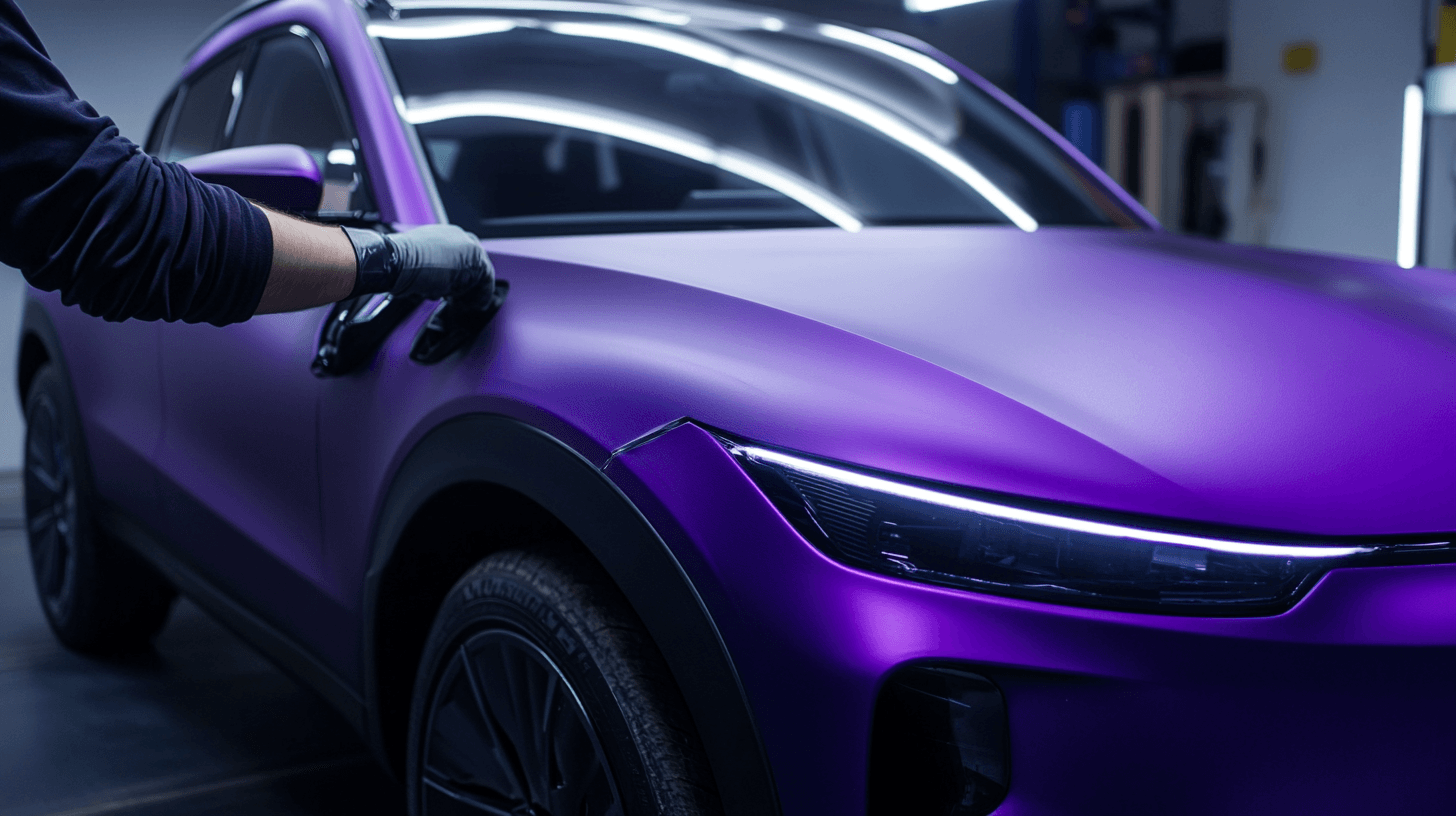
Vinyl wrapping has become one of the most popular ways for EV owners to customize their vehicles. Whether you want to change your car's color, protect the factory paint, or create a completely unique look, a quality wrap delivers on all three. Here's everything you need to know about wrapping your electric vehicle in 2026.
Why EV Owners Love Vinyl Wraps
- •Color options are limited from the factory — Most EV manufacturers offer 5-7 colors. Tesla famously charges $1,000-$2,000 for anything beyond white. A wrap gives you access to hundreds of colors and finishes for a similar price.
- •Reversible customization — Unlike a repaint, a wrap can be removed in 3-5 years with the original paint untouched underneath. This is ideal for leased EVs or owners who like to change things up.
- •Paint protection — The vinyl layer shields the factory paint from UV rays, minor scratches, bird droppings, and road debris. When removed, the paint underneath looks like it did the day the wrap went on.
- •Resale value preservation — A wrapped EV with pristine original paint underneath can command a higher resale price than one with worn or damaged factory paint.
Types of Vinyl Wrap Finishes
Popular Finishes
- Gloss — Mirror-like shine, looks like a factory paint job
- Matte — Flat, non-reflective finish. Extremely popular on EVs, especially black and gray
- Satin — Between gloss and matte. Subtle sheen that catches light beautifully
- Metallic — Contains metallic flakes for depth and sparkle
- Chrome — Full mirror finish. Eye-catching but may not be legal in all areas
Specialty Finishes
- Color shift — Changes color depending on viewing angle
- Brushed metal — Mimics brushed aluminum or steel texture
- Carbon fiber — Textured pattern for accents or full body
- Forged carbon — Irregular carbon pattern, popular on performance EVs
- Printed/custom — Custom graphics, logos, or artistic designs
How Much Does It Cost?
- Partial wrap (roof, mirrors, trim): $500 - $1,500
- Full wrap — standard color (gloss/matte): $2,500 - $4,500
- Full wrap — premium color (satin/metallic): $3,500 - $6,000
- Full wrap — specialty (color shift, chrome): $5,000 - $8,000+
- Printed/custom design wrap: $4,000 - $10,000+
Prices vary by vehicle size, complexity of body lines, and your market. SUVs and trucks cost more than sedans due to surface area.
EV-Specific Wrapping Considerations
- 1.Flush door handles — Many EVs (Tesla, Rivian, Polestar) have retractable or flush-mounted door handles. Wrapping around these requires precision and experience. Ask if the installer has worked with your specific car.
- 2.Camera and sensor areas — Autopilot cameras, parking sensors, and surround-view cameras need to remain uncovered. A skilled installer knows where these are on your specific model.
- 3.Charging port door — The charge port area gets opened frequently and is exposed to heat from charging. Quality installation ensures the wrap around this area holds up over time.
- 4.Thinner factory paint — Some EVs (especially early Teslas) have thinner paint that's more susceptible to damage during wrap removal if done incorrectly. This makes choosing a skilled installer even more important.
- 5.Glass roof — If your EV has a panoramic glass roof, the wrap stops at the roof trim. Some owners add a contrasting color on the pillars or a gloss black roof trim wrap to complement the glass.
The Wrapping Process
- 1.Deep clean and decontamination — The car is thoroughly washed, clay barred, and wiped with isopropyl alcohol to remove any contaminants. Any wax, sealant, or ceramic coating may need to be removed for proper adhesion.
- 2.Disassembly — Badges, trim pieces, door handles, mirrors, and other components are removed for a clean wrap that tucks behind edges rather than cutting on the body.
- 3.Film application — Vinyl is applied panel by panel using squeegees and heat guns. Heat makes the vinyl conformable around curves and recesses. Skill here determines whether the wrap looks professional or amateur.
- 4.Post-heating — After application, all edges and curves are re-heated to ensure the vinyl's memory is set. This prevents lifting and shrinking over time.
- 5.Reassembly and inspection — Components are reinstalled and the entire wrap is inspected under bright light for bubbles, lifting, or alignment issues.
Timeline: A full wrap typically takes 3-5 days. Rushed jobs lead to poor results.
How to Maintain Your Wrap
- •Hand wash only — Automatic car washes can lift edges and scratch the film. Use a gentle car soap and microfiber mitt.
- •Avoid wax on matte/satin wraps — Traditional wax adds shine to matte finishes, ruining the effect. Use wrap-specific cleaners from brands like Avery or 3M.
- •Remove bird droppings and bugs quickly — Acidic contaminants can stain vinyl if left on too long, especially on lighter colors.
- •Park in shade when possible — Prolonged UV exposure degrades vinyl faster. Garage-kept wraps last significantly longer.
- •Ceramic coat over the wrap — A ceramic coating applied over the vinyl adds hydrophobic protection, makes cleaning easier, and extends the wrap's lifespan.
Choosing an Installer
- •Check their EV portfolio — Ask for before-and-after photos of EVs they've wrapped, specifically your make and model if possible.
- •Ask about removal technique — They should be confident in removing wraps cleanly from thinner EV paint without damage.
- •Verify the film brand — Reputable shops use 3M 2080, Avery Dennison Supreme, or KPMF premium vinyl. Cheap film from unknown brands fails faster and is harder to remove.
- •Get a written warranty — Quality shops warranty against peeling, bubbling, and premature failure for 1-3 years.
Final Thoughts
A vinyl wrap is one of the most transformative things you can do to your EV. It changes the look completely, protects the factory paint, and is fully reversible when you're ready for a change. The key is choosing quality film, a skilled installer with EV experience, and maintaining the wrap properly.
For maximum protection, consider combining a wrap with ceramic coating on top and PPF on high-impact areas that the wrap alone may not fully protect — like the leading edge of the hood and front bumper.