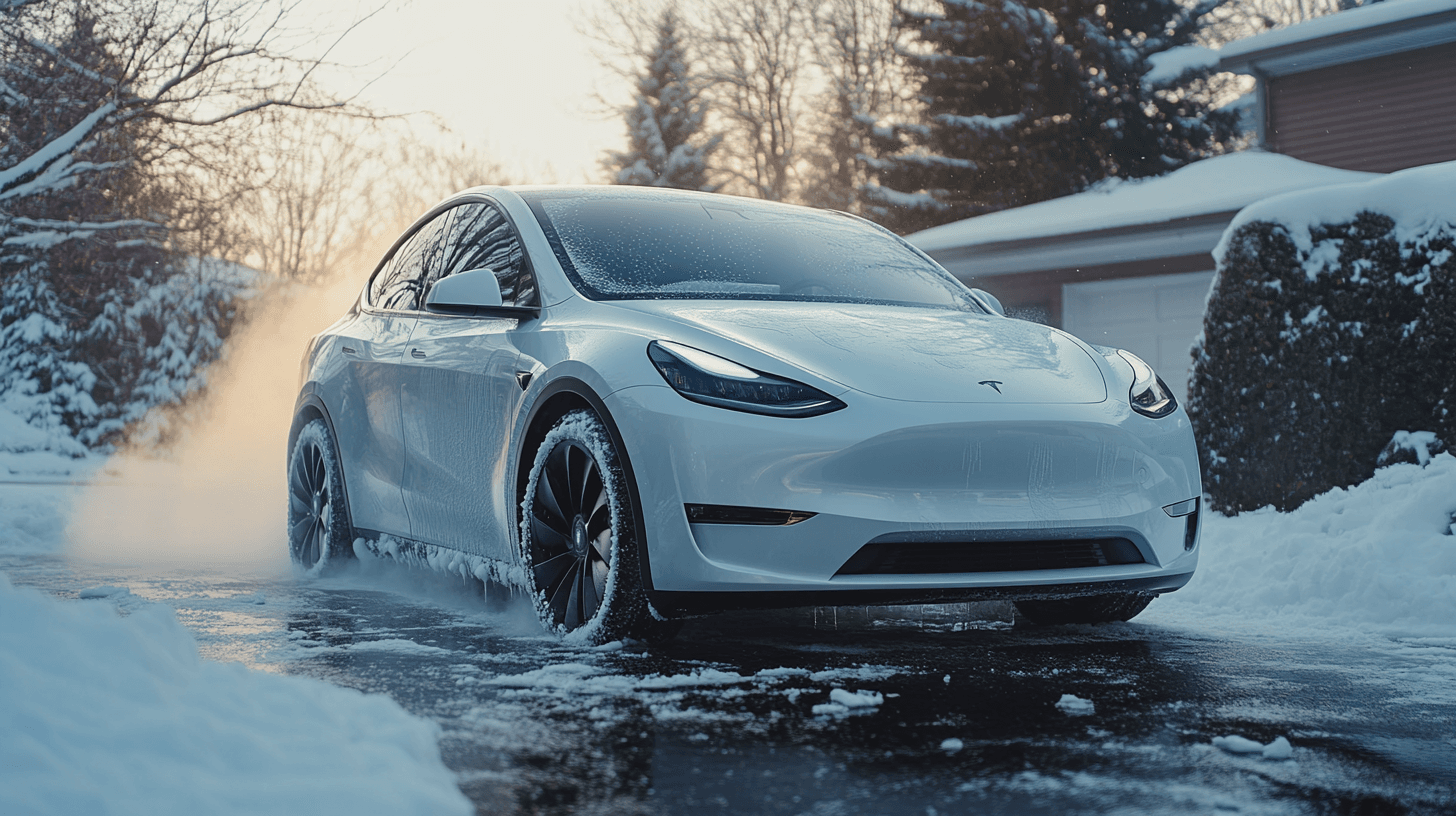
Most winter EV advice focuses on range loss and battery performance. That's important, but it's only part of the picture. Road salt, ice, slush, and freezing temperatures attack your EV's paint, undercarriage, wheels, and interior just as aggressively. Here's how to protect your entire vehicle through the cold months.
Road Salt: Your EV's Worst Winter Enemy
Road salt is devastating to any vehicle, but EVs deserve extra attention because of the components mounted underneath — the battery pack, electric motors, and high-voltage cables are all exposed to salt spray from the road surface.
What Salt Does
- •Corrodes metal components — Suspension, brake calipers, and exposed fasteners rust faster with salt exposure.
- •Damages paint and clear coat — Salt particles scratch the surface and chemical reactions can etch through clear coat if left unwashed.
- •Attacks wheel finishes — Alloy wheels and their protective coatings break down from prolonged salt contact.
- •Corrodes charging port — The charging port pins and surrounding area are exposed to salt spray while driving. Corrosion here can cause charging issues.
Winter Washing Strategy
In winter, washing your EV isn't just about looks — it's maintenance. The goal is to remove salt before it causes damage.
- 1.Wash every 1-2 weeks minimum — If your area uses road salt, bi-weekly washing is the baseline. After heavy storms or extended highway driving, wash sooner.
- 2.Focus on the undercarriage — Use a pressure washer or touchless car wash with undercarriage spray. This is where salt accumulates most and where your battery pack lives.
- 3.Clean the wheel wells — Salt and slush pack into wheel wells and sit against the body. Spray them out thoroughly during every wash.
- 4.Wipe the charging port — After washing, dry the charging port area completely. A damp charging port in freezing temperatures can ice over and make plugging in difficult.
- 5.Avoid washing in below-freezing temps — Water in door handles, charge port covers, and window seals can freeze. If you must wash in freezing conditions, use a touchless wash and dry the car immediately.
Paint Protection for Winter
Winter is when paint protection pays for itself. If you invested in ceramic coating or PPF before winter, your car is in good shape. If not, here's what you can do now:
- •Apply a paint sealant — If you don't have ceramic coating, a synthetic paint sealant provides 3-6 months of protection. It creates a barrier between road salt and your paint. Cost: $20-$50 DIY or $100-$300 professionally applied.
- •Spray ceramic boost — If you already have ceramic coating, a spray ceramic booster refreshes the hydrophobic layer mid-winter. Apply after washing every 4-6 weeks.
- •Protect the wheels — Apply a wheel-specific sealant or ceramic coating. This makes brake dust and salt easier to wash off and prevents etching of the wheel finish.
- •Treat rubber seals — Apply silicone-based protectant to door seals, trunk seals, and charge port gaskets. This prevents them from freezing shut and cracking in cold weather.
Interior Winter Care
Salt doesn't just attack the outside. It gets tracked in on shoes and boots, staining carpets and floor mats.
- •All-weather floor mats are essential — Rubber floor mats with raised edges catch snow, slush, and salt from shoes. Without them, your carpet absorbs moisture and develops a permanent salt stain pattern.
- •Clean mats weekly — Pull them out and rinse off the accumulated salt water. Letting salt sit in pooled water on rubber mats can still damage the carpet underneath if it seeps through.
- •Condition leather and vinyl seats — Cold, dry air causes leather and vegan leather to dry out and crack. Apply conditioner every 4-6 weeks during winter to keep the material supple.
- •Keep a microfiber towel in the car — Use it to wipe condensation off windows and the touchscreen. EVs with large glass areas tend to fog up more in cold weather.
Tire and Wheel Care
- •Switch to winter tires — EVs are heavier than comparable gas cars due to the battery pack. This extra weight combined with instant torque makes winter tires even more important for traction. All-season tires lose grip below 45°F (7°C).
- •Check tire pressure frequently — Tire pressure drops about 1 PSI for every 10°F drop in temperature. Underinflated tires reduce range and wear unevenly. Check at least monthly in winter.
- •Consider a dedicated winter wheel set — Running winter tires on a separate set of steel or basic alloy wheels protects your expensive OEM wheels from salt, curb rash from snow-covered curbs, and pothole damage.
- •Clean brake dust more frequently — Even though EVs use regenerative braking, the mechanical brakes still engage in cold weather. Salt and brake dust combined are particularly corrosive to wheel finishes.
Charging in Cold Weather
While this article focuses on physical care rather than battery management, there are a few charging-related tips that affect the vehicle itself:
- •Keep the charge port clean and dry — Ice can form inside the charge port door, making it difficult to open or preventing a proper connection. Apply a thin layer of silicone spray to the port gasket.
- •Precondition while plugged in — Use your car's scheduled departure or preconditioning feature while it's still connected to the charger. This heats the cabin and battery using grid power instead of battery power, preserving range.
- •Garage your EV if possible — Even an unheated garage keeps the battery 10-20°F warmer than outside temperatures. A warmer battery means better efficiency, faster charging, and less strain on the thermal management system.
Spring Recovery Checklist
Once winter ends, give your EV a thorough recovery service:
- ☐Full exterior wash with thorough undercarriage rinse
- ☐Clay bar treatment to remove embedded contaminants
- ☐Inspect paint for chips and scratches — touch up before rust starts
- ☐Reapply ceramic coating or sealant
- ☐Deep clean interior — remove salt stains from carpet and mats
- ☐Swap winter tires back to all-season or summer tires
- ☐Inspect brake pads and rotors for salt corrosion
- ☐Check and condition all rubber seals and gaskets
Final Thoughts
Winter EV care goes well beyond plugging in and hoping for the best. Road salt, freezing temperatures, and moisture threaten your paint, undercarriage, interior, and components for months at a time.
The investment in winter protection — regular washing, paint sealant or ceramic coating, rubber seal treatment, and proper tires — is small compared to the cost of repairing salt damage or restoring a neglected exterior. Take care of your EV through winter, and it'll emerge in spring looking as good as it did in fall.