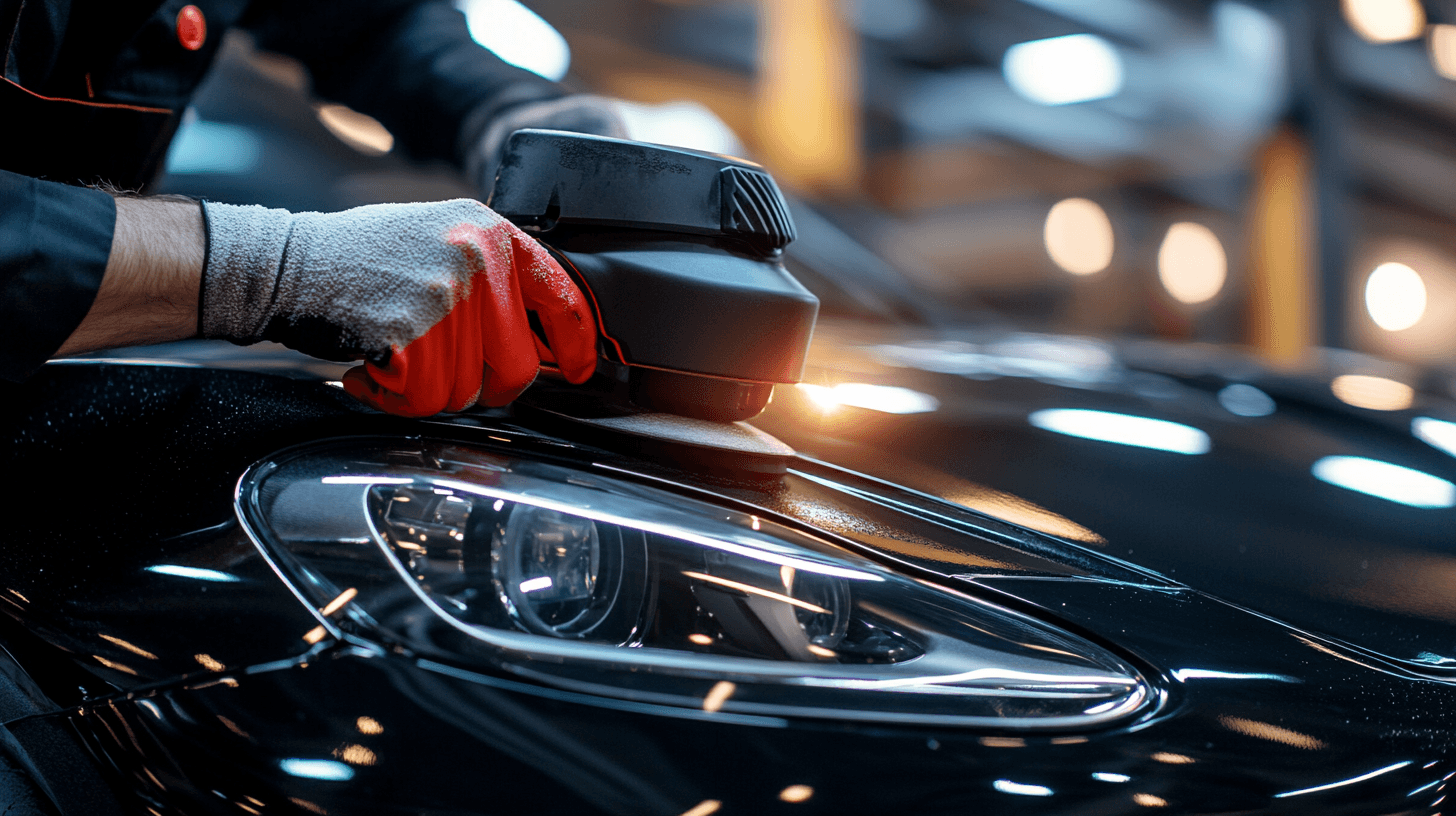
Scratches happen to every car — parking lot dings, shopping cart hits, branch scrapes, even careless car washes. The good news is that many scratches can be removed or significantly reduced. The key is understanding what type of scratch you're dealing with and whether it's a DIY fix or one that needs professional attention.
Understanding Your Car's Paint Layers
Modern car paint has multiple layers. Where the scratch stops determines how it should be treated:
- 1.Clear coat (top layer) — Most scratches live here. These are surface-level and the easiest to fix. If water or polish makes the scratch disappear temporarily, it's clear coat only.
- 2.Base coat / color layer — If you can see a different color beneath the scratch (white on a black car, for example), it's gone through the clear coat into the paint. Polishing alone won't fix this.
- 3.Primer — Gray or dull-colored layer visible in the scratch. The paint is gone completely in that spot and needs professional repair.
- 4.Bare metal — Silver/metallic visible in the scratch. This needs immediate attention to prevent rust, especially on non-aluminum body panels.
DIY Scratch Removal Methods
For Light Clear Coat Scratches
Method 1: Scratch Remover Compound
Products like Meguiar's ScratchX, Chemical Guys VSS, or 3M Scratch Remover contain fine abrasives that level the clear coat around the scratch, making it disappear.
- 1. Wash and dry the area thoroughly
- 2. Apply a small amount of compound to a microfiber applicator pad
- 3. Work in small circular motions over the scratch for 30-60 seconds
- 4. Wipe off with a clean microfiber towel
- 5. Repeat if needed, then apply wax or sealant to protect the area
Cost: $10 - $25 | Difficulty: Easy | Best for: Light swirl marks and hairline scratches
Method 2: Polishing with a Dual-Action Polisher
A DA polisher with a medium-cut polish removes deeper clear coat scratches more effectively than hand application. This is what professionals use for paint correction.
- 1. Wash, clay bar, and dry the surface
- 2. Apply polish to a foam cutting pad on the DA polisher
- 3. Work in 2x2 foot sections at medium speed
- 4. Wipe residue and inspect under direct light
- 5. Follow with a finishing polish and sealant
Cost: $150 - $300 (polisher + pads + polish) | Difficulty: Moderate | Best for: Swirl marks, water spots, moderate scratches
Method 3: Touch-Up Paint Pen
For scratches that go through the clear coat into the color layer, a color-matched touch-up paint pen fills the scratch. It won't be invisible, but it prevents rust and makes the scratch far less noticeable.
- 1. Clean the scratch with rubbing alcohol
- 2. Apply touch-up paint in thin layers, letting each dry
- 3. Once level with the surface, wet sand with 2000-grit sandpaper (optional)
- 4. Polish the area to blend
Cost: $15 - $40 | Difficulty: Moderate | Best for: Deep scratches showing primer or color layer
When to Go Professional
- •Scratches down to metal — These need professional wet sanding, primer, paint, and clear coat to repair properly and prevent rust.
- •Large panels with heavy scratching — If an entire panel is scratched (keying damage, for example), a professional repaint is the only clean solution.
- •Multi-stage paint correction — If you want the entire car swirl-free and showroom-perfect, a professional detailer with proper lighting, tools, and experience will deliver results that DIY can't match.
- •Before ceramic coating or PPF — If you're planning to apply paint protection, get professional paint correction first. Coating over scratches locks them in permanently.
Professional Scratch Repair Costs
- Light scratch buffing (per panel): $50 - $150
- Single-stage paint correction (full car): $300 - $600
- Two-stage paint correction (full car): $500 - $1,000
- Deep scratch repair with touch-up (per scratch): $75 - $200
- Panel repaint (body shop): $300 - $1,000+ per panel
- Full car repaint: $3,000 - $10,000+ depending on quality
How to Prevent Scratches
- •Apply PPF to high-impact areas — Hood, bumper, fenders, and mirrors. PPF absorbs rock chips and minor scratches before they reach the paint.
- •Use ceramic coating — While it won't stop deep scratches, ceramic coating adds a sacrificial layer that resists light scratches and swirl marks.
- •Hand wash only — Automatic car washes with spinning brushes are the #1 cause of swirl marks. Use the two-bucket method at home.
- •Park smart — Farther spots in parking lots mean fewer door dings. End spots with one open side reduce risk by half.
- •Use quality microfiber towels — Cheap towels or old rags leave micro-scratches. Invest in plush, high-GSM microfiber towels and wash them separately.
Final Thoughts
Most light scratches are clear coat deep and can be handled at home with a good scratch remover or a DA polisher. For anything deeper — especially scratches showing primer or bare metal — professional repair is worth the investment to prevent rust and maintain your car's value.
The best strategy is prevention: protect your paint with PPF and ceramic coating, wash carefully, and address scratches promptly before they worsen.