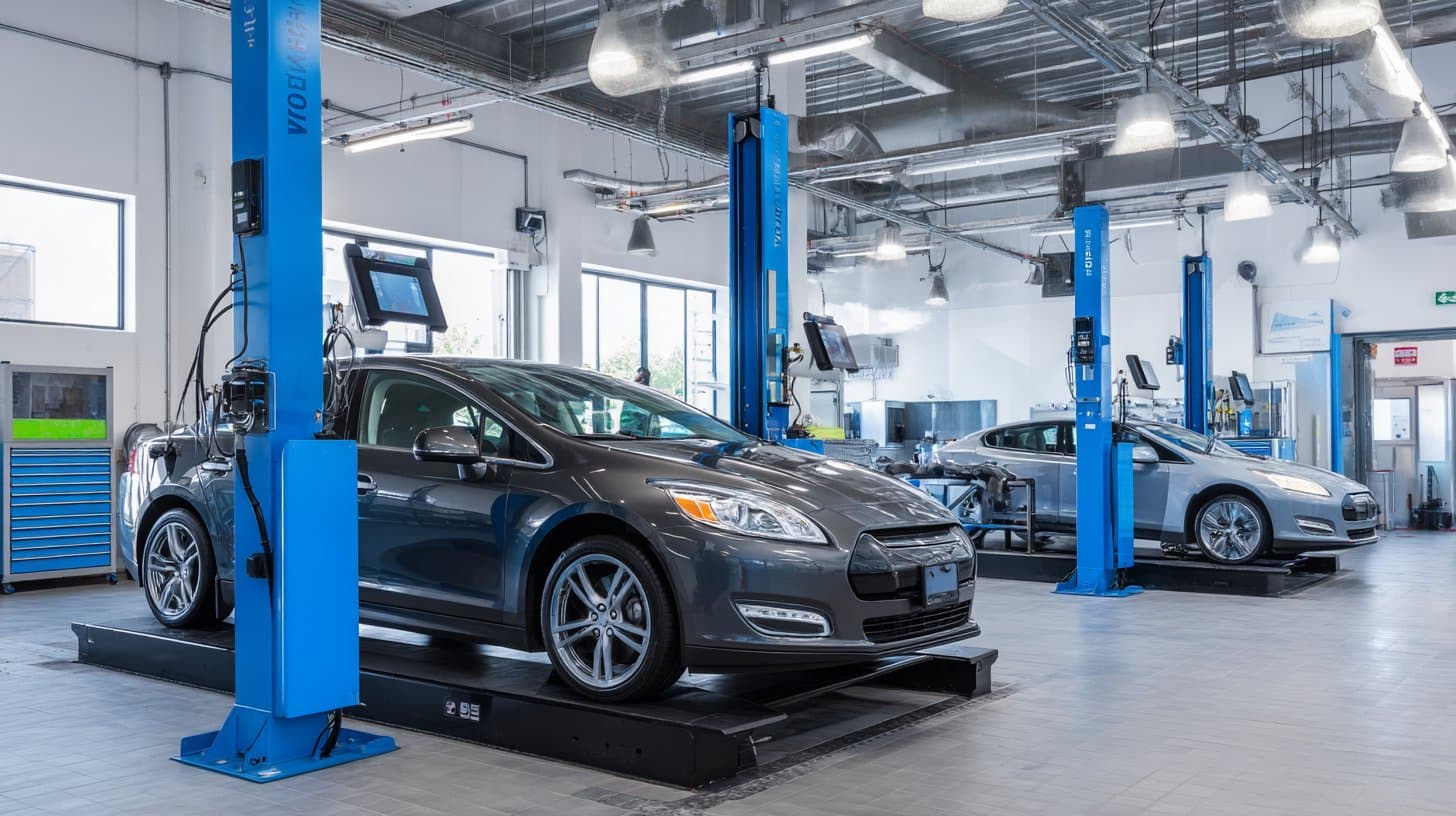
It's one of the most common questions from people considering an electric vehicle: “Do EVs need oil changes?” The short answer is no — electric vehicles have no engine, no pistons, no combustion, and therefore no engine oil. But that doesn't mean EVs are maintenance-free. Here's a complete guide to what your EV actually needs to stay in peak condition, how much it costs, and how it compares to maintaining a gas car.
Why EVs Don't Need Oil Changes
Traditional gas and diesel engines use oil to lubricate hundreds of moving parts — pistons, crankshafts, camshafts, valves, and more. That oil breaks down over time from heat and friction, requiring replacement every 3,000–10,000 miles. Electric vehicles replace all of that complexity with an electric motor that has as few as one moving part. No combustion means no oil contamination, no carbon buildup, and no need for oil filters.
This single difference eliminates one of the most frequent and expensive maintenance items for car owners. At $50–$100 per oil change, two to four times per year, you're saving $100–$400 annually just on this one item. Over a typical 10-year ownership period, that's $1,000–$4,000 in savings from skipping oil changes alone.
What EVs Actually Need: The Complete Maintenance Checklist
Tire Rotation — Every 5,000–7,500 Miles
Every 5,000–7,500 miles
$30–$60
Even wear, safety
EVs are heavier, wear faster
Tires are actually the most important maintenance item for EVs. Electric vehicles are significantly heavier than gas cars due to their battery packs, and the instant torque from electric motors can wear tires faster. Regular rotation ensures even wear and extends tire life. Many EV owners also choose EV-specific tires designed for lower rolling resistance and higher load ratings.
Cabin Air Filter — Every 15,000–20,000 Miles
Every 15,000–20,000 miles
$20–$50
Easy (5 minutes)
Tesla, Volvo, others
The cabin air filter cleans the air entering your vehicle's interior. It's one of the few maintenance items that's identical between EVs and gas cars. Some premium EVs like Tesla and Volvo offer HEPA-grade filters that capture 99.97% of particles, including pollen, wildfire smoke, and pollution. Replacement is simple and many owners do it themselves in under five minutes.
Brake Fluid — Every 2–3 Years
Every 2–3 years
$80–$150
Absorbs moisture over time
Moderate
Brake fluid is hygroscopic — it absorbs moisture from the air over time, which lowers its boiling point and reduces braking performance. While EVs use their friction brakes far less than gas cars (thanks to regenerative braking), the brake fluid still needs periodic replacement. Most manufacturers recommend every two to three years regardless of mileage.
Battery Coolant — Every 50,000–100,000 Miles
50,000–100,000 miles
$100–$250
Battery thermal management
Varies significantly
EVs use a liquid cooling system to maintain optimal battery temperature. Over time, this coolant degrades and needs replacement. Tesla recommends checking coolant at 50,000 miles, while Hyundai and Kia suggest replacement at around 60,000 miles. Some manufacturers like BMW claim their coolant is “lifetime fill” under normal conditions. Check your owner's manual for specific intervals.
Software Updates — Over-the-Air (OTA)
Automatic / As available
Free
Range, features, safety
Wi-Fi recommended
Unlike gas cars that are essentially frozen in time after purchase, EVs regularly receive over-the-air software updates that can improve range, add features, enhance safety systems, and fix bugs. Tesla pushes updates every few weeks, while other manufacturers like Hyundai, Ford, and BMW have accelerated their OTA programs significantly in 2026. Keep your EV connected to Wi-Fi at home to receive updates automatically.
12V Battery — Every 4–5 Years
Every 4–5 years
$100–$300
Powers accessories, computers
Slow startup, errors
Even though your EV has a massive high-voltage battery, it also uses a small 12V battery to power the vehicle's computers, lights, door locks, and other accessories. This 12V battery wears out just like in a gas car and needs replacement every 4–5 years. Some newer EVs are switching to lithium-ion 12V batteries that last longer, but most still use traditional lead-acid units.
The Regenerative Braking Advantage
One of the biggest maintenance savings comes from regenerative braking. When you lift your foot off the accelerator in an EV, the electric motor reverses to act as a generator, converting kinetic energy back into battery charge. This slows the car without using the friction brakes. Many EV drivers rarely touch the brake pedal during normal driving — a driving style called “one-pedal driving.”
The result? EV brake pads can last 100,000–200,000 miles compared to 30,000–50,000 miles on a gas car. That's potentially the entire life of the vehicle without a single brake pad replacement. Brake rotors last similarly longer. This alone saves $300–$800 over typical ownership compared to a gas vehicle.
Annual Cost Comparison: EV vs Gas Car
When you add it all up, the average EV owner spends approximately $400 per year on maintenance, compared to $1,200 or more for a comparable gas vehicle. That's a savings of $800+ every single year. Over a 10-year ownership period, you'll save $8,000–$10,000 in maintenance costs alone — and that's before counting the fuel savings from charging with electricity instead of buying gasoline.
Battery Health Tips for Longevity
Your EV's battery is its most expensive component, and a few simple habits can extend its life significantly. Keep daily charging between 20% and 80% — only charge to 100% before long trips. Avoid leaving the battery at very low states of charge for extended periods. Use Level 2 home charging as your primary method, reserving DC fast charging for road trips. Park in shade when possible, especially in hot climates, as heat is the battery's biggest enemy.
Modern EV batteries are remarkably durable. Most manufacturers warranty their batteries for 8 years or 100,000 miles, and real-world data shows the average EV battery retains 85–90% of its original capacity after 200,000 miles. Battery replacement fears are largely overblown — you're far more likely to sell the car before the battery wears out.
Ready to Save on Maintenance? Find Your EV
Compare real-time pricing on the lowest-maintenance vehicles on the road. Our EV Best Price Finder tracks deals across Carvana, CarMax, AutoTrader, and dealer inventory.
Browse EV DealsRelated Articles
True Cost of EV Ownership
A full breakdown of what it really costs to own an electric vehicle.
GuideFirst-Time EV Buyer's Complete Guide
Everything you need to know before making the switch to electric.
ComparisonGas vs Electric: Real Savings Breakdown
Side-by-side comparison of gas and electric vehicle costs over time.