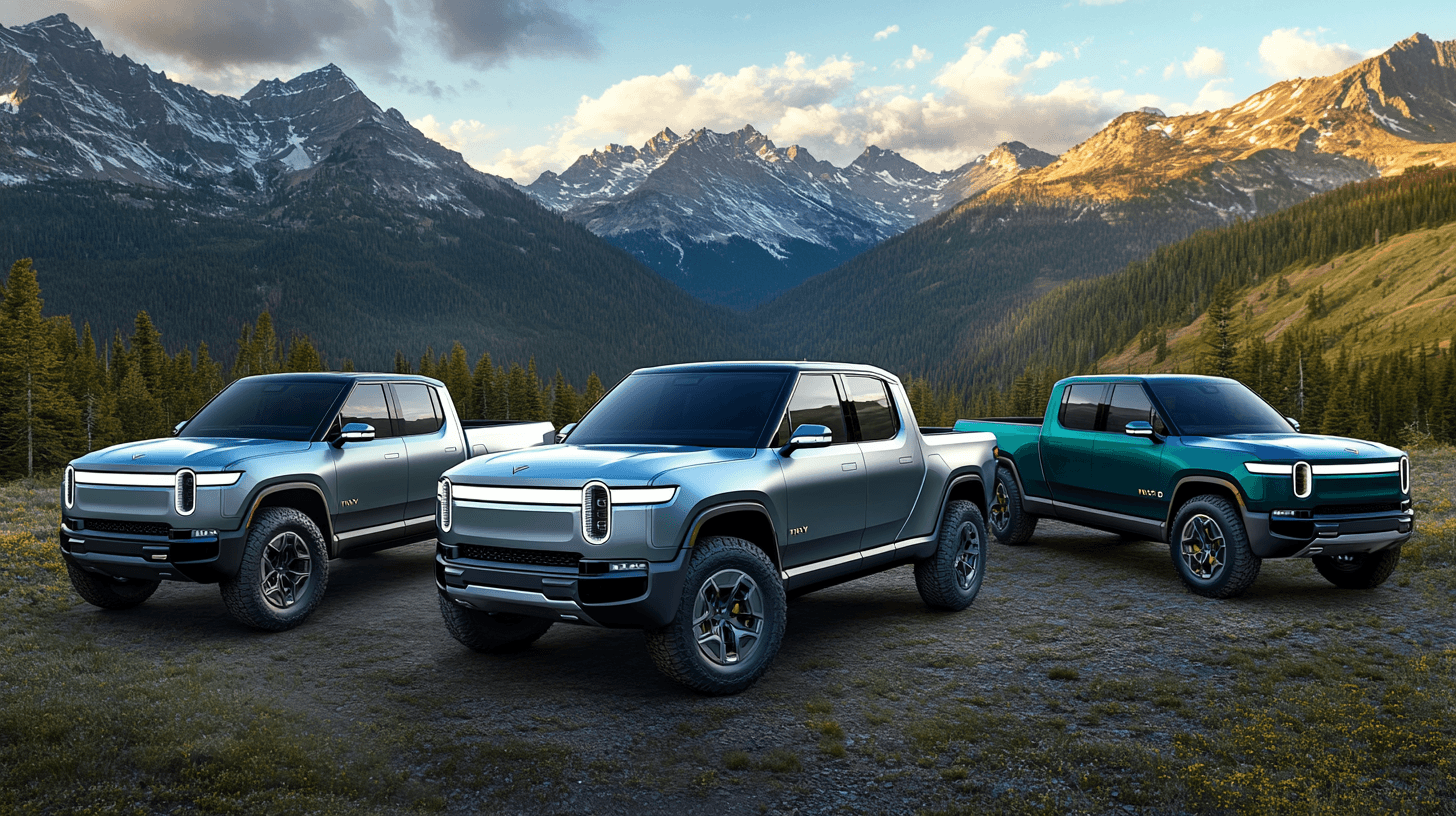
When it comes to electric trucks compared side by side, 2026 marks the year the truck segment has truly gone electric. Pickup trucks have long been the backbone of the American vehicle market, outselling every other body style for decades. Now, the biggest automakers and boldest startups are pouring billions into electrifying these workhorses. Whether you need a truck for towing boats, hauling lumber, or simply conquering the daily commute in commanding style, there is an EV pickup built for the job. In this comprehensive comparison, we break down four of the best electric trucks available today: the Tesla Cybertruck, Rivian R1T, Ford F-150 Lightning, and Chevrolet Silverado EV.
The Electric Truck Lineup
The electric truck market has evolved from a handful of concept sketches into a fiercely competitive landscape. Tesla shattered expectations with its angular, stainless-steel Cybertruck. Rivian carved out a niche for adventure-seekers with the R1T. Ford leveraged its decades of truck heritage to electrify the best-selling F-150. And General Motors responded with the Silverado EV, a ground-up redesign built on its Ultium platform. Each truck takes a distinct approach to range, capability, technology, and pricing, which means the right choice depends entirely on how you plan to use your truck.
Below, we examine each truck individually with detailed specs, strengths, and weaknesses before putting them all in a head-to-head comparison table that makes the decision easier.
Tesla Cybertruck
Up to 340 miles
11,000 lbs
2,500 lbs
2.6 sec (Beast)
From ~$80,000
The Tesla Cybertruck is unlike anything else on the road. Its exoskeleton of ultra-hard 30X cold-rolled stainless steel is virtually dent-proof, and the angular design polarizes onlookers like no vehicle before it. Under the skin, the Cybertruck delivers serious truck capability. The tri-motor Beast variant launches to 60 mph in a supercar-rivaling 2.6 seconds, while the dual-motor AWD model offers up to 340 miles of range. The 6-foot bed, integrated tonneau cover, and 120/240V outlets in the bed make it a legitimate work truck.
Tesla's native Supercharger access remains a significant advantage, giving Cybertruck owners the largest and most reliable fast-charging network in North America. Steer-by-wire technology with rear-wheel steering enables surprisingly tight turning for such a massive vehicle. However, the Cybertruck's unconventional looks, high price floor, and the fact that the stainless body cannot be easily painted or wrapped without specialized preparation are notable trade-offs.
Pros
- +Fastest acceleration of any production truck ever built
- +Stainless steel body resists dents, scratches, and corrosion
- +Native Supercharger access for seamless fast charging
- +Best-in-class payload capacity at 2,500 lbs
- +Rear-wheel steering for improved maneuverability
Cons
- -Polarizing angular design is not for everyone
- -Stainless steel shows fingerprints and is hard to wrap or paint
- -Expensive entry point with no budget-friendly trim
- -Massive dimensions challenge parking garages and tight lots
Rivian R1T
Up to 328 miles
11,000 lbs
1,760 lbs
3.0 sec
From ~$73,000
The Rivian R1T was the first electric pickup to reach customers, and it remains the segment's top choice for outdoor enthusiasts. Its quad-motor drivetrain offers true tank-turn capability, and adjustable air suspension can raise the body to over 14 inches of ground clearance for tackling serious off-road trails. The R1T's signature Gear Tunnel, a pass-through storage compartment between the cab and bed, is a uniquely clever feature that can hold skis, fishing rods, or even Rivian's optional pull-out camp kitchen.
Inside, the R1T boasts the most refined interior of any electric truck. Premium materials, a clean dashboard design with a large central display, and whisper-quiet ride quality make it feel more like a luxury SUV than a pickup. The trade-off is its 4.5-foot bed, the shortest in this comparison, which limits traditional truck utility for hauling full sheets of plywood or long cargo. Rivian's service network is also still expanding, with fewer locations than established brands.
Pros
- +Best off-road capability with quad-motor tank turns
- +Unique Gear Tunnel with optional camp kitchen
- +Most refined interior quality and ride comfort
- +Excellent build quality and attention to detail
Cons
- -Smallest bed at 4.5 feet limits hauling versatility
- -Service network still growing with fewer locations
- -Lowest payload capacity of the four trucks compared
- -Software updates roll out slower than Tesla's OTA cadence
Ford F-150 Lightning
Up to 320 miles
10,000 lbs
2,000 lbs
4.0 sec
From ~$52,000
The Ford F-150 Lightning is the most approachable electric truck in this comparison, both in price and in concept. Built on the bones of the best-selling vehicle in America, the Lightning feels immediately familiar to anyone who has driven an F-150. Ford's massive dealer network means service is never far away, and the extensive F-150 accessory ecosystem largely carries over. The standout feature is Pro Power Onboard, which delivers up to 9.6 kW of exportable power from the truck's battery, enough to run power tools on a job site or power a home during an outage.
The Lightning also boasts the largest frunk in the segment at 14.1 cubic feet, complete with a drain plug that turns it into a giant cooler for tailgating. At a starting price of roughly $52,000, it undercuts the competition significantly. The downsides include the heaviest curb weight in its class, which hurts efficiency, and a notable 40-50% range reduction when towing heavy loads. Its interior technology, while perfectly adequate, trails behind Tesla and Rivian in terms of cutting-edge features and interface responsiveness.
Pros
- +Most affordable entry point starting around $52K
- +Pro Power Onboard delivers up to 9.6 kW of exportable power
- +Massive frunk with drain plug doubles as a cooler
- +Ford's nationwide dealer network for easy service
- +Familiar F-150 feel eases the gas-to-electric transition
Cons
- -Heaviest curb weight hurts efficiency and range under load
- -Range drops 40-50% when towing at capacity
- -Slowest acceleration and least sporty driving dynamics
- -Interior tech feels a step behind Tesla and Rivian
Chevrolet Silverado EV
Up to 450 miles
10,000 lbs
1,300 lbs
4.5 sec
From ~$75,000
The Chevrolet Silverado EV arrives with the single most impressive headline spec in the electric truck segment: up to 450 miles of EPA-estimated range on the RST trim. Built from the ground up on GM's Ultium platform rather than adapted from a gas truck, the Silverado EV features a massive 200 kWh battery pack and an available Multi-Flex Midgate that opens the rear wall of the cab into the bed, creating a load floor over 10 feet long. The fixed-glass roof fills the cabin with natural light, and the 17-inch diagonal infotainment screen dominates the dashboard.
GM's CrabWalk feature, which enables four-wheel steering for diagonal movement at low speeds, is a party trick that also proves genuinely useful in tight parking lots and on congested job sites. However, the Silverado EV's payload capacity is the lowest in this group at 1,300 lbs, limiting its work-truck credentials. The RST First Edition launched at a premium price, though the upcoming WT (Work Truck) trim promises to bring costs closer to the Lightning's territory in the near future.
Pros
- +Best-in-class range at up to 450 miles EPA estimated
- +Multi-Flex Midgate creates 10+ foot load floor
- +CrabWalk four-wheel steering for tight maneuvering
- +Ground-up EV design maximizes interior and cargo space
Cons
- -Lowest payload capacity at 1,300 lbs limits work-truck use
- -RST trim is expensive; affordable WT trim still rolling out
- -Limited real-world availability and long wait times
- -Massive battery adds significant curb weight
Head-to-Head Comparison Table
| Spec | Cybertruck | Rivian R1T | F-150 Lightning | Silverado EV |
|---|---|---|---|---|
| Starting Price | ~$80,000 | ~$73,000 | ~$52,000 | ~$75,000 |
| Max Range | 340 miles | 328 miles | 320 miles | 450 miles |
| Towing Capacity | 11,000 lbs | 11,000 lbs | 10,000 lbs | 10,000 lbs |
| Payload | 2,500 lbs | 1,760 lbs | 2,000 lbs | 1,300 lbs |
| 0-60 mph | 2.6 sec | 3.0 sec | 4.0 sec | 4.5 sec |
| Bed Length | 6.0 ft | 4.5 ft | 5.5 ft | 5.9 ft (10+ w/ Midgate) |
| Charging | NACS (Supercharger) | NACS adapter incl. | NACS adapter incl. | NACS adapter incl. |
Towing and Payload: Real-World Performance
For many truck buyers, towing and payload capacity are the deciding factors, and this is where electric trucks face their biggest challenge. Every EV truck on this list sees a significant drop in range when towing at or near maximum capacity. Industry testing shows that towing a 5,000-lb trailer can reduce an electric truck's range by 35-50%, depending on terrain, speed, and wind conditions. The Ford F-150 Lightning is particularly affected, with real-world towing range dropping to as low as 100-130 miles with a heavy load at highway speeds.
The Chevrolet Silverado EV's massive 200 kWh battery partially offsets this penalty, maintaining usable towing range over 200 miles in most conditions. The Cybertruck and R1T fall in between, with towing ranges typically between 150-200 miles depending on the load. For buyers who tow frequently, planning routes around DC fast-charging stations is essential, and the Cybertruck's native Supercharger access gives it a practical advantage since Tesla's network has the most stations along major highways.
Payload tells a different story. The Cybertruck's 2,500-lb capacity leads the group by a wide margin, making it the most capable choice for hauling heavy materials in the bed. The F-150 Lightning holds its own at 2,000 lbs, while the Silverado EV's 1,300-lb payload may disappoint buyers who need a serious work truck for heavy loads.
Which Electric Truck Should You Buy?
The best electric truck for you depends on how you plan to use it. Each model excels in a different scenario, so matching the truck to your lifestyle is the key to satisfaction.
- 1.Choose the Tesla Cybertruck if you want maximum performance, best-in-class payload, and seamless Supercharger access. It is the truck for tech-forward buyers who value speed, towing muscle, and the largest charging network.
- 2.Choose the Rivian R1T if you are an outdoor adventurer who values off-road capability, interior refinement, and unique features like the Gear Tunnel and camp kitchen. The R1T is a lifestyle truck for trail runners, campers, and weekend explorers.
- 3.Choose the Ford F-150 Lightning if you want the most affordable entry into electric trucks, need Pro Power Onboard for job-site tools, and value Ford's nationwide dealer network. It is the easiest transition for traditional truck buyers going electric.
- 4.Choose the Chevrolet Silverado EV if range is your top priority. With up to 450 miles on a charge and the innovative Midgate for oversized cargo, the Silverado EV suits long-haul drivers and road-trippers who want to minimize charging stops.
No matter which electric truck you choose, you are stepping into a new era of truck ownership where instant torque, lower fuel costs, and zero tailpipe emissions come standard. The electric truck segment is only going to get more competitive from here, with more models, lower prices, and improved charging infrastructure on the horizon. Now is the best time to compare your options and find the EV pickup that fits your life.