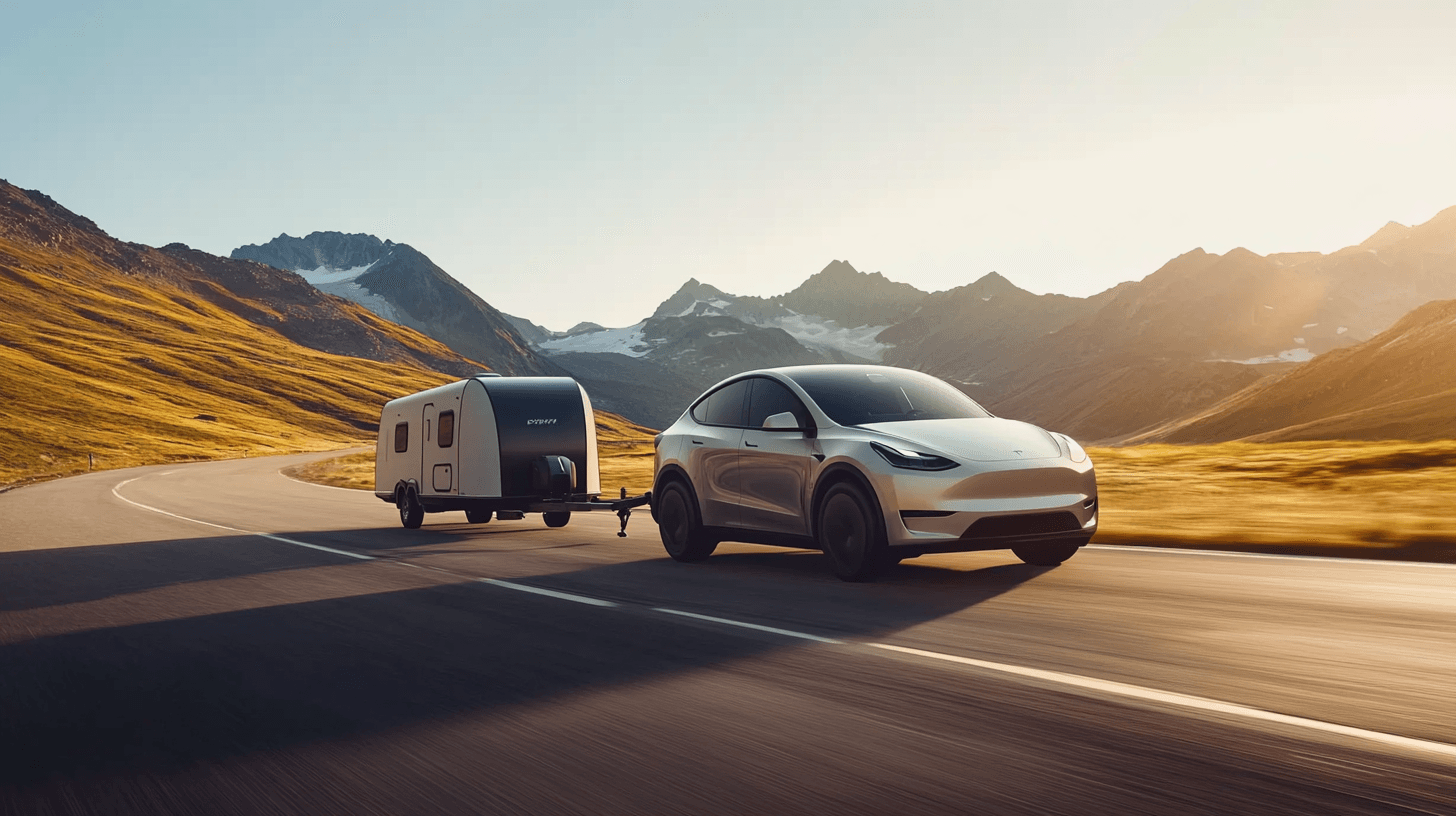
Electric vehicles can absolutely tow — but towing with an EV comes with unique considerations around range impact, tow ratings, and charging logistics that every EV owner should understand before hitching up. Here's the complete guide.
The Range Impact Reality
The biggest concern with EV towing is range reduction. Towing dramatically increases energy consumption because you're fighting aerodynamic drag, rolling resistance, and additional weight. Here's what to realistically expect:
| Towing Scenario | Range Reduction | Example (300mi rated) |
|---|---|---|
| Small utility trailer (1,000 lbs) | 25-35% | 195-225 miles |
| Mid-size camper (3,500 lbs) | 40-55% | 135-180 miles |
| Large travel trailer (5,000 lbs) | 50-65% | 105-150 miles |
| Boat trailer (4,000 lbs) | 45-60% | 120-165 miles |
Speed has an outsized effect. Towing at 55 mph instead of 70 mph can recover 15-20% of your range because aerodynamic drag increases exponentially with speed.
Top EV Tow Ratings
| Vehicle | Max Tow Rating | Battery Size | Rated Range |
|---|---|---|---|
| Rivian R1S | 7,700 lbs | 135 kWh | 321 miles |
| Tesla Model X | 5,000 lbs | 100 kWh | 348 miles |
| Ford F-150 Lightning | 10,000 lbs | 131 kWh | 320 miles |
| Chevrolet Silverado EV | 10,000 lbs | 200 kWh | 400+ miles |
| Tesla Cybertruck | 11,000 lbs | 123 kWh | 340 miles |
| BMW iX xDrive50 | 6,000 lbs | 111 kWh | 324 miles |
Why EVs Are Actually Great for Towing
Despite the range concern, EVs have several inherent advantages for towing:
- ✓Instant torque — Electric motors deliver maximum torque at 0 RPM. Getting a heavy load moving from a stop is effortless. No turbo lag, no hunting for the right gear.
- ✓Low center of gravity — The heavy battery pack sits low in the chassis, improving stability when towing. Less sway, better handling.
- ✓Regenerative braking on descents — Going downhill with a trailer, regen braking slows you without heating your friction brakes. This is a major safety advantage on mountain passes.
- ✓No transmission strain — No gears to overheat. Electric motors maintain consistent power delivery regardless of load.
Charging While Towing
Charging logistics are the biggest practical challenge when towing with an EV. Here's how to handle it:
- ✓Plan stops at 20-30% SOC — Don't push it to the wire. Towing energy consumption is less predictable than normal driving, and headwinds or elevation changes can burn through reserves quickly.
- ✓Use pull-through chargers — Many DC fast charging stations have pull-through stalls designed for vehicles with trailers. Apps like PlugShare let you filter for these.
- ✓Charge to 80-90%, not 100% — Charging slows dramatically above 80%. It's faster to make an extra stop than to wait for the last 20%.
- ✓Map charger spacing to your towing range — If your towing range is 150 miles, make sure chargers are spaced no more than 100 miles apart on your route to maintain a comfortable buffer.
Tips for Maximizing Towing Range
- ✓Slow down — Dropping from 70 to 55 mph can add 30-50 miles of towing range. Aerodynamic drag is the dominant factor.
- ✓Maintain proper tire pressure — Check both the tow vehicle and trailer tires. Under-inflated tires increase rolling resistance significantly.
- ✓Choose aerodynamic trailers — A teardrop camper creates far less drag than a box trailer. If buying a trailer for EV towing, prioritize aerodynamics.
- ✓Reduce unnecessary weight — Every 100 lbs removed from the trailer saves roughly 1-2% range. Pack light and leave non-essentials at home.
- ✓Avoid extreme temperatures — Tow in mild weather when possible. Air conditioning and heating add to energy consumption on top of the towing load.
Flatbed Towing Your EV
If your EV needs to be towed (breakdown, flat tire, etc.), there's a critical rule:
- ✕Never flat-tow an EV — Dragging an EV with its wheels on the ground forces the electric motor to spin, generating electricity with no load. This can overheat the motor and damage the drivetrain. Some EVs have a "transport mode" for short-distance wheel-down towing, but a flatbed is always the safest option.
- ✓Always use a flatbed — All four wheels off the ground. This is non-negotiable for most EVs. Make sure your roadside assistance plan specifies flatbed towing.
Is EV Towing Right for You?
EV towing works best for short to medium trips with lightweight trailers. If your typical towing involves hauling a 2,000 lb utility trailer 50 miles to a job site or pulling a small camper to a campground 100 miles away, an EV handles this easily with minimal disruption.
For long-distance heavy towing — 300+ mile trips with a 5,000+ lb trailer — you'll need a large-battery EV truck and patience for charging stops. It's doable but requires more planning than a gas truck. The charging infrastructure is rapidly improving, and by the time you read this, the network is likely better than when this was written.