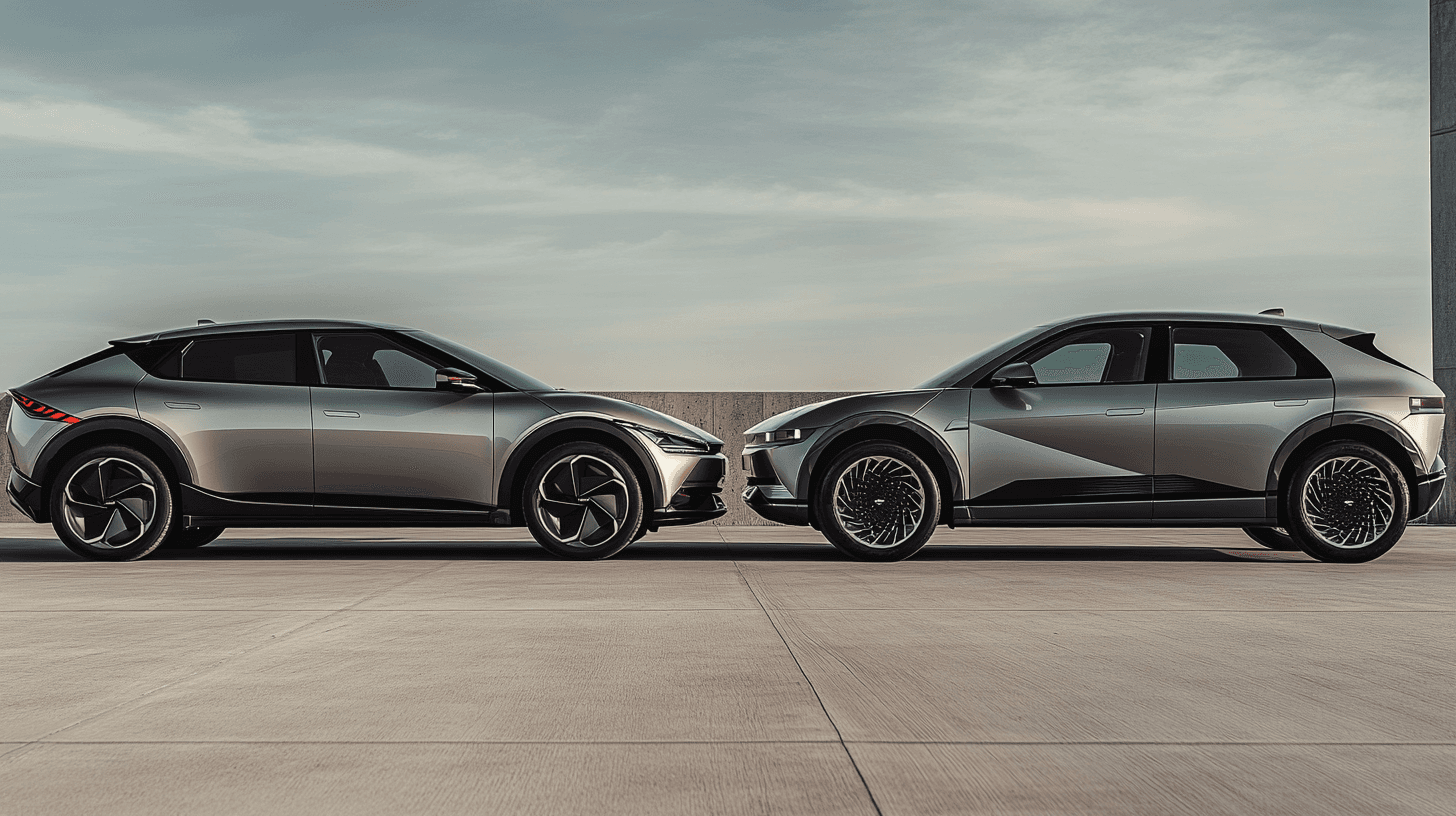
The EV market has matured enough that you can now get excellent electric sedans and SUVs at similar price points. But the choice between them affects more than just cargo space — it impacts range, efficiency, charging costs, insurance, and how the car handles. Here's an objective breakdown to help you decide.
Range and Efficiency
This is where sedans have a clear, physics-based advantage. A lower, more aerodynamic profile means less energy is wasted pushing air out of the way.
| Metric | EV Sedan | EV SUV |
|---|---|---|
| Typical EPA range | 300-400 miles | 250-330 miles |
| Efficiency | 3.5-4.5 mi/kWh | 2.8-3.5 mi/kWh |
| Drag coefficient (Cd) | 0.20-0.23 | 0.26-0.32 |
| Annual charging cost (12k mi) | ~$400-500 | ~$500-650 |
With identical battery sizes, a sedan typically gets 15-25% more range than an SUV. That translates to fewer charging stops on road trips and lower annual energy costs.
Space and Practicality
This is where SUVs earn their premium. The taller body and flat EV floor create genuinely useful interior volume.
- •Cargo space — SUV: 30-75 cu ft with seats folded. Sedan: 12-22 cu ft trunk. If you regularly haul bikes, strollers, furniture, or sports equipment, an SUV is meaningfully more capable.
- •Rear seat headroom — SUVs offer 2-4 inches more rear headroom, which matters for adults in the back seat. EV sedans with sloped rooflines can feel tight for taller passengers.
- •Entry and exit — SUVs have a higher seating position, making it easier to get in and out — especially for older passengers or those with mobility issues.
- •Frunk storage — Most EV sedans and SUVs have front trunks, but SUV frunks tend to be larger due to the taller hood profile.
Driving Dynamics
- •Center of gravity — Both body styles benefit from the heavy battery pack mounted low in the floor. However, sedans sit even lower, giving them a slight handling advantage in corners and less body roll.
- •Acceleration — With comparable powertrains, sedans are typically 200-500 lbs lighter than SUVs, resulting in slightly quicker 0-60 times. The difference is small but noticeable.
- •Ride comfort — SUVs generally have more suspension travel, which can smooth out rough roads better. Sedans offer a more connected, sporty feel.
- •Ground clearance — SUVs offer 7-9 inches vs 5-6 for sedans. This matters for gravel roads, steep driveways, and snow. Some EV SUVs offer adjustable air suspension.
Cost Comparison
| Cost Category | EV Sedan | EV SUV |
|---|---|---|
| Starting MSRP (mid-range) | $35,000-$45,000 | $40,000-$55,000 |
| Insurance (annual avg.) | $1,800-$2,200 | $2,000-$2,600 |
| Tires (per set) | $600-$900 | $800-$1,200 |
| Charging (annual, 12k mi) | ~$450 | ~$575 |
| 5-year total cost of ownership | $48,000-$58,000 | $55,000-$70,000 |
EV sedans are cheaper to buy, insure, and operate. An SUV adds roughly $5,000-$12,000 to the 5-year total cost of ownership. Whether the extra utility justifies that premium depends on your needs.
Popular Models Compared
Top EV Sedans (2026)
- •Tesla Model 3 — 341 miles range, 3.1s 0-60 (Performance), from $38,990. The efficiency benchmark.
- •Hyundai Ioniq 6 — 361 miles range, ultra-low 0.21 Cd, from $38,615. Best-in-class efficiency.
- •BMW i4 — 301 miles range, premium interior, from $52,200. The luxury sport sedan choice.
- •Mercedes EQE — 305 miles range, MBUX Hyperscreen available, from $74,900. Maximum luxury.
Top EV SUVs (2026)
- •Tesla Model Y — 310 miles range, 76 cu ft cargo, from $44,990. The best-selling EV globally for a reason.
- •Hyundai Ioniq 5 — 303 miles range, 800V architecture for ultra-fast charging, from $42,745. 10-80% in 18 minutes.
- •Kia EV6 — 310 miles range, GT version does 0-60 in 3.4s, from $42,600. Performance meets practicality.
- •Rivian R1S — 321 miles range, true off-road capability, from $75,900. The adventure SUV.
Who Should Choose a Sedan?
- ✓Commuters prioritizing efficiency — If range per dollar matters most, sedans deliver 15-25% more miles per kWh.
- ✓Drivers who value handling — Lower center of gravity and lighter weight create a more engaging driving experience.
- ✓Budget-conscious buyers — Lower purchase price, insurance, tires, and energy costs add up to meaningful savings.
- ✓Couples or small families — If you don't regularly need to haul large items, a sedan's trunk is sufficient for daily life.
Who Should Choose an SUV?
- ✓Families with kids — Car seats, strollers, sports gear, and road trip luggage need the extra cargo volume.
- ✓People in snowy or rural areas — Higher ground clearance and available AWD make SUVs more capable in adverse conditions.
- ✓Those who tow occasionally — Some EV SUVs can tow 3,500-7,700 lbs. Most EV sedans aren't rated for towing at all.
- ✓Passengers with mobility needs — The higher seating position and wider door openings make entry and exit easier.
Final Verdict
If maximum range, efficiency, and driving dynamics are your priorities, an EV sedan is the better choice. If you need cargo space, higher ground clearance, or regularly carry passengers who appreciate easier entry, an SUV justifies the extra cost and reduced efficiency.
The good news is that both body styles have excellent options in 2026. The EV market has moved past the era of limited choices — you can now pick the form factor that fits your life and still get a great electric car.