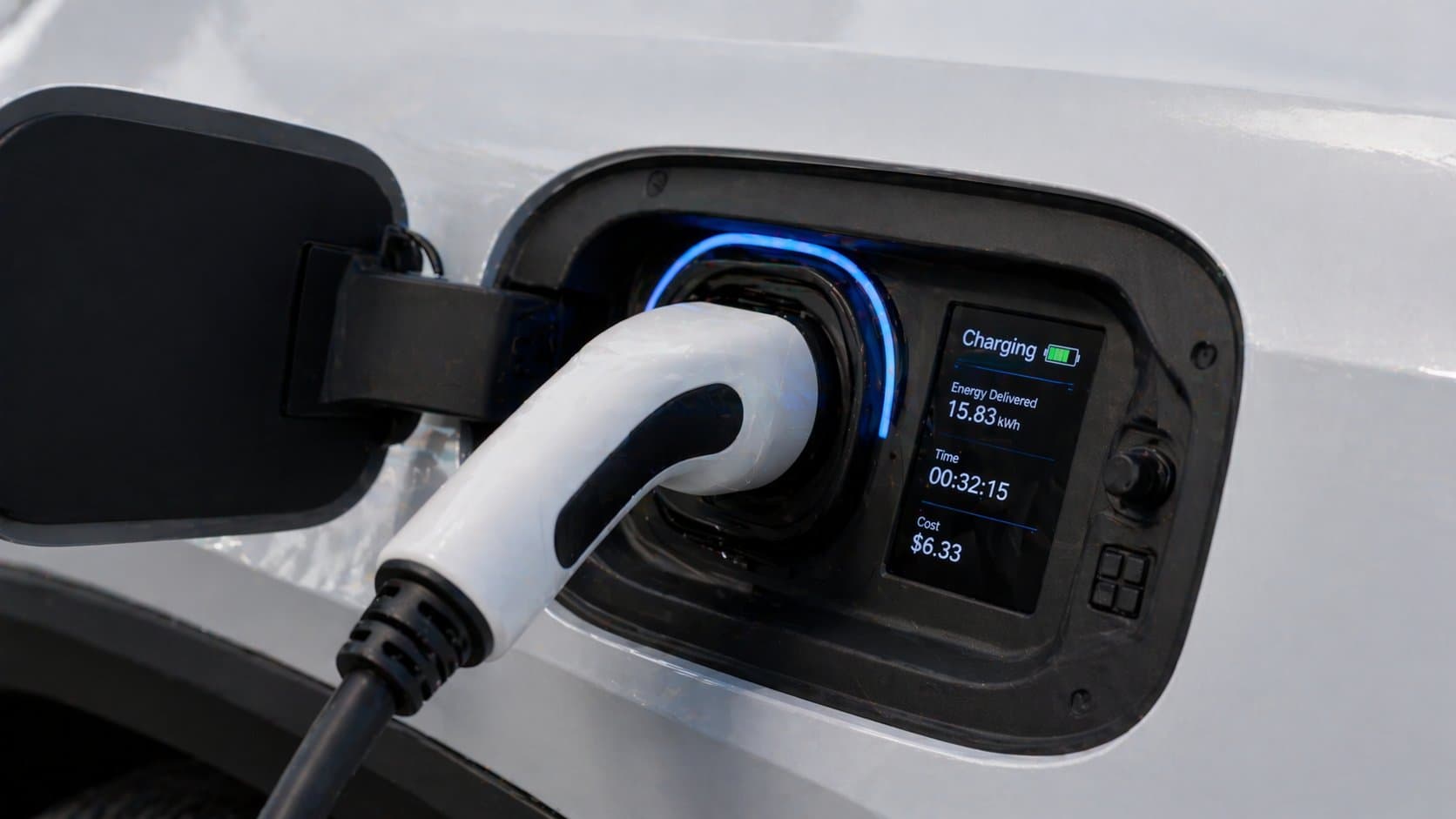
The promise of EVs is cheaper fuel. The reality is more nuanced — charging costs vary enormously depending on WHERE you charge, WHEN you charge, and HOW FAST you charge. A full charge can cost as little as $4 at home during off-peak hours or as much as $30 at a highway DC fast charger during peak pricing. Understanding these differences saves hundreds of dollars per year and eliminates the surprise of your first public charging bill.
Home Charging Costs
Home charging is where the savings happen. The average American electricity rate is approximately $0.16 per kWh, but this varies dramatically by state and time of day. For a deeper comparison of outlet types, see our Level 1 vs Level 2 home charging guide.
The Basic Math
Most EVs consume 3–4 miles per kWh (this is the EV equivalent of “miles per gallon”). To calculate your cost per mile:
Cost per mile = Electricity rate ÷ Efficiency
At the national average rate ($0.16/kWh) with average efficiency (3.5 mi/kWh): $0.16 ÷ 3.5 = $0.046 per mile.
For comparison, a 30 MPG gas car at $3.50/gallon costs $0.117 per mile — more than 2.5x the cost of home EV charging.
What a Full Charge Costs at Home
Chevy Bolt EV (65 kWh): $10.40 at $0.16/kWh, $5.20 off-peak. Tesla Model 3 LR (75 kWh): $12.00 / $6.00 off-peak. Hyundai Ioniq 5 LR (77 kWh): $12.32 / $6.16 off-peak. Ford Mustang Mach-E (91 kWh): $14.56 / $7.28 off-peak. Tesla Model Y LR (75 kWh): $12.00 / $6.00 off-peak.
The off-peak advantage is massive. Many utilities offer time-of-use (TOU) rates with overnight electricity at $0.06–$0.10/kWh — half the standard rate. A Level 2 smart charger with scheduling charges your car at 2 AM when rates are lowest. Over a year, TOU scheduling saves $200–$500 compared to charging at standard rates.
Monthly Electricity Bill Impact
The average American drives 13,500 miles per year, or about 1,125 miles per month. At average EV efficiency (3.5 mi/kWh), that's approximately 321 kWh per month of additional electricity consumption.
At $0.16/kWh: $51 per month added to your electric bill. At $0.08/kWh off-peak: $26 per month added to your electric bill. Compare to gasoline: 1,125 miles ÷ 30 MPG × $3.50/gal = $131 per month in gas.
The monthly savings: $80–$105 depending on your electricity rate. That's $960–$1,260 per year in fuel savings.
Public Charging Costs
Public charging is more expensive than home charging — sometimes significantly so. Understanding the pricing structures prevents bill shock. Our public charging map lists real-time pricing at stations near you.
Level 2 Public Charging ($0.20–$0.45/kWh)
Public Level 2 chargers at shopping centers, parking garages, and workplaces charge $0.20–$0.45 per kWh. Some charge by the hour ($1–$3/hour) rather than per kWh. Level 2 public charging is roughly 2–3x more expensive than home charging but still cheaper than gasoline.
Some Level 2 public chargers are free — offered by businesses as a customer perk. Shopping centers, hotels, and employers increasingly offer free charging to attract EV-driving customers and employees. The PlugShare app shows which chargers are free.
DC Fast Charging ($0.30–$0.60/kWh)
Highway DC fast chargers from Electrify America, EVgo, and ChargePoint charge $0.30–$0.60 per kWh — 2–4x home rates. A full fast charge can cost $20–$35 depending on the network and your vehicle's battery size.
Tesla Supercharger pricing varies by location but typically runs $0.25–$0.45/kWh. Tesla owners on the legacy “free Supercharging” plans from pre-2020 purchases still charge for free at Superchargers — a perk worth $1,000+ per year for heavy travelers.
The “Idle Fee” Trap
Most DC fast charging networks charge idle fees if you leave your car plugged in after it finishes charging — typically $0.50–$1.00 per minute. A 30-minute overstay can add $15–$30 to your charging bill. Set a phone timer and move your car promptly when charging is complete.
The Annual Cost Comparison
For a driver covering 15,000 miles per year:
Home (standard rate, $0.16/kWh): $686 annually — $0.046/mile. Home (off-peak, $0.08/kWh): $343 annually — $0.023/mile. Public Level 2 ($0.35/kWh): $1,500 annually — $0.100/mile. DC Fast Charging ($0.45/kWh): $1,929 annually — $0.129/mile. Gasoline (30 MPG, $3.50/gal): $1,750 annually — $0.117/mile.
Key insight: Home charging saves 60–80% vs gasoline. Public Level 2 saves 15–40%. But DC fast charging can actually cost MORE than gasoline per mile if you rely on it exclusively. The EV savings story only works if you charge at home most of the time. Our gas prices vs EV savings piece breaks down the delta at various fuel prices.
How to Minimize Charging Costs
Charge at home during off-peak hours. This is the single biggest savings lever. Set your charger to start at 9–11 PM and finish before 6 AM.
Use free public chargers when available. PlugShare filters for free chargers. Many grocery stores, malls, and hotels offer free Level 2 charging.
Join charging network memberships. Electrify America's Pass+ membership ($4/month) reduces per-kWh costs by approximately 25%. ChargePoint offers similar membership discounts.
Avoid DC fast charging for daily needs. Reserve fast charging for road trips and emergencies. Daily fast charging is expensive and accelerates battery degradation.
The Bottom Line
EV charging costs $343–$686 per year at home versus $1,750 for gasoline — saving $1,000–$1,400 annually. The key is charging at home during off-peak hours, which requires nothing more than a standard outlet or a $400–$500 Level 2 charger. Public charging erodes the savings, and exclusive DC fast charging can eliminate them entirely.
Charge at home. Charge off-peak. Save $1,000+ per year. That's the honest math. Browse current EV deals and run your personal numbers on our cost calculator.