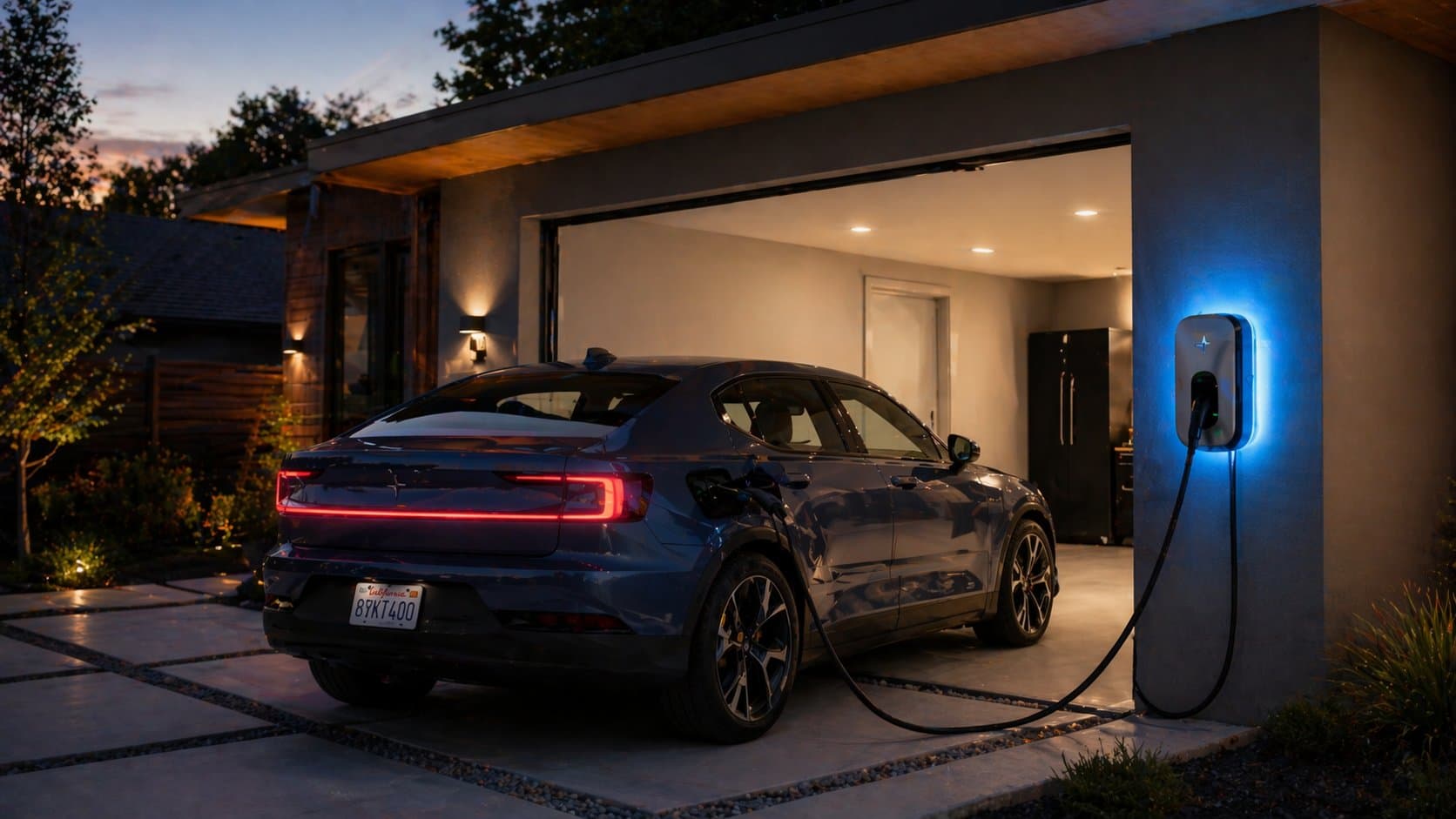
Ninety percent of EV charging happens at home. Not at Superchargers. Not at highway rest stops. At home, overnight, while you sleep. This single fact makes home charging the most important infrastructure decision for any new EV owner — and the one most people overthink. You don't need a $2,000 installation for a car you drive 40 miles a day. But you also don't want to spend six months plugging into a standard wall outlet before realizing it isn't enough. Here's exactly what you need based on how you actually drive.
Level 1 Charging: The Wall Outlet You Already Have
Every EV comes with a Level 1 portable charger — a cable that plugs into any standard 120V household outlet. Level 1 delivers approximately 3–5 miles of range per hour of charging. Over a 10-hour overnight session, that's 30–50 miles.
Who Level 1 Works For
If your daily round-trip commute is under 40 miles, Level 1 charging may be all you need. You drive 40 miles, come home, plug in for 10 hours overnight, and wake up with 30–50 miles replenished. You never visit a public charger. You never think about charging. You just plug in when you get home like you plug in your phone.
Approximately 30% of American commuters drive fewer than 40 miles round-trip daily. For these drivers, Level 1 is free (no installation cost), convenient (use any outlet), and sufficient. Don't spend $1,500 on a Level 2 setup if a free wall outlet does the job.
Who Level 1 Doesn't Work For
If your daily driving exceeds 50 miles, Level 1 can't keep up — you'll drain more range each day than you replenish each night, creating a deficit that eventually requires a public charging session to recover. If you have multiple EVs sharing one outlet, Level 1 is too slow. And if you regularly need to top off during the day for unexpected trips, Level 1's 4 mph charging rate is frustrating.
Level 2 Charging: The Home Upgrade
Level 2 charging uses a 240V circuit — the same type that powers your clothes dryer or electric oven. A dedicated Level 2 home charger (also called an EVSE — Electric Vehicle Supply Equipment) delivers 25–40 miles of range per hour. A full battery charge from near-empty takes 6–10 hours for most EVs — easily accomplished overnight. For the deep dive on installation, read our complete home charging guide.
Installation Cost Breakdown
The total cost of Level 2 home charging installation ranges from $500 to $2,500 depending on your home's existing electrical infrastructure:
Best case ($500–$800): Your electrical panel has spare capacity, and a 240V outlet or dedicated circuit is already near your parking spot (like a dryer outlet in the garage). An electrician installs a dedicated 50-amp circuit and you plug in a portable Level 2 charger.
Typical case ($1,000–$1,500): Your panel has capacity but needs a new 50-amp breaker and wiring run to the garage. This is the most common scenario for homes built after 1990 with 200-amp panels.
Worst case ($2,000–$3,000): Your electrical panel is full or undersized (100-amp panel in older homes). You need a panel upgrade ($1,000–$2,000) before installing the charging circuit.
Best Level 2 Home Chargers
Tesla Wall Connector ($475): The default for Tesla owners. Sleek design, integrated cable management, WiFi connectivity, and up to 44 miles of range per hour on a 60-amp circuit. Works with non-Tesla vehicles via a J1772 adapter.
ChargePoint Home Flex ($400–$500): The best universal charger. Works with every EV, adjustable amperage (16–50 amps), WiFi app control with charging schedules, and UL Listed safety certification. The ChargePoint Home Flex is the charger most electricians recommend for non-Tesla households.
Grizzl-E Classic ($400): Built in Canada, rated for extreme weather (-22°F to 122°F), and dead simple — no app, no WiFi, just plug in and charge. The Grizzl-E is the “just works” charger for people who don't want smart features.
The Smart Charging Advantage
Level 2 smart chargers with WiFi connectivity offer time-of-use scheduling — automatically starting charging during off-peak electricity hours (typically 9 PM to 6 AM) when rates can be 30–50% cheaper. Over a year of daily charging, smart scheduling saves $200–$500 depending on your utility's rate structure. The charger pays for itself in 1–2 years through electricity savings alone. See our EV charging costs breakdown to estimate your specific savings.
Level 3 (DC Fast Charging): Not for Home
Level 3 DC fast charging delivers 150–350 miles of range per hour and is used at commercial charging stations along highways. It cannot be installed at home — the equipment costs $50,000–$150,000 and requires commercial-grade power connections. You'll use Level 3 for road trips and occasional top-ups, but it's not part of your home charging setup. Use our charging station finder to locate DC fast chargers near you.
What About Apartments and Condos?
If you don't have a dedicated garage or driveway, home charging is harder but not impossible. Options include requesting that your building install EV charging in the parking structure (increasingly common as HOAs recognize the demand), using a long extension cord to a dedicated outdoor outlet (Level 1 only — never use extension cords with Level 2), or relying on workplace charging during the day and public Level 2 chargers near your home for overnight sessions.
Several states now have “right to charge” laws that prevent HOAs and landlords from prohibiting EV charging installations. Check your state's regulations — you may have more rights than your landlord tells you.
The Bottom Line
For most homeowners, the decision is simple. If you drive under 40 miles daily, start with Level 1 — it's free and might be enough. If you need more, install a Level 2 charger with a 50-amp circuit for $1,000–$1,500 total. The ChargePoint Home Flex at $450 plus $800 installation is the sweet spot for most households — it charges any EV overnight, schedules off-peak rates automatically, and pays for itself in electricity savings within two years.
The biggest mistake new EV owners make is overthinking home charging. It's not complicated. It's an outlet and a cable. You've been charging your phone every night for a decade — charging your car is the same habit with a bigger plug. Ready to pick your next EV? Browse current EV deals and compare real-world home charging compatibility across 50 models.