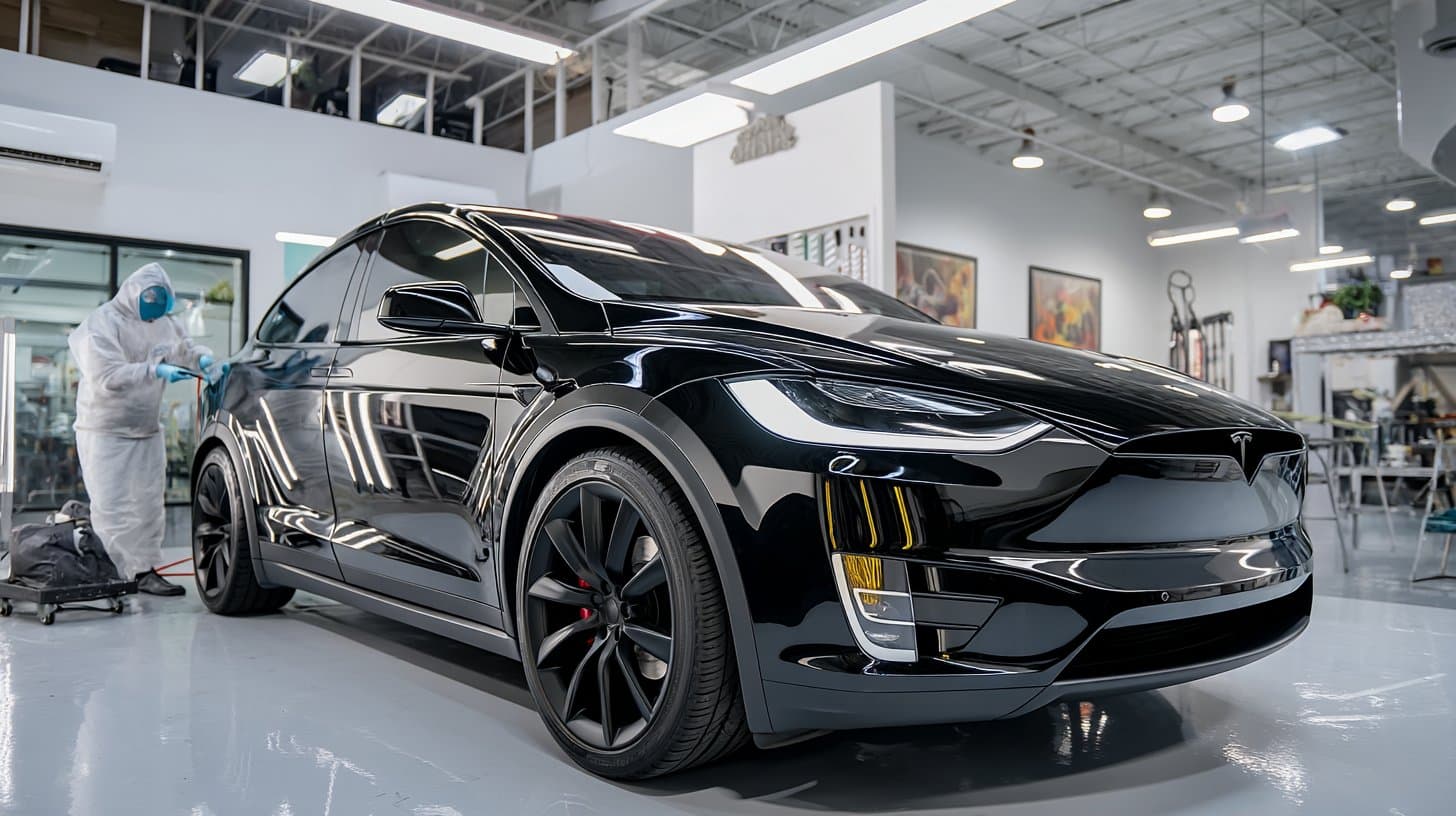
Electric vehicles represent a significant investment, and protecting that investment starts with the paint. Whether you drive a $35,000 Tesla Model 3 or a $105,000 Mercedes EQS, paint protection film (PPF) and ceramic coating can keep your EV looking showroom-new for years. But EVs have unique design elements that require special attention from detailers — flush door handles, frunk edges, camera lenses, and charge port areas all need expert care.
EV-Specific Paint Protection Challenges
Electric vehicles present unique challenges that traditional gas cars don't have. Flush door handles — found on Tesla, Rivian, Mercedes EQ, and many other EVs — create tight gaps where dirt and debris accumulate, causing micro-scratches every time the handles deploy. PPF applied around these areas prevents damage from repeated use.
The frunk (front trunk) is another EV-specific concern. Without an engine compartment, the frunk lid and surrounding edges are exposed to road debris kicked up by the front wheels. This area sees more rock chip damage than a traditional car's hood because the flat, low-profile design catches stones at a more direct angle.
Camera and sensor housings are critical for EVs that rely on vision-based driver assistance systems. Autopilot, BlueCruise, and other ADAS systems depend on clean camera lenses. Ceramic coating on camera housings helps shed water and dirt, maintaining clear vision for safety systems. PPF on the areas surrounding sensors protects against chips that could misalign calibration.
The charge port area deserves special attention too. Repeated plugging and unplugging of charging cables, especially at public DC fast chargers with heavier plugs, can cause scuffs and scratches around the port door and surrounding paint. A small piece of PPF here prevents cosmetic damage over thousands of charging sessions.
Paint Protection Film (PPF): The Full Breakdown
PPF — Physical Shield Against Damage
$2,000–$7,000
5–10 years
6–8 mil
Yes (heat-activated)
Paint protection film is a clear, thermoplastic urethane film applied directly to your vehicle's painted surfaces. It physically absorbs impacts from rock chips, road debris, bug splatter, and minor scratches. Premium films like XPEL Ultimate Plus, SunTek Ultra, and 3M Pro Series feature self-healing technology — minor scratches disappear when exposed to heat from sunlight or warm water.
PPF pricing depends on how much of the vehicle you cover. A partial front-end package (hood, fenders, bumper, mirrors) typically costs $1,500–$2,500. A full front-end package adding the A-pillars, roofline, and headlights runs $2,500–$4,000. A full-body wrap covering every painted surface costs $5,000–$7,000 depending on the vehicle's size and complexity. Larger EVs like the Rivian R1S or BMW iX cost more than compact models like the Tesla Model 3.
Ceramic Coating: The Full Breakdown
Ceramic Coating — Chemical Protection and Shine
$500–$2,000
2–5 years
Chemical, UV, hydrophobic
9H (professional grade)
Ceramic coating is a liquid polymer that chemically bonds to your vehicle's paint, creating a semi-permanent layer of protection. It doesn't prevent rock chips like PPF, but it excels at UV protection, chemical resistance (bird droppings, tree sap, acid rain), and hydrophobic water beading that makes washing easier. Professional-grade coatings like Gtechniq Crystal Serum Ultra and Ceramic Pro 9H offer the longest durability.
Ceramic coating pricing depends on the product quality and preparation work. A consumer-grade coating ($500–$800) offers 1–2 years of protection with basic prep. A professional single-layer coating ($800–$1,200) includes paint correction and decontamination for 2–3 years of protection. A professional multi-layer coating ($1,200–$2,000) adds multiple layers with extensive paint correction for 4–5 years of protection and the deepest gloss.
PPF vs Ceramic Coating: Which Should You Choose?
These two products protect against different threats. PPF excels at physical protection — rock chips, scratches, door dings, and road debris. Ceramic coating excels at chemical and environmental protection — UV damage, oxidation, bird droppings, tree sap, and ease of cleaning. They're not competitors; they're complementary products that work best together.
For budget-conscious EV owners, prioritize PPF on the highest-impact areas (front bumper, hood, fenders, mirrors) and ceramic coating on the entire vehicle. This combo typically costs $2,500–$3,500 and provides the best protection per dollar spent.
Finding an EV-Aware Detailer
Not all detailers understand the unique needs of electric vehicles. When choosing a PPF or ceramic coating installer, ask these questions: Have they worked on your specific EV model before? Do they know where the sensors and cameras are located? Can they properly handle flush door handles without damaging the mechanism? Do they understand that EVs should not be left in direct sunlight during paint correction to avoid battery thermal management issues?
Look for XPEL, SunTek, or 3M certified installers in your area. These certifications ensure the installer has been trained on proper application techniques and uses genuine materials. Many Tesla and Rivian owners' groups maintain lists of recommended detailers in each city.
The Florida UV Angle
Florida's intense UV radiation makes paint protection especially important for Sunshine State EV owners. UV damage causes paint oxidation, fading, and clear coat failure faster than in northern states. Red, black, and dark blue paints are particularly vulnerable. A quality ceramic coating with UV inhibitors can dramatically slow this degradation, while PPF's UV-blocking top layer protects underlying paint from sun damage.
Florida's salt air, frequent rain, and love bugs (seasonal insects whose acidic remains etch paint within 24 hours) make the hydrophobic properties of ceramic coating especially valuable. Water, bug residue, and salt mist bead up and slide off coated surfaces, reducing the frequency of washes needed and preventing long-term damage.
The Best Combo: PPF High-Impact + Ceramic Full Body
For the ultimate protection, our recommendation is PPF on high-impact zones combined with ceramic coating over the entire vehicle (including on top of the PPF). This approach gives you physical chip protection where you need it most, chemical and UV protection everywhere, and the stunning hydrophobic finish that makes your EV look incredible. Budget approximately $3,000–$5,000 for this combination, depending on your vehicle and installer. It's a significant upfront investment that pays for itself by preserving your EV's resale value and eliminating costly paint repairs down the road.
Protect Your Investment — Find Your Next EV
Compare real-time pricing on every major EV and protect it from day one. Our EV Best Price Finder tracks deals across Carvana, CarMax, AutoTrader, and dealer inventory.
Browse EV DealsRelated Articles
Best Luxury EVs for Florida Drivers
Top premium EVs perfectly suited for the Sunshine State.
GuideDo EVs Need Oil Changes? Complete Maintenance Guide
Everything you need to know about maintaining an electric vehicle.
GuideTrue Cost of EV Ownership
A full breakdown of what it really costs to own an electric vehicle.