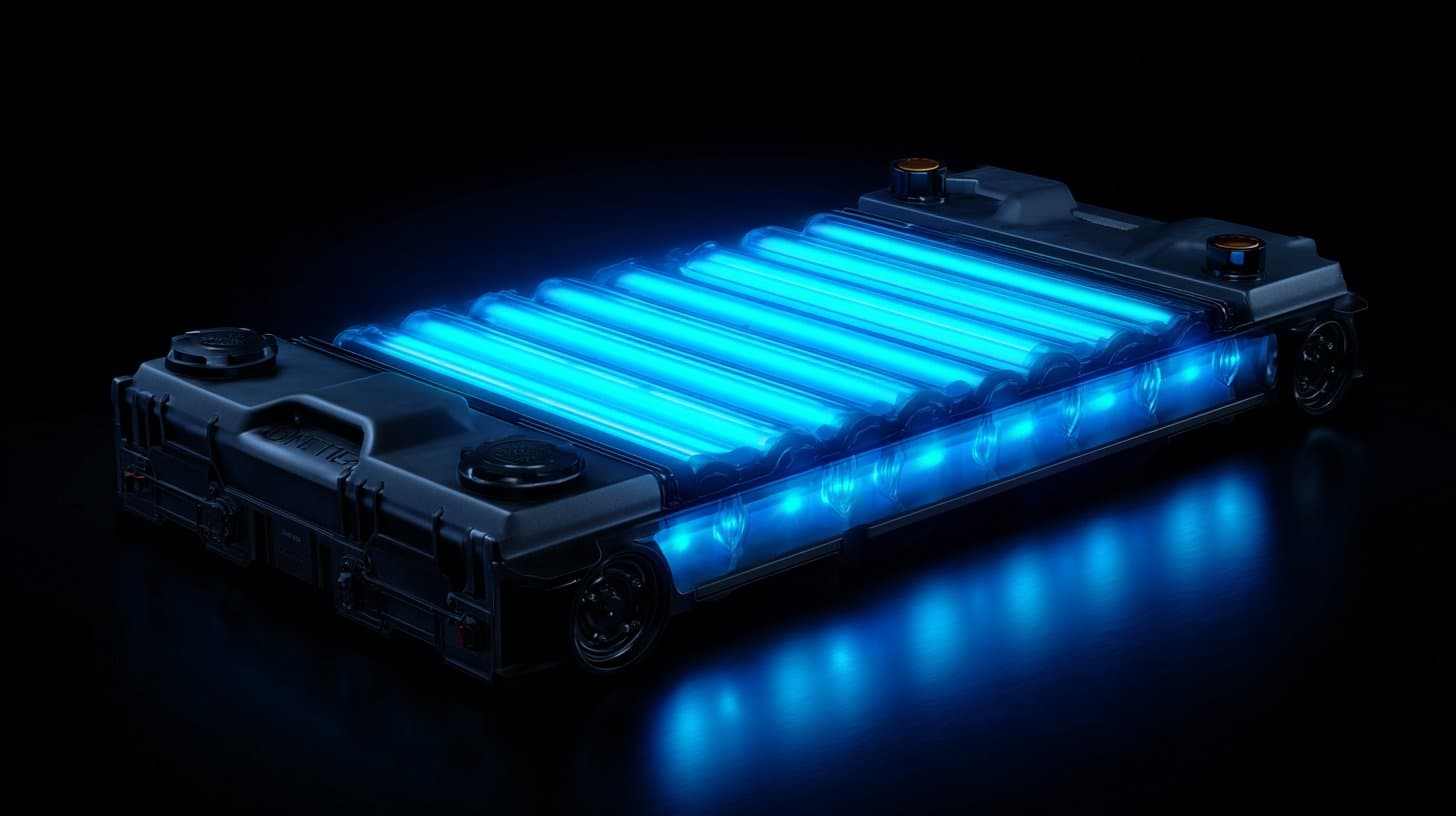
“But what about the battery?” It's the most common question from anyone considering an EV purchase, and it's a fair one. The battery is the most expensive component in an electric vehicle, so understanding how long it lasts, how it degrades, and what warranties cover is critical. The good news? Real-world data from millions of EVs on the road tells a very reassuring story.
The Short Answer: 15-20 Years
Modern EV batteries are designed to last 15 to 20 years or 200,000-300,000 miles before they degrade to a point where replacement becomes necessary. That timeframe exceeds the average lifespan of a gas car, which typically hits the junkyard at 12-15 years. In other words, the battery will almost certainly outlast the rest of the vehicle.
“Degradation” doesn't mean the battery suddenly dies. It means the total capacity gradually decreases over time. A battery that started at 300 miles of range might deliver 270 miles after 5 years and 240 miles after 10 years. For the vast majority of drivers, even a degraded battery meets daily driving needs with room to spare.
Real-World Degradation Data by Brand
Thanks to fleet tracking services and owner-reported data, we now have solid numbers on how different EV batteries hold up over time:
Tesla
~12% at 200K miles
NCA / LFP
8 yr / 120K miles
200K+ vehicles tracked
Tesla has the largest dataset in the industry, and the numbers are impressive. Fleet data from over 200,000 vehicles shows an average of just 12% degradation at 200,000 miles. The newer LFP (lithium iron phosphate) batteries in the base Model 3 and Model Y are expected to perform even better, as LFP chemistry handles deep cycling with less wear.
Hyundai / Kia (E-GMP Platform)
~5% at 60K miles
NMC (SK Innovation)
10 yr / 100K miles
Ioniq 5, 6, EV6
The Ioniq 5, Ioniq 6, and Kia EV6 use the E-GMP platform with advanced thermal management. Early data shows excellent retention — about 5% degradation at 60,000 miles, projecting to roughly 10-12% at 150,000 miles. Hyundai's industry-leading 10-year/100,000-mile warranty is a confidence booster.
GM (Ultium Platform)
~8% at 80K miles
NCMA (Ultium)
8 yr / 100K miles
Equinox EV, Lyriq, Bolt
GM's Ultium batteries power the Chevy Equinox EV, Cadillac Lyriq, and others. The NCMA chemistry uses less cobalt than previous generations, improving both longevity and sustainability. The older Bolt EUV uses a different chemistry but has also shown strong retention after GM's battery management software updates.
Nissan
~15-20% at 100K miles
NMC (passive cooling)
8 yr / 100K miles
No active cooling (older)
The Nissan Leaf is the cautionary tale in this list. Earlier models used passive air cooling instead of liquid thermal management, which led to faster degradation — especially in hot climates like Florida and Arizona. The current Leaf has improved, but Nissan's lack of active battery cooling remains a weak point compared to competitors. In moderate climates, Leaf batteries hold up reasonably well.
What Every EV Battery Warranty Covers
Federal law mandates that EV batteries carry a minimum warranty of 8 years or 100,000 miles. Most manufacturers guarantee the battery will retain at least 70% of its original capacity during that period. If it drops below 70%, the manufacturer will repair or replace the pack at no cost. Here's a quick breakdown:
- Tesla — 8 years / 100,000-150,000 miles (varies by model), minimum 70% retention
- Hyundai/Kia — 10 years / 100,000 miles, minimum 70% retention
- GM (Chevy/Cadillac) — 8 years / 100,000 miles, minimum 70% retention
- Nissan — 8 years / 100,000 miles, minimum 70% retention (9 bars of 12)
- BMW — 8 years / 100,000 miles, minimum 70% retention
- Ford — 8 years / 100,000 miles, minimum 70% retention
7 Tips to Maximize Your EV Battery Life
While modern EV batteries are robust, a few simple habits can meaningfully extend their lifespan:
- Keep daily charge between 20-80% — avoid charging to 100% unless you need the full range for a trip. Lithium batteries last longest when kept in the middle of their charge range.
- Minimize DC fast charging — occasional fast charging is fine, but relying on it daily generates more heat and accelerates degradation. Home Level 2 charging is gentlest on the battery.
- Avoid extreme heat exposure — park in shade or a garage when possible. Florida and Arizona drivers should be especially mindful. The battery's thermal management system works harder in 100-degree heat.
- Don't let it sit at 0% or 100% for extended periods — if storing the car for weeks, leave it at 50-60% charge.
- Use scheduled charging — set your car to finish charging right before you leave. This minimizes time spent at high charge levels.
- Keep software updated — manufacturers regularly push battery management improvements via over-the-air updates.
- Pre-condition before fast charging — use the navigation system to warm the battery before arriving at a fast charger. A warm battery charges faster and with less wear.
What Happens When an EV Battery Needs Replacement?
Battery replacement costs have dropped significantly. In 2020, a full pack replacement cost $15,000-$20,000. In 2026, costs are closer to $8,000-$12,000 for most mainstream EVs, and they're still falling as manufacturing scales up. However, most owners will never need a full replacement. Individual cell or module replacements can fix degradation issues for $2,000-$5,000.
When an EV battery can no longer serve a vehicle effectively (typically below 70-75% original capacity), it still has a second life ahead of it. Used EV batteries are increasingly repurposed for home energy storage, commercial backup power, and grid stabilization. Companies like Redwood Materials and Li-Cycle are building out recycling infrastructure that recovers 95%+ of critical minerals for reuse in new batteries.
Ready to Find Your EV?
Now that you know EV batteries last 15-20 years, it's time to find the right model. Our free EV Match tool considers your budget, driving habits, and priorities to recommend the best options.
Try the EV Match ToolRelated Articles
EV Battery Degradation Guide
Deep dive into how battery degradation works and what to expect.
GuideDo EVs Need Oil Changes? EV Maintenance Guide
Everything you need to know about maintaining an electric vehicle.
GuideEV Battery Warranty Guide
What every EV battery warranty covers and what it doesn't.