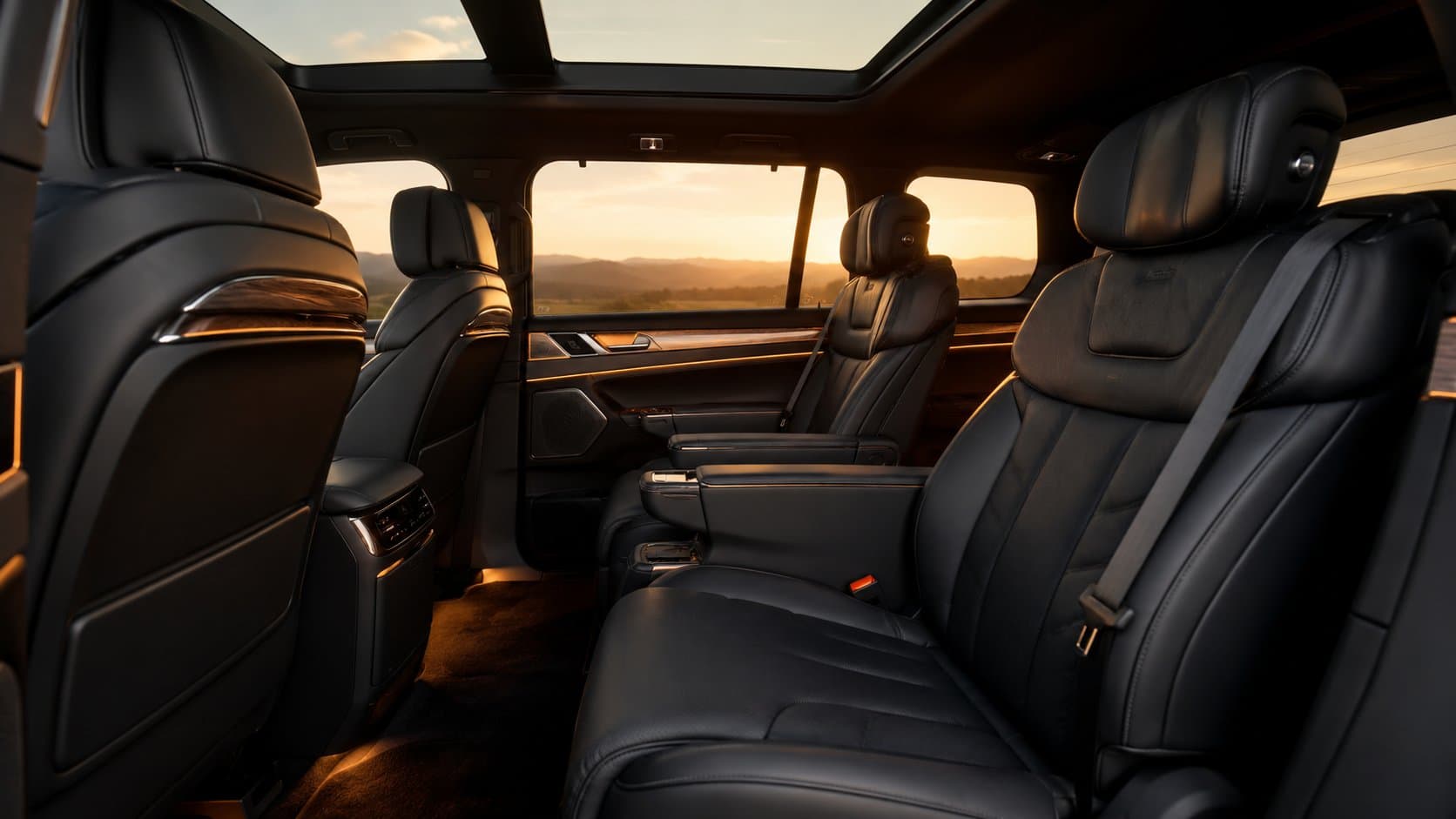
When we covered the Nio ES9 in our Beijing Auto Show deep dive on the cars that defined Auto China 2026, we focused on what the ES9 means for Nio strategically — its role as the flagship halo SUV in a critical year, the path to profitability, the competitive positioning against Mercedes and BMW. That was the executive summary.
This is the experiential one.
Because what the spec sheet doesn't quite capture is what it actually feels like to sit in this car. The ES9 isn't just another large luxury SUV. It is, by Nio's own count, packed with more than 40 industry-first technologies and nearly 40 class-leading features. Most of those features don't appear on any vehicle currently sold in the United States — at any price. And the starting price for the ES9 in China sits around $84,300 USD for the base configuration, with battery-rental options bringing the entry point even lower.
To put that in context: a Mercedes-Benz GLS 580 starts at $112,000 in the US. A BMW X7 xDrive40i starts at $87,000. A Range Rover P530 SE starts at $124,000. The ES9 is targeting that tier — and arguably exceeding it on technology and interior amenities — while costing less than the entry-level competitor.
Here are the ten features that define why this car matters.
1. Smart-Tinting Windows With Adjustable Opacity
This is the feature that most surprises first-time passengers. The ES9's second-row and third-row windows use array-type LC intelligent privacy dimming glass — what Nio describes as the fastest tint-changing speed in the industry. Hold a button, and the window darkens. Hold it again, it darkens further. Roll a controller, and you can dial in any opacity level between fully transparent and fully privacy-tinted.
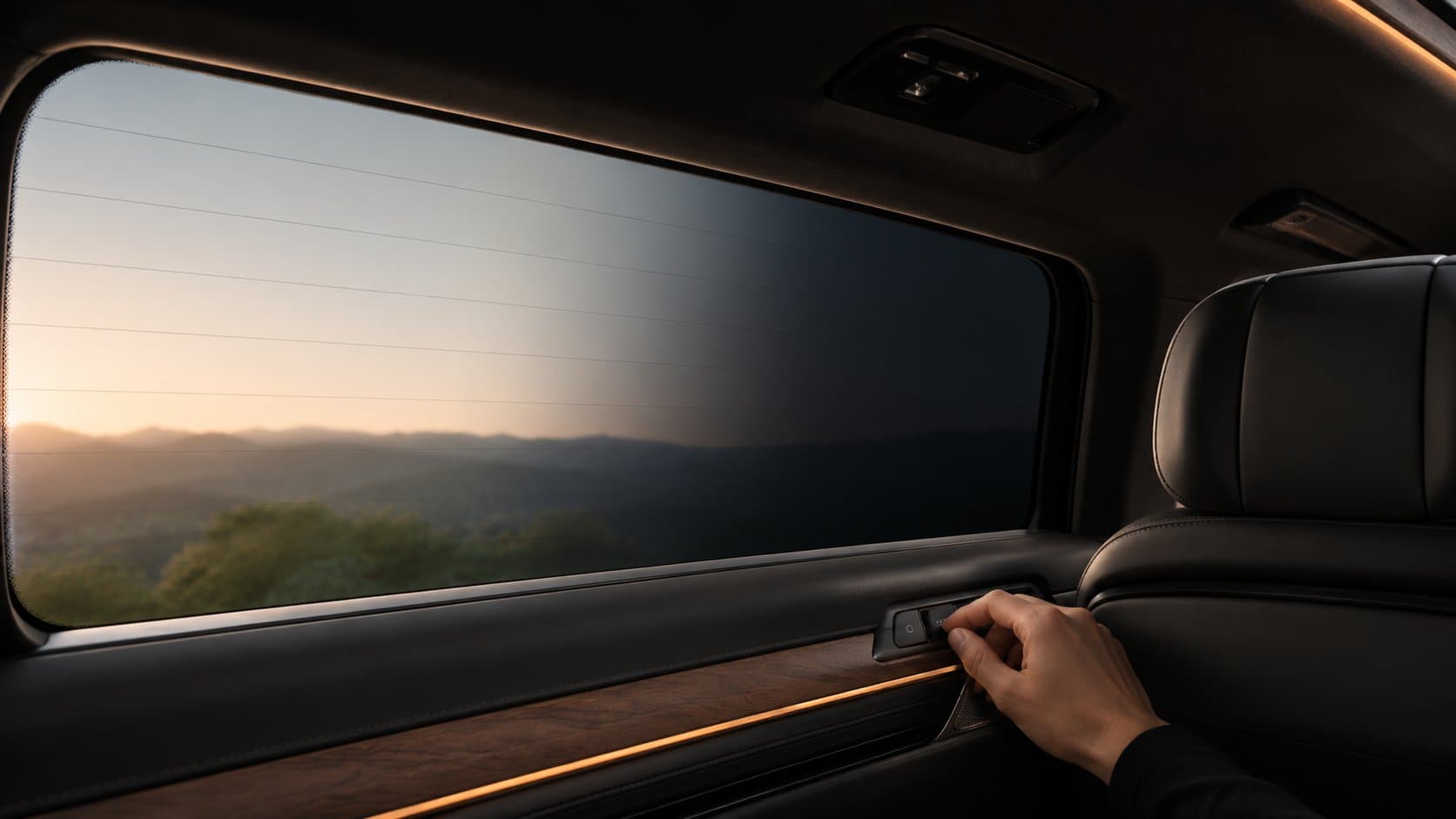
Electrochromic glass exists on a small number of Western luxury vehicles, typically on sunroofs only and with two states (clear or tinted). The ES9 puts continuously adjustable electrochromic technology on every rear window, with what Nio calls a “peek mode” for celebrities or executives who want partial visibility without full exposure.
There is no Western luxury SUV currently sold with an equivalent system. Mercedes-Benz announced an electrochromic sunroof for some EQS variants. BMW offers limited electrochromic sunroof functionality. Neither offers user-adjustable, multi-level, side-window-applied dimming.
2. The 20-Point Foot Massage System
The second-row passenger experience in the ES9 is built around what Nio calls its proprietary seating platform — up to 17 layers of comfort, with a sacral support system, and a 22-point massage system in the seat itself. That alone matches the better Mercedes Maybach configurations.
What goes beyond Maybach territory is the dedicated 20-point foot massage. Take your shoes off in the rear of an ES9, and a heated, multi-zone foot massage system targets pressure points in the soles and arches. Combined with the seat massage, the full experience covers 42 points across the body.
The Maybach S-Class has heated and ventilated rear seats with massage. It does not have a dedicated foot massage system. Neither does the Bentley Bentayga, the Rolls-Royce Cullinan, or any current production Range Rover.
3. The PIN-Protected In-Car Safe
The ES9's optional center console between the second-row captain's chairs is more than a fancy armrest. It contains an 8.8-liter heated and cooled compartment with a temperature range from -2°C to 55°C — which means it can chill champagne or keep takeout warm. Built into the same console is a PIN-code-protected safe.
This is genuinely unusual. Lockable storage exists in many luxury cars. PIN-coded electronic safes do not. The use case is straightforward — executives carrying confidential documents, valuables for a business trip, or simply privacy from chauffeurs and family members. It is the kind of feature that exists because Nio specifically engineered the ES9 around chauffeur-driven use cases that are still relatively rare in Western luxury markets.
4. The 3,020-Watt, 47-Speaker Audio System
Audio in luxury cars has a clear hierarchy. A standard Mercedes Burmester system has 13 speakers and 590 watts. The high-end Burmester 4D system, available in the Maybach, has 30 speakers and 1,750 watts. Bowers & Wilkins systems in BMW top-of-line vehicles run around 16 speakers and 1,500 watts.
The Nio ES9 ships with a 9.2.4.8 surround sound system that has 47 speakers and 3,020 watts of output — roughly double the speaker count and nearly double the power of the most expensive Western luxury audio packages. Nio describes the layout as having 9 surround sound channels, 2 subwoofers, 4 overhead channels, and 8 headrest audio channels. The headrest channels are key — they enable phone calls and personal audio without disturbing other passengers.
This is the kind of feature that doesn't read on a spec sheet but transforms the cabin experience. A 3,020-watt 47-speaker system isn't audio. It's an environment.
5. The Two-Meter Panoramic Sunroof With Individual Sunshades
The ES9's panoramic sunroof measures 2 meters long and 1.5 meters wide — running essentially the full length of the cabin. Most luxury SUVs offer panoramic sunroofs of similar dimensions. What the ES9 does differently is split the sunshade along the centerline.
This means the driver-side and passenger-side sunshades operate independently. One person can have full sunlight, another can have full coverage, simultaneously. For three-row vehicles where rear passengers may have entirely different lighting preferences from front passengers, this is genuinely useful — and not currently available on any Western competitor.
6. The 14.5-Inch Rear Executive Screens With Video Conferencing
Two 14.5-inch displays mount to the rear of the front seats. These are not entertainment screens — or rather, they are not only entertainment screens. Each display is equipped with 4K cameras and a face lighting system that enables full video conferencing, with audio routed through the dedicated headrest speakers to maximize privacy.
The use case is explicit: business calls from the back seat of the car, with a professional-grade video setup that doesn't require holding a phone. Audio is contained to the user's headrest channel, so other passengers don't hear the conversation.
The Mercedes-Maybach S-Class has rear screens. They display content from connected devices. They cannot host independent video calls with built-in cameras and lighting. The ES9 does this natively.
7. The 8.8-Liter Heated and Cooled Compartment
Built into the optional second-row console: an 8.8-liter compartment that operates as a refrigerator (down to -2°C) or as a warmer (up to 55°C). For comparison, the Mercedes-Maybach S-Class has an optional refrigerator compartment in some configurations. It cools only — there is no heating function.
The ES9's compartment can keep wine cold on the way to dinner or keep food warm on a long drive. It is, in other words, configured for the practical reality of how chauffeur-driven cars actually get used in modern executive contexts.
8. The 26-Position Power Captain's Chairs With Zero-Gravity Recline
Most luxury rear seats offer somewhere between 8 and 16 power adjustments. The ES9's second-row captain's chairs offer 26 positions of power adjustment, including a “zero-gravity” recline that distributes the body's weight across the chair to reduce pressure points and simulate weightlessness.
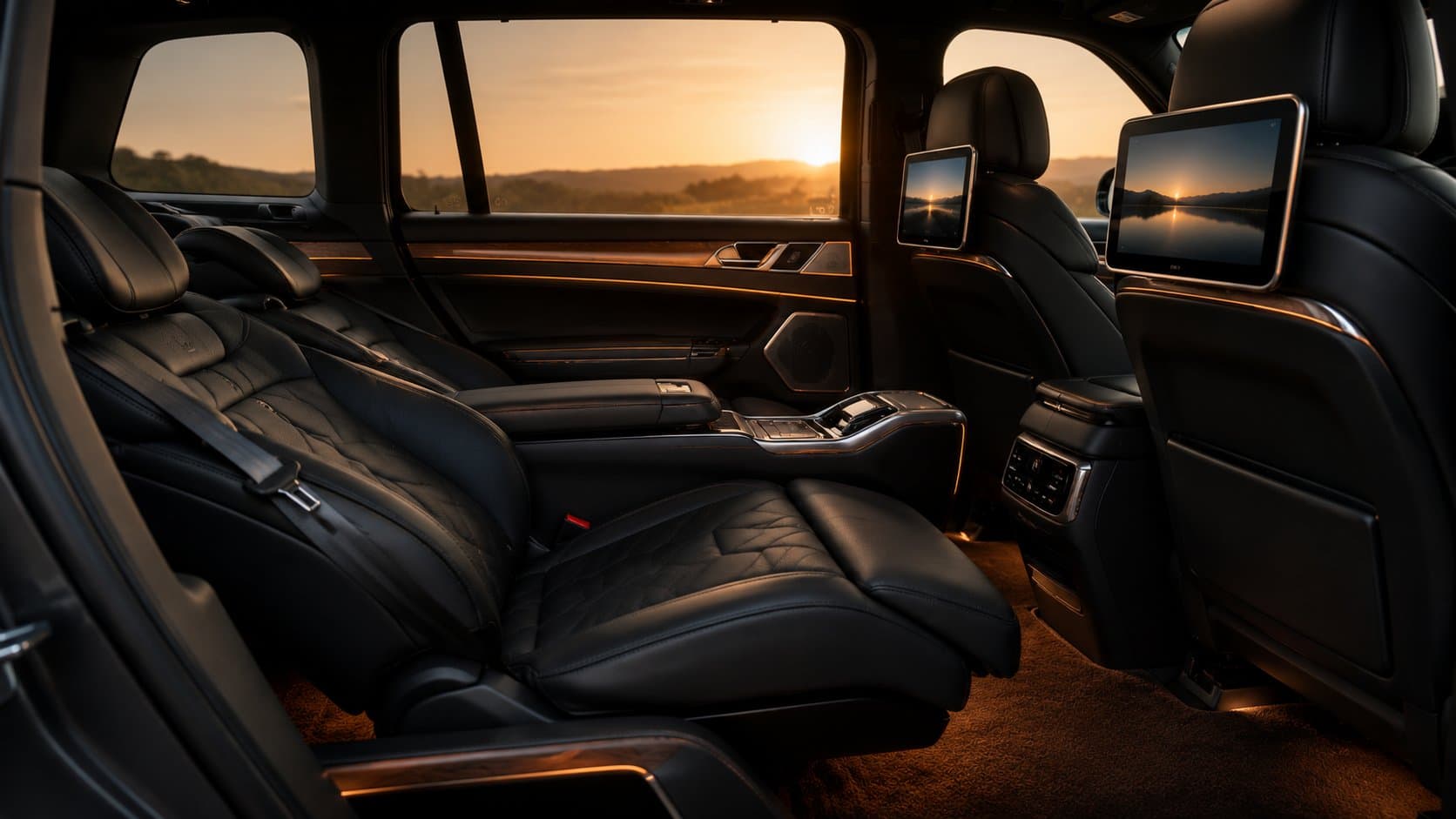
Combined with the 22-point massage system, the heated and ventilated seating across nearly 2.3 square meters of surface area, and the deployable footrest, the second-row experience is engineered to make a 2–3 hour drive feel restorative rather than depleting.
The closest Western equivalent — the Mercedes-Maybach Executive Seat package — offers approximately 19 adjustment positions and reclines to about 43 degrees. The ES9 second row offers more adjustment range and goes deeper into recline.
9. The 28-Mic Active Noise Cancellation System
The ES9 uses 28 microphones positioned throughout the cabin to detect ambient noise and generate counter-frequencies that cancel it. Combined with 5-layer laminated glass and 2.3 square meters of sound deadening throughout the vehicle, the system can reduce cabin noise by up to 12 decibels.
Twelve decibels is a meaningful number. Cabin noise at highway speeds in a typical luxury SUV runs around 68–72 dB. A 12-dB reduction brings that into the 56–60 dB range — quieter than most home environments. For passengers trying to hold conference calls, work on documents, or simply have conversations without raising their voices, this changes how the cabin feels.
The Rolls-Royce Ghost and Phantom remain the benchmarks for cabin silence among Western luxury cars. The ES9, with its 28-mic active noise cancellation, is targeting that same level of acoustic isolation at one-third of the Rolls-Royce price.
10. The SkyRide Full Active Suspension
The technical foundation under all of these comfort features is the SkyRide Full Active Suspension system — an electrohydraulic active suspension developed in partnership with Clearmotion (a Nio investee). The system supplements dual-chamber air springs with continuous damping control, allowing 130 mm of ride height adjustment.
Active suspension at this level of sophistication has historically been the domain of the most expensive European luxury cars — the Mercedes E-Active Body Control system, the Audi predictive active suspension, and similar high-end engineering exercises. Putting fully active suspension on a vehicle starting at $84,300 represents a meaningful shift in what's available at the luxury price point.
The result, in practice, is the ability to lean the car into curves, adjust ride height for ground clearance, and isolate the cabin from road imperfections in ways that traditional air suspension cannot.
What All This Adds Up To
The Nio ES9 is, on paper, a $84,300 large electric SUV. In experience, it is something different — a vehicle engineered around the assumption that the most important seat is not behind the wheel.
This is not a uniquely Chinese assumption — Mercedes-Maybach, Bentley, Rolls-Royce, and Range Rover have always built around it for their highest trims. What's different is the price point. The ES9 is delivering executive-rear-seat experiences that have historically required spending $200,000–$400,000 on a Western luxury vehicle, and is doing so at sub-$90,000 pricing.
For Chinese buyers, this matters because chauffeur-driven luxury cars are a meaningful segment in China that doesn't exist at scale in the US. The ES9's interior makes sense in a market where executives spend significant time in the back seat of vehicles driven by professional drivers.
For global observers, the ES9 matters as a signal: the technology and execution gap between Chinese flagship EVs and Western luxury vehicles is no longer a future concern. It is the present reality. And while the ES9 is not currently available outside China, the engineering capability that produced it is.
The Catch
There are real reasons the ES9 won't appear in American showrooms. Tariff structures make import economics impossible. Regulatory certification for a vehicle built around the Chinese market would require significant adaptation. The chauffeur-driven luxury segment that justifies the ES9's design choices barely exists in US suburbs.
But the more important point isn't whether you can buy an ES9 in Atlanta or Chicago. It's that the ES9 exists, that it works, and that it represents what Chinese automakers can now build at scale. Mercedes, BMW, Audi, and Range Rover are all watching. The question for those brands is no longer whether they can compete on price — they can't, given current cost structures — but whether they can compete on capability and feature density without raising their already-premium prices.
Beijing 2026 made clear that the luxury EV segment is not headed toward a single dominant model. It is fragmenting into Chinese flagships that lead on technology and feature integration, and Western flagships that lead on heritage, brand prestige, and global distribution. The Nio ES9 is the clearest current example of what the Chinese side of that divide looks like.
For more on the strategic positioning of this vehicle and its competitors, see our deep dive on the Yangwang U9, AITO M9, and Nio ES9 — Beijing's headline cars decoded. For the broader context of what changed at Auto China 2026, see our recap of the show's 10 most important reveals.
The ES9 is one car. But it is a meaningful preview of where the luxury EV market is heading.