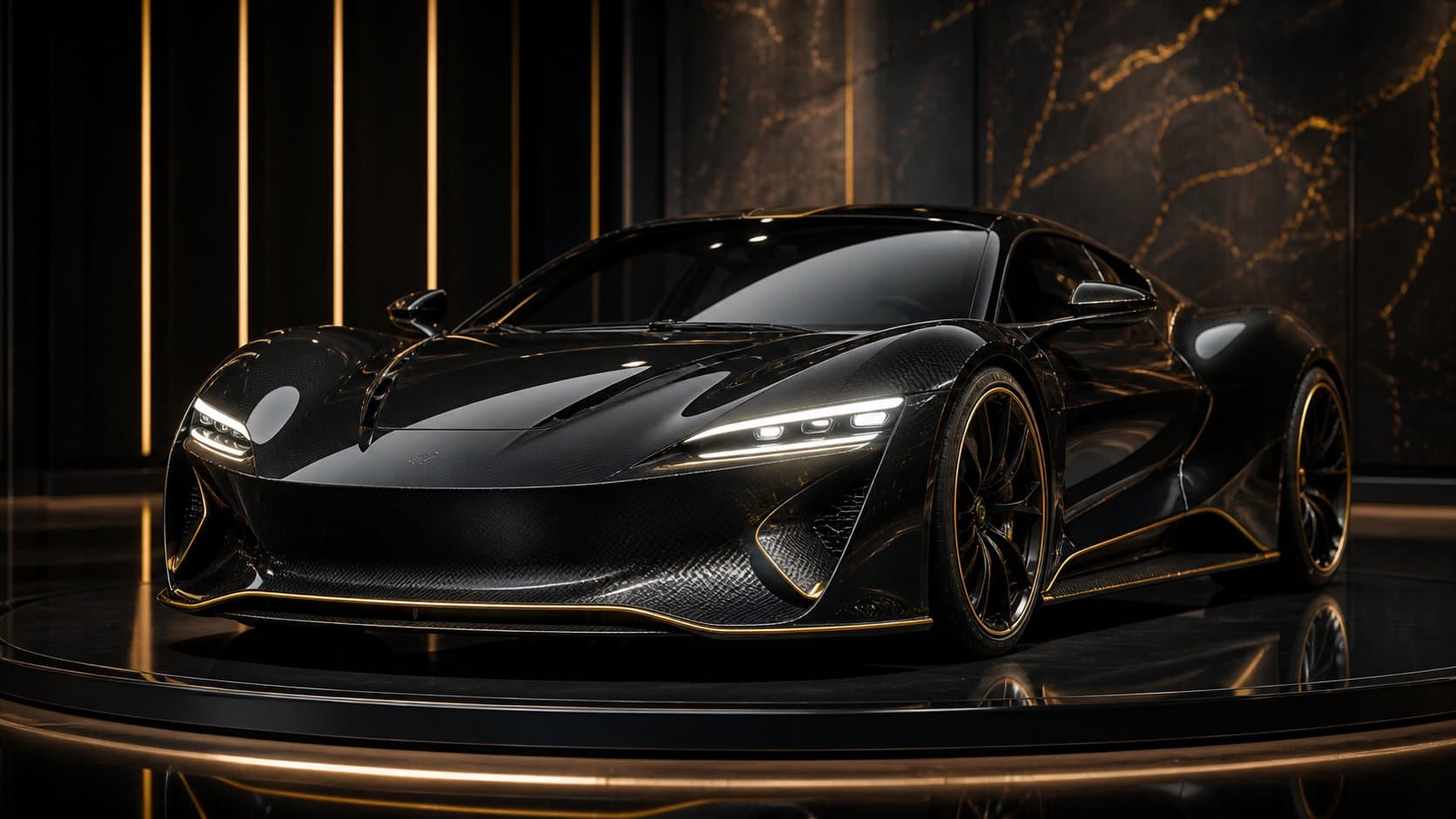
The 2026 Beijing Auto Show featured 1,451 vehicles from manufacturers across 21 countries. Not all of them mattered equally. Across ten days of debuts, three cars defined the conversation — each for different reasons, and each representing a different bet about where the automotive industry is heading.
This is a closer look at the BYD Yangwang U9 Xtreme, the next-generation AITO M9, and the Nio ES9 — what they are, who builds them, what they cost, and what they signal about the future of the global auto market.
BYD Yangwang U9 Xtreme: The $2.9 Million Statement Car
The Headline
On opening day at Beijing 2026, BYD's ultra-luxury sub-brand Yangwang did something remarkable. The production version of its U9 Xtreme electric supercar — limited to 30 units globally — was sold for over 20 million yuan ($2.9 million) per vehicle. The first delivery went to Australian entrepreneur Nick Politis, with BYD chairman and president Wang Chuanfu personally handing over the keys at the show.
This makes the U9 Xtreme the most expensive production vehicle BYD has ever sold, and one of the most expensive electric supercars ever produced.
The Engineering
The U9 Xtreme is built on the world's first mass-produced 1,200-volt high-voltage platform — a meaningful step beyond the 800V architecture that has become standard for premium electric vehicles. Each of its four electric motors produces a peak output of 555 kilowatts, delivering a combined 2,220 kW (2,977 horsepower) to the wheels.
Specifications worth noting:
Powertrain: Quad motor, all-wheel drive, 1,200V architecture
Battery: Custom 30C ultra-high discharge rate cell
Top speed: 500 km/h (310 mph) capable
Tires: China's first specially-tailored wear-resistant tires designed for sustained extreme speeds
Limited production: 30 units worldwide
Special edition: Black-and-gold exterior, gold accents on the front splitter, hood, and doors
The Track Record That Justifies the Price
In September 2025, the U9 Xtreme became the first pure-electric production car to break the seven-minute barrier at Germany's Nürburgring, posting a time of 6 minutes and 59.157 seconds. The car has also held the world record for the fastest lap at 496.22 km/h.
The Nürburgring time matters because it places the U9 Xtreme not just among electric supercars, but among supercars period. It is faster around the most demanding production circuit in the world than nearly any combustion-powered vehicle ever sold to the public.
What It Means
BYD has stated openly that the Yangwang halo cars are not about volume. The brand recorded just 307 domestic deliveries in March 2026. The cars exist to demonstrate that a Chinese automaker can occupy the absolute top of the global market — a position that did not seem possible five years ago and that establishes credibility for everything BYD sells beneath it.
If you are an industry analyst still doubtful that Chinese brands can move into premium territory, the U9 Xtreme should be a problem for that thesis.
AITO M9: The Smart-SUV Defining a New Category
The Headline
The next-generation AITO M9 was unveiled at Beijing 2026 with six Huawei-developed LiDAR sensors and the latest Qiankun ADS 4.1 advanced driver assistance system. Pre-orders opened during the show. AITO is the flagship brand inside Huawei's Harmony Intelligent Mobility Alliance (HIMA), which now spans five major brands — AITO, LUXEED, STELATO, MAEXTRO, and Shangjie — partnered with SERES, Chery, JAC, BAIC Group, and SAIC Motor respectively.
What Makes the M9 Different
Most premium SUV manufacturers compete on the same dimensions: leather, badging, ride comfort, traditional luxury cues. The AITO M9 competes on a different axis. Its primary value proposition is its software stack — specifically, Huawei's Qiankun ADS 4.1 system supporting full-coverage urban Navigate-on-Autopilot functionality.
For Chinese buyers, this matters more than soft-close doors. The capability to handle complex urban driving environments — unprotected left turns, traffic-light navigation, dense pedestrian areas — is increasingly the dimension on which premium SUVs are judged. Western luxury brands have struggled to match the pace of Chinese ADAS development, partly because Chinese roads, traffic patterns, and driver behavior are different enough that Western-trained ADAS systems often perform poorly when ported over.
The Six-LiDAR Sensor Suite
The next-gen M9 features six Huawei in-house developed LiDARs — a significant step beyond the typical two-LiDAR sensor configuration used by most competitors. The redundancy is partly about safety, partly about coverage of edge cases. Chinese highway driving conditions and urban environments together generate more challenging scenarios than most ADAS systems have been trained on.
Huawei sells this technology as Qiankun ADS 4.1, and AITO is the first brand to deploy the full version.
The Category the M9 Created
The full-size, three-row, six-seater electric SUV format was effectively pioneered by the original Li Auto ONE and the first-generation AITO M9. What was once a 20,000-unit-per-year niche has now become a major segment with annual sales exceeding 100,000 units across multiple manufacturers (Li Auto L9, Denza N9, Lynk & Co 900, the new BYD Fang Cheng Bao models, Voyah Dreamer, Nio ES8). It is now the highest-margin segment in the lineup of nearly every Chinese premium brand, which is why every brand is chasing it.
The M9's pricing typically ranges from 470,000 to 570,000 yuan (roughly $65,000 to $80,000 USD).
Why Huawei's Approach Matters
Huawei does not manufacture cars itself. Its strategy is to provide the smart cockpit, autonomous driving stack, software architecture, and increasingly the brand alliance structure (HIMA) that lets it work with multiple manufacturing partners. This approach is similar to what Red Bull does in beverage and racing — providing the platform that lets partners compete and remain relevant.
The model has worked. Huawei now has Qiankun ADS or HarmonyOS integration in vehicles from Nissan (Teana), Audi (A6L e-tron), and BYD, in addition to the dedicated HIMA brands. Beijing 2026 confirmed this approach is now mainstream rather than experimental.
Nio ES9: The Halo SUV in a Critical Year for Nio
The Headline
Nio used Beijing 2026 to debut the ES9, its new flagship SUV, alongside ongoing momentum from the Nio ES8 — the company's other large SUV, which is approaching 100,000 deliveries in just seven months on the market. The ES8 has led the large SUV segment in China for four consecutive months and represents what Nio's executive team has described as a critical model in the company's path to full-year profitability in 2026.
Why ES9 Matters for Nio Specifically
Nio is in a different position from BYD or Huawei. The company has been a premium player in China but has fought through a difficult period of cash burn and slow path to profitability. Q4 2025 marked the company's first profitable quarter, and 2026 is the year Nio has publicly targeted full-year profitability.
The ES9 is the halo SUV that anchors the lineup at the top. Its purpose is not necessarily volume — that role goes to the ES8 — but to establish that Nio can compete at the highest end of the premium SUV market against Mercedes, BMW, and now Chinese flagships like the AITO M9 and Denza N9.
Technical Positioning
Nio's standard advantages remain in play: industry-leading battery-swap network (over 3,000 swap stations across China by the end of 2025), strong software ecosystem, and a customer-experience model that has been described as Apple-like in its execution. The ES9 builds on this with the latest 800V architecture, advanced ADAS, and the kind of three-row family-SUV interior that Chinese buyers increasingly expect at this price point.
Pricing for the Nio ES9 typically falls in the 600,000 to 800,000 yuan range (roughly $83,000 to $110,000 USD), positioning it directly against German premium SUVs.
The Path Forward
For Nio, success at Beijing 2026 is less about a single flagship reveal and more about the trajectory the brand demonstrates. The fact that the ES8 is on track to hit 100,000 deliveries faster than nearly any competing premium SUV — combined with the ES9 anchoring the top of the lineup — gives the company a credible story for 2026 profitability.
If Nio achieves that milestone, it will be the second Chinese EV-only brand (after Li Auto) to reach full-year profitability, validating the business model of premium-positioned electric vehicles in a market that has seen most pure-EV startups fail.
What These Three Cars Tell Us
Each of these vehicles represents a different bet about how to win in the post-2026 automotive market:
The Yangwang U9 Xtreme bets that Chinese brands can compete at the absolute top — the place historically reserved for Ferrari, Lamborghini, Bugatti, and a small number of European hypercar makers. The bet is that buyers willing to spend $2.9 million on a car care more about performance and exclusivity than about brand heritage.
The AITO M9 bets that the future of premium isn't traditional luxury — it's software and AI capability. Huawei's bet is that the manufacturer-to-software-platform relationship in cars will mirror what happened in mobile devices, where the platform companies (Apple, Google) capture most of the value while hardware OEMs commoditize.
The Nio ES9 bets on a different premium playbook — one focused on ecosystem, customer experience, and battery-swap infrastructure as differentiators rather than raw specifications.
All three bets could pay off. None of them require the others to fail. But all three represent moves that Western luxury brands will struggle to match without major strategic shifts of their own.
For buyers in 2026 and beyond, the takeaway is simpler: the most interesting cars in the world right now are increasingly being made in China, by brands that did not exist a decade ago, in categories that did not exist five years ago. Whether you can buy them in your country yet is a separate question. Whether you eventually will is increasingly clear. For more on the show overall, see our 10 most important reveals from Auto China recap.