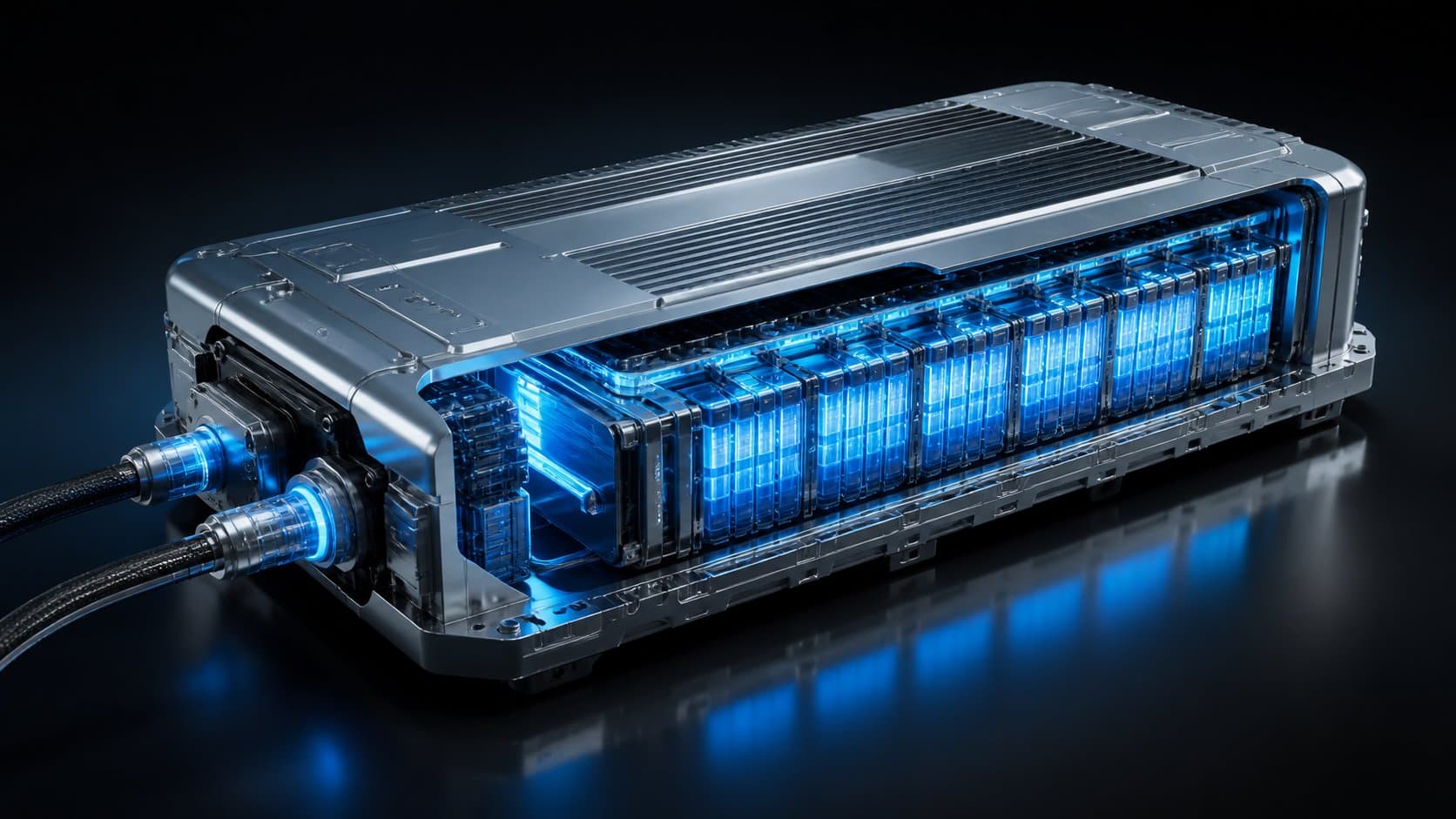
For the first decade of the modern electric vehicle era, the conversation about EV batteries was dominated by two specifications: range and price per kilowatt-hour. By 2026, both questions have been answered well enough that they no longer drive purchase decisions. The 2026 Beijing Auto Show made it clear what the next decade's conversation will be about: charging speed, energy density, voltage architecture, and the supply chain dynamics that determine which manufacturers can deliver what at what cost.
The battery technology shown at Beijing 2026 — and the manufacturers competing to commercialize it — will shape the EV market well into the 2030s. Here is what the show revealed.
The 800-Volt Architecture Has Become Table Stakes
Eighteen months ago, 800V architecture was a flagship feature. It was the headline spec on the Porsche Taycan, the Hyundai Ioniq 5, and the Lucid Air — premium vehicles that justified premium prices in part by enabling faster charging.
At Beijing 2026, nearly every significant new EV at the show featured 800V systems. The technology has dropped from premium differentiator to expected baseline specification, and it has reached vehicles that cost less than $25,000.
Hongqi launched 800V versions of its Tiangong 05 sedan and Tiangong 06 SUV starting at 171,800 yuan ($23,900) for the sedan and 191,800 yuan ($26,700) for the SUV. Both vehicles charge from 10 to 80 percent in 12 minutes. CLTC ranges reach 650 kilometers for the sedan and 610 kilometers for the SUV. These are not flagship products — they are mainstream offerings priced below the 200,000 yuan threshold that defines mass-market in China.
The implication is significant. For Western automakers still rolling out 800V on premium-priced vehicles, the competitive dynamic in China is already different. The technology has mainstreamed in a way that has not yet happened in Europe or North America.
The Sub-10-Minute Charging Race
The most aggressive battery announcements at Beijing 2026 came from the two dominant Chinese battery players, BYD and CATL, each targeting sub-10-minute charging as the new competitive frontier.
BYD's second-generation Blade Battery, which debuted in early March and was deployed in the Seal 08 at Beijing, claims megawatt-level flash charging that adds 400 kilometers of range in five minutes. BYD says the system can charge from 10 to 70 percent in five minutes at room temperature. The Blade Battery 2.0 also claims over 1,000 kilometers of CLTC range, roughly double what the first-generation Blade Battery delivered.
CATL's second-generation Flash-Charge battery, announced at the same time, achieves 10 to 97 percent state of charge in approximately 9 minutes at room temperature. Crucially, CATL's battery maintains performance down to -30°C — addressing one of the persistent weaknesses of high-energy-density batteries in cold-weather markets.
For comparison, a Tesla Supercharger today adds about 320 kilometers of range in 15 minutes. A current-generation 800V architecture EV like the Hyundai Ioniq 5 charges from 10 to 80 percent in roughly 18 minutes. The Chinese systems are now operating in a different time scale entirely.
The 800V Real-World Implication
What sub-10-minute charging actually means for buyers depends heavily on infrastructure. A 1,000-volt or 800-volt battery in a car is only as fast as the charging station can deliver. BYD has been investing heavily in its own charging infrastructure to support the Blade Battery 2.0 — including a Singapore flash-charging network that the company cited as a reference case for international expansion.
The infrastructure question is why these technologies will not equalize across markets at the same speed. China is rolling out megawatt-class charging infrastructure faster than any other market, which means Chinese buyers will see real-world benefits of these batteries before American or European buyers do — even if the same vehicles are sold globally.
For most international markets, the practical advantage in 2026–2027 will be incremental: faster charging on the existing infrastructure, perhaps cutting 30 percent from typical road-trip charging stops. The full benefit of five-minute charging will arrive years later, as utility-grade charging stations are upgraded.
Energy Density: The Race Toward 400 Wh/kg
Beneath the charging-speed headlines, a quieter race is happening on energy density. The 2026 show featured multiple battery announcements pushing toward 400 watt-hours per kilogram — a meaningful step up from the ~250 to 280 Wh/kg typical in current premium EVs.
Chery's “Rhino E battery,” shown in the Fulwin A9 wagon concept, has an energy density of 195 Wh/kg with operational range from -40°C to 60°C and at least 90 percent capacity retention at -30°C. Chinese battery manufacturers as a group are now claiming production-grade cells in the 280 to 350 Wh/kg range, with prototype cells targeting 400 Wh/kg for commercialization in 2027–2028.
Higher energy density translates directly to longer range or smaller, lighter battery packs. For a manufacturer designing a new vehicle, every 50 Wh/kg improvement either adds about 15–20 percent range at the same battery weight, or removes about 80–100 kilograms of battery weight at the same range. The compounding effects on vehicle dynamics, efficiency, and cost are significant.
Solid-State and Sodium-Ion: The Next Generations Move Closer
Multiple manufacturers at Beijing 2026 indicated solid-state and sodium-ion batteries are moving from research and development into commercial production windows.
CATL unveiled the Naxtra Sodium-ion Battery, targeting mass production by the end of 2026 for entry-level and cold-weather applications. Sodium-ion chemistry uses abundant materials — sodium replaces the lithium that is increasingly tight in global supply — but historically suffered from lower energy density. CATL appears to have brought sodium-ion close enough to lithium-ion that it makes commercial sense for vehicles in the entry-level segment, where cost matters more than maximum range.
Hongqi has indicated solid-state batteries aimed at production vehicles around 2027, alongside testing of higher-energy-density battery packs. Multiple manufacturers indicated solid-state and semi-solid-state chemistries will reach commercial production between 2027 and 2028.
Solid-state batteries — which use solid electrolyte materials instead of liquid — promise significantly higher energy density, better safety performance, and faster charging. They have been the “next big thing” in batteries for a decade. Beijing 2026 was the first major show where solid-state announcements moved from speculative timelines into commercial production windows.
The Supply Chain Story
Beneath the product announcements, the more important shift visible at Beijing 2026 was structural. CATL's 1,500-square-meter “Energy Technology Experience Area” at the entrance of the exhibition hall showed the full supply chain — battery cell production, battery-swapping networks, recycling infrastructure, and cascade utilization.
Battery suppliers historically displayed at component-focused trade shows. At Beijing 2026, they displayed alongside the OEMs themselves. CALB and BYD Battery had similarly prominent booths. This is the dynamic that has been emerging for years and is now visible at the consumer-facing show: in EVs, the battery is no longer a component — it is the product.
This shift has implications for how Western automakers compete. The traditional OEM model assumes the manufacturer controls the most strategically important parts of the vehicle and outsources commodity components. In EVs, the most strategically important component is the battery, and Chinese manufacturers (CATL, BYD, CALB) have built scale advantages that Western suppliers (Panasonic, LG Energy Solution, SK On) are struggling to match.
What Buyers Should Take Away
For consumers, the practical implications of Beijing 2026's battery story are roughly these:
By end of 2026: Sub-10-minute charging on 800V architecture EVs will be available in China and at flagship-level pricing in some other markets. Most buyers in North America and Europe will see incremental improvements rather than transformational changes.
By 2027–2028: Solid-state and sodium-ion batteries will reach commercial production. Solid-state will appear first in premium and luxury segments. Sodium-ion will appear first in entry-level and fleet segments. Range and charging speed will both continue to improve.
By 2030: The current charging-speed and energy-density specifications will look as dated as 2016 specifications look today. The competitive frontier will likely have moved to integration with renewable infrastructure, vehicle-to-grid services, and battery longevity at second-life applications.
The Chinese battery industry now operates with a structural cost and capability advantage that will be difficult for any single Western competitor to match. The question for the rest of the global auto industry is whether to compete by partnership (Volkswagen Group's CATL relationships, Ford's investments in CATL-licensed manufacturing in the US), by acquisition, or by accepting a slower competitive position.
Beijing 2026 made the answer increasingly clear: partnership is the path most Western automakers are taking, because the alternative is to accept being one or two generations behind on the most strategically important component in the modern automobile. For more on the show overall, see our 10 most important reveals from Auto China and our deep dive on the Yangwang U9, AITO M9, and Nio ES9.