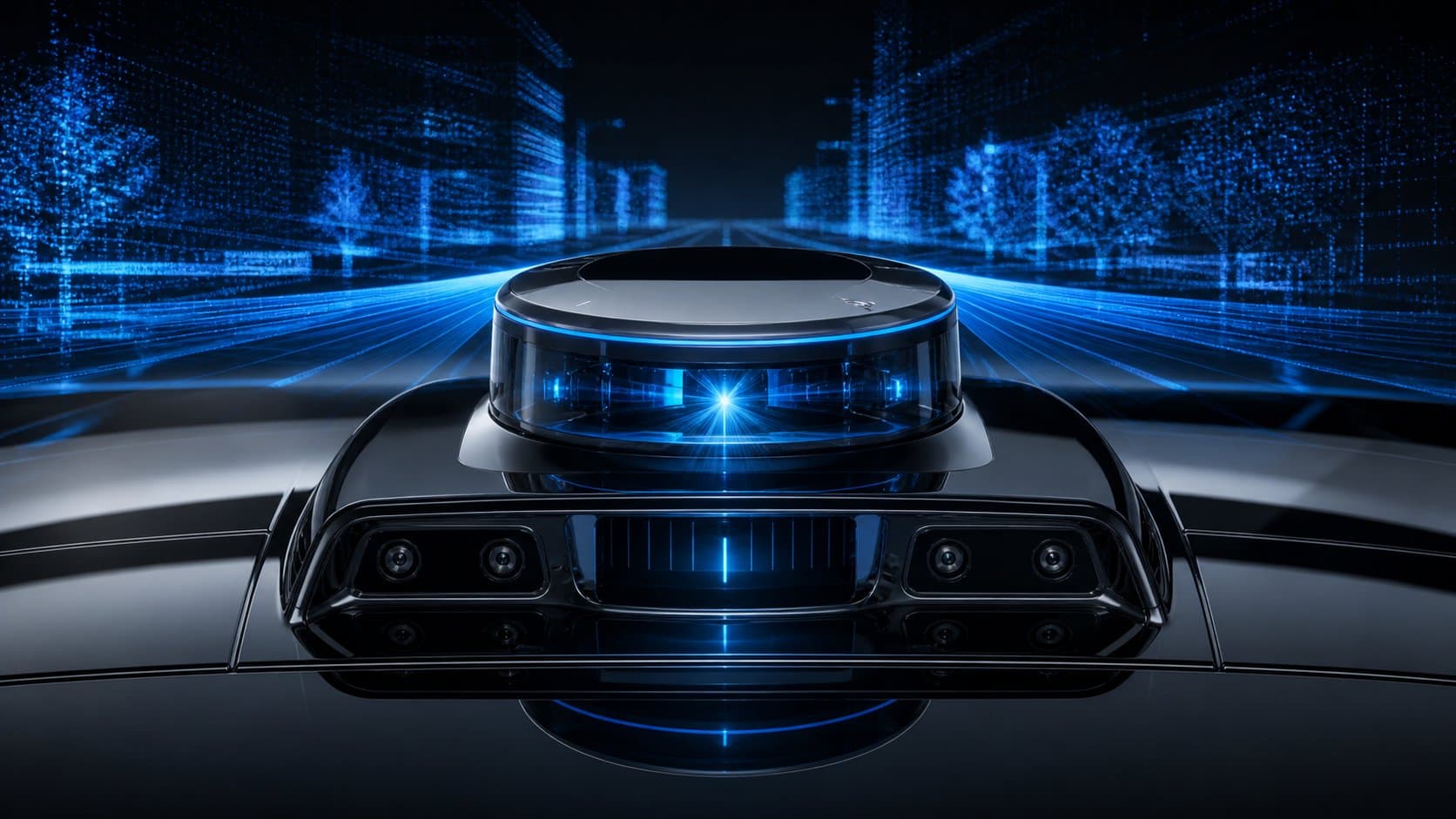
The 2026 Beijing Auto Show carried the theme “Future of Intelligence.” For some auto shows, theming is decorative — a slogan above the entrance and little else. At Beijing 2026, the theme was substance. Across nearly every major brand booth, the most prominent product story was not horsepower, range, or styling. It was artificial intelligence, autonomous driving capability, and the deep integration of consumer-electronics technology into vehicles.
This is the dimension on which the Chinese auto industry now sets the global pace, and the Beijing show made the gap with Western automakers visible in a way that previous shows had only hinted at. Here is what the AI and smart-vehicle story at Beijing 2026 actually looked like — and what it means for where vehicles are heading.
Huawei Becomes the Center of Gravity
The clearest signal at Beijing 2026 was how thoroughly Huawei has become the center of gravity in the Chinese smart-vehicle ecosystem. The company doesn't manufacture cars. It manufactures the intelligence inside them.
Huawei now operates the Harmony Intelligent Mobility Alliance (HIMA), which spans five major brands at Beijing 2026:
AITO (with SERES) — the original and best-selling HIMA brand, with the next-generation M9 unveiled at the show with six Huawei-developed LiDARs and Qiankun ADS 4.1.
LUXEED (with Chery).
STELATO (with JAC).
MAEXTRO (with BAIC Group).
Shangjie (with SAIC Motor).
Beyond the HIMA alliance, Huawei has embedded its smart-driving and smart-cockpit technologies in vehicles from foreign brands. At Beijing 2026, the new-generation Audi A6L combustion sedan was shown with Huawei's Qiankun Intelligent Driving System integrated. BYD now offers HarmonyOS and Huawei Qiankun smart-driving features in select models. The Nissan Teana sedan in China runs on Huawei systems.
The Hongmeng Smart Mobility booth at Beijing 2026 covered over 4,400 square meters, with more than 20 exhibition vehicles, including the new Zhijie V9 and the new-generation AITO M9, both of which opened pre-orders during the show.
This is what platform consolidation looks like. Just as the smartphone industry consolidated around Apple's iOS and Google's Android, the Chinese automotive software stack appears to be consolidating around Huawei's Qiankun and HarmonyOS. The implications for Western automakers attempting to compete with their own internal software development are significant.
What “Qiankun ADS 4.1” Actually Means
The term “Qiankun ADS” appears throughout coverage of the Beijing show, but its actual capabilities deserve explanation. Qiankun is Huawei's autonomous driving stack. ADS 4.1 is the latest version, supporting what is described as “full-coverage urban Navigate-on-Autopilot.”
In practical terms, this means the system handles complex urban driving scenarios — unprotected left turns, traffic light navigation, construction zones, dense pedestrian areas, parking lot navigation — without driver intervention required for most situations. This is functionally equivalent to what Tesla calls Full Self-Driving Beta, and to what Mercedes-Benz calls Drive Pilot in its limited markets.
The differentiation is in the hardware sophistication. The next-gen AITO M9 unveiled at Beijing has six Huawei-developed LiDAR sensors. Most vehicles with comparable autonomous-driving aspirations have one or two LiDAR sensors. The redundancy and coverage matter for handling edge cases — the unusual scenarios where most autonomous systems still struggle.
For Chinese drivers, the practical experience of Qiankun ADS 4.1 in Chinese urban environments is reportedly more reliable than equivalent Western systems performing on Western roads. This is partly because Chinese ADAS systems are trained on Chinese data and Chinese traffic patterns. It is also partly because Chinese roads — while complex — have certain features (more lane discipline in some cities, faster adoption of standardized signage, stronger traffic law enforcement in tier-1 cities) that lend themselves better to autonomous driving than chaotic Western urban environments.
The Smart Cockpit Revolution
Beyond autonomous driving, Beijing 2026 showcased the depth of integration between vehicles and consumer-electronics ecosystems that has become standard in Chinese cars and remains less developed in Western vehicles.
A few illustrative examples:
The Hongqi Tiangong 06 SUV — selling for $26,700 — features a 15.6-inch center screen, AI-powered voice controls, multi-zone voice recognition, a 14-speaker Dynaudio audio system, and an augmented-reality head-up display. These specifications match or exceed what is offered in Western luxury SUVs costing five times as much.
The Mercedes-Benz GLC EV long-wheelbase debuted at Beijing with deep integration of Chinese consumer-electronics services — a recognition that Mercedes cannot win in China by importing the same European-developed software stack used in its other markets.
BMW's Neue Klasse iX3 LWB runs voice assistant capabilities on large language models from Alibaba and DeepSeek. Navigation is built with Amap (China's leading mapping service). Driver assistance is developed with Momenta, a Chinese ADAS specialist tuned for local traffic patterns.
The pattern across these vehicles is consistent: in 2026, “smart cockpit” no longer means a touchscreen. It means deep, native integration with the consumer-electronics ecosystem the driver already uses. For Chinese buyers, this means integration with WeChat, Alibaba services, Bilibili, and dozens of other apps that are central to daily Chinese life. Western automakers attempting to compete have to either build this integration locally (BMW's approach) or accept being functionally less useful than competing Chinese vehicles.
Xiaomi: When a Phone Company Becomes a Car Company
The presence of Xiaomi at Beijing 2026 represented a different version of the same trend. Xiaomi entered the auto market in 2024 with the SU7 sedan, and by Beijing 2026 had established itself as a credible competitor in the premium EV segment.
What makes Xiaomi different is its starting position. Xiaomi is a consumer electronics company first — phones, smart home devices, wearables, an ecosystem of products. The Xiaomi SU7 Ultra and the Xiaomi Aero GT concept shown at Beijing 2026 represent a vehicle that fits naturally into the existing Xiaomi product ecosystem, not a separate device that has been retrofitted to integrate with a phone.
For a Xiaomi customer who already owns Xiaomi phones, Xiaomi smart home devices, and Xiaomi wearables, the SU7 represents the same level of integration that an iPhone owner expects between their phone, watch, and AirPods. Western automakers cannot offer this experience because they do not own the underlying consumer-electronics ecosystem.
This is the deeper threat that Xiaomi represents. It is not just another car brand competing on traditional automotive merits. It is a different kind of company entering the automotive market, with structural advantages in software integration that traditional automakers cannot replicate without acquiring or building consumer-electronics platforms of their own.
Physical AI and World Models
A more technical thread at Beijing 2026 was the integration of what are increasingly called “Physical AI” and “World Model” technologies into in-car connectivity and ADAS systems.
The basic idea is that next-generation autonomous driving systems are moving beyond rule-based logic and statistical pattern matching toward genuinely understanding the physical environment around the vehicle — modeling how other agents (pedestrians, cyclists, drivers) are likely to behave based on a learned model of the world.
Several manufacturers at Beijing referenced these technologies, though the marketing claims often outrun the actual capability. What is genuinely true is that the autonomous driving systems being demonstrated at Beijing 2026 — particularly Huawei's Qiankun ADS 4.1 — are using significantly more sophisticated machine learning approaches than systems available even two years ago.
For Western buyers, this matters because the trajectory of capability improvement in autonomous driving is now being set primarily by Chinese development. Western autonomous-driving leaders (Waymo, Mobileye, Tesla) remain technically competitive, but they are no longer the only frontier. The frontier now includes Huawei, Momenta, and a handful of other Chinese players whose work is mostly invisible to Western audiences.
Live Commerce: How Chinese Buyers Actually Research Cars
A small but telling detail from Beijing 2026: at multiple booths, the number of livestreamers outnumbered traditional sales staff by 2-to-4x. J.P. Morgan analysts have been tracking this trend since the 2024 Beijing Auto Show, and it has only intensified.
This reflects a structural shift in how younger Chinese buyers research purchases — away from traditional print and broadcast channels toward social media and live video platforms. OEMs that can deliver real-time product information through digital channels gain a measurable advantage. In a market with rising product homogeneity, the capacity to “win mindshare” online is becoming a primary competitive variable.
For Chinese automakers, this is a natural extension of their consumer-electronics roots. For Western automakers, it represents another dimension on which the playing field is tilted in favor of competitors who already operate in the relevant cultural and digital channels.
What This Means for the Future
If you abstract away from individual products at Beijing 2026, the deeper story is about a fundamental change in what a vehicle is. For the entire history of the automotive industry, a vehicle has been primarily a mechanical product with electronics and software added on top. Beijing 2026 made it clear that in 2026, a vehicle is increasingly a software product with mechanical and electronic systems built underneath.
This shift has implications across the industry:
For automakers: The skill set required to build a competitive vehicle is changing. Software engineering, AI development, ADAS expertise, and integration with consumer-electronics ecosystems are now as important as traditional automotive engineering disciplines. Companies that cannot recruit and retain the relevant software talent will struggle.
For suppliers: The most strategically important suppliers in 2026 are the ones providing software and AI capability. Huawei's role in the Chinese auto industry is functionally similar to the role Google's Android plays in the smartphone industry — a platform that lets multiple manufacturers compete while capturing significant value.
For buyers: The differentiation between vehicles is shifting. The best autonomous-driving capability, the best smart-cockpit integration, the best AI features will be the differentiators that matter, not 0-to-60 acceleration or top speed. This is good news for buyers, who get more capable vehicles. It is harder news for traditional luxury brands whose differentiation has historically rested on driving dynamics and craftsmanship.
For markets: The vehicles being designed in 2026 for the Chinese market are the most software-intensive cars ever built. As these vehicles export to other markets — through partnerships, joint ventures, or direct exports — the global vehicle fleet is going to look increasingly like Chinese vehicles. The “Future of Intelligence” theme of Beijing 2026 was not aspirational. It was descriptive. For consumers and industry watchers in markets where Chinese vehicles are not yet widely available, this future is closer than it might seem. The vehicles displayed in Beijing this spring will be the reference point for what every other major auto show is measured against. The bar has been raised, and it will not come back down. For deeper context, see our deep dive on the headline cars and our analysis of how Western brands are responding.