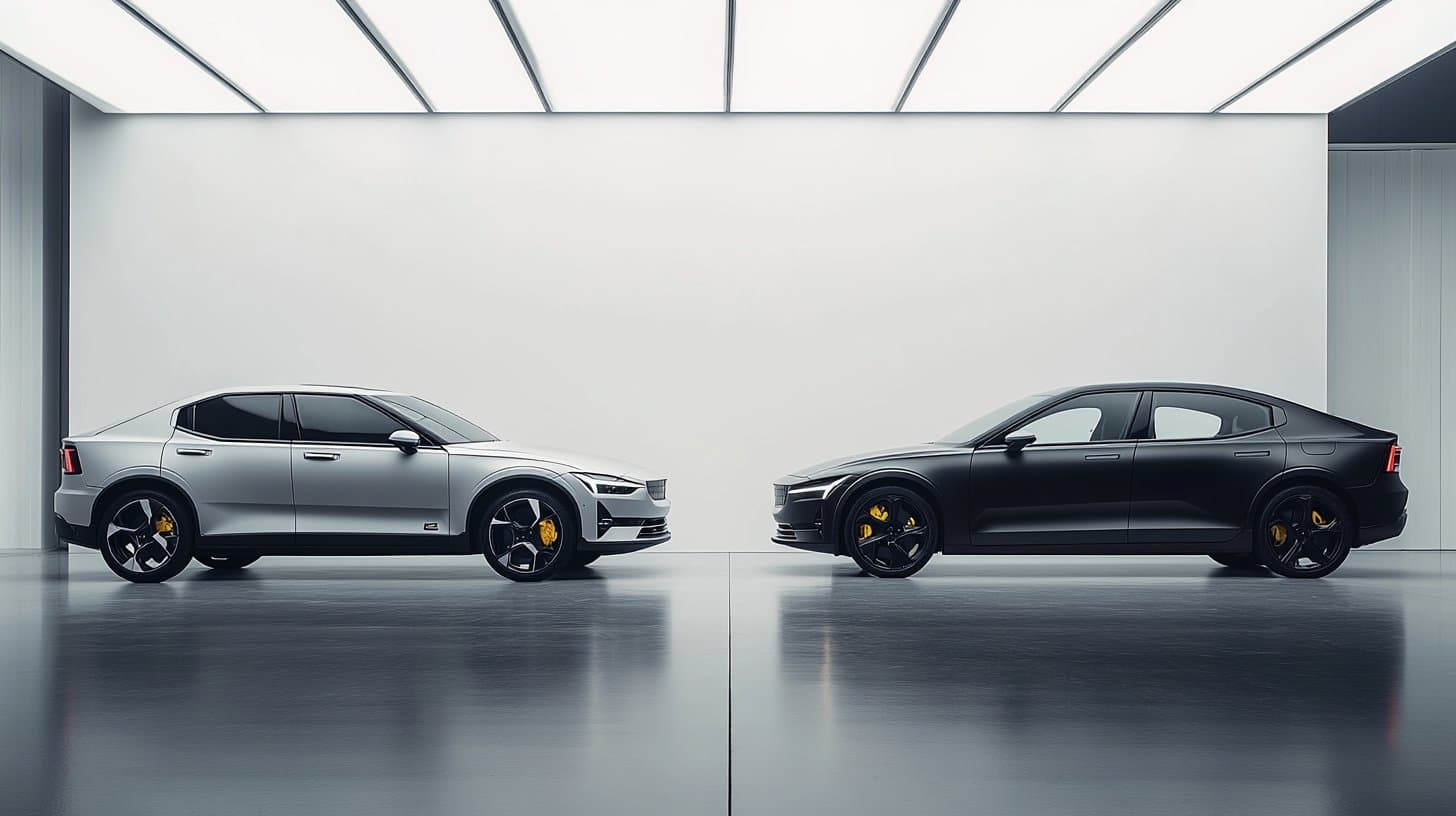
Polestar just launched one of the most aggressive conquest programs the EV market has ever seen — and it's aimed squarely at Tesla owners.
The Swedish-born, Volvo-backed electric brand is offering current Tesla owners a $5,000 trade-in bonus on top of market value when they switch to any new Polestar model. Existing Volvo or Polestar owners can stack an additional $2,000 loyalty discount on top of that. And for buyers who finance through Polestar Financial Services, there's a 0.9% APR promotional rate for qualified buyers on 36- and 48-month terms.
Combined, these incentives can shave $7,000 or more off the price of a new Polestar — bringing certain models into direct price competition with their Tesla equivalents. It's a bold move, and the timing is anything but accidental.
Why Polestar Is Making This Move Now
Two converging factors explain the timing of this program. The first is Tesla's shifting brand perception. Over the past year, CEO Elon Musk's increasingly visible political activities have alienated a meaningful segment of Tesla's traditional customer base. Market research from multiple firms has shown that brand sentiment among progressive and moderate buyers — historically the core of the EV early-adopter market — has declined measurably since late 2024.
Vandalism of Tesla vehicles has made national headlines. Tesla showroom traffic has dropped in several major metro areas. Some Tesla owners have reported feeling uncomfortable driving their cars in certain social settings. Whether or not you agree with the politics, the brand association has become a real consideration for a notable portion of the market.
The second factor is Polestar's own need for volume. The company sold approximately 52,000 vehicles globally in 2025 — respectable for a boutique brand, but nowhere near the scale needed for long-term profitability. Polestar has been public about its path to break-even requiring significantly higher sales volume, and the US market is central to that strategy. With three models now available in the US and a network of Polestar Spaces expanding steadily, the company has the product lineup to support a volume push. What it needs is a catalyst to get buyers through the door.
A $5,000 bonus targeting Tesla owners specifically is that catalyst. It's not subtle, and it doesn't need to be. Polestar is betting that there's a significant pool of Tesla owners who are ready to switch but need a financial nudge to pull the trigger.
The Polestar Lineup: What Tesla Owners Can Switch To
Polestar currently offers three models in the US market, each targeting a slightly different buyer profile. Here's how they compare to their closest Tesla equivalents.
Polestar 2 ($46,900) vs. Tesla Model 3 ($38,990)
The Polestar 2 is the most direct Tesla competitor in the lineup. It's a fastback sedan with up to 270 miles of EPA range in its single-motor rear-wheel-drive configuration, and it's available with dual-motor all-wheel drive for buyers who want extra grip and performance.
On paper, the Model 3 wins on price and range — $38,990 and 272 miles for the base rear-wheel-drive model. That's nearly $8,000 less before incentives. But the Polestar 2 counters with measurably better build quality. The interior materials are a step above — real metal accents, Weavetech or Nappa leather upholstery, and panel gaps that are consistently tighter than what Tesla delivers.
The infotainment system is another area where Polestar has a genuine advantage. Instead of a proprietary system, Polestar uses Google Built-In, which means native Google Maps with real-time traffic, Google Assistant for voice commands, and the Google Play Store for apps — all running directly on the car's hardware without needing a phone connection. For buyers who live in the Google ecosystem, it's seamless in a way that Tesla's custom interface isn't.
With the $5,000 trade-in bonus applied, the Polestar 2 drops to an effective price of roughly $41,900. Add the $2,000 loyalty discount for existing Volvo owners, and you're looking at approximately $39,900 — within $1,000 of the Model 3's base price. At that point, the value comparison changes significantly.
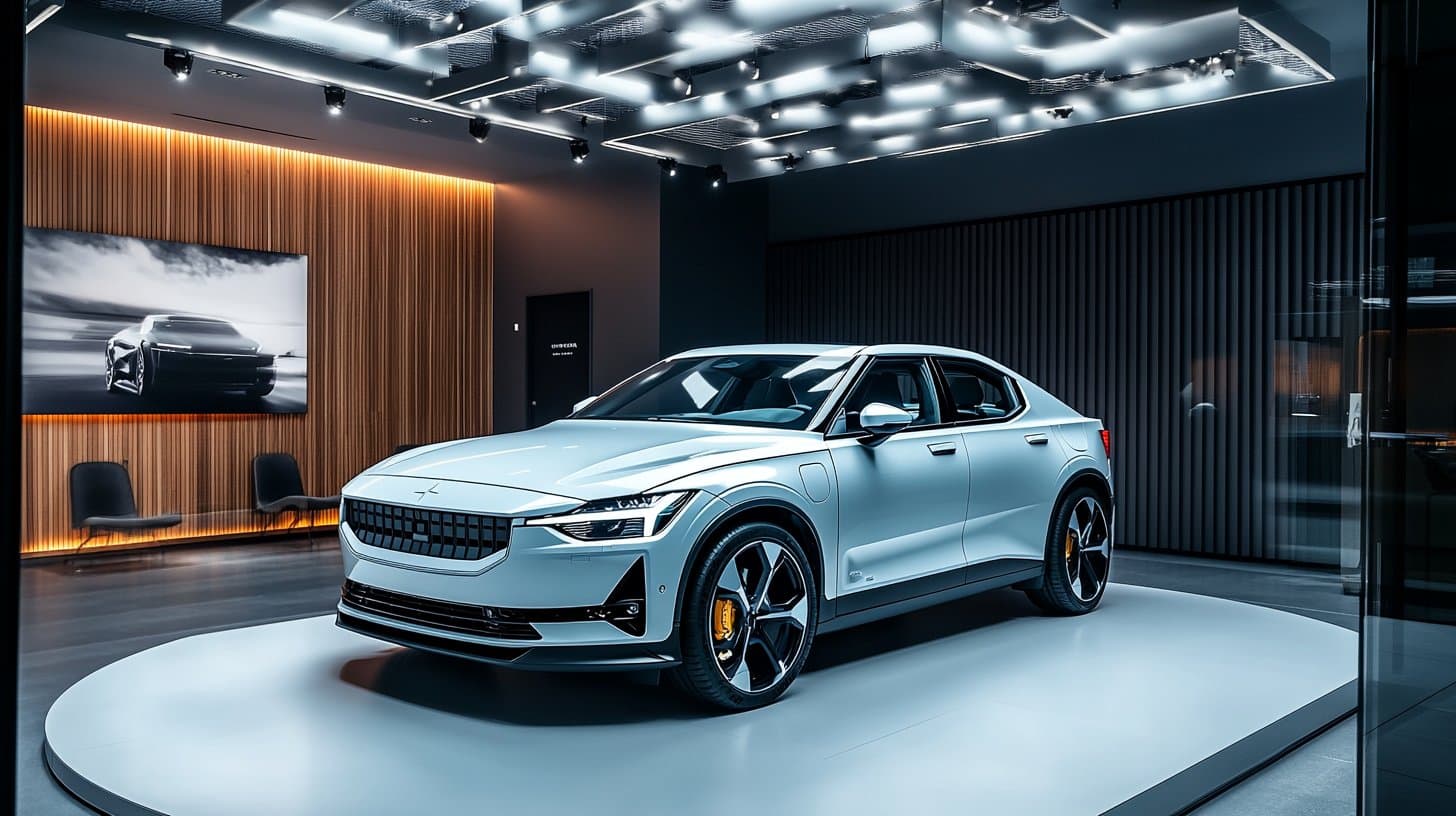
Polestar 3 ($73,400) vs. Tesla Model Y ($44,990)
Comparing the Polestar 3 directly to the Model Y is a bit of a stretch — these are fundamentally different vehicles targeting different buyers. The Polestar 3 is a large, luxurious electric SUV with 315 miles of EPA range and a starting price of $73,400. The Model Y is a compact crossover that prioritizes value and practicality at $44,990.
Where the Polestar 3 makes its case is in the premium experience. The interior is genuinely luxurious — Nappa leather, a 25-speaker Bowers & Wilkins audio system, a massive panoramic roof, and an air suspension system that delivers a ride quality closer to a BMW iX or Mercedes EQS SUV than anything in Tesla's lineup.
For Tesla Model X owners looking to switch, the Polestar 3 is actually the more natural comparison. At an effective price of $66,400 after the $5,000 Tesla trade-in bonus plus $2,000 loyalty, it undercuts the Model X significantly while delivering comparable space and a more refined driving experience. The Model X retains advantages in cargo flexibility with its falcon-wing doors and Tesla's superior Supercharger network.
Polestar 4 ($56,300) — Nothing Quite Like It
The Polestar 4 is the wildcard of the lineup, and it's arguably the most interesting car Polestar makes. It's a coupe-SUV with 300 miles of EPA range and one truly distinctive design decision: there is no rear window. Instead, Polestar uses a high-definition camera system mounted in the rear, feeding a display integrated into the rearview mirror position.
This isn't a gimmick — it actually works well in practice, and the absence of a rear window allows for a dramatically sloping roofline that gives the Polestar 4 its striking silhouette while maintaining generous rear headroom. The rear seat experience is actually more open and airy than you'd expect because there's a full glass roof panel above rear passengers without a crossbar.
At $56,300 before incentives — or roughly $49,300 after the full Tesla conquest stack — the Polestar 4 occupies a space between the Model Y and Model X that Tesla doesn't directly address. It's for the buyer who wants something more premium and distinctive than a Model Y but doesn't need the size or price of a full luxury SUV.
What Tesla Owners Gain by Switching
Beyond the financial incentives, Tesla owners switching to Polestar gain several tangible advantages.
Scandinavian minimalist design — Polestar's interiors are consistently praised by automotive journalists for their material quality and design cohesion. The aesthetic is clean and modern without feeling sterile. Buttons and physical controls for key functions remain where Tesla has gone fully touchscreen.
Google Built-In infotainment — native Google Maps, Assistant, and Play Store access without phone dependency. The system is fast, intuitive, and familiar to anyone who uses Google products.
Build quality and materials — Polestar vehicles are built in Volvo's manufacturing facilities, and the fit-and-finish reflects Volvo's decades of premium manufacturing experience. Panel gaps are consistent, interior surfaces use higher-quality materials, and the overall tactile experience is more refined.
Volvo safety heritage — Polestar benefits from Volvo's safety engineering, which remains among the best in the industry. Advanced driver assistance systems, structural engineering, and crash protection all leverage Volvo's considerable expertise.
What Tesla Owners Lose by Switching
Switching from Tesla isn't all upside. There are real trade-offs that buyers should consider carefully.
The Supercharger network. This remains Tesla's single biggest competitive advantage. With over 60,000 Superchargers worldwide and growing, Tesla's charging network is the most reliable and extensive in North America. Polestar owners primarily use Electrify America, which has improved significantly but still doesn't match the Supercharger experience for reliability and coverage. An NACS adapter is available for Polestar models, but the experience isn't as seamless as native Tesla Supercharger access.
Over-the-air update cadence. Tesla pushes software updates frequently — sometimes weekly — that add features, improve performance, and fix issues. Polestar does offer OTA updates, but at a much slower pace. Tesla's approach to continuous software improvement is genuinely industry-leading.
Autopilot and Full Self-Driving. Tesla's driver assistance technology, for all its controversies, remains the most capable and widely deployed system in the consumer market. Polestar's Pilot Assist is competent but not in the same league as Tesla's Autopilot, particularly on highways.
The Tesla app ecosystem. Tesla's mobile app is excellent — remote climate control, charging management, location tracking, Sentry Mode monitoring, and more. Polestar's app is functional but less feature-rich. The digital ownership experience with Tesla is still the benchmark.
Does the Deal Make Financial Sense?
Let's run the numbers on the most direct comparison: Polestar 2 versus Tesla Model 3.
A base Polestar 2 at $46,900 minus the $5,000 Tesla trade-in bonus brings the price to $41,900. If you're an existing Volvo owner switching from a Tesla second car, the additional $2,000 loyalty discount brings you to $39,900. With the 0.9% APR financing on a 48-month term, you're looking at monthly payments of approximately $850 — competitive with a comparably equipped Model 3 financed at standard market rates of 5–6% APR.
For the Polestar 3 at $73,400 minus $7,000 in combined discounts, the effective price of $66,400 puts it in a premium segment. But compared to what it actually competes with — the BMW iX, Mercedes EQS SUV, and Tesla Model X — that price is competitive for the level of luxury and technology delivered.
The financial case is strongest for the Polestar 2, where the incentives nearly close the price gap with the Model 3. It's weakest for the Polestar 3, where even with $7,000 off, you're paying a significant premium over the much smaller Model Y.
The Bigger Picture: A Market in Motion
Polestar isn't the only brand targeting disaffected Tesla owners. BMW, Mercedes, and Hyundai have all launched competitive incentives in recent months. But Polestar's program is the most explicitly targeted — naming Tesla owners specifically and offering a concrete dollar amount to switch.
This reflects a broader shift in the EV market. For years, buying an EV essentially meant buying a Tesla. That hasn't been true for a while now, but consumer perception is finally catching up to reality. There are excellent EVs available from a dozen manufacturers at every price point. The competition is real, the alternatives are good, and brands like Polestar are willing to pay real money to prove it.
For Tesla owners who've been quietly considering a switch, Polestar's conquest program removes one of the biggest barriers — the financial cost of changing brands. Whether the trade-offs are worth it depends entirely on what you value most in your EV ownership experience.
If the Supercharger network, Autopilot, and Tesla's software ecosystem are essential to your daily driving, staying with Tesla probably still makes sense. But if build quality, interior refinement, and Google's infotainment system matter more — and you can live with a slightly smaller charging network — Polestar is making it very easy to make the switch.
Explore our best EV deals for April 2026 to see how Polestar's offers compare with other incentives across the market, or browse the latest EV deals to find the right model for your needs.