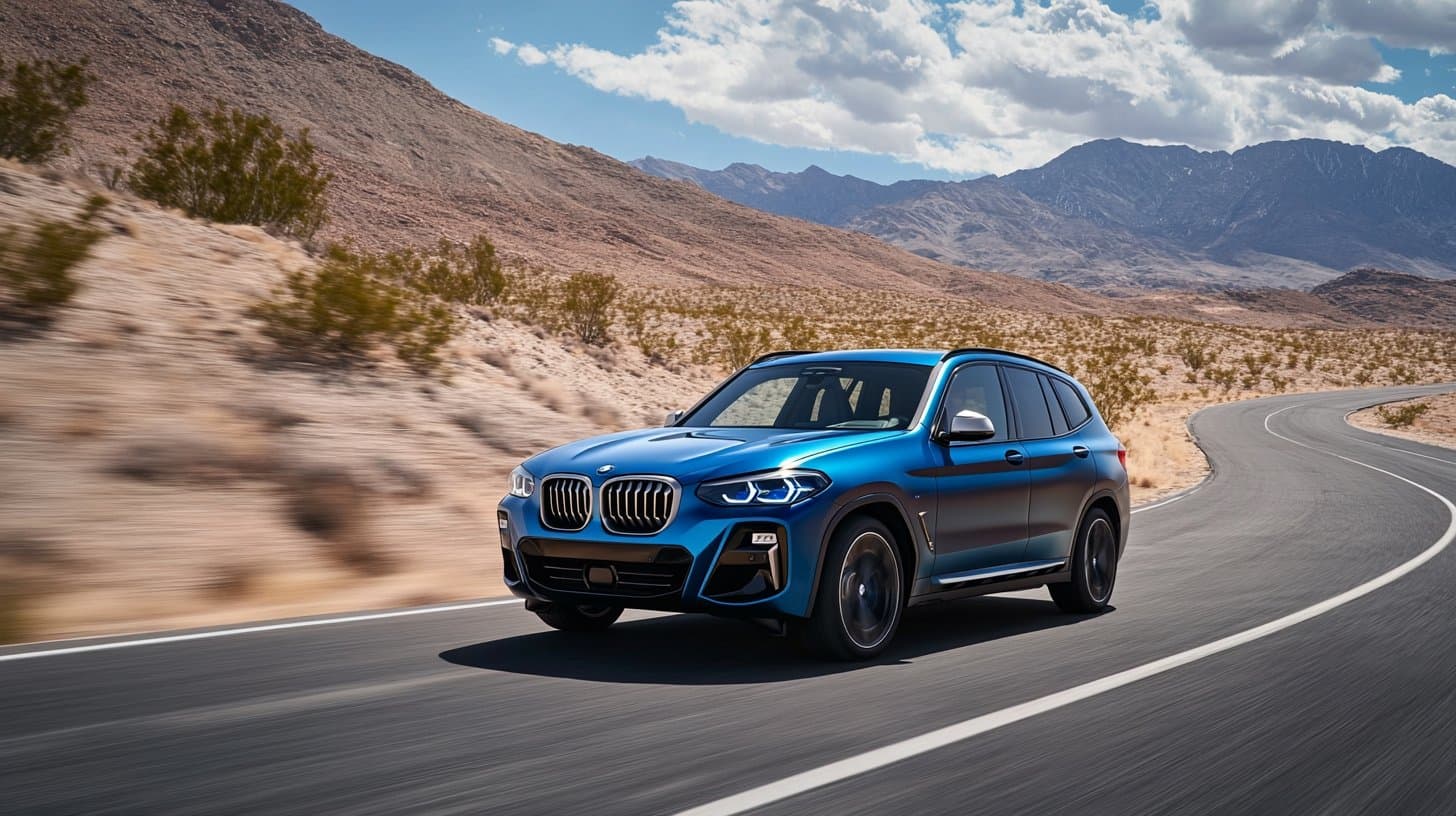
The best-reviewed electric vehicle on the planet is finally coming to America. BMW has officially confirmed that the all-new iX3 — built on the ground-up Neue Klasse platform and fresh off winning 2026 World Car of the Year — will arrive at US dealerships this summer with a starting price of $60,000.
That price positions the iX3 squarely in the premium electric SUV segment, above mainstream competitors like the Tesla Model Y and Hyundai Ioniq 5, but competitive with the Audi Q6 e-tron and Porsche Macan Electric. For a vehicle that European reviewers have called a generational leap in EV technology, $60,000 is arguably aggressive pricing from BMW.
US Trim Levels and Pricing
BMW will launch the iX3 in the US with two trim levels, following the same naming structure used across its global lineup.
iX3 eDrive40 — starting at $60,000. This is the rear-wheel-drive model with a single electric motor producing approximately 340 horsepower. It uses a smaller battery optimized for efficiency, delivering an estimated 395 miles of WLTP range. The EPA estimate will likely land between 335–350 miles, since the WLTP-to-EPA conversion typically results in a 15–20% reduction. Even at the conservative end, 335 miles of real-world range is exceptional for this segment.
RWD is the traditional BMW layout that driving enthusiasts prefer, and BMW has tuned the eDrive40 to deliver the engaging rear-drive dynamics the brand is known for. For most buyers — especially those in Sun Belt states like Florida — rear-wheel drive with 340 horsepower is more than sufficient.
iX3 xDrive50 — expected around $68,000. BMW hasn't officially confirmed the xDrive50 price for the US, but based on European pricing differentials and BMW's typical US pricing strategy, $68,000 is the widely anticipated figure. This is the dual-motor all-wheel-drive variant with approximately 420 horsepower and an estimated 370 miles of WLTP range (likely 310–330 miles EPA). The xDrive50 adds all-weather capability and significantly quicker acceleration, making it the right choice for buyers in northern climates or those who prioritize outright performance.
The Neue Klasse Platform: Why It Matters
The iX3 is not an incremental update to BMW's existing EV lineup. It's the first vehicle built on an entirely new architecture that BMW has been developing for years, and the differences compared to current BMW EVs like the iX and i4 are substantial.
Previous BMW EVs used platforms shared with internal combustion models. The i4 shares its bones with the 4 Series Gran Coupe. The iX, while purpose-built, used older battery technology and software architecture. These were good cars, but they carried the compromises inherent in transitional products.
Neue Klasse changes everything. The platform uses cylindrical battery cells instead of the prismatic cells in current BMW EVs, co-developed with battery partners specifically for this architecture. The result is higher energy density (more range from less weight), improved thermal management (better performance in extreme temperatures), and critically, much faster charging speeds.
The software architecture is equally revolutionary for BMW. The company calls the iX3 its first true “software-defined vehicle,” built on a unified computing platform that can receive significant capability upgrades through over-the-air updates. This is BMW closing the gap with Tesla's software approach while bringing BMW's own strengths in user interface design and driving dynamics tuning.
400 kW DC Fast Charging: The Game Changer
If there's a single number that defines the iX3's technical advantage, it's 400 kilowatts. That's the iX3's maximum DC fast charging rate, and it's the fastest in its segment by a significant margin.
At 400 kW, the iX3 can add approximately 190 miles of range in just 10 minutes. To put that in context, most current EVs top out at 150–270 kW. The Tesla Model Y peaks at around 250 kW. The Hyundai Ioniq 5, one of the fastest-charging EVs currently available, reaches 350 kW on its 800-volt architecture. The iX3 beats them all.
For road-trip scenarios, this changes the math entirely. A 10-minute charging stop that adds nearly 200 miles of range is approaching the convenience of a gas station fill-up. Combined with the iX3's 335+ mile EPA range, the days of careful charging planning and range anxiety calculations are effectively over for this vehicle.
There is a caveat: you need access to chargers that can actually deliver 400 kW. As of 2026, most public DC fast chargers in the US top out at 150–350 kW. But the infrastructure is catching up quickly, and the iX3 is future-proofed for the faster chargers that are being deployed now.
Interior and Technology
The iX3's interior represents a clean break from BMW's current design language. The centerpiece is a panoramic curved display that stretches across nearly the entire width of the dashboard, combining the instrument cluster and infotainment screen into a single flowing unit.
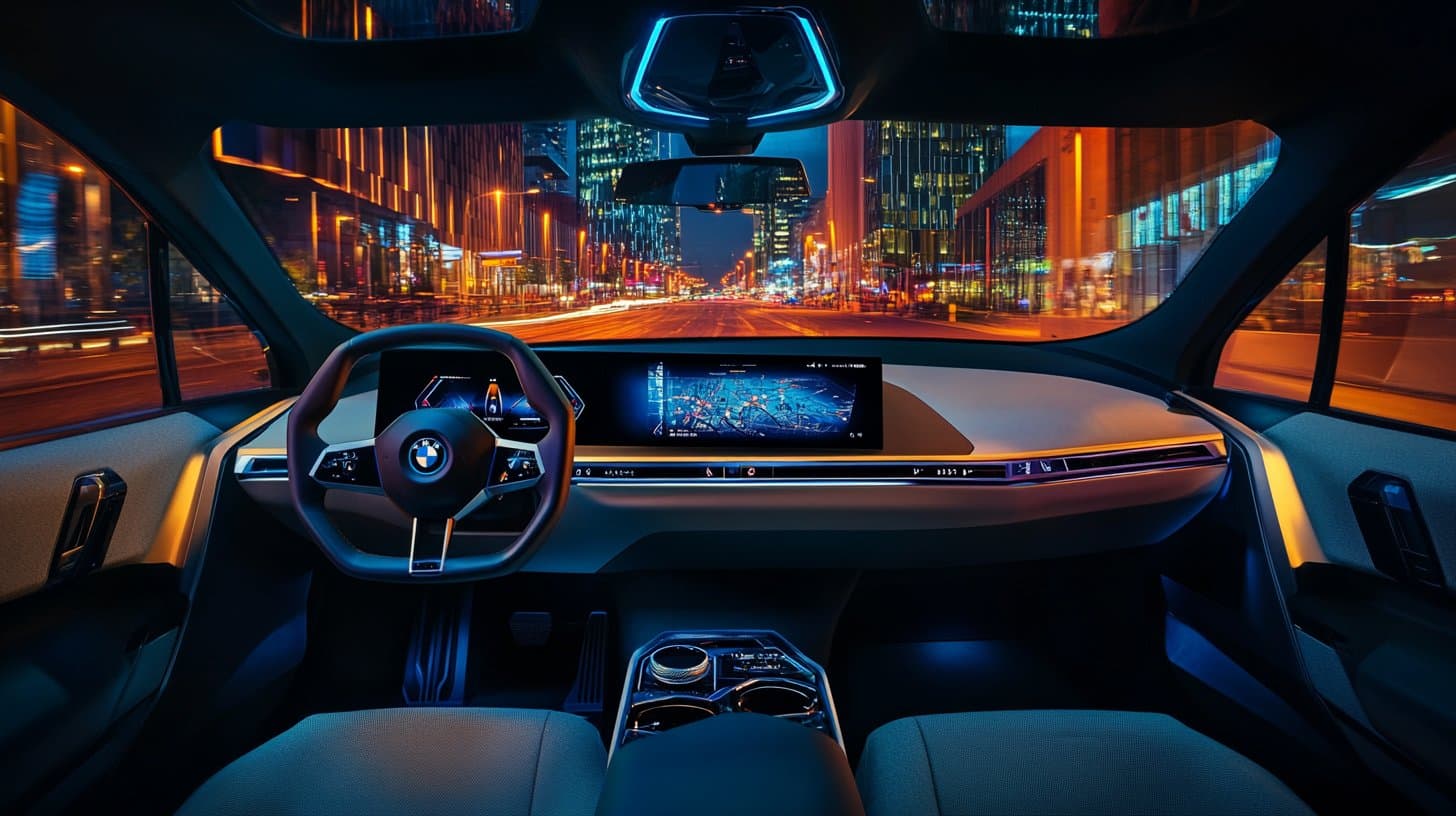
BMW's new iDrive system runs on a custom operating system with an AI-powered assistant that learns your preferences and proactively adjusts vehicle settings. The voice assistant can handle complex natural-language requests, and the system integrates tightly with BMW's cloud services for navigation, media, and vehicle management.
The seats are redesigned with sustainable materials that BMW says are both more environmentally responsible and more durable than traditional options. The standard audio system is Harman Kardon, with an upgraded Bowers & Wilkins system available. Ambient lighting is customizable across a wide spectrum, and the overall material quality reflects BMW's premium positioning.
Physical controls remain for key functions — climate, volume, drive modes — which will be a relief for buyers frustrated by the fully touchscreen approach that Tesla and other brands have adopted. BMW has found a balance between digital integration and tactile usability that reviewers have universally praised.
How $60,000 Positions the iX3 in the Market
Pricing is where the iX3's competitive story gets interesting. At $60,000, it sits in a fascinating middle ground — too expensive to be a mainstream EV, but aggressively priced for what it delivers as a premium offering.
Versus Tesla Model Y ($44,990). The Model Y is $15,000 less, which is a substantial gap. But these are fundamentally different vehicles targeting different buyers. The iX3 delivers a dramatically more refined interior, faster charging, likely longer range, and BMW's driving dynamics. The Model Y counters with the Supercharger network, Autopilot, and a $15K price advantage. For buyers who prioritize value, the Model Y wins. For those who want a premium experience, the iX3 justifies the premium.
Versus Audi Q6 e-tron ($63,800). This is the most direct competitor. Both are premium German electric SUVs from established luxury brands. The iX3 undercuts the Q6 by nearly $4,000 while offering faster charging speeds (400 kW vs. Audi's 270 kW) and likely longer range. The Q6 counters with Audi's excellent Virtual Cockpit technology and arguably more refined ride quality. On paper, the iX3 has the technical edge at a lower price.
Versus Mercedes EQC (~$55,000). Mercedes's EQC is less expensive, but it's built on an older platform with significantly slower charging speeds and less range. The BMW is the newer, more technically advanced vehicle. For Mercedes buyers, the upcoming next-generation electric GLC on the MMA platform will be the more relevant comparison, but it hasn't arrived yet.
Versus Hyundai Ioniq 5 ($41,800). The Ioniq 5 is $18,000 less expensive and offers 800-volt charging architecture. It's remarkable value. But the BMW delivers a more premium interior, badge prestige, and faster peak charging. Different buyers, different priorities — but the Ioniq 5 proves that fast-charging technology isn't exclusive to luxury price points.
Federal Tax Credit: Don't Count on It
Here's the reality check: the BMW iX3 is unlikely to qualify for the $7,500 federal EV tax credit. The vehicle is manufactured in Germany at BMW's Neue Klasse production facility, not in North America. Under current IRS rules for the Inflation Reduction Act, vehicles must meet both final assembly and battery component sourcing requirements to qualify for the full credit.
BMW is building a Neue Klasse plant in Mexico that will eventually produce vehicles for the North American market, but that facility isn't expected to be online until 2027 or 2028. So for the initial US launch, $60,000 is the real, out-of-pocket starting price with no federal offset.
This puts the iX3 at a disadvantage compared to domestically assembled competitors that do qualify for the credit. A $44,990 Tesla Model Y with a $7,500 credit drops to an effective $37,490 — making the gap with the iX3 more like $22,500 than $15,000. Buyers need to factor this into their calculations.
Dealer Availability and Launch Timeline
BMW has confirmed that it will prioritize US allocation for the iX3, recognizing the importance of the American market for its Neue Klasse rollout. Initial deliveries are expected to begin in July or August 2026, with the eDrive40 arriving first and the xDrive50 following shortly after.
Major metro dealers — Los Angeles, New York, Miami, Chicago, San Francisco, and Dallas — will receive the first allocations. BMW's dealer network in the US is extensive, which gives the iX3 a distribution advantage over brands like Polestar or Rivian that have more limited retail footprints.
BMW is also expanding its Electrified Vehicle Experience program, which allows potential buyers to spend extended time with EVs before committing. Given that the iX3 represents such a significant departure from BMW's current lineup, the company wants buyers to experience the Neue Klasse difference firsthand rather than just reading about it.
Why This Matters for the EV Market
The BMW iX3 arriving in the US at $60,000 is significant for several reasons beyond just being another new EV option.
First, it validates that traditional automakers can build EVs that are genuinely world-class — not just competitive but best-in-class. The World Car of the Year award, judged by 100 international automotive journalists, isn't given to transitional products. The iX3 earned it on pure merit.
Second, 400 kW charging entering the mainstream market will accelerate the buildout of faster charging infrastructure. When a vehicle from a major manufacturer needs 400 kW chargers to deliver its full capability, charging networks will respond by deploying them faster.
Third, the $60,000 price point signals that BMW is serious about competing, not just participating. Previous BMW EVs were often criticized for being overpriced relative to their capabilities. The iX3 appears to correct that — delivering flagship technology at a price that, while premium, is competitive within its segment.
For American buyers who've been watching the iX3 win awards and rave reviews overseas, the wait is almost over. This summer, you'll be able to walk into a BMW dealer, sit in the Neue Klasse interior, experience the panoramic display, and take one of the most advanced EVs on the planet for a test drive.
Check out our latest EV deals to compare the iX3 against other models, or read our best EV deals for April 2026 roundup to see what's available right now while you wait for the iX3 to arrive.